 Ferndale
 Deck Building for Sumas Homes
Sumas sits in a part of Whatcom County where a deck earns its keep. It's the space where morning coffee happens, where the grill lives half the year, and where kids and dogs track in and out all summer. But it's also a structure that sits outside, uncovered, taking on whatever the Pacific Northwest sends its way for the other eight or nine months. A deck built without that reality in mind will look fine at the ribbon-cutting and start showing problems by year three or four. We build decks in this area the way the climate actually demands, not the way a catalog photo makes it look.
This page is specifically about deck building for homeowners in and around Sumas. We're not going to give you a generic "what is a deck" overview — we'll cover what local conditions mean for material choice, framing, fasteners, and drainage, and how our process works from first call to final walkthrough.
What Whatcom County Weather Does to a Deck
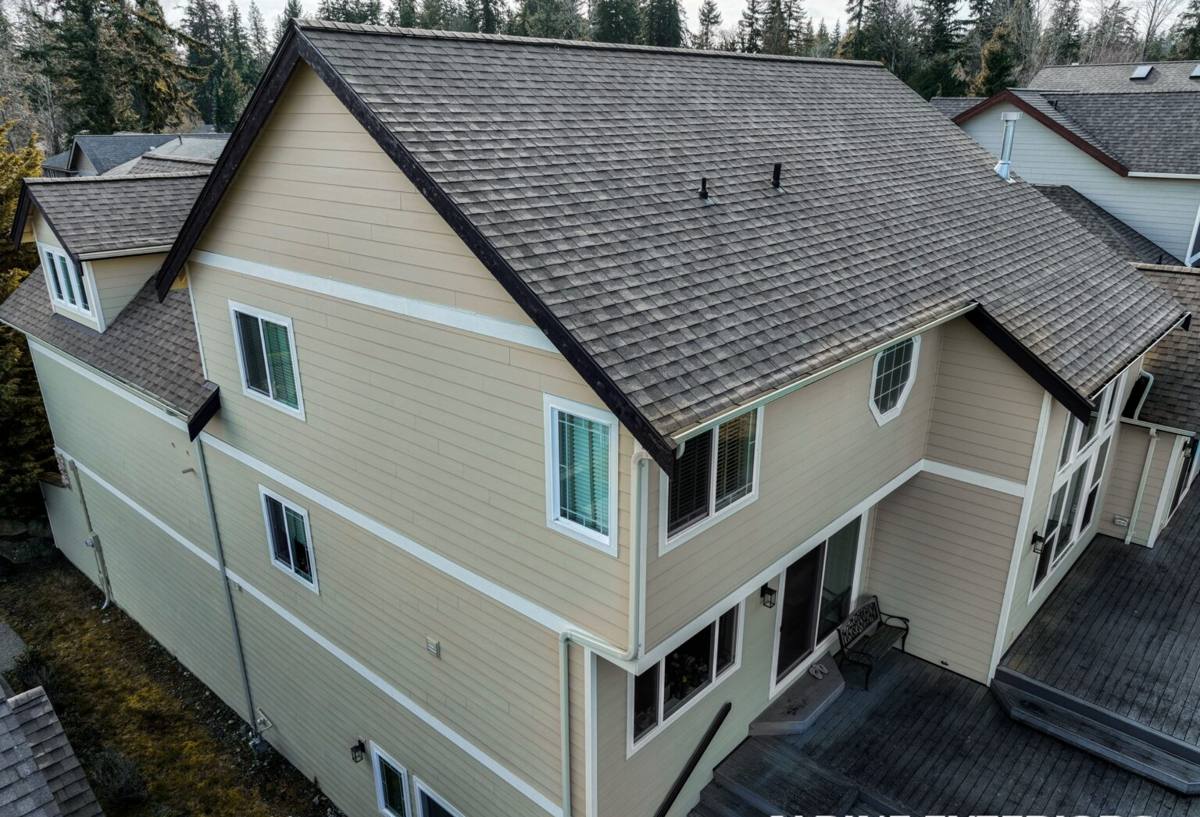
Whatcom County's climate is defined by long stretches of damp weather, driving rain that comes in sideways off storms moving through the Fraser Valley and Puget Sound region, and a moss season that can run from fall through late spring. Add in moisture-laden marine air that reaches well inland from the coast, and you've got conditions that are hard on any exterior wood or wood-composite structure that isn't detailed correctly.
For a deck, the damage shows up in predictable places:
- Standing water on flat boards that never fully dries between rain events, especially on north-facing or shaded decks
- Moss and algae growth on horizontal surfaces, which holds moisture against the wood and makes boards slick and dangerous underfoot
- Fastener corrosion where the wrong screws or nails were used, leading to rust streaks and loosening boards
- Ledger board rot where the deck attaches to the house, if flashing wasn't installed or was installed wrong
- Freeze-thaw stress on footings and fasteners during the occasional hard cold snaps this area gets, which can crack poorly cured concrete or work screws loose over several winters
None of this is unusual or a sign of a bad piece of land — it's just what this region does to an outdoor structure. The fix isn't avoiding decks, it's building them with the right materials and details from the start.
Why "Good Enough Elsewhere" Isn't Good Enough Here
A deck design that would hold up fine in a dry climate can fail early here simply because it never gets a real chance to dry out between rains. That's why spacing, slope, and ventilation underneath the deck matter as much as the decking material itself.
Choosing the Right Decking Material
There's no single "best" decking material — there's the right material for your budget, your maintenance appetite, and how much sun or shade your particular lot gets. Here's how the common options actually compare for a Sumas property.
| Material | Upfront Cost | Maintenance | How It Handles Our Climate |
|---|---|---|---|
| Pressure-treated wood | Lowest | Annual cleaning, periodic re-staining/sealing | Good if sealed and maintained; neglect leads to graying, splintering, and moss buildup |
| Cedar | Moderate | Regular sealing to hold color and resist moisture | Naturally rot-resistant but still needs upkeep in a wet climate; looks excellent when maintained |
| Composite (capped) | Higher | Occasional washing, no staining or sealing | Handles moisture and moss better than wood; needs proper airflow underneath to avoid mildew |
| PVC decking | Highest | Lowest — soap and water | Fully moisture-resistant surface, though can be slicker when mossy film builds up if never cleaned |
We'll walk through these trade-offs with you honestly rather than push whatever has the best margin. If you want a lower-maintenance deck and plan to spend most of your time using it rather than tending it, composite or PVC decking usually pays for itself in saved weekends. If you like the classic wood look and don't mind a maintenance routine, cedar or well-treated wood is a legitimate choice — it just needs a real commitment to upkeep in this climate, not a "we'll get to it" plan.
What a Correctly Built Deck Requires Here
Framing and Fasteners
Framing lumber should be rated for ground contact where it's close to grade, and every fastener — joist hangers, structural screws, ledger bolts — should be corrosion-resistant hardware rated for exterior use. In a region with this much sustained moisture, the difference between standard coated screws and true stainless or hot-dip galvanized hardware shows up as rust streaks and loosening connections within a few years, not decades.
Ledger Attachment and Flashing
Where the deck ties into your house, proper flashing is what keeps water from working its way behind the siding and into the wall framing. This is one of the most common shortcuts we see on decks that weren't built by a crew used to this climate — and it's one of the most expensive things to fix after the fact, since it can mean opening up siding to address rot that's already spread.
Drainage and Airflow
Decking boards need consistent gapping so water sheds through rather than pooling. Just as important is what happens underneath: a deck built low to the ground with poor ventilation traps moisture and becomes a moss and mildew factory even if the top surface is a low-maintenance material. We grade and detail the substructure so air and water can actually move through.
Footings
Footings need to be poured to the correct depth and properly cured before load is applied, and posts need proper post bases that keep wood off direct concrete contact. Skipping this is invisible on install day and shows up years later as a wobbly, settling deck.
Our Deck Building Process
- On-site consultation — we look at your lot, sun and shade patterns, drainage, and how you actually plan to use the space, then talk through material options and layout.
- Design and quote — you get a clear plan and honest pricing before anything is scheduled, with material options broken out so you can compare real costs.
- Permitting — most deck projects in Whatcom County require a permit, and we handle that process so you're not stuck navigating it yourself.
- Site prep and footings — proper excavation, footing depth, and cure time before framing begins.
- Framing — structural framing with corrosion-resistant hardware and correctly flashed ledger attachment.
- Decking and railing installation — your chosen surface material installed with correct gapping and fastening, plus code-compliant railing.
- Final walkthrough — we go over the finished deck with you, including basic care guidance for whatever material you chose.
New Deck vs. Deck Repair or Rebuild
Not every project starts from bare ground. We regularly get called out to look at an existing deck that's showing its age, and the right answer depends on what's actually failing.
- Surface-level wear only (graying wood, minor moss, cosmetic issues) — often addressed with cleaning, sanding, and re-sealing or staining rather than a full rebuild
- Soft or spongy boards, visible rot on decking — usually means the decking surface needs replacing, but the frame underneath may still be sound and reusable
- Wobbly railing, sagging frame, rot at the ledger — this is a structural issue, not cosmetic, and typically means a partial or full rebuild is the safer and more cost-effective path than patching around a compromised frame
- Deck was never permitted or flashed correctly — worth a full assessment, since bringing it up to code now is easier than dealing with a failure or a sale-time inspection issue later
If you're not sure which category your deck falls into, that's exactly what a free on-site look is for. We'll tell you straight whether it needs a full rebuild or just some overdue maintenance — there's no reason to pay for a rebuild you don't need.
Sizing and Budgeting for Your Project
Deck costs vary widely based on size, material, height off grade, railing style, and site access, so we don't publish blanket pricing — every lot and every homeowner's priorities are different. What we can tell you is the general shape of the decision: material choice tends to be the single biggest cost driver after square footage, followed by height (a deck requiring a set of stairs and taller footings costs more than one built near grade) and any custom features like built-in benches, multi-level layouts, or roof/cover structures. We'll give you a clear, itemized quote during your consultation so you know exactly what you're paying for and why.
Why Hire a Crew That Already Works in Sumas
A deck builder who mainly works in drier parts of the country can build you something that looks correct and still be missing the details that matter here — flashing details, hardware grade, drainage slope, and ventilation clearance are all judgment calls shaped by local conditions. We work throughout Whatcom County, and we build every deck assuming it will face a real Pacific Northwest winter, not an average one. That shows up in the fasteners we use, how we detail the ledger connection, and how we grade the ground underneath, none of which is visible in a finished photo but all of which determines whether the deck is still solid in ten years.
We also know the local permitting process, which keeps your project moving instead of stalling out on paperwork you weren't expecting.
Before You Hire Anyone: A Quick Checklist
- Ask whether they pull a permit for deck projects in your jurisdiction — if the answer is no, that's a red flag
- Ask what fastener and hardware grade they use, and whether it's rated for exterior/coastal-influenced climates
- Ask how they detail the ledger board flashing where the deck meets the house
- Ask about footing depth and cure time before framing load is applied
- Get the material comparison in writing so you're comparing the same scope across quotes
If a contractor can't answer these clearly, that's worth noticing before you sign anything.
If you're planning a new deck in Sumas or need an honest read on whether your current one needs repair or replacement, we'd be glad to take a look. Reach out for a free, no-pressure estimate using the form below.