 Ferndale
 Composite Decking in Sumas: Built for the Weather That's Actually Here
Sumas sits close enough to the water and the marine air pattern that moves through Whatcom County that homeowners here deal with a specific combination of problems on outdoor structures: driving rain that comes in sideways during fall and winter storms, a moss and algae season that can stretch for months, and salt-tinged air that slowly works on fasteners, finishes, and anything that isn't sealed correctly. A deck built without that combination in mind doesn't fail overnight. It fails slowly, in ways that are easy to miss until boards are cupping, railings are loose, or a section of framing underneath has gone soft.
Composite decking has become the practical answer for a lot of homeowners in this part of the county, not because it's trendy, but because it removes several of the maintenance headaches that wood decking creates in this exact climate. This page is about what that looks like specifically for a deck in Sumas — what the material needs to do here, what a correct installation actually involves, and how we approach the job.
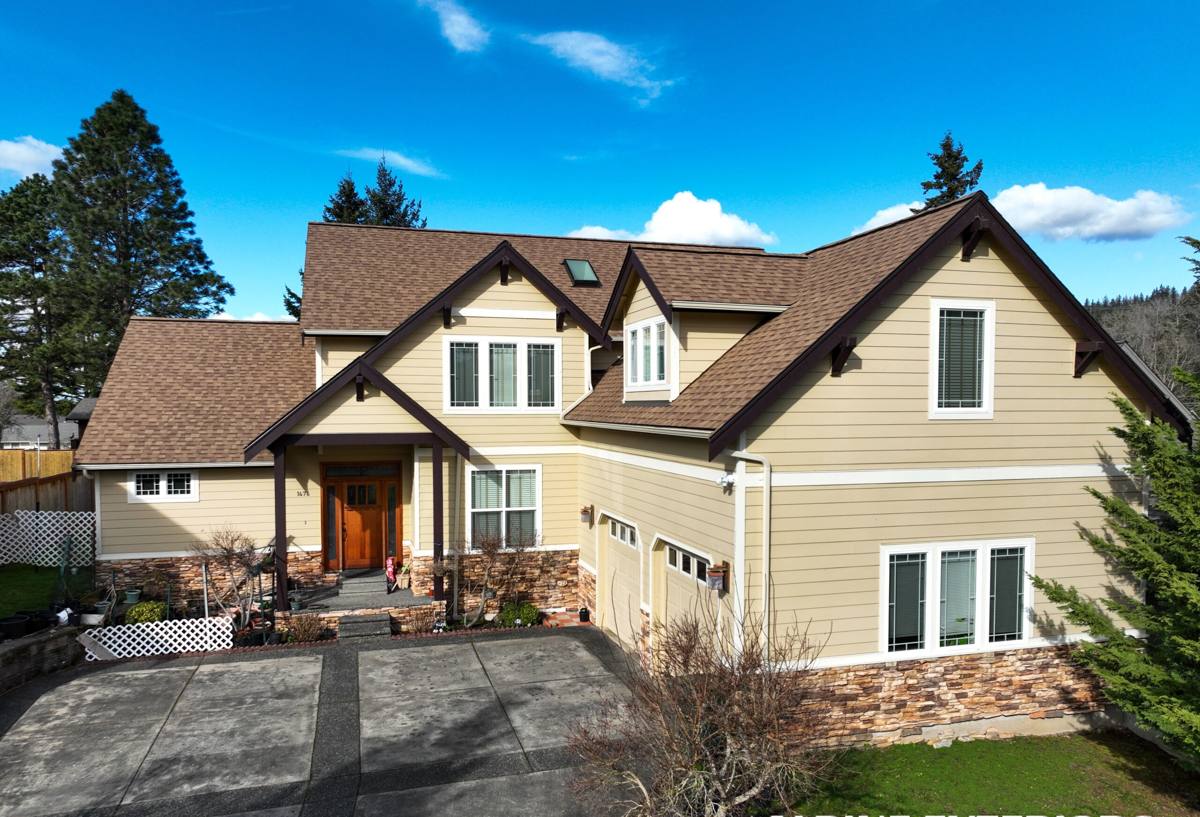
What Sumas Homes Actually Need From a Deck
Every decking material has to survive the same three things in this area, in this order of importance:
Sustained moisture exposure
Long stretches of steady rain, combined with limited sun and airflow in the winter months, keep deck surfaces and the framing underneath damp for days at a time. That moisture load is what drives rot in wood decking and corrosion in fasteners and connectors that aren't rated for it.
Moss, algae, and organic buildup
Whatcom County's moss season isn't a minor cosmetic issue. Moss and algae hold moisture against the deck surface, and on wood that means accelerated rot in exactly the spots that already drain poorly — board edges, near posts, and anywhere leaves and debris collect. On any decking material, moss buildup left unaddressed becomes a slip hazard.
Salt-influenced air and UV cycling
The combination of salt-carrying air and the region's UV exposure during summer months is hard on fasteners, hardware, and lower-grade finishes over time. Metal components corrode faster, and coatings on cheaper composite or capped products can degrade unevenly if they weren't designed for coastal-influenced climates in the first place.
None of this means a deck in Sumas can't last decades. It means the material selection and the build details have to account for these conditions from the start, not get patched around later.
Why Composite Decking Fits This Climate
Composite decking — engineered boards made from a blend of wood fiber and plastic, usually with a protective cap layer — is built specifically to resist the failure modes that wood struggles with in wet, moss-prone climates. It doesn't absorb water the way solid wood does, it doesn't require annual staining or sealing to keep moisture out, and quality capped composite resists mold and algae growth on the surface far better than untreated or even pressure-treated wood.
That doesn't mean composite is maintenance-free or that every composite product performs the same. There's real variation between manufacturers and product lines in how well the cap resists moisture intrusion at cut ends, how the board handles freeze-thaw cycling, and how the color and texture hold up under years of UV exposure. Part of our job is steering homeowners toward products that have a track record in wet Pacific Northwest climates, not just the least expensive option on a shelf.
Composite vs. Other Common Decking Materials
| Material | Moisture Resistance | Moss/Algae Resistance | Maintenance | Typical Lifespan Here |
|---|---|---|---|---|
| Pressure-treated wood | Fair — absorbs water, needs sealing | Poor without regular cleaning | Annual staining/sealing recommended | 10–15 years before major repair/replacement |
| Cedar | Good if maintained, poor if neglected | Fair, prone to graying and moss in shade | Regular sealing and cleaning | 15–20 years with upkeep |
| Composite (capped) | Very good — engineered to resist absorption | Good, resists surface growth better than wood | Periodic washing, no staining/sealing | 25–30+ years, backed by manufacturer warranty |
| PVC decking | Excellent — no wood fiber content | Very good | Low, occasional cleaning | 25–30+ years |
Composite hits a practical middle ground for most Sumas homeowners: it holds up to the wet, mossy conditions far better than wood without the higher cost and different install requirements that come with full PVC systems. It's also the material we recommend most often when a homeowner wants a deck they can actually enjoy instead of maintain.
What a Correct Composite Deck Build Involves
Composite boards are only as good as what's underneath and around them. Most of the composite deck problems we get called out to look at — soft spots, boards that have shifted, railings that have loosened — trace back to shortcuts in the structure or the details, not the decking material itself.
Substructure and framing
The framing has to be sized and spaced correctly for composite's weight and flex characteristics, which differ from solid wood. In our climate, we also pay close attention to ledger board flashing and the connection point where the deck meets the house, since that's a common spot for water intrusion into the structure if it's not detailed correctly.
Drainage and airflow underneath
Composite decking doesn't rot, but the framing underneath it still can if moisture gets trapped with nowhere to go. Proper spacing, joist tape on framing members, and grading that moves water away from the structure all matter more in a climate that stays wet for months at a time than they would somewhere drier.
Fasteners and hardware
Corrosion-resistant, climate-rated fasteners and hidden fastening systems matter here specifically because of the salt-influenced air and constant moisture cycling. Using standard hardware to save a small amount on materials is one of the most common ways a deck develops problems years earlier than it should.
Board layout and cut-end sealing
Every cut end on a composite board exposes the core material, which is more vulnerable to moisture than the capped surface. Cut ends that face weather exposure — at stair edges, board ends near the perimeter — need to be treated or capped correctly during installation, not left raw.
Our Process for a Sumas Composite Deck
- On-site assessment. We look at the existing structure (if there is one), drainage patterns around the house, sun and shade exposure, and how the space will actually be used before recommending a product or layout.
- Material selection. We walk through composite options with the specific climate factors above in mind — cap quality, color retention, and manufacturer warranty terms for wet coastal-influenced climates.
- Design and layout. Board direction, railing style, stair placement, and any structural changes are planned around both function and how water will move off the deck.
- Permitting. Depending on scope — height, attachment to the home, footprint — a permit through the local jurisdiction may be required. We handle that coordination as part of the job.
- Structural build. Framing, footings, ledger flashing, and drainage details go in first, built to hold up under sustained Whatcom County moisture, not just pass a one-time inspection.
- Decking installation. Boards, hidden fasteners, stairs, and railings are installed to manufacturer spec, with attention to cut-end sealing and expansion gaps that account for temperature swings.
- Final walkthrough. We go over care basics with the homeowner — what routine cleaning looks like, what to watch for, and what's actually covered under the manufacturer's warranty.
Living With a Composite Deck Through Moss Season
Composite decking resists moss and algae far better than wood, but "resists" isn't "immune." In a climate with a moss season as long as ours, a deck in shaded or low-airflow areas will still collect organic growth over time if it's never cleaned. The good news is that upkeep on composite is straightforward compared to wood:
- Rinse and sweep debris off the deck regularly, especially in fall when leaves and needles accumulate
- Wash the surface a couple of times a year with a soft-bristle brush and a cleaner rated for composite — pressure washers on the wrong setting can damage the cap layer
- Keep gutters and downspouts near the deck clear so runoff isn't dumping directly onto the surface or framing
- Trim back vegetation that's shading the deck and keeping it damp longer than it needs to be
- Check railings, stair connections, and fastener points once a year for movement or corrosion
- Address any standing water or slow-draining spots early — those are the areas moss and algae take hold first
None of this is heavy maintenance. It's a fraction of what a wood deck demands, but skipping it entirely in a climate like ours will still shorten the life of the surface.
What Actually Drives Cost on a Sumas Composite Deck
Every deck is different, and we don't think broad national pricing guides are useful to a homeowner trying to plan a real project. What we can tell you is which factors move the cost up or down on a typical job:
| Cost Factor | Impact |
|---|---|
| Deck size and shape (square footage, angles, multiple levels) | High |
| Existing structure condition (repair/replace vs. build new) | High |
| Composite product tier and manufacturer warranty level | Medium-High |
| Railing style (composite, metal cable, glass panel) | Medium |
| Stairs, multiple access points, or built-in features | Medium |
| Site access and grading (slope, existing landscaping in the way) | Medium |
| Permit and inspection requirements | Low-Medium |
The most reliable way to know what your specific project will cost is a walkthrough. We give straightforward, itemized estimates so you can see exactly where the money is going, rather than a single lump number.
Why It Matters That Your Crew Already Works in This Area
A deck built to a generic national spec sheet doesn't automatically hold up to Whatcom County's specific mix of rain volume, moss growth, and salt-influenced air. A crew that already works in Sumas and the surrounding Ferndale area knows which drainage details matter here, which fastener and hardware choices actually hold up, and which composite products have a real track record in this climate versus ones that look good on paper in a drier region.
That local experience shows up in small decisions throughout the job — how flashing gets detailed at the ledger board, how much slope gets built into the framing for drainage, where cut ends need extra attention — the kind of details that don't show up on a proposal but determine whether a deck is still solid in fifteen years or showing problems in five.
Ready to Talk About Your Deck?
If you're planning a new composite deck or replacing an aging wood deck in Sumas, we're happy to walk the site with you, talk through material options, and put together a straightforward estimate — no pressure, no obligation. Use the form below to request your free estimate and we'll get in touch to schedule a time that works.