 Ferndale
 New Roof Installation Built for Sumas's Valley Climate
Sumas sits out at the far edge of Whatcom County, hard against the Canadian border where the Nooksack River valley opens into flat farmland below Sumas Mountain. It's a different setting than the towns closer to Bellingham Bay, and that changes what a new roof actually needs to hold up here. Sumas doesn't take the same steady dose of salt-laden marine air that coastal Whatcom County towns deal with, but it makes up for that with valley humidity, driving rain, cold outflow wind funneling down from the Fraser Valley, and a moss season that runs long across the shaded, north-facing roof planes common on homes in this area. A new roof — whether it's a full replacement on an aging house or a roof going onto a new structure or addition — needs to be built around that specific combination, not installed the same way it would be on a drier, more sheltered lot.
This page covers what new roof installation looks like for a Sumas property specifically: what the local climate actually asks of a roof system, what separates a correct installation from a rushed one, the material choices that make sense here, and how our process works from first inspection to final walkthrough.
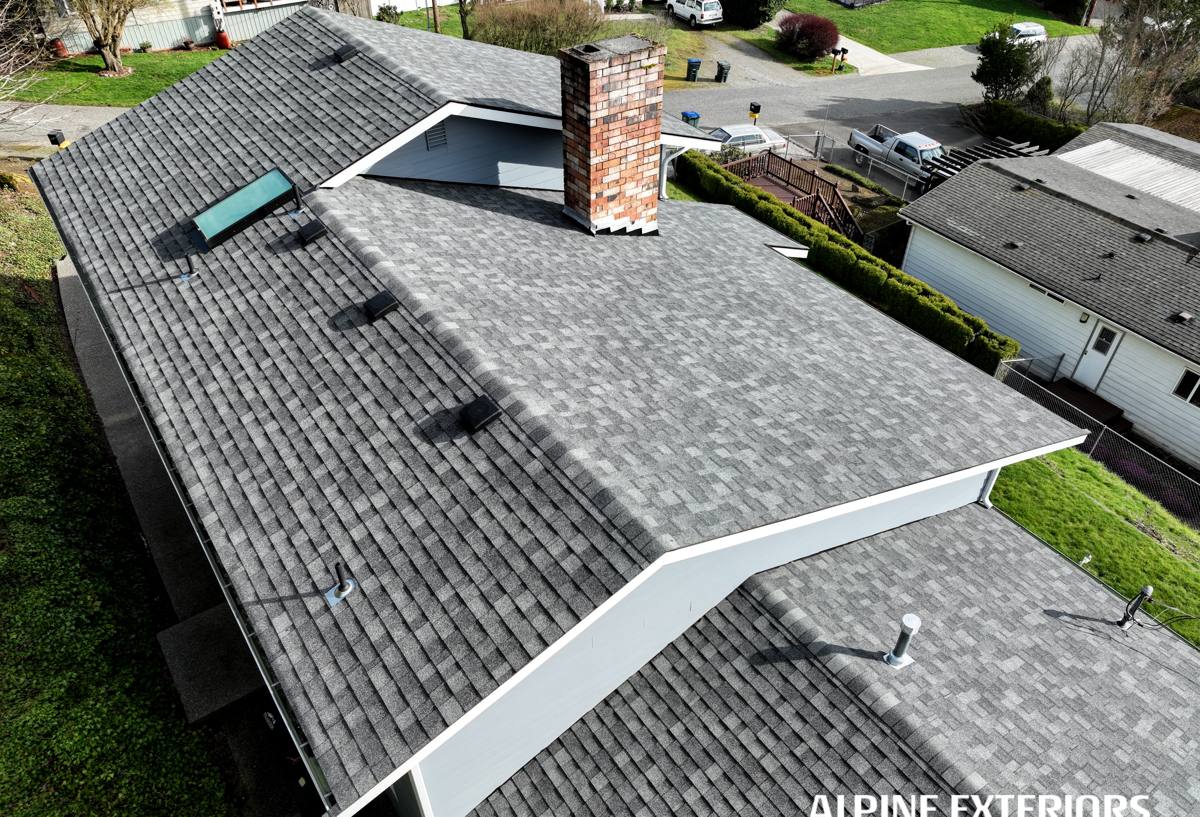
What Sumas's Climate Actually Demands From a New Roof
Driving Rain That Doesn't Fall Straight Down
Storms moving through this part of the valley rarely drop rain straight down. Wind pushes it sideways and up under shingle edges, into valleys, and against flashing that was only ever designed to shed water falling from above. A new roof installed without that in mind — using underlayment and lap details suited to a calmer climate — tends to develop leaks at exactly the points a homeowner would least expect, since the water isn't coming from where gravity alone would suggest.
Valley Humidity, Fog, and a Long Moss Season
Sumas sits low in the valley, and low ground holds humidity and fog longer after a storm than higher, more exposed terrain does. That extra dwell time matters for a roof surface: the longer shingles and decking stay damp, the more opportunity moss and organic growth have to take hold, especially on shaded and north-facing slopes that don't get enough direct sun to dry out between rain events. Once moss establishes itself on a roof, it holds moisture directly against the shingle surface, which shortens the roof's service life well ahead of schedule.
Cold Outflow Wind Off the Fraser Valley
Because of where it sits near the head of the valley and close to the border, Sumas is more exposed to cold outflow wind events funneling down from British Columbia than towns farther south and west in the county. Those events bring real wind load along with sharp temperature drops, and a roof that's only fastened to handle ordinary Whatcom County weather can get tested harder here when an outflow event rolls through with wind behind the cold.
Freeze-Thaw Cycling
Sumas sees more frequent hard frosts than the milder coastal parts of the county, which adds a freeze-thaw dimension on top of everything else. Water that's worked its way into an underlayment seam, a fastener hole, or a compromised shingle and then freezes expands as it does, which accelerates cracking and material failure faster than a wet-but-mild climate would on its own.
New Installation vs. Repair: When a Full Roof Is the Right Call
Not every roof problem on a Sumas home calls for a full new installation. Isolated wind damage, a single failed flashing detail, or a section that's taken impact can often be repaired without tearing off the whole roof. But there's a point where repeated patching stops making sense — where the underlying materials are past their service life, where moisture has been tracking into the deck for a while, or where enough of the roof has failed that section-by-section repair would cost more over a few years than a proper new installation would cost once. We'll tell you honestly which situation you're actually in rather than defaulting to the bigger job.
New roof installation also applies to more than replacements. A new addition, a detached garage or shop building, or a structure going up on undeveloped land in the Sumas area all need a roof built from scratch, and the same climate considerations apply just as much to new construction as they do to replacing an aging roof.
Signs a Full New Roof Makes More Sense Than Another Repair
- The roof is at or past its expected service life for its material type
- Granules are collecting heavily in gutters, signaling shingles worn thin across large sections
- Moisture staining or soft spots show up in more than one area of the attic or deck
- Previous repairs haven't held, or the same leak keeps returning after patching
- Moss and organic growth have returned quickly and repeatedly despite cleaning
- The existing roof was installed as a layover rather than a full tear-off, and the deck condition underneath is unknown
What a Correct New Roof Installation Involves
Full Tear-Off and Deck Inspection
A new roof installation starts with a full tear-off to the decking, not a layover on top of what's already there. That's the only way to find hidden moisture damage, soft spots, or rot that's developed under old roofing, which is common enough in a valley climate that holds moisture as long as this one does. Any deck repair gets handled before anything new goes down, since covering a compromised deck with new shingles just delays a bigger problem.
Underlayment and Ice-and-Water Protection
Synthetic or self-adhered underlayment gives the roof a real water barrier underneath the shingle field, which matters directly here since wind-driven rain gets forced under shingle tabs instead of running straight off. Ice-and-water shield at eaves, valleys, and other vulnerable transitions adds another layer of protection at exactly the spots most likely to let water through first.
Flashing at Valleys, Chimneys, and Wall Transitions
Most roof leaks in this region start at flashing, not out in the open field of the roof. Valleys where two roof planes meet, chimney and skylight penetrations, and wall-to-roof transitions all need flashing that's properly lapped, sealed, and integrated with the underlayment, not caulked over as an afterthought once the shingles are already down.
Fastening for Wind Exposure
Correct nail placement and count, following manufacturer spec rather than a shortcut pattern, is what keeps shingles from lifting when wind gets behind them. That matters more on a Sumas roof than on a sheltered inland lot, given how much stronger local outflow wind events can get during a winter cold snap.
Ventilation
Balanced intake and exhaust ventilation keeps the underside of the roof deck dry, which extends the life of the new roofing and reduces the moisture that feeds moss growth from underneath. In a valley setting where humidity and fog linger longer after a storm, ventilation isn't an optional add-on — it's part of what keeps a new roof living up to its expected service life.
Choosing the Right Roofing Material for a Sumas Home
Asphalt shingles remain the right choice for the large majority of Sumas homes: proven performance in this climate, a reasonable cost relative to metal or tile, and straightforward section repair if something happens down the road. Material grade and installation detail matter more to how a roof performs here than the brand name on the wrapper.
| Material | Typical Lifespan | Fit for Sumas Conditions |
|---|---|---|
| 3-Tab Asphalt Shingles | 15-20 years | Lower upfront cost, but a thinner profile and lower wind rating are a tougher match for a wind-exposed valley lot |
| Architectural (Laminated) Shingles | 25-30 years | Heavier construction and better wind resistance make this the practical default for most Sumas roofs |
| Premium/Algae-Resistant Shingles | 30+ years | Extra resistance to moss and organic staining, worth it on heavily shaded or north-facing roof planes |
| Standing Seam Metal | 40-50+ years | Sheds wind-driven rain and snow load well and holds up to freeze-thaw, at a higher upfront cost |
For most Sumas homes, architectural shingles with algae-resistant granules give the best balance of upfront cost and long-term performance against the local wind, moisture, and moss exposure. Metal is worth a real look on steep-pitched or heavily shaded roofs, or for homeowners planning to stay long enough for the higher upfront cost to pay off in reduced maintenance.
Cost Factors for a New Roof Installation in Sumas
Two bids for what looks like the same roof can differ by thousands of dollars, and the gap usually reflects real differences in scope rather than one contractor simply padding the price.
| Factor | What It Affects | Why It Matters in Sumas |
|---|---|---|
| Tear-off vs. layover | Whether hidden deck damage gets found and repaired | Valley humidity gives moisture more time to work into decking under older roofing |
| Underlayment grade | Resistance to wind-driven rain intrusion | Rain here is pushed sideways more often than it falls straight down |
| Shingle grade and wind rating | Expected lifespan and resistance to lifting | Outflow wind events near the border can exceed what a standard-rated shingle is built for |
| Flashing scope | How thoroughly valleys, chimneys, and walls are addressed | Flashing failures are the most common source of leaks in this climate |
| Ventilation upgrades | Long-term moisture control and material lifespan | Slower drying time in a low-lying valley setting makes ventilation carry more weight |
| Site access and roof pitch | Labor time, staging, and safety equipment | Rural and agricultural properties in the Sumas area can have longer driveways or wider staging needs than in-town lots |
Exact numbers depend on the specific roof and its exposure, which is why we walk the property in person before giving a real estimate instead of quoting off a generic price sheet.
How Our New Roof Installation Process Works
- In-person inspection: We walk the roof and attic ourselves, not from a photo or a drive-by estimate, and document what we find.
- Written estimate: A clear, itemized bid covering tear-off, underlayment, flashing, ventilation, material selection, and cleanup — no vague single-line pricing.
- Scheduling around weather: We build reasonable flexibility into the timeline, since wet-season and wind delays are a normal part of working in this part of the county rather than an excuse.
- Tear-off and deck repair: Old roofing comes off completely and any deck damage found gets addressed before anything new goes down.
- Underlayment, flashing, and material installation: Each layer goes on to manufacturer specification, with extra attention at valleys, penetrations, and wall transitions.
- Final walkthrough and cleanup: We review the finished roof with you and do a full site and magnetic nail sweep before calling the job done.
Why a Local Crew Matters for New Roof Installation in Sumas
A crew that installs roofs across Whatcom County regularly, including out to border communities like Sumas, has already seen how outflow wind loosens an underspecified fastening pattern, how valley humidity keeps a roof deck damp longer after a storm, and which roof orientations hold moss longest through the wet season. That's the kind of practical knowledge that shows up in the small decisions made on install day — decisions a crew unfamiliar with this specific stretch of the county might not think to make at all.
It also matters after the job is finished. A workmanship warranty is only worth as much as the company standing behind it, and a contractor with an ongoing local presence is the one you can actually reach a few years later if a question comes up.
If your Sumas home needs a new roof — whether that's a full replacement on an aging roof or roofing a new structure — we're glad to take a look and give you an honest, straightforward assessment. Reach out using the form below to schedule a free, no-pressure estimate.