 Ferndale
 Building New in Fairhaven? The Windows Have to Work With the Weather, Not Against It
New construction gives you one real advantage over a remodel: you get to do the window installation right the first time, before drywall, siding, and trim lock everything in place. That matters more in Fairhaven than in a lot of places. Homes in this part of Whatcom County sit close enough to open water that salt-laden air, wind-driven rain, and a long wet moss season are just part of the deal. A window package that would be fine in a dry inland climate can start showing problems here within a few years if the flashing, fastener choice, or glazing spec wasn't matched to the site.
This page is about one job: installing new-construction windows correctly in a Fairhaven build, from rough opening to final trim. Not repair, not retrofit — the ground-up install that determines whether those windows perform for the next 20-plus years or start causing headaches by year five.
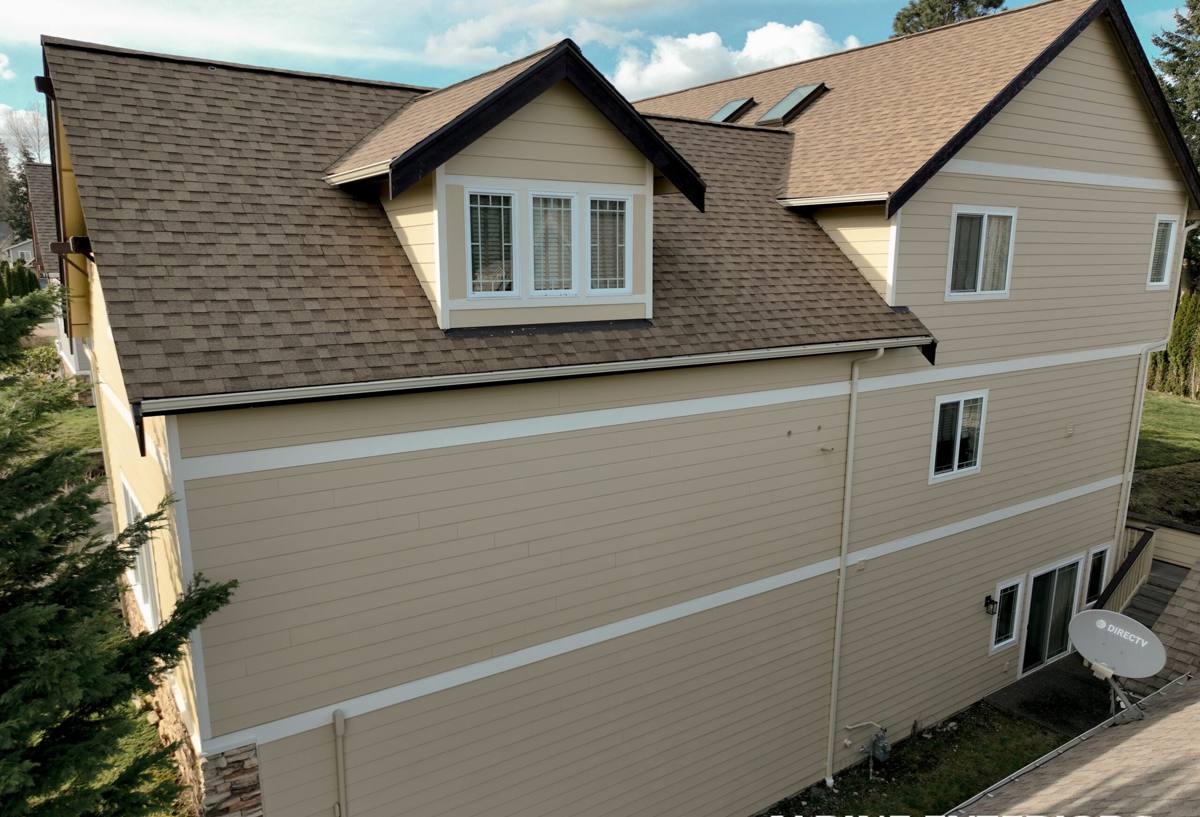
What Fairhaven's Climate Actually Demands From a Window Install
Three conditions drive almost every decision we make on a coastal Whatcom County build:
- Salt air accelerates corrosion on exposed metal — hinges, cranks, screen frames, and lower-grade fasteners degrade faster here than in inland Washington.
- Driving rain off the water doesn't just fall straight down; it gets pushed sideways into wall assemblies, which means flashing details that would pass in a calm climate can still let water in during a real storm.
- Moss and prolonged dampness mean anything that traps moisture against wood trim or sheathing — a bad sill pan, a missing weep path, caulk used in place of proper flashing — turns into rot on a shorter timeline than homeowners expect.
None of this means you need exotic materials. It means the install has to respect water management as the priority, every time, even on details that seem minor.
Why This Is Different From a Replacement Window Job
On a replacement, we're working inside an existing wall and often reusing the original flashing or working around what's already there. New construction is the opposite: the wall is open, the weather-resistive barrier isn't installed yet, and we control every layer of the water management system from the sheathing out. That's a real opportunity, but it also means there's no excuse for shortcuts — everything is visible and everything is our responsibility to get right the first time.
What a Correct New-Construction Install Actually Involves
A window that leaks in three years almost never fails because the window itself was bad. It fails because one of these steps got skipped or rushed:
Sill Pan Flashing
Every rough opening gets a sloped, sealed sill pan before the window ever goes in. This is the single most important detail on a coastal build — it gives any water that gets past the window a way out instead of a place to pool against the framing.
Weather-Resistive Barrier Integration
The house wrap or building paper has to be sequenced correctly around the opening — head flashing lapped over the WRB, side flashing lapped over the sill pan, and the WRB itself lapped over the top flange. Done out of order, water runs behind the barrier instead of over it.
Fastening and Shimming
Windows get shimmed square and plumb at every fastening point specified by the manufacturer, not just at the corners. A window that's slightly racked will bind, won't seal evenly, and puts stress on the frame that shows up as air and water infiltration later.
Insulation and Air Sealing at the Perimeter
The gap between the window frame and rough opening gets sealed with a low-expansion foam or backer rod and sealant — never packed tight with fiberglass, which does nothing to stop air movement and can actually hold moisture against the frame.
Exterior Trim and Final Sealant
Trim and sealant go on last, over cured flashing, with sealant used only where the manufacturer's instructions call for it — not as a substitute for flashing that wasn't installed correctly underneath.
Choosing the Right Window for a Salt-Air, High-Rain Site
Material choice matters more here than in a dry climate. Here's how the common options actually hold up under Fairhaven conditions:
| Material | Salt Air / Corrosion | Moisture Behavior | Maintenance |
|---|---|---|---|
| Vinyl | Excellent — no metal corrosion, won't pit or oxidize | Doesn't absorb moisture; performs consistently in damp conditions | Low — occasional cleaning, no refinishing |
| Fiberglass | Excellent — very stable, minimal expansion/contraction | Handles temperature and moisture swings well over time | Low to moderate |
| Wood-clad | Good on the clad exterior; interior wood needs protection from indoor humidity | Strong performer if flashed correctly, but any breach lets moisture into the wood core | Moderate — interior finish upkeep, exterior clad is low-maintenance |
| Aluminum | Fair — anodized finishes resist corrosion but hardware and fasteners need to be corrosion-rated | Conducts cold and can condense; less common in this application locally | Moderate |
We don't push one brand or material on every job. What we do insist on is matching hardware and fasteners to the environment — stainless or corrosion-resistant screws and cranks, not the standard-grade parts that ship as a builder's default in drier markets. That's a professional standard we hold on every coastal install, regardless of which window line the homeowner or builder chooses.
Our New-Construction Window Process
New construction usually means we're one trade among several on a job site, working on the builder's or general contractor's schedule. Here's how we keep that coordination clean:
- Plan review. We review window schedules and rough opening sizes against the architectural plans before the openings are even framed, catching sizing conflicts early.
- Rough opening check. Before installation day, we verify every opening is square, correctly sized, and properly sheathed.
- Sill pan and flashing installation. Done to manufacturer specs and matched to whatever WRB the builder has spec'd for the project.
- Window setting. Windows are set, shimmed, and fastened per manufacturer instructions at every required point.
- Flashing tie-in. Head and side flashing integrated with the WRB in proper shingle-lap sequence.
- Quality check before trim. We check operation, squareness, and seal integrity before siding or trim crews cover the work.
- Final trim and sealant. Exterior trim installed and sealed at the appropriate joints only.
We coordinate directly with the general contractor or builder so the sequencing lines up — window install has to happen at the right point relative to WRB and siding work, not before or after.
Energy Code, Egress, and Permitting in Whatcom County
New-construction windows in Washington State have to meet the Washington State Energy Code, which sets minimum U-factor requirements for the whole house's window package, not just individual units. On a coastal build, we also pay attention to solar heat gain coefficient (SHGC) — Fairhaven doesn't get brutal summer heat, but window orientation still affects comfort and heating costs through the winter.
Bedroom windows also have to meet egress requirements — minimum clear opening width, height, and area, plus a maximum sill height above the floor. This gets checked during framing inspection, so getting window selection right at the plan stage avoids a costly change order later. We work off the approved plans and window schedule, and we flag anything that looks like it won't pass inspection before it becomes a problem on install day.
What Drives Cost on a New-Construction Window Package
| Factor | Why It Matters |
|---|---|
| Number and size of openings | Larger openings and more units mean more material and labor, straightforwardly |
| Material (vinyl vs. fiberglass vs. wood-clad) | Fiberglass and wood-clad typically cost more upfront than vinyl but bring different maintenance and lifespan tradeoffs |
| Glazing package | Double vs. triple pane, and coatings for U-factor/SHGC performance, affect both price and long-term energy costs |
| Hardware and fastener grade | Corrosion-resistant hardware for salt-air exposure costs modestly more but avoids early hardware failure |
| Site access and scheduling | Coordinating around other trades on an active build site can affect labor efficiency |
| Special shapes or sizes | Custom or oversized units (large picture windows, angled tops) run above standard-size pricing |
We're not going to quote a number without seeing the plans — window packages vary too much for that to be honest. What we can tell you upfront is that we won't downgrade hardware or flashing components to hit a lower number; if a budget is tight, we'll tell you where the real tradeoffs are instead.
A Pre-Install Checklist We Walk Through on Every Fairhaven Job
- Rough openings confirmed square, level, and correctly sized against the window schedule
- Sheathing intact and properly fastened around each opening
- WRB type and lap sequence confirmed with the builder before flashing starts
- Sill pan flashing sloped and sealed at every opening, no exceptions
- Window hardware and fasteners confirmed as corrosion-resistant grade
- Egress-required bedroom windows checked against code minimums
- Shimming plan reviewed for each window per manufacturer specs
- Sequencing coordinated with siding/trim crews so flashing isn't covered before inspection
Why Hiring a Crew That Already Works Fairhaven Makes a Difference
Window installation isn't complicated in theory — the steps are documented by every manufacturer. What separates a job that holds up from one that doesn't is whether the crew treats those steps as non-negotiable on a site where the weather doesn't forgive mistakes. A crew that mostly works drier inland areas can get away with sloppier flashing habits for years before a problem shows up. On a Whatcom County coastal build, driving rain and a long wet season expose those shortcuts much faster.
We also know how to work alongside builders and general contractors on an active construction schedule — showing up at the right point in the sequence, communicating when something on site doesn't match the plans, and not holding up the next trade. That coordination is its own skill, separate from the window installation itself, and it's part of what makes a new-construction job go smoothly instead of turning into a scheduling headache.
If you're planning a new build in the Fairhaven area and want windows installed the right way from the start, we're happy to walk the plans with you and give you a straightforward, no-pressure estimate. Use the form below to get in touch.