 Ferndale
 Fairhaven's Roofs Carry a Different Kind of Load
Fairhaven sits close enough to the water that homes here deal with a combination most inland roofing guides never account for: salt-laden air coming off the bay, wind-driven rain that doesn't just fall straight down, and a moss season that runs longer than almost anywhere else in Whatcom County. None of these on their own is unusual for Western Washington. Together, on the same roof, year after year, they wear an asphalt shingle system faster than a standard install can handle if it wasn't built with that combination in mind.
We're a Ferndale-based crew, and Fairhaven is part of our regular service area. That matters more than it sounds like it should — a roof designed and installed with this specific mix of conditions in mind holds up differently than one installed off a generic spec sheet.
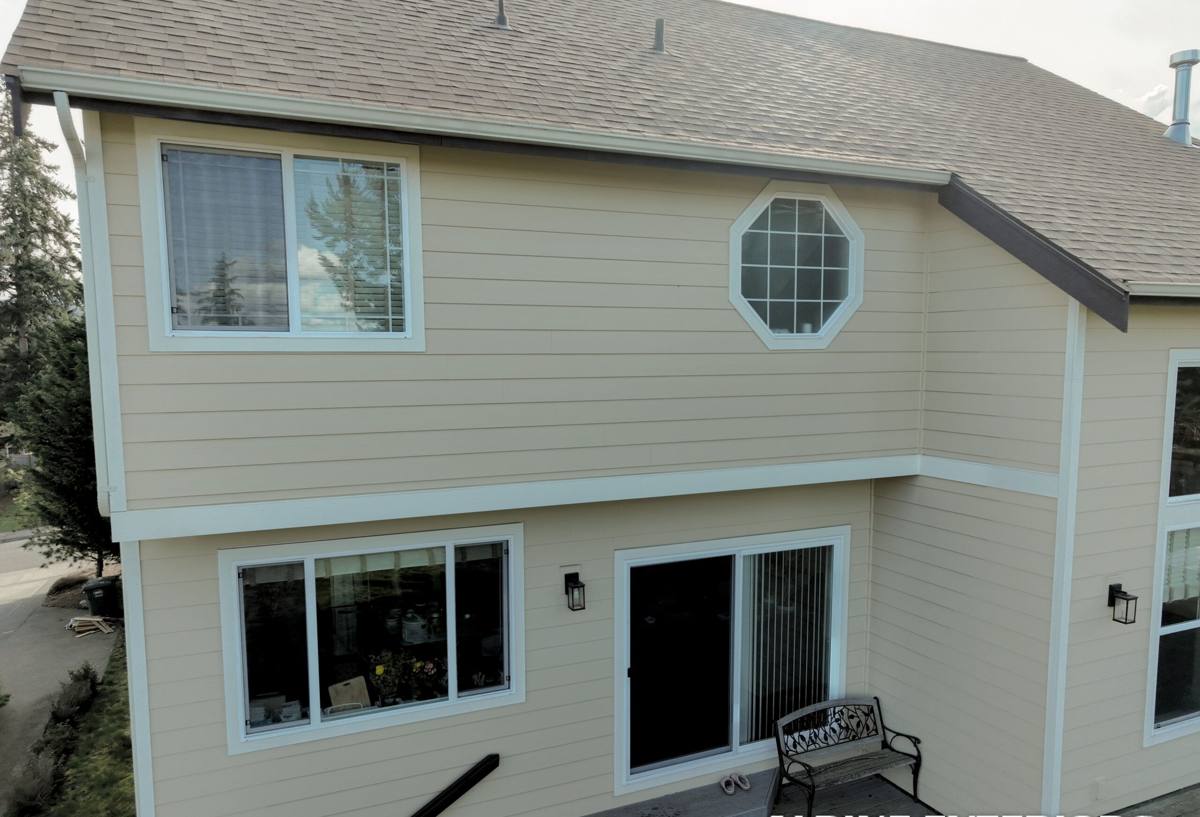
What Salt Air and Driving Rain Actually Do to a Shingle Roof
Salt air doesn't damage asphalt shingles directly the way it corrodes bare metal, but it accelerates wear on everything around the shingles that keeps a roof watertight — flashing, fasteners, vents, and drip edge. Salt carried on marine air settles on these components and speeds up oxidation, especially on lower-grade galvanized metal. Once flashing starts to degrade, water finds its way in at valleys, chimneys, and roof-to-wall transitions long before the shingles themselves show any wear.
Driving rain is the other half of the problem. When wind pushes rain sideways instead of letting it run straight off the roof, water gets forced up under shingle tabs and into laps that were never meant to see water from that angle. A roof that would shed water fine in a calm downpour can leak in a sideways storm if the underlayment, starter strip, and nail pattern weren't installed to account for wind-driven exposure.
- Flashing and fasteners need corrosion-resistant materials, not the cheapest galvanized option on the shelf
- Underlayment has to be a real water barrier at valleys, eaves, and penetrations — not just a formality
- Shingle nailing patterns matter more here than in calmer inland areas, since wind uplift is a real, recurring stress
Why Moss Season Matters More Here Than the Instructions Assume
Whatcom County's wet season stretches long, and Fairhaven's tree cover and proximity to moisture-heavy air give moss an unusually long window to establish itself on a roof. Moss isn't just cosmetic. Once it takes hold, it holds moisture against the shingle surface far longer than the shingle was designed to tolerate, and it works its way under tab edges as it grows, gradually lifting them. Left unchecked over a few seasons, that's granule loss, premature aging, and eventually leaks in spots that had nothing to do with the original installation quality.
The fix isn't just "clean it off when you notice it." It starts at installation, with shingle selection and roof design choices that make moss harder to establish in the first place, and it continues with realistic maintenance expectations for a property in this specific microclimate.
Where Moss Gets a Foothold First
North-facing slopes, shaded valleys, and anywhere debris collects — around chimneys, in valleys, behind vent stacks — are where moss starts. These are also the areas most homeowners can't see well from the ground, which is part of why moss damage often goes unnoticed until it's already affected the shingle underneath.
What a Correctly Installed Asphalt Shingle Roof Actually Includes
"Asphalt shingle roof" covers a wide range of actual installation quality. A roof that looks the same from the street can be built to very different standards underneath. For a Fairhaven home, we treat the following as non-negotiable, not upgrades:
- Ice-and-water shield or a comparable self-adhering membrane at eaves, valleys, and around all penetrations
- Synthetic underlayment across the full deck, not just felt paper, for a stronger secondary water barrier
- Corrosion-resistant flashing at every chimney, wall transition, and roof-to-roof intersection
- Proper nailing pattern and nail count matched to the shingle manufacturer's high-wind specification
- Balanced intake and exhaust ventilation, so moisture from inside the attic doesn't add to what's already coming from outside
- Starter strip and drip edge installed correctly at all eaves and rakes, not skipped to save material
Skipping any one of these doesn't necessarily show up as a problem in year one. It shows up in year five or eight, as a leak that seems to come from nowhere, when really it came from a shortcut taken at installation.
Choosing the Right Shingle for This Location
Shingle choice matters more in a salt-air, high-moisture location than it does further inland. Here's how the common tiers stack up for a Fairhaven roof specifically:
| Shingle Type | Wind Rating | Algae/Moss Resistance | Best Fit For |
|---|---|---|---|
| Standard 3-tab | Lower | None built in | Budget-driven projects, less wind/moisture exposure |
| Architectural (laminate) | Higher | Often available with algae-resistant granules | Most Fairhaven homes — best balance of durability and cost |
| Premium/designer laminate | Highest available | Algae-resistant granules standard | Homes with heavy shade, exposed wind, or longer ownership horizon |
We steer most Fairhaven homeowners toward architectural shingles with algae-resistant (copper-infused) granules as the practical baseline, not the upsell. In a moss-prone, salt-air environment, that granule technology and the added wind rating earn their cost difference back in fewer maintenance calls and a longer service life. Standard 3-tab shingles still have a place on budget-conscious projects, but we'll tell you honestly where that trade-off shows up over time rather than just quoting the cheaper number.
Our Process, Start to Finish
1. On-Site Assessment
We walk the roof, not just look at it from the driveway. That means checking the deck condition, existing ventilation, flashing condition, and any moss or algae staining that points to problem areas before we ever talk shingle brands.
2. Honest Scope and Written Estimate
You get a clear breakdown of what's included — underlayment type, flashing scope, ventilation work, tear-off and disposal — not a single lump number that hides what you're actually paying for.
3. Tear-Off and Deck Inspection
Once the old roofing is off, we inspect the deck itself. Any soft or water-damaged sheathing gets flagged and replaced before new material goes down — installing a new roof over a compromised deck just hides the problem for another buyer or another season.
4. Installation to Manufacturer Spec
Underlayment, flashing, starter strip, shingles, and ventilation all go in to the manufacturer's documented specification, which is also what keeps the material warranty valid. We don't shortcut nail counts or skip flashing details to save an hour.
5. Final Walkthrough
We walk the finished roof and the site cleanup with you before we consider the job done, and answer any questions about maintenance going forward.
Maintenance That Actually Fits This Climate
A well-installed roof still needs seasonal attention in Fairhaven's climate. This isn't about babying the roof — it's about a handful of realistic habits that keep moss and moisture from undoing good installation work.
| Task | Why It Matters Here | Rough Frequency |
|---|---|---|
| Clear debris from valleys and around penetrations | Trapped debris holds moisture and feeds moss growth | 1-2x per year |
| Check and clean gutters | Overflowing gutters push water back under eave edges | Fall and spring |
| Visual moss check on shaded slopes | Early moss is easy to manage; established moss lifts shingles | Annually |
| Flashing and vent inspection | Salt air accelerates corrosion on lower-grade metal | Every 2-3 years |
Why a Crew That Already Works Fairhaven Matters
Roofing contractors who mostly work inland don't always build in the extra flashing, underlayment, and nailing margin this coastal stretch of Whatcom County actually needs. It's not that they're careless — it's that generic specs are written for average conditions, and Fairhaven isn't average. Working here regularly means we've seen where roofs installed to a lower standard actually fail first: the north-facing valley that never fully dries out, the chimney flashing that was fine inland but corrodes faster this close to the water, the eave that needed a wider ice-and-water shield than the minimum code calls for.
That local pattern recognition is the difference between a roof that's technically up to code and one that's actually built for where it sits. As a Ferndale crew, we're not driving in from out of the area for this job and driving back out — we're working the same climate on our own roofs and our neighbors' roofs, and we stand behind what we install here.
Get a Straight Answer on Your Roof
If you're dealing with moss buildup, a leak that seems to come and go, or you're just planning ahead for a roof that's showing its age, we're happy to take a look and give you an honest read on where things stand. Reach out for a free, no-pressure estimate using the form below — no upsell pitch, just a clear picture of what your roof actually needs.