 Ferndale
 Composite Decking Built for Fairhaven's Coastal Conditions
Fairhaven sits close enough to the water that homeowners feel the difference every year: salt-laden air, driving rain off Bellingham Bay, and a moss season that seems to stretch longer with each passing winter. A deck in this neighborhood works harder than a deck fifteen miles inland, and it shows the wear faster if it isn't built with that reality in mind. We install composite decking across Whatcom County, but Fairhaven jobs get their own set of considerations — from how we flash the ledger board to which fastener hardware we trust near salt exposure.
This page covers what composite decking actually involves for a Fairhaven property: the climate stress the deck will face, what a correctly built substructure looks like underneath the boards, how our process runs from estimate to final walkthrough, and why local experience matters more than most homeowners expect when they're comparing bids.
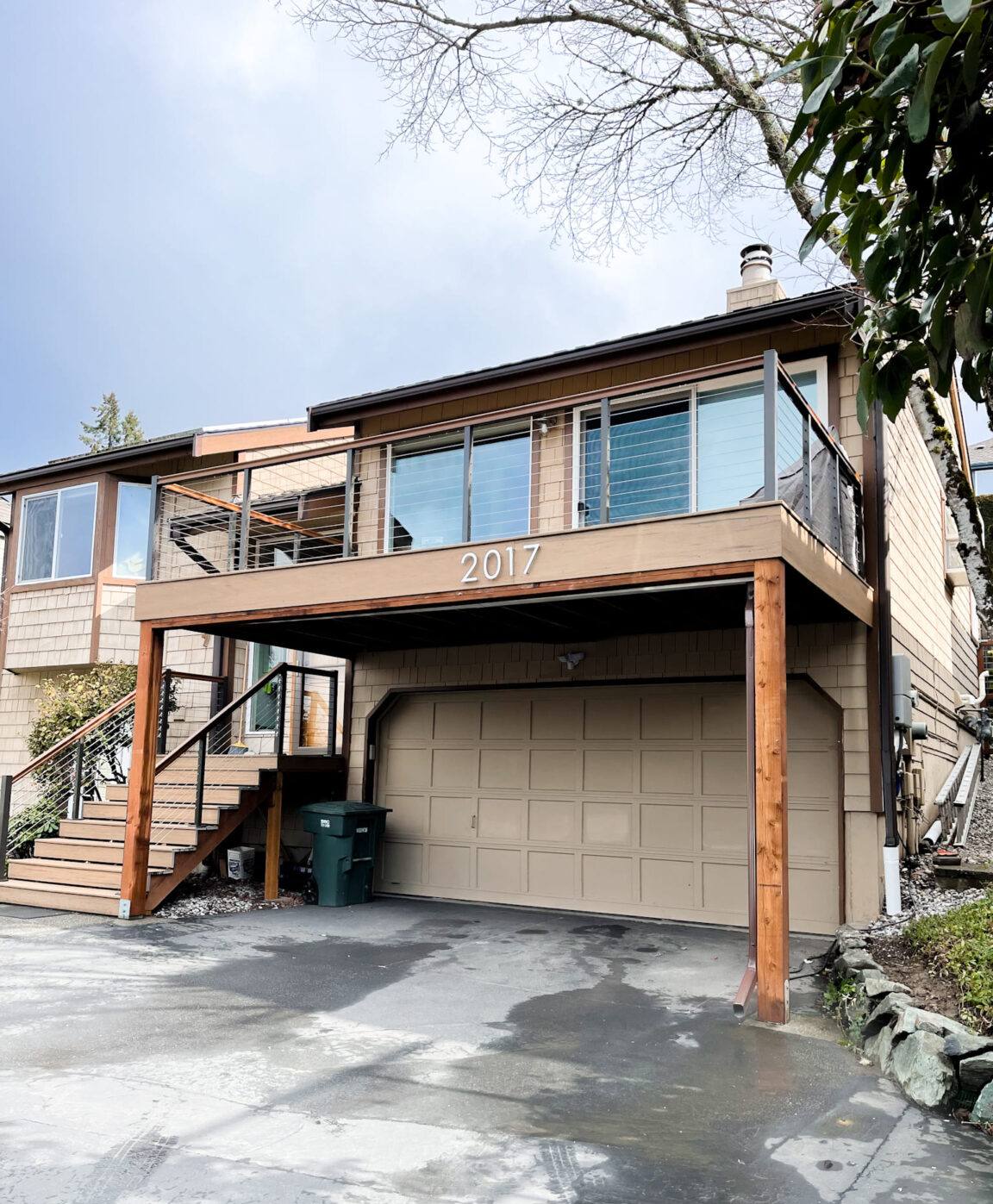
Why Fairhaven's Climate Is Tougher on Decks Than It Looks
Composite decking was developed to resist rot and splintering better than raw wood, and it does. But "low maintenance" doesn't mean "climate-proof," and Fairhaven's specific combination of conditions puts real stress on both the decking surface and the structure underneath it.
Salt Air and Metal Hardware
Proximity to the bay means airborne salt settles on every exterior surface, including deck fasteners, ledger flashing, and structural connectors. Standard zinc-coated hardware corrodes faster in this environment than it would twenty miles inland. We spec stainless or heavy-duty coated fasteners rated for coastal exposure on Fairhaven jobs, not because it's required everywhere, but because it's the right call here specifically.
Driving Rain and Water Management
Wind-driven rain off the water doesn't just fall straight down — it gets pushed sideways into ledger connections, under rail posts, and into any gap where flashing was skipped or done poorly. The composite boards themselves shed water fine. The failure point is almost always the framing, flashing, and fastener penetrations underneath, which is why we treat that hidden work as the real scope of the job, not an afterthought.
Moss, Algae, and Shade
Western Washington's moss season runs long, and composite surfaces — especially in shaded, north-facing, or tree-covered yards common around Fairhaven — can develop a green film if airflow underneath the deck is poor. Composite doesn't rot the way wood does, but a damp, shaded deck surface will still grow algae if water can't drain and dry between rains. Board spacing, joist height, and ventilation underneath the deck all affect how much maintenance a homeowner ends up doing.
What a Correctly Built Composite Deck Involves
The decking material gets most of the attention, but the quality of a composite deck comes almost entirely from what's underneath it. A good composite deck and a mediocre one can use the exact same boards and look identical the day they're finished — the difference shows up two or three winters later.
Ledger Attachment and Flashing
Where the deck ties into the house is the single most common failure point on any deck, composite or wood. Proper ledger flashing — installed correctly against the house's water-resistive barrier, not just caulked on top of siding — keeps water from tracking behind the ledger board and into the wall framing. This matters even more on a composite deck, because the boards themselves can hide a slow ledger leak for years before staining or damage shows up on the siding above.
Joist Spacing and Framing
Composite boards have manufacturer-specified joist spacing requirements, and that spacing often needs to be tighter than what's standard for wood decking — particularly on angled or diagonal board patterns, stairs, and around picture-frame borders. Framing that ignores these specs leads to boards that flex, bounce, or sag over time, regardless of how good the composite material itself is.
Fastening Method
Most composite systems today use hidden fastener clips rather than face-screwing, which gives a cleaner look and avoids the screw-hole water entry points that plagued early composite installations. Hidden fastener systems need to be installed exactly to spec — gapped correctly for expansion and contraction, which composite boards do more of than wood as temperatures shift.
Ventilation and Drainage Underneath
Low-clearance decks or decks built close to grade need attention paid to airflow and drainage underneath, especially given how much rain this area gets. Standing water or trapped moisture under the deck accelerates joist rot even when the composite surface above looks fine, and it's a major contributor to the moss and algae buildup homeowners notice on the surface.
Composite vs. Wood: The Honest Trade-offs for This Climate
We install both composite and wood decking, and the right choice depends on budget, maintenance appetite, and how the deck will be used. Here's how they actually compare for a Fairhaven property, without the sales pitch.
| Factor | Composite Decking | Wood Decking (cedar/treated) |
|---|---|---|
| Upfront cost | Higher material cost | Lower material cost |
| Maintenance | Occasional wash-down; no staining or sealing | Annual or biannual staining/sealing to prevent rot |
| Moisture resistance | Boards resist rot; framing underneath still needs proper flashing | Prone to rot and splintering without regular upkeep |
| Moss/algae in shade | Can develop surface film if poorly ventilated; cleans off | Traps moisture, accelerates rot in shaded areas |
| Salt air exposure | Board material unaffected; hardware still needs coastal-rated fasteners | Accelerates weathering and fastener corrosion similarly |
| Long-term cost | Lower over 15-20 years due to reduced upkeep | Lower upfront, higher cumulative maintenance cost |
For homeowners who want to spend weekends doing something other than sanding and re-staining a deck every year, composite is usually the better long-term value in this climate. For a tight budget or a smaller, low-use deck, wood can still be the sensible choice — we'll tell you honestly which one fits your situation rather than pushing whichever pays us more.
Our Process for a Fairhaven Composite Deck Project
Every deck we build follows the same core sequence, adjusted for the specific site conditions we find once we're actually looking at the property.
- On-site assessment: We look at the existing structure (if there is one), grade and drainage around the footprint, ledger attachment point, and any shade or moss patterns already visible on nearby surfaces.
- Design and material selection: Board pattern, color, and railing style get chosen alongside a straightforward conversation about budget and maintenance expectations.
- Permitting: Most deck projects in Whatcom County and the City of Bellingham (Fairhaven falls under Bellingham's jurisdiction) require a permit, especially for elevated structures or anything attached to the house. We handle that paperwork as part of the project.
- Demolition and site prep: Removal of any existing deck, grading adjustments, and footing layout.
- Framing and ledger installation: This is where the flashing, fastener grade, and joist spacing decisions described above actually get executed — the part of the job that determines how the deck holds up.
- Decking installation: Composite boards installed with the hidden fastener system, correct expansion gaps, and manufacturer-spec board spacing.
- Railing, stairs, and trim: Fascia boards, post sleeves, and railing systems installed to match the deck design.
- Final walkthrough: We go over the finished deck with you, including basic care — what little maintenance composite actually needs and what to watch for near the ledger and underneath the structure.
What to Ask Before Hiring Anyone for a Composite Deck
Composite decking is a big enough investment that it's worth vetting a contractor properly, not just comparing bottom-line numbers. A few questions separate a crew that builds decks correctly from one that just installs boards.
- Do they pull permits, or do they suggest skipping it?
- Can they explain their ledger flashing method without hesitating?
- Do they follow the manufacturer's specific joist spacing and fastener requirements for the composite brand being installed, or use generic wood-deck spacing?
- Are they using coastal-rated hardware if the property is near the water, or standard fasteners regardless of location?
- Do they carry manufacturer certification or training for the composite product line, which typically affects warranty coverage?
- Will the quote in writing specify board brand, fastening method, and framing material — or is it vague on the details that actually matter?
Maintenance: What Fairhaven Homeowners Actually Need to Do
One of the real advantages of composite decking is how little upkeep it needs compared to wood — but "little" isn't "none," particularly in a wet, salt-air, shaded environment.
Routine Care
A seasonal rinse with a hose or soft-bristle brush removes pollen, dust, and early moss growth before it sets in. In heavily shaded yards, this may need to happen more than once during the wet months.
Moss and Algae Spots
If green film develops in shaded corners, a composite-safe cleaner (never a pressure washer on high pressure, which can damage the board surface) handles it without harming the material. Improving airflow underneath the deck reduces how often this is needed.
Hardware Checks
An occasional visual check of railing posts and stair connections for corrosion or looseness — especially in the first couple years — catches hardware issues before they become structural ones. This is more relevant in Fairhaven's salt-air exposure than it would be for a deck further from the water.
What You Won't Need to Do
No annual staining, no sealing, no sanding down splintered boards. That's the trade-off for the higher upfront material cost — the maintenance burden shifts almost entirely away from the homeowner.
Why Local Experience Matters for This Job
A composite deck built to a generic spec sheet will hold up fine in a dry inland climate. Fairhaven isn't that climate. A crew that already works this neighborhood knows which ledger details need extra attention because of wind-driven rain, which hardware grade actually holds up against salt air over years rather than months, and how local shade and moisture patterns affect where moss shows up first. That's the difference between a deck that needs real attention at year five and one that's still solid at year fifteen.
We're a Ferndale-based crew that works Whatcom County regularly, including Fairhaven and the rest of the Bellingham area, so these aren't abstract concerns — they're what we build around on every project here.
Get a Free Estimate for Your Fairhaven Deck
If you're considering a composite deck for your Fairhaven property, we're happy to walk the site, talk through board options and budget, and give you a straightforward, no-pressure estimate. Use the form below to get started.