 Ferndale
 Roofing in Fairhaven Isn't the Same Job as Roofing Inland
Fairhaven sits close enough to the water that its roofs live a different life than a roof ten miles inland in Whatcom County. Salt-laden air moves in off the bay, wind-driven rain comes at roofs sideways instead of straight down, and the tree cover that gives the neighborhood its character also means shade, damp debris, and a moss season that can run most of the year. None of that makes a roof here doomed to fail early — but it does mean the installation has to account for conditions a generic roofing job in a drier climate wouldn't need to think about.
When we install a new roof in Fairhaven, we're not just putting shingles or panels over plywood. We're building an assembly meant to shed constant moisture, resist corrosion from salt exposure, and stay ventilated enough that moss and mold don't get a foothold in the first place. That's the whole focus of this page: what a correctly installed new roof looks like for a Fairhaven home, and why the details matter more here than they would somewhere drier.
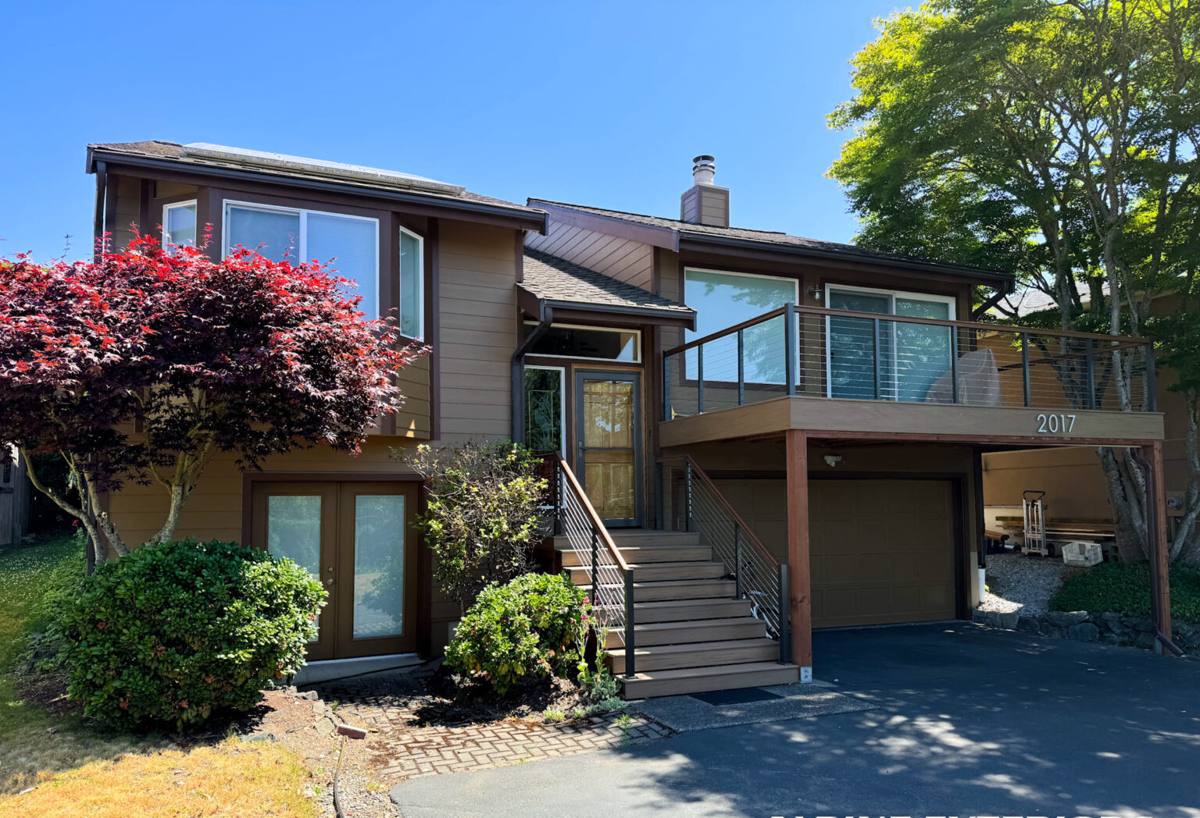
What Fairhaven's Climate Actually Does to a Roof
Salt Air and Corrosion
Proximity to salt water accelerates corrosion on any exposed metal — flashing, fasteners, vents, and drip edge. Standard fasteners that would hold up fine inland can start rusting and staining a roof within a few years near the water. This is one of the most common shortcuts we see on older or poorly specified roofs in coastal-adjacent neighborhoods: builders used whatever hardware was on the truck instead of hardware rated for the environment.
Driving Rain
Wind off the water doesn't just drop rain straight down — it pushes it sideways and, in gusts, upward under eaves and around penetrations. That means underlayment coverage, flashing laps, and the sealing details around chimneys, skylights, and vent pipes carry more of the waterproofing burden than they would in a calmer climate. A roof that would be "good enough" in a still, dry region can leak here if those details are rushed.
Moss and Shade
Fairhaven's tree cover is part of what makes it a desirable place to live, but shaded, damp roof surfaces are exactly what moss needs to establish. Moss holds moisture against the roofing material, works into seams and granule surfaces, and over time can lift shingle edges and hold water where it shouldn't sit. A roof installed without moss-resistant strategy in a shaded Fairhaven lot will need moss treatment or removal within a few years of install, sometimes sooner.
What a Correct New Roof Installation Includes Here
A proper install isn't just laying material — it's a stack of decisions, each one tuned to the site conditions. For a Fairhaven home, here's what we build into the job:
- Deck inspection and repair — every roof starts with an honest look at the sheathing underneath. Soft, delaminated, or water-stained plywood gets replaced before anything new goes down, not patched over.
- Ice-and-water shield at vulnerable points — valleys, eaves, and penetrations get self-adhering waterproof membrane, not just felt, because those are the spots driving rain and moss-related moisture find first.
- Corrosion-resistant fasteners and flashing — given the salt exposure this close to the water, we spec hardware rated to hold up rather than the cheapest option on the shelf.
- Balanced attic ventilation — intake at the eaves, exhaust at the ridge, sized to the attic volume. Poor ventilation traps moisture, which speeds up rot and gives moss and mold exactly the damp environment they need.
- Proper overlap and nailing pattern — installed to the manufacturer's wind and rain exposure specifications, not a generic pattern that ignores local wind-driven rain.
- Clean, sealed penetrations — every pipe boot, vent, and chimney flashing detailed so wind-driven rain can't find a way in around it.
Choosing the Right Roofing Material for a Fairhaven Home
There's no single "best" roofing material — the right choice depends on the home's roof pitch, budget, shade exposure, and how the owner wants to handle long-term maintenance. Here's how the common options stack up for a coastal-adjacent, shaded lot like much of Fairhaven:
| Material | Moss/Moisture Behavior | Salt Air Durability | Maintenance |
|---|---|---|---|
| Architectural asphalt shingle | Prone to moss in heavy shade without algae-resistant granules; manageable with periodic cleaning | Good with corrosion-resistant flashing and fasteners | Moderate — periodic moss/debris removal recommended |
| Standing seam metal | Sheds moss better due to smooth, steep-shedding surface | Requires coated or marine-grade fasteners near the water; otherwise very durable | Low — occasional inspection of fasteners and seams |
| Composite/synthetic shingle | Resists moisture absorption well; some products include algae resistance | Good, depends on flashing details | Low to moderate |
| Cedar shake | High moss risk in shade without diligent maintenance; needs breathable installation | Requires careful metal detailing to avoid staining and corrosion | High — regular treatment and inspection needed |
We'll walk through these trade-offs honestly during an estimate rather than pushing whatever has the best margin. For a heavily shaded Fairhaven lot, we're often steering homeowners toward algae-resistant shingle products or metal specifically because of how much less moss maintenance they demand over the life of the roof.
Our Installation Process
1. On-Site Assessment
We walk the roof, check the attic for existing ventilation and moisture issues, and look at how the home sits relative to shade, wind exposure, and water runoff. This tells us what the deck condition likely is and what ventilation or moisture problems we'll need to solve, not just what material the homeowner has in mind.
2. Written Scope and Estimate
You get a clear breakdown of what's being replaced, what materials are specified, and why — including any deck repair contingencies, since we won't know the exact extent of deck damage until the old roofing is off.
3. Tear-Off and Deck Inspection
Old roofing comes off, the deck gets inspected in full daylight, and any soft or damaged sheathing is flagged and replaced. This is the point where hidden moisture damage from years of moss or leaks typically shows up.
4. Waterproofing Layer
Ice-and-water membrane goes down at eaves, valleys, and penetrations, followed by synthetic underlayment across the full deck.
5. Ventilation Correction
If the attic ventilation is undersized or unbalanced — common in older Fairhaven homes — we correct intake and exhaust before the new roofing goes on. Covering up a ventilation problem with new shingles just hides it for a few years.
6. Roofing Installation
Material goes on per manufacturer spec, with corrosion-resistant fasteners and flashing throughout, especially at chimneys, skylights, and any low-slope transitions where driving rain is most likely to find a gap.
7. Final Walkthrough
We review the finished roof with the homeowner, cover care and moss-prevention basics specific to a shaded lot, and go over the warranty coverage in plain terms.
Signs a Fairhaven Roof Needs Replacing, Not Just Repairing
Not every roof problem near the water calls for full replacement, but there's a point where patching stops being cost-effective. Watch for:
- Granule loss heavy enough that shingles look bald or patchy in sun-exposed areas
- Moss buildup that's lifted shingle edges rather than just sitting on the surface
- Soft spots or visible sagging when walking the attic or looking at the roofline from the ground
- Rust staining streaking down from flashing or fasteners — a sign salt-air corrosion has already started
- Daylight visible through the roof deck from inside the attic
- Interior water stains on ceilings, especially near chimneys, skylights, or valleys
- A roof approaching or past the manufacturer's rated lifespan, especially if it was never properly ventilated
If you're only seeing one or two of these and the roof is otherwise sound, a repair or targeted maintenance visit may be the more honest recommendation — we'll tell you that instead of upselling a full tear-off you don't need yet.
Why Local Experience in Fairhaven Matters
A roofing crew that mostly works inland, drier parts of Whatcom County can still do competent work, but they may not default to the corrosion-resistant hardware, moss-conscious ventilation planning, or driving-rain flashing details that a coastal-adjacent neighborhood like Fairhaven needs as a baseline, not an upgrade. We work these conditions regularly, so those choices are part of how we scope every Fairhaven roof from the start — not an afterthought after a callback.
Local experience also means knowing what tends to fail first on homes in this specific setting: which flashing details get missed, which shaded rooflines need extra ventilation attention, and which fastener choices hold up versus rust out within a few years. That's knowledge that only comes from working this exact climate over time.
Maintenance After Installation
A well-installed roof in Fairhaven still benefits from periodic attention given the moss and moisture load it's under:
| Task | Frequency | Why It Matters Here |
|---|---|---|
| Moss removal / treatment | Annually, or every 1-2 years for algae-resistant products | Prevents moss from lifting shingle edges and holding moisture against the roof |
| Gutter and downspout clearing | Twice a year, more with heavy tree cover | Clogged gutters back water up under eaves during driving rain |
| Flashing and fastener check | Every 1-2 years | Catches early corrosion before it becomes a leak point |
| Attic ventilation check | Every few years or after any insulation work | Confirms intake and exhaust are still balanced and unobstructed |
We're happy to handle these as standalone maintenance visits even outside of an installation project — a lot of roof failures we see near the water are maintenance failures more than material failures.
Get a Straightforward Estimate
If your Fairhaven home's roof is showing its age, or you just want an honest read on where it stands, we'll come take a look and give you a clear, no-pressure estimate — what we'd do, why, and what it would cost. Use the form below to get started.