 Ferndale
 Siding Replacement in Fairhaven: A Different Job Than New Construction
Replacing siding on an existing home in the Fairhaven area is a different project than putting siding on new construction, even though the finished wall can look similar from the street. On a replacement, you're not just choosing a product and installing it — you're dealing with whatever the old siding left behind: years of wall assembly history, hidden moisture patterns, and a substrate that may or may not still be sound. Fairhaven's location near Ferndale, in Whatcom County, adds its own layer to that equation. Salt-tinged marine air, rain that gets driven sideways by wind more often than it falls straight down, and a moss season that can stretch across most of the year on shaded, tree-covered lots all shape how siding ages here and, eventually, why it needs to come off.
This page focuses specifically on siding replacement for Fairhaven-area homes: how to tell you actually need it, what a correct replacement project involves, and why the crew doing the work matters as much as the material going on the wall.
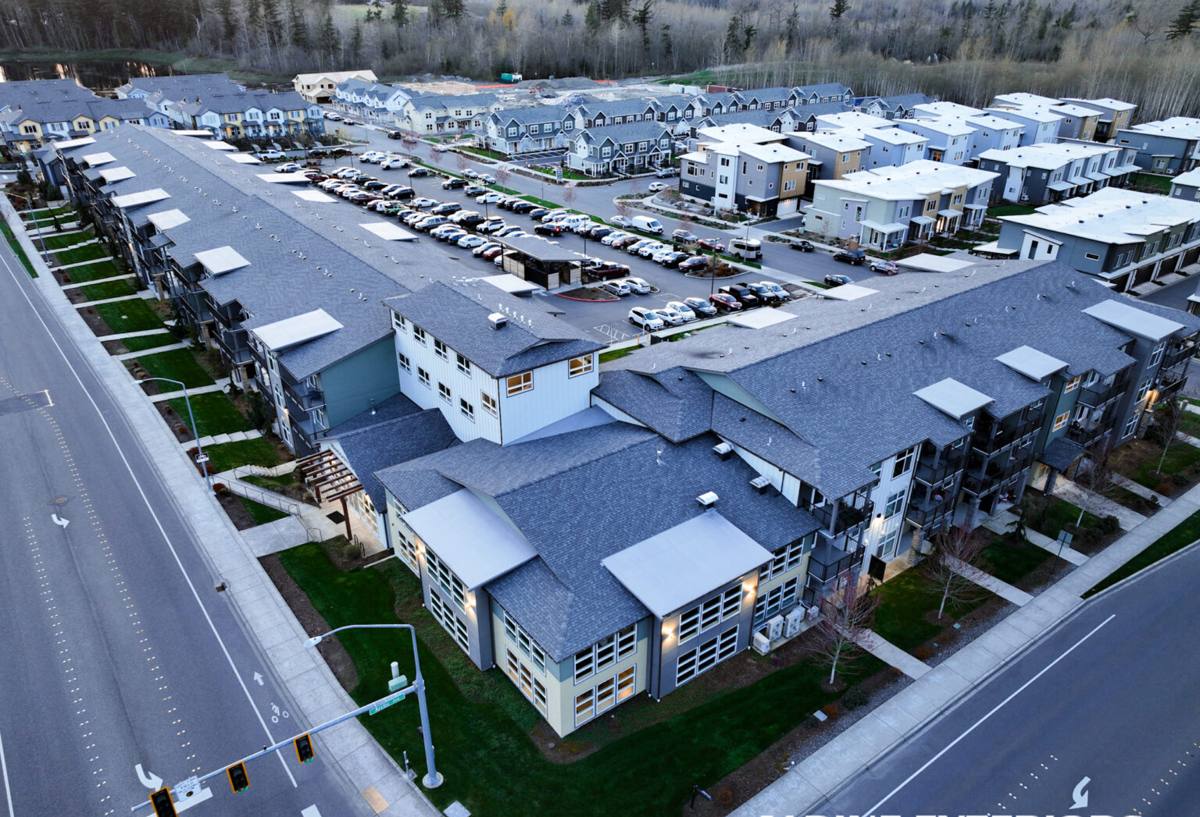
What Pushes Siding in This Area Toward Replacement
Sustained Marine Moisture
Homes in and around Fairhaven sit close enough to open water that they take on a steady drift of moisture-laden air most of the year, not just during storms. That kind of exposure doesn't announce itself. It works quietly on fasteners, seams, and lower-grade finishes, and by the time it's visible from the curb — rust bleed at nail heads, a chalky or faded finish, caulking that's cracked and pulled away — the damage underneath is usually further along than it looks.
Wind-Driven Rain
Rain near the water doesn't just fall, it gets pushed. Wind-driven rain finds lap joints, trim seams, and wall penetrations from angles that older siding, or siding installed to a lower standard, was never really built to handle. This is one of the more common reasons we find water damage concentrated on specific wall faces rather than spread evenly across a house.
A Long Moss and Mildew Season
Mild temperatures, consistent dampness, and mature tree cover common in this part of Whatcom County add up to extended moss and mildew growth, especially on north-facing walls and anywhere shade keeps a surface from drying out between rain events. Porous or moisture-retentive siding becomes a growth surface over time, and once moss and mildew are established, they hold additional moisture against the wall, accelerating whatever damage is already underway.
Age and Original Material
A lot of the siding reaching the end of its service life in this area was never a bad choice at the time — it just wasn't built for decades of this specific combination of salt air, wind-driven rain, and shade. Older wood-based sidings and lower-grade composites tend to show their age here faster than the same products would in a drier, calmer climate.
Signs You're Looking at Replacement, Not Just Repair
- Soft, spongy, or crumbling siding, especially near the base of the wall or around window and door trim
- Moss or dark staining that returns quickly after cleaning, particularly on shaded or north-facing walls
- Widespread cracking, cupping, or warping across multiple courses rather than one isolated board
- Paint that's peeling, bubbling, or chalking over large sections rather than a single spot
- Visible gaps at seams, corners, or trim joints in more than one area of the house
- Rust staining around fasteners across the wall, not just one or two spots
- A musty smell near exterior walls or rising heating bills that suggest the wall assembly is no longer sealing properly
One or two of these in a contained area often points to a repair. Several of them spread across the house, or any sign that moisture has been tracking behind the wall for a while, usually means the smarter move is a full replacement rather than a series of patches that keep chasing the same underlying problem.
Why We Replace Old Siding With James Hardie — and Only James Hardie
When a Fairhaven-area homeowner is replacing siding, they're making a decision that should hold up for decades, not just look good on move-in day. We install James Hardie fiber cement siding exclusively, and we don't offer LP SmartSide, vinyl, Cemplank, Allura, primed spruce, or cedar as alternatives. Those are legitimate products and other contractors install them competently, but in a climate this consistently wet and salt-exposed, we made a professional call to stand behind one system we understand completely rather than offer options whose trade-offs we'd end up explaining away on a callback later.
- Non-combustible core: fiber cement doesn't feed a fire the way wood-based products can, which matters for household safety.
- Factory-applied ColorPlus finish: the color coat cures under controlled factory conditions rather than being brushed on at the job site, which gives it real resistance to fading, chalking, and moisture intrusion over time.
- Climate-engineered HZ5 formulation: built specifically for regions with heavy sustained moisture and freeze-thaw cycling, a closer match to coastal Whatcom County than a generic national spec.
- Dimensional stability: fiber cement doesn't swell, cup, or warp the way engineered wood can after repeated wet-season moisture cycles — a direct answer to the wall movement we see driving a lot of replacement calls in the first place.
- Strong transferable warranty: a meaningful backstop for a homeowner who wants this decision to be the last siding decision they make on this house for a long time, provided the installation follows spec.
Engineered wood products like LP SmartSide can perform reasonably in drier regions, but their resin-treated strand core is more sensitive to moisture intrusion at cut edges and fastener penetrations than fiber cement in a marine environment. Vinyl is affordable and low-maintenance in general, but it can warp under direct sun, crack in a cold snap, and trap moisture behind the panel if house wrap and flashing weren't installed with real care. Cedar and primed spruce look great, but they need ongoing painting or sealing to keep moisture out, and in a climate that stays wet this much of the year, that maintenance schedule tends to slip — which is exactly the pattern that leads to another replacement project sooner than the material's rated lifespan would suggest.
What a Correct Siding Replacement Actually Involves
The material is only part of a replacement job. What happens underneath it determines whether the new siding lasts. A correct replacement isn't just pulling off the old siding and nailing up new boards — it's an opportunity to fix whatever the old siding was hiding and to get the water-management details right the first time.
- Walk-through and assessment: we look at the whole exterior, not just the siding — trim, flashing, roofline intersections, and grading, since siding problems often start somewhere else.
- Tear-off: removing the existing siding fully rather than installing over it, so hidden moisture damage doesn't stay sealed behind a new wall.
- Substrate inspection and repair: checking sheathing and framing for rot or soft spots and repairing anything compromised before new material goes on.
- House wrap and flashing: installing a continuous water-management layer with flashing integrated at every window, door, and penetration — this is the step that actually keeps wind-driven rain out, more than the siding itself.
- Fastening to spec: correct nailing patterns and clearance from grade and roofline, which affects both performance and warranty coverage.
- Trim, joints, and sealing: lapping and sealing joints correctly so seams don't become the entry point the old siding's seams were.
- Final inspection and cleanup: confirming the finished wall meets spec before we consider the job done.
A rushed or corner-cut installation is one of the most common reasons a good product ends up with a poor reputation on paper. We treat the installation detail with the same seriousness as the material choice, because in this climate, the flashing and house wrap behind the siding do as much of the real work as the siding boards themselves.
Repair Versus Replacement: How We Actually Decide
| Situation | Usually Points To | Why |
|---|---|---|
| Isolated impact damage on one or two boards | Repair | Can be replaced and matched into existing Hardie siding without disturbing the rest of the wall |
| Failure concentrated around one window or door | Repair, with flashing check | Often a localized flashing issue rather than a wall-wide material failure |
| Moss, staining, or soft spots on multiple wall faces | Full replacement | Suggests moisture has been working on the wall broadly, not in one spot |
| Siding at or past its expected service life | Full replacement | Patching an aging material usually just delays a larger project by a year or two |
| Evidence of moisture behind the wall assembly | Full replacement | Sealing new siding over an active moisture problem hides it instead of fixing it |
We'll walk the property and give you a straight answer about which column your house is actually in, rather than defaulting to the more expensive option out of habit.
Cost Factors in a Fairhaven-Area Siding Replacement
| Factor | What It Affects | Why It Matters Here |
|---|---|---|
| Substrate condition | Repair costs before new siding goes on | Years of trapped moisture behind failing siding near the water can rot sheathing before it's ever visible from outside |
| Wall complexity and trim detail | Total material and labor | More roofline intersections and trim seams mean more places wind-driven rain can find a way in if not detailed correctly |
| Site access and slope | Labor time and equipment needs | Sloped or tree-covered lots common in the area can add staging and setup time |
| Siding profile and color | Material cost and finish longevity | ColorPlus factory finishes outlast field-applied paint against salt air and UV exposure |
| Full tear-off vs. partial replacement | Scope and substrate access | Tear-off exposes and lets us fix hidden moisture damage that's common under older siding this close to the coast |
Real numbers depend on the specific house, which is why we walk the property in person before quoting instead of pricing off square footage alone.
What to Check Before Hiring Anyone for a Siding Replacement
- Confirm an active Washington state contractor license and current insurance
- Ask exactly which siding brand and product line they install, and why they chose it
- Ask how they handle hidden substrate damage discovered during tear-off, and how that affects the price
- Get a written scope that specifies flashing and house wrap details, not just "new siding installed"
- Ask whether they do full tear-off as standard practice or install over existing siding
- Ask how they handle warranty registration once the job is complete
Why a Crew That Already Works Fairhaven Matters
A crew that regularly works this stretch of Whatcom County has seen how salt air, wind-driven rain, and moss actually behave on real houses over a full year, not just how a product performs on a spec sheet. That shows up in practical decisions on install day: where extra flashing attention pays off, which wall orientations stay damp longest, and which details are worth the extra time so a homeowner isn't dealing with a callback two winters later. It also means we're not guessing at what "normal" looks like for a Fairhaven-area house — we've already seen what these homes look like ten and twenty years after a siding job, both done right and done wrong, and we build that experience into every replacement we quote.
If your home near Fairhaven or Ferndale has siding that's reached the end of its service life, or you just want an honest opinion on whether you're looking at a repair or a full replacement, we're glad to take a look. Reach out using the form below to schedule a free, no-pressure estimate.