 Ferndale
 Window Installation Built for Marietta's Waterfront Exposure
Marietta sits along Bellingham Bay between Ferndale and Bellingham, and that shoreline position puts local homes under a heavier version of the weather the rest of Whatcom County deals with. Windows are one of the first places that exposure shows up. A window that's failing here usually isn't failing because the glass wore out — it's failing because the flashing, sealant, or frame material wasn't specified or installed for salt air, wind-driven rain, and a moss season that runs longer than it does a few miles inland. We install windows in Marietta regularly, and the way we approach the job reflects what actually happens to a window opening on a property this close to the water.
This page covers window installation specifically for Marietta — what the local climate does to windows, what a correct installation actually involves, and how our process works from first visit to finished trim.
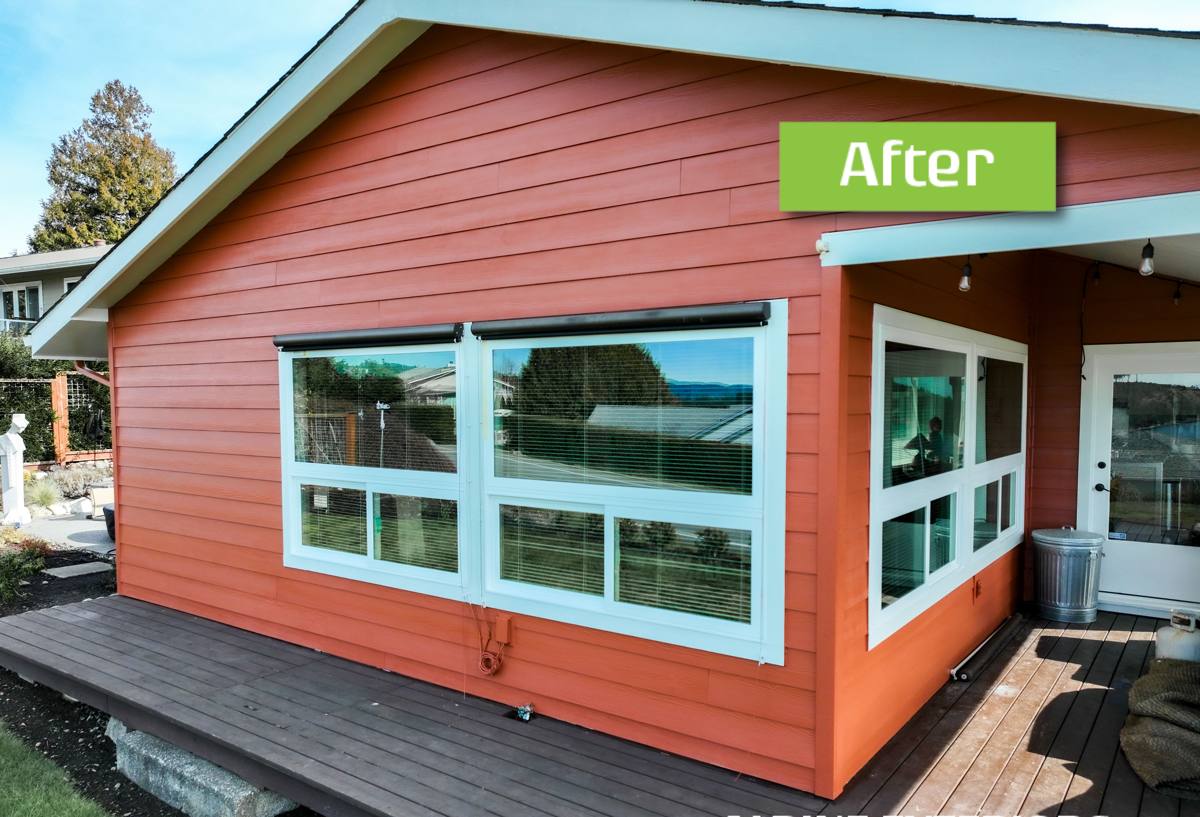
What Bellingham Bay Proximity Does to Windows
Salt Air and Hardware Corrosion
Homes close to open water pick up more salt-laden moisture in the air than homes set back further inland, and that affects window performance in ways that aren't always obvious right away. Salt air accelerates corrosion on lower-grade fasteners, hinges, balance hardware, and screen frames, and it breaks down cheaper finishes faster than a drier climate would. A window that would give a decade of trouble-free service in a sheltered inland yard can start showing rust streaks, stiff hardware, or a chalky finish years ahead of schedule on a Marietta lot facing the bay.
Wind-Driven Rain
Open water exposure means less windbreak, and less windbreak means storms push rain sideways into a wall rather than letting gravity handle it. Wind-driven rain finds gaps that would never get tested somewhere calmer — around window flanges, at the head flashing, along the sill. A window installation that looks fine on a dry day can still leak within a season or two if the flashing sequence wasn't built to shed water that's arriving from the side and, at times, from underneath the sill on a hard gust.
A Long Moss and Mildew Season
The shade, dampness, and mild temperatures common to this stretch of the county keep moss and mildew active for most of the year, especially on north-facing walls and shaded elevations. Around windows, that shows up as dark staining on trim and sills, and sustained organic growth holds moisture against the wall assembly right where a window opening is already one of the more vulnerable points in the exterior. It's a slow problem, not a dramatic one, which is part of why it goes unaddressed until trim starts softening.
Wind Loading in Winter Storms
Waterfront and near-waterfront lots in Marietta also see stronger, more sustained wind during winter storm systems than homes tucked further from the bay. That matters for larger window units in particular, since more glass area means more surface for wind to push against, and it's part of why we pay close attention to how a window is anchored into the framing, not just how it's flashed.
What a Correct Window Installation Involves
Most window failures we get called out to inspect in this area trace back to installation detail, not the window unit itself. Getting it right involves several steps that are easy to shortcut and hard to fix later without pulling the window back out.
Opening Assessment
Before anything is ordered, we check the actual condition of the rough opening — square, level, and whether the existing sheathing, framing, or flashing shows signs of past water intrusion. Marietta has a real mix of housing stock, from older homes with original wood-frame openings to newer construction, and each comes with its own set of things worth checking before a new window goes in.
Removal Without Hidden Damage
Pulling an old window is also when hidden problems usually surface — soft sheathing, rotted framing at the sill, or flashing that was never installed correctly in the first place. On a bay-facing or otherwise exposed Marietta property, we treat this step as a checkpoint, not just demolition, since water damage found here needs to be repaired before the new unit goes in rather than sealed over.
Flashing Sequence
This is the step that decides whether a window installation holds up on a wind-exposed lot. Flashing has to be layered correctly — sill pan first, then side flashing, then head flashing — so that any water that gets past the window sheds outward and down rather than pooling or working its way behind the siding. On a home this close to the water, we don't treat this as optional or something caulk can make up for later.
Setting, Shimming, and Anchoring
The window has to sit plumb, level, and square in the opening, shimmed correctly so it isn't relying on the frame alone to hold its shape, and anchored with fasteners rated for the wind exposure the property actually sees. A window that's slightly out of square won't operate correctly and won't seal evenly, which shows up as drafts or water intrusion at one corner before anywhere else.
Insulation and Air Sealing
The gap between the window frame and the rough opening needs to be insulated and air-sealed correctly — not overpacked with expanding foam, which can bow a frame out of square, and not left with gaps that undercut the window's energy performance. This step also affects comfort and heating costs more than most homeowners expect.
Trim and Exterior Finish
Exterior trim has to integrate cleanly with the siding and be detailed so water sheds away from the window rather than collecting at the trim joints. On older Marietta homes especially, this is also where trim condition around the existing opening often needs some repair before the finish work is complete.
Full-Frame Replacement vs. Insert Replacement
One of the first decisions on a Marietta window project is whether the job calls for a full-frame replacement or an insert, sometimes called a pocket replacement. The right answer depends on the condition of the existing frame and opening, not just on what's faster or cheaper.
| Factor | Insert (Pocket) Replacement | Full-Frame Replacement |
|---|---|---|
| What it involves | New window installed inside the existing frame, which stays in place | Old window and frame removed down to the rough opening |
| Best used when | Existing frame is sound, square, and free of water damage | Frame or sheathing shows rot, past leaks, or is out of square |
| Access to flashing | Limited — existing flashing largely stays in place | Full access to re-flash the opening correctly |
| Glass area | Slightly reduced, since the new frame sits inside the old one | Can match or increase original glass area |
| Labor and cost | Generally lower | Higher, but addresses hidden problems at the same time |
| Best fit for Marietta homes | Newer construction with sound, undamaged original frames | Older waterfront-exposed homes, or any opening with signs of past water intrusion |
Given how much wind-driven rain and salt exposure Marietta properties see compared to more sheltered inland lots, we check for hidden water damage before recommending an insert. If the frame or sheathing has already been compromised, an insert just seals a problem back up inside the wall instead of fixing it.
Frame Material Considerations for This Climate
Frame material affects how well a window holds up to sustained salt air and moisture, and we'll walk through the honest trade-offs for your specific property rather than defaulting to whatever installs fastest.
- Vinyl: Reasonable cost and low maintenance, though quality varies widely between manufacturers — cheaper vinyl can become brittle over time under sustained UV and salt exposure.
- Fiberglass: Holds dimensional stability well under temperature swings and moisture cycling, with strong resistance to the kind of sustained coastal exposure a bay-facing Marietta home sees.
- Wood: Offers a traditional look that suits some of the older homes in this area, but requires real upkeep — repainting, sealing, and monitoring for moisture — to hold up against this much salt air and rain.
- Wood-clad (wood interior, low-maintenance exterior cladding): A middle path when the interior look matters and the exterior needs to shed water and salt with less upkeep than bare wood.
- Aluminum: Strong and slim-profile, but a poor thermal performer and prone to condensation issues in this climate unless it's a thermally broken product, which adds cost.
We don't push one frame material on every job. The right call depends on the home's age, exposure, and how much upkeep the owner actually wants to take on, and we'll lay out that trade-off honestly before you decide.
Glass Packages Worth Understanding
Frame material gets most of the attention, but the glass package matters just as much for comfort and performance on a Marietta home.
Low-E Coatings
Low-emissivity coatings reduce heat transfer through the glass, which helps keep a home more comfortable through the region's mild but persistently damp winters without needing a specialty glass package.
Gas Fill
Argon or krypton gas fill between panes improves insulating performance over plain air fill, and it's a standard upgrade on most quality double-pane units today rather than a rare specialty option.
Impact and Laminated Glass
Laminated glass adds resistance to wind-blown debris impact, which is worth discussing for larger picture windows or units facing open exposure toward the bay, where storm-driven debris is more of a factor than on a sheltered inland wall.
Our Process, Start to Finish
- On-site assessment — we check the existing opening, frame condition, and any signs of past water intrusion before recommending an approach
- Honest recommendation — insert or full-frame replacement, explained with the reasoning specific to your opening
- Material and glass selection — we walk through frame material and glass package trade-offs for your budget and exposure
- Ordering and scheduling — a realistic timeline based on the units ordered and your property's access
- Removal and opening prep — the old unit comes out carefully, and any hidden framing or sheathing issues are addressed before the new window goes in
- Installation and flashing — the new unit is set, shimmed, and flashed in a sequence built to shed wind-driven rain
- Trim and finish — exterior trim is integrated to match the surrounding siding and sealed against the exposure Marietta sees
Signs a Marietta Home's Windows Need Attention
- Drafts or noticeable temperature difference near the window even when it's fully closed and locked
- Fogging or moisture between panes, which means the seal between the glass layers has failed
- Soft, spongy, or discolored trim around the frame
- Difficulty opening, closing, or locking the window, or hardware that's stiff or rusted
- Visible gaps, cracked caulk, or daylight around the frame from the interior
- Moss or dark staining on the sill or trim that returns quickly after cleaning
- Condensation on the interior glass regularly, beyond what normal cooking or showering would explain
Cost Factors for Marietta Window Projects
| Factor | What It Affects | Why It Matters in Marietta |
|---|---|---|
| Insert vs. full-frame | Labor scope and access to flashing | Older or exposed homes more often need full-frame replacement to address hidden water damage |
| Frame material | Upfront cost and long-term maintenance | Salt air and moisture reward materials that resist corrosion and don't need frequent repainting |
| Number of windows | Total project cost and scheduling | Whole-house replacements are common when original windows are reaching the end of their service life together |
| Opening condition | Repair costs before the new window goes in | Wind-driven rain exposure makes hidden sill and framing damage more common than on sheltered inland homes |
| Glass package | Comfort, energy performance, and impact resistance | Upgraded glass pays off more on wind- and water-exposed elevations facing the bay |
| Site access | Labor time and equipment needs | Waterfront and near-waterfront lots can have tighter staging areas or steeper grades |
We don't quote window projects off a price sheet. Exact costs depend on the specific opening, the material and glass package you choose, and what we find once the old window comes out, which is why we walk the property in person before giving a real number.
Why a Local Crew That Works Marietta Matters
Manufacturer installation instructions are written for average conditions in a moderate climate, and Marietta's bay-facing exposure isn't average. A crew that installs windows in this specific area regularly knows which wall orientations take the worst of the wind-driven rain, where extra flashing attention pays off even when it isn't strictly required by code, and which frame materials actually hold up here versus which ones look fine in the showroom and start showing their age within a few years. That experience shows up in decisions that don't come up in a sales pitch — how much lap a flashing course needs on a bay-facing wall, when a sill needs extra slope, and which fastening details are worth the added time so you're not dealing with a callback after the next winter storm off the water.
Questions Worth Asking Before You Hire
- Ask how they sequence flashing on a window installation, not just what brand of window they sell
- Confirm current Washington contractor licensing and insurance
- Ask whether they recommend insert or full-frame replacement for your specific opening, and why
- Get a written scope of work, including how hidden damage found during removal is handled
- Ask how the window unit and the installation labor are each covered under warranty
If your Marietta home needs new windows, a second opinion on drafts or fogging you've noticed, or an honest look at whether your current openings are holding up to the exposure this close to the bay, we're glad to take a look. Use the form below to schedule a free, no-pressure estimate.