 Ferndale
 Roofing in Kendall Faces a Specific Set of Conditions
Kendall sits inland from the coastline that runs through Ferndale and Whatcom County, but the roofs here still take a beating from the same weather system. Moist, marine-influenced air pushes inland off Bellingham Bay and the Salish Sea for much of the year, and it settles into the tree-covered lots and low-lying stretches common around Kendall. Add heavy tree canopy, driving rain that comes in sideways during winter storms, and a moss season that can run eight months or longer, and you get roofs that age differently here than they would in a drier inland climate.
A roof installed without accounting for this — thin underlayment, poor ventilation, flashing details cut short — will show problems years before it should. Moss gets a foothold in shaded valleys and north-facing slopes first. Trapped moisture works into the decking from the underside before a homeowner ever sees a stain on the ceiling. None of this is exotic; it's just what happens when a roof system isn't built for sustained dampness and shade.
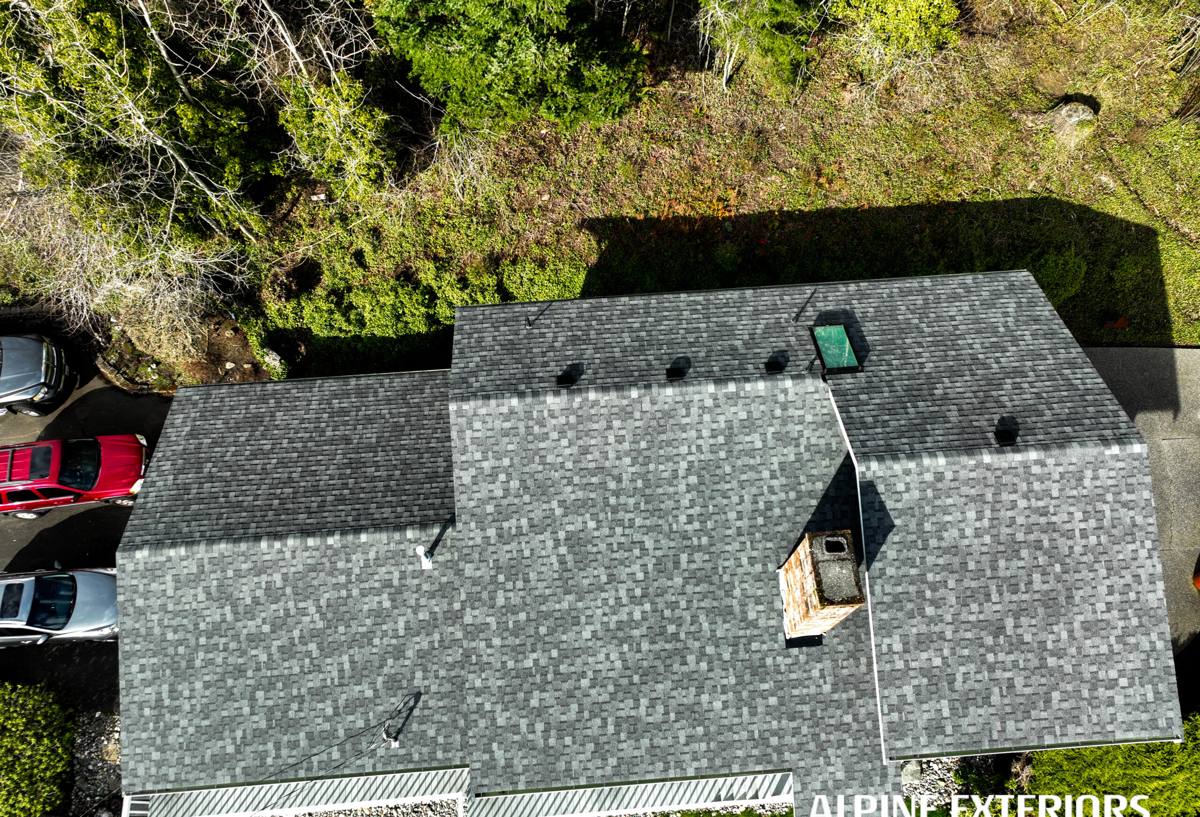
Signs a Kendall Roof Needs Replacement, Not Another Repair
Not every roof problem calls for a full tear-off. But there's a point where patching becomes a waste of money, and homeowners in this area tend to hit that point sooner than they expect because of how moisture accumulates under shingles over time.
- Granules collecting in gutters or at downspouts, especially after a hard rain
- Moss or algae that returns within a season or two of cleaning, even after treatment
- Soft or springy spots underfoot, which usually mean the decking underneath has taken on water
- Daylight or water stains visible in the attic, particularly around chimneys, vents, or valleys
- Shingles that are curling, cracking, or missing tabs across multiple sections of the roof
- A roof already past 20–25 years old, regardless of how it looks from the ground
If a roof is showing two or more of these at once, a replacement usually costs less over five years than a string of repairs — and it removes the guesswork of not knowing what condition the decking is really in.
What a Correct Installation Actually Involves
"New roof" gets used loosely. A correct installation is a system, not a single layer of shingles, and each part of that system matters more in a climate like this one than it would somewhere dry.
Tear-Off and Deck Inspection
We remove the old roofing down to the deck rather than layering over it. That's the only way to actually see the plywood or OSB underneath and catch soft, delaminated, or water-damaged sections before they get covered up again. In a moss-heavy, high-moisture area, skipping this step just hides a problem for a few more years.
Underlayment and Water-Resistive Barrier
Given how much of the year Whatcom County sees rain, we don't treat underlayment as an afterthought. A synthetic underlayment with proper lap and fastening, plus ice-and-water shield at eaves, valleys, and any low-slope transitions, gives the deck a second line of defense if wind-driven rain ever gets past the shingles.
Flashing
Flashing around chimneys, skylights, sidewalls, and roof-to-wall intersections is where most leaks actually start — not in the open field of shingles. We install new flashing rather than reusing old pieces, and we pay particular attention to any spot where a roof meets a wall or a lower roof plane feeds into a higher one.
Ventilation
A roof that can't breathe traps moisture in the attic, which speeds up decking rot and shortens shingle life from underneath. Balanced intake at the eaves and exhaust at the ridge keeps air moving, which matters more under heavy tree cover where the roof gets less direct sun to dry out between rain events.
Final Details
Starter strips, ridge caps, proper nailing patterns, and drip edge all sound minor, but they're exactly what separates a roof that holds up for its full warranty period from one that needs attention in year eight.
Material Options for Kendall Homes
Most homes in this area do well with one of three roofing approaches. The right choice depends on the home's roof pitch, tree coverage, and how long the owner plans to stay in the house.
| Material | How It Handles Moss & Moisture | Typical Lifespan | Maintenance Burden |
|---|---|---|---|
| Architectural Asphalt Shingle | Good with proper underlayment and ventilation; algae-resistant granule options help on shaded slopes | 25–30 years | Periodic moss/debris removal, especially on shaded sides |
| Standing Seam Metal | Sheds moisture and moss very effectively; smooth surface gives moss less to grip | 40–50+ years | Low; occasional debris clearing near valleys |
| Cedar Shake | Attractive but holds moisture in a damp, shaded climate; needs consistent upkeep to avoid rot | 20–30 years with upkeep | High; regular treatment and inspection required |
We'll install any of these correctly, but we're upfront with homeowners: in a climate this wet and shaded, cedar shake carries a real maintenance commitment that many owners underestimate going in. That's not a knock on the look of the product — it's a fact about how wood behaves when it stays damp for months at a time. Asphalt shingle with the right underlayment and ventilation package is the most common, cost-effective choice we install in the Kendall area, and metal is a strong option for homeowners who want to minimize moss battles and roofing frequency over the long run.
Our Installation Process
- On-site inspection and estimate — we walk the roof, check the attic for ventilation and moisture signs, and measure for an accurate quote.
- Material selection — we walk through the options above based on the home's specific slopes, shade, and budget.
- Scheduling around weather — we plan installation windows with Whatcom County's rain patterns in mind, so the deck isn't left exposed longer than necessary.
- Tear-off and deck repair — old roofing comes off, damaged decking gets identified and replaced before anything new goes down.
- Underlayment, flashing, and ventilation installation — the parts of the job that determine how the roof performs in year ten, not just year one.
- Roofing material installation — installed to manufacturer specification so the warranty is actually valid if it's ever needed.
- Final walk-through — we review the finished roof and cleanup with the homeowner before calling the job done.
What Affects Cost
Every roof is different, and we don't quote sight-unseen, but these are the factors that move the price up or down on most Kendall projects.
| Factor | Effect on Cost |
|---|---|
| Roof size and number of planes | More square footage and more valleys/hips mean more material and labor |
| Deck condition | Rotted or soft decking found during tear-off adds repair cost not visible in a surface inspection |
| Roof pitch and access | Steep or hard-to-access roofs take longer and require more safety setup |
| Material choice | Asphalt shingle is generally the most budget-friendly; metal costs more upfront but less over its life |
| Tree coverage | Heavy overhang may call for additional moss-resistant granules or more frequent future maintenance |
Rather than quote a broad range that doesn't mean much for a specific house, we prefer to inspect first and give a real number based on what's actually on the roof and in the attic.
Why a Local Crew Matters for This Neighborhood
A crew that works Whatcom County regularly already knows how the moss builds up on north-facing slopes here, how much rain a roof needs to shed in a bad winter, and which flashing details tend to fail first on homes with this much tree cover. That's not something a crew passing through from outside the region picks up on the first job. We're based in Ferndale, we work this climate year-round, and we stand behind the installations we do in this specific area — which means if something ever needs attention after the job, we're close by and familiar with the house.
Keeping a New Roof Performing Long-Term
A correctly installed roof still benefits from basic upkeep, especially under Whatcom County's tree cover and moss season.
- Clear gutters and downspouts at least twice a year so water isn't backing up under shingles
- Trim back overhanging branches to reduce shade and debris buildup on the roof surface
- Have moss removed gently (never pressure-washed) rather than left to spread
- Check the attic once a year for any signs of moisture or blocked ventilation
- Address small flashing or shingle issues right away, before a small leak becomes a decking repair
If you're weighing repair versus replacement, or just want an honest read on what your roof needs after another wet Whatcom County winter, we're glad to take a look. Fill out the form below for a free, no-pressure estimate.