 Ferndale
 Roof Repair on Lummi Island: A Different Kind of Wear
Lummi Island sits out in the water, surrounded by the Strait of Georgia and Rosario Strait, which means every roof out there takes weather that homes a few miles inland on the mainland simply don't see as often. Salt-laden air off the water, wind-driven rain that comes in sideways during a fall or winter blow, and a moss season that stretches across most of the wet months of the year — all of it adds up to roofs that age faster and fail in different spots than a typical Whatcom County home. A repair that would hold up fine in a drier, more sheltered location can fail within a season or two out here if it doesn't account for what the island actually throws at a roof.
We work roofs across Ferndale and the surrounding Whatcom County coastline, and Lummi Island roofs get their own approach. This page covers what actually goes wrong out there, what a repair should include to hold up, and how we handle the job from first look to final walk-through.
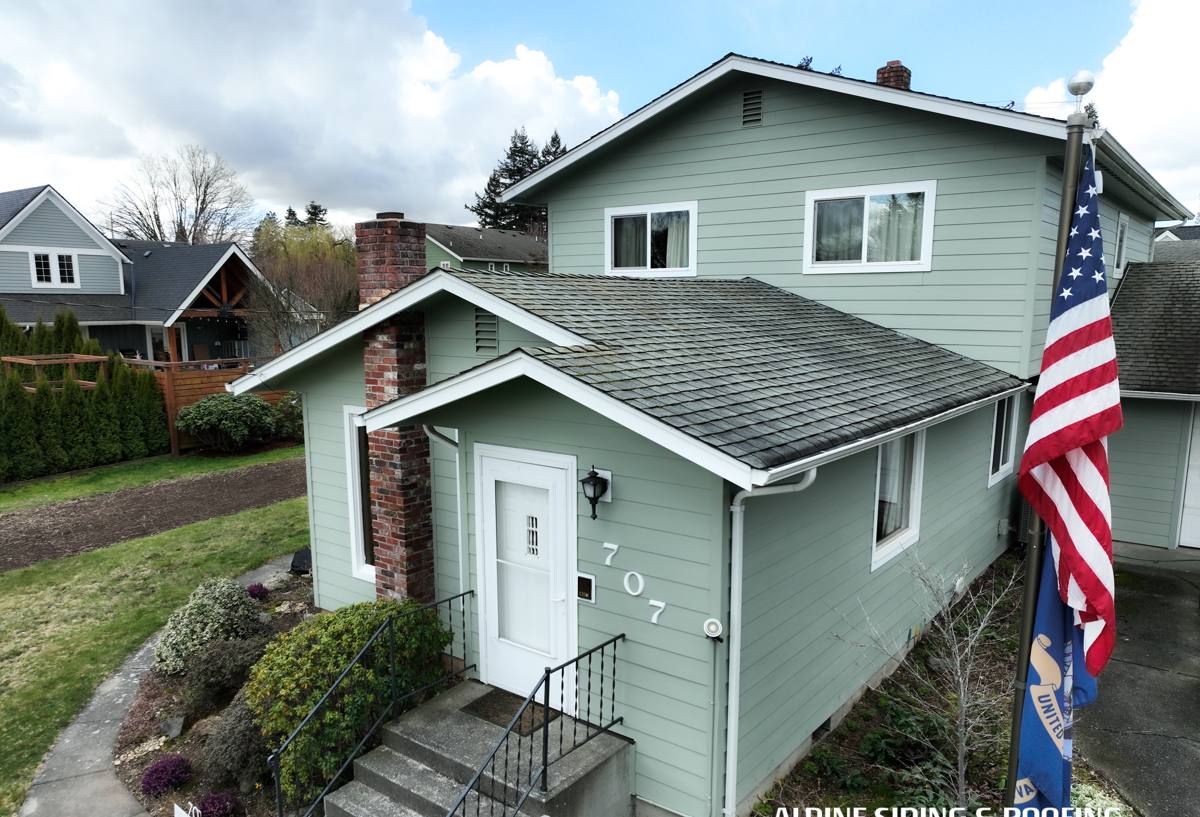
What the Marine Climate Does to a Roof
Salt Air and Fasteners
Airborne salt doesn't just sit on the surface — it works into any exposed metal on a roof: nail heads, flashing seams, screw fasteners on metal panels, and the metal components in ridge vents and pipe boots. Over years, that salt exposure accelerates corrosion in ways that plain rain doesn't. A fastener that's rusted through is a leak point waiting to happen, even if the shingle or panel around it still looks fine.
Moss, Shade, and Standing Moisture
Whatcom County's wet season is long, and any roof section that sits in shade from trees or faces north holds moisture longer than the rest of the roof. Moss takes hold in those damp, shaded spots first, and once it's established it holds water against the roofing material almost year-round. That constant dampness is what actually causes the damage — lifted shingle tabs, soft or rotting decking underneath, and granule loss that shortens the life of asphalt shingles well before their expected age.
Wind-Driven Rain
Open water exposure means wind-driven rain during storms, and driving rain finds weaknesses that a straight-down rain never would — lifted shingle edges, marginal flashing laps, and gaps around penetrations that would otherwise stay dry. Roofs on Lummi Island need flashing and shingle laps done to a higher standard than roofs in more sheltered inland locations, simply because the rain is coming at the roof from more angles.
Common Roof Repair Calls We Get on Lummi Island
- Cracked, curled, or lifted shingles from repeated wind exposure
- Flashing leaks around chimneys, skylights, and roof-to-wall transitions
- Shingle tabs lifted or held open by moss growth underneath
- Gutters and downspouts clogged with needles and moss debris, holding water against the fascia and roof edge
- Corroded fasteners on metal roofing or metal flashing components
- Ridge cap shingles separated or blown loose after a windstorm
- Soft or spongy decking discovered under a section of moss-covered roofing
Most of these show up as a small leak, a stain on a ceiling, or a homeowner noticing moss thickening in one spot — but the underlying cause is usually one of the climate factors above, not a one-time defect.
What a Correct Repair Actually Involves
There's a real difference between patching the spot where water is currently coming through and actually fixing the problem. A quick patch stops the visible symptom. A proper repair addresses what let the water in and what will let it back in again if it's ignored.
| Quick Patch | Proper Repair |
|---|---|
| Seals the visible leak point only | Traces the leak back to its actual entry point, which is often several feet from the stain |
| Leaves surrounding moss or debris in place | Clears moss and debris from the repair area so materials bond and drain correctly |
| Reuses old flashing if it looks intact | Replaces flashing that's thinned, corroded, or no longer laps correctly |
| Matches shingles loosely by color | Matches shingle type, exposure, and fastening pattern to the existing roof |
| No check of decking underneath | Checks decking condition beneath the repair area before closing it back up |
The extra steps on the right side of that table are what determine whether a repair lasts five years or fails again after the next hard rain.
Signs Your Roof Needs Attention
- Granules collecting in gutters or at the base of downspouts
- Daylight visible through the roof deck when viewed from inside the attic
- Moss mats thick enough that you can't easily see the shingle surface underneath
- Water stains, discoloration, or sagging on ceilings below the roof
- Shingles missing, cracked, or curled after a windstorm
- Musty smell or visible damp spots in the attic, especially near the eaves
- Flashing that looks lifted, bent, or separated from the roof surface
Any one of these on its own doesn't necessarily mean a full replacement is coming — but it does mean a proper inspection is worth doing before the next wet season sets in.
Repair or Replace? Cost Factors to Weigh
| Factor | What It Tells Us |
|---|---|
| Age of the roof | A roof well past its expected service life is a poor candidate for repeated repairs |
| Extent of the damage | Isolated flashing or shingle issues repair well; widespread moss or decking damage often doesn't |
| Number of past repairs in the same area | Repeat failures in one spot usually point to a structural or ventilation issue, not a material one |
| Decking condition underneath | Soft or rotted decking changes the scope from a surface repair to a rebuild of that section |
| History of moss coverage | Long-term moss growth often means moisture has been sitting in that area for longer than it appears from the surface |
We'll walk you through where your roof falls on these factors honestly — our goal is a roof that holds up, not the biggest invoice we can write.
Our Roof Repair Process
- Inspection. We check the roof surface, flashing, gutters, and the attic from the inside — moisture problems often show up in the attic before they're visible from the ground.
- Honest findings. We tell you what we found, what's causing it, and whether a repair or a larger fix makes sense — no upselling a repair into a replacement it doesn't need.
- Repair plan. We scope the actual repair area, including moss removal and any flashing or decking work needed, and give you a clear estimate before starting.
- The work. We remove moss and debris, address the decking if needed, replace flashing and shingles to match the existing roof, and re-seal penetrations properly.
- Cleanup and follow-up. We clear debris from the site and gutters, and we're available if anything about the repair needs a second look.
Why Hiring a Crew That Already Works Lummi Island Matters
Getting to Lummi Island means the ferry, and that's a real scheduling factor most mainland contractors don't build into their day. A crew that already works the island can plan a repair trip efficiently — loading the right materials the first time, working within the ferry schedule instead of around it, and not treating your job as an inconvenient outlier that gets pushed to the bottom of the list because of the logistics involved.
There's also a familiarity factor that matters for roofing specifically. Crews who've worked multiple roofs on the island already understand which orientations take the worst of the wind and salt exposure, where moss tends to build up fastest given the tree cover and shade patterns common out there, and what a proper repair needs to hold up against that combination — rather than treating it like a standard inland repair and having it fail again within a year or two.
Getting a Repair Done Right
A roof repair on Lummi Island isn't just about matching shingles and sealing a leak — it's about understanding why that leak happened in the first place, given the salt air, the driving rain, and the moss that builds up faster than it does just about anywhere else in Whatcom County. Done right, a repair should hold up through several more wet seasons, not just until the next storm off the water.
If you're seeing signs of trouble or just want an honest look at where your roof stands, we're happy to come out and take a look. The estimate is free, there's no pressure, and you'll get a straight answer about what your roof actually needs — just fill out the form below to get started.