 Ferndale
 Siding Repair for a Community Built Right on the Water
Sandy Point sits out on open water northwest of Ferndale, and that location changes the math on siding repair compared to almost anywhere else in Whatcom County. Homes here take a steadier, more direct version of the marine exposure that the rest of the region only sees in occasional storms: salt-laden air moving off the Strait of Georgia, rain that arrives sideways as often as it falls straight down, and a moss and mildew season that runs longer than it does a few miles inland. We do repair work in Sandy Point regularly, and the approach we use there is built around what that exposure actually does to a wall over time, not a generic patch-and-paint fix pulled from a job on a sheltered inland lot.
Siding repair on an exposed waterfront property is a different job than siding repair on a typical suburban home. The damage patterns are different, the moisture behind the wall is often further along than it looks from the outside, and the margin for a sloppy patch is much thinner. This page is about what that means in practice — what to look for, what a correct repair actually involves, and why hiring a crew that already knows this specific stretch of coastline matters.
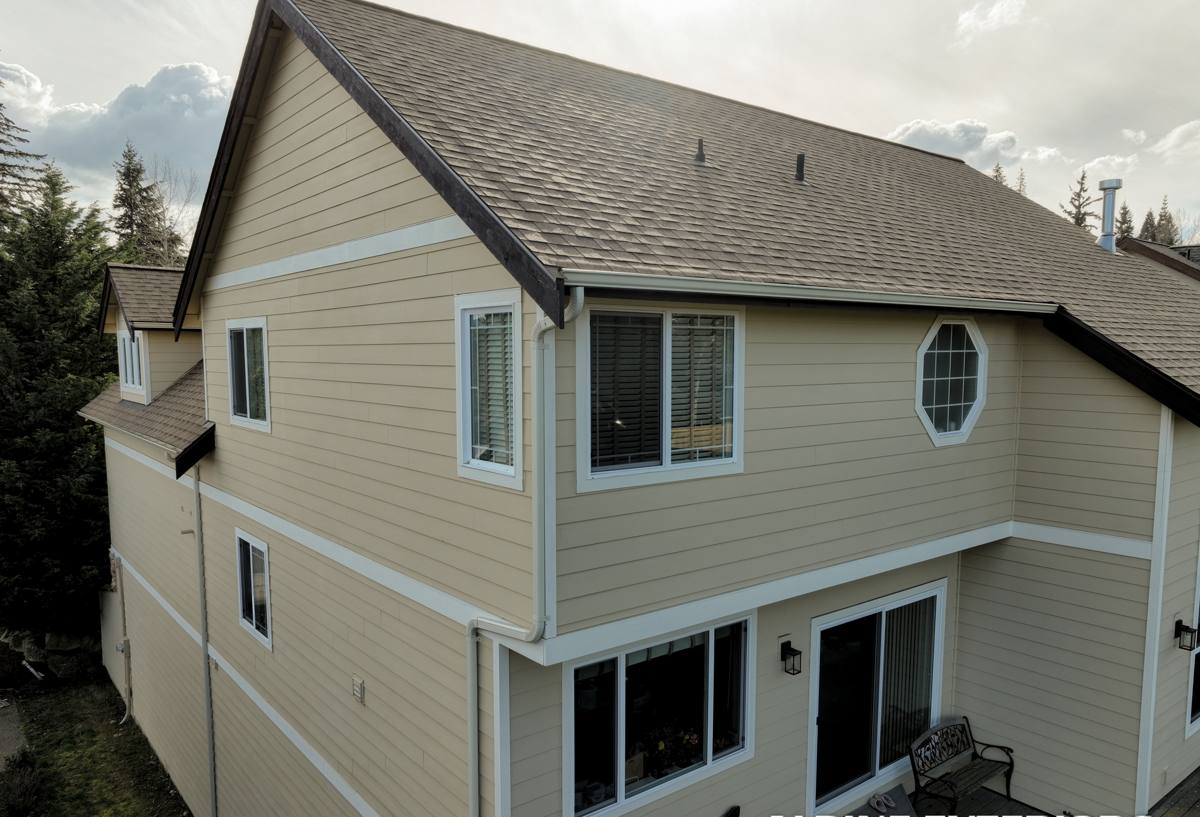
What Salt Air, Driving Rain, and a Long Moss Season Do to Siding
Salt Air
The closer a home sits to open water, the more salt-laden moisture settles on every exterior surface, day after day, regardless of whether it's actively raining. Salt air accelerates corrosion in fasteners, flashing, and hardware, and it breaks down lower-grade paints and finishes faster than a drier climate would. On siding, that often shows up as fasteners rusting through their heads years before they should, trim that chalks and fades ahead of schedule, and seams that were sealed correctly on day one starting to fail early simply because the materials around them gave out first.
Driving Rain
Open water exposure means fewer windbreaks, and wind is what turns ordinary rain into a sideways problem. Wind-driven rain gets forced into lap joints, trim seams, and any spot where flashing isn't doing its job, which is a much tougher test than total rainfall alone suggests. A repair that would hold up fine on a sheltered inland wall can still fail on a Sandy Point home because the water is coming in from an angle a standard patch was never built to handle.
A Long Moss and Mildew Season
Consistent moisture and shaded elevations add up to a moss and mildew season that runs longer here than in drier parts of the county. It usually shows up first on north-facing or shaded walls, and it's more than a cosmetic problem — sustained organic growth holds moisture directly against the wall assembly, which is exactly the condition that leads to rot behind the siding if a repair only addresses what's visible on the surface.
Signs a Sandy Point Home Needs Siding Repair
Waterfront exposure means damage often starts small and stays hidden longer before it becomes obvious. These are the signs worth acting on rather than waiting out:
- Soft, spongy, or slightly bowed siding, especially low on the wall or around window and door trim
- Moss or dark staining that returns quickly after cleaning, particularly on shaded or north-facing walls
- Cracked, chipped, warped, or missing sections, especially after a winter storm system
- Rusting fasteners, corroding flashing, or a chalky, faded finish that's noticeably worse than the rest of the house
- Visible gaps at seams, corners, or trim joints where caulk has shrunk, cracked, or pulled away
- Peeling or bubbling paint near seams, which often points to moisture trapped behind the siding rather than a simple paint problem
- A musty smell or rising energy bills that may point to a wall assembly no longer sealing the way it should
What a Correct Siding Repair Actually Involves
The biggest mistake we see in prior repair work on waterfront homes isn't bad workmanship on the visible patch — it's stopping at the visible patch. A section of siding can look fine from ten feet away while the sheathing behind it is already compromised, and on a property that takes this much sustained wind and moisture, that gap between "looks fixed" and "is actually fixed" matters more than almost anywhere else in the county.
Diagnose Before Cutting
A correct repair starts with figuring out why the damage happened, not just where it is. Damaged siding near a window is often a symptom of failed window flashing rather than a siding defect on its own, and a repair that ignores the actual cause tends to fail again within a season or two.
Check What's Behind the Wall
Once damaged siding is removed, the sheathing and house wrap underneath need a real look, not a glance. Soft sheathing, staining, or standing moisture behind the siding means the repair scope just got bigger, and on a home this exposed to wind-driven rain, that's a common finding rather than a rare one.
Match the Material and the Fastening
Patched-in siding needs to match the existing product in profile, thickness, and finish, and it needs to be fastened to the same standard the rest of the wall should be held to — which, on an exposed waterfront lot, often means tighter fastening patterns than a calmer inland site would call for. A repair that uses whatever material is on hand instead of the correct match tends to stand out and age differently than the surrounding wall.
Rebuild the Water Path, Not Just the Surface
Flashing, house wrap laps, and joint sealing all need to be rebuilt correctly so water sheds the way it's supposed to, not just caulked over and hoped for. On a property that takes wind-driven rain from multiple directions, a repair that relies on caulk to do a flashing detail's job is a repair that will need to be done again.
Repair or Replace: How We Make That Call
| Situation | What It Usually Means | Typical Approach |
|---|---|---|
| Isolated storm damage or impact damage to a small area | Localized issue, surrounding wall likely sound | Repair and match into existing siding |
| Failed caulk or flashing at one window or corner | A detail failure rather than a material failure | Repair the detail, replace any compromised sheathing behind it |
| Soft or spongy siding across multiple wall sections | Moisture has likely been tracking behind the wall for a while | Broader repair or partial replacement, depending on sheathing condition |
| Older non-Hardie siding nearing the end of its service life | Repairs are patching a product that's already declining | Full replacement usually makes more sense than repeated patching |
| Widespread rot or repeated repair calls to the same area | The underlying cause was never fully resolved | Full replacement of the affected wall section or the home |
Not every siding problem on a Sandy Point home calls for a full re-side, and we're not going to tell you it does. But when the damage keeps coming back to the same spot, or the existing material is already near the end of what it can give, patching it usually just delays a bigger job while hidden rot keeps spreading behind the wall. We'll walk you through which situation you're actually in and why, rather than defaulting to whichever answer costs more.
Why We Repair and Replace With James Hardie Fiber Cement
We install James Hardie fiber cement siding exclusively, and that carries through to repair work too — when we patch a section or tie a repair into existing siding, we're matching into a material system we trust to perform under this kind of exposure. Fiber cement doesn't absorb moisture into its core the way engineered wood products can, and it doesn't warp, cup, or crack under sun and salt the way vinyl can over time. Hardie's factory-applied ColorPlus finish is baked on under controlled conditions, so it holds its color and resists chalking far longer than field-applied paint, and Hardie's climate-engineered HZ product lines are built specifically for regions with heavy, sustained moisture exposure, which is a close match for a Sandy Point property.
We don't install LP SmartSide, vinyl siding, Cemplank, Allura, primed spruce, or cedar, and if a Sandy Point home currently has one of those products and needs more than a minor patch, we'll say so plainly rather than pretending the material isn't part of the problem. Each of those products has a place in the broader market. But for a home taking this much direct wind, salt, and moisture, we made a professional call years ago that one system we trust completely is worth more than a cheaper option that quietly shifts maintenance risk back onto the homeowner.
Our Process for a Sandy Point Repair Call
- A walk-through of the affected area and the surrounding wall, not just the spot you called about, since damage on an exposed property often extends further than what's visible from the ground
- An honest read on whether the sheathing behind the damaged section needs attention before any new siding goes back on
- A clear explanation of what caused the damage, so the repair addresses the actual source rather than just the symptom
- A written estimate that separates repair costs from any additional scope, so you know exactly what you're paying for and why
- A repair that matches existing James Hardie siding, or an honest conversation about replacement if that's genuinely the better long-term move
Why a Crew That Already Works Sandy Point Matters
A crew that repairs siding in Sandy Point regularly knows how salt air, driving rain, and a long moss season behave on this specific stretch of coastline over a full year, not just how a patch looks the day it's installed. That experience shows up in small but important decisions: which wall orientations hold moisture longest, where a flashing detail is worth extra time even if it slows the job down, and how to tell the difference between cosmetic damage and a sign of something bigger happening behind the wall. A crew without that local, hands-on experience is more likely to treat a Sandy Point repair like any other job in Whatcom County, and on a property with this level of direct water exposure, that gap tends to show up again the following winter.
If you're dealing with damaged, soft, or failing siding on a Sandy Point home, we're glad to take a look and give you an honest read on what's actually going on. Reach out using the form below to schedule a free, no-pressure estimate.