 Ferndale
 Roofing in Cordata: A Different Set of Problems Than Most of the Country
Cordata sits in the north end of the Whatcom County corridor between Ferndale and Bellingham, close enough to the Salish Sea that salt-laden air is part of daily life and far enough into the tree cover that shade, moisture, and moss are a year-round conversation. A roof here isn't fighting hail or wildfire embers — it's fighting slow, patient water. Driving rain off the water, weeks of low cloud cover that never quite dries a roof deck, and a moss season that can run eight or nine months out of twelve. None of that is dramatic. It's just relentless, and it's exactly the kind of wear that shows up as a slow leak years after the shingles started failing, not the day they failed.
That's the case for treating a Cordata roof replacement as a climate-specific job, not a generic one. The materials, the ventilation plan, and the flashing details that hold up fine in a dry inland market are often the first things to fail here. We build roofs for this specific stretch of Whatcom County, and this page is about what that actually means in practice.
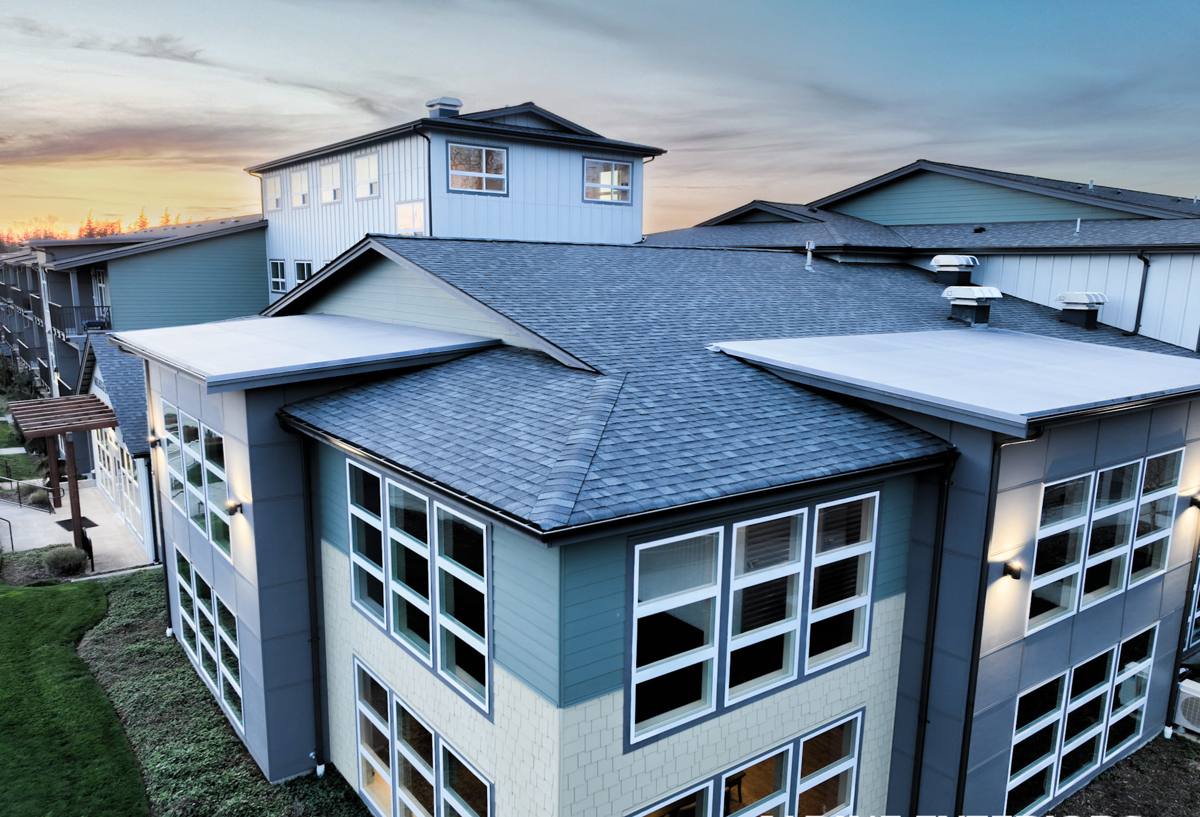
What Actually Wears Out a Roof in This Area
Most roof failures we find on Cordata-area homes trace back to one of a handful of causes, and almost none of them are "the shingles just got old." A few decades of asphalt shingle chemistry mean the material itself usually outlasts the details around it. Here's what actually fails first:
- Moss and organic growth holding moisture against the shingle surface long after rain has stopped, accelerating granule loss and lifting shingle edges.
- Undersized or blocked attic ventilation, which traps warm moist air against the underside of the roof deck and speeds up sheathing rot from the inside out.
- Flashing at valleys, chimneys, and wall intersections that was caulked instead of properly stepped or woven — caulk fails in a few seasons; correct flashing lasts the life of the roof.
- Underlayment that wasn't rated for extended wet exposure, which matters more here than almost anywhere else because Whatcom County roofs go weeks between fully dry days.
- Salt-air corrosion on exposed fasteners and metal flashing, which is a slower process than most homeowners expect but a real one this close to the water.
A correct roof replacement addresses every one of these, not just the shingles on top.
What a Correct Roof Replacement Actually Involves
Tear-Off and Deck Inspection
We remove the existing roofing down to the deck rather than layering over it. That's the only way to actually see what's underneath — soft spots, rot around old flashing, or ventilation gaps that have been hidden for years. Any damaged sheathing gets replaced before anything new goes down. Skipping this step is the single most common shortcut in the roofing trade, and it's the one that causes the most expensive surprises five years later.
Underlayment Built for Wet Weeks, Not Wet Days
In a drier climate, a basic felt underlayment is adequate backup protection. In this part of Whatcom County, where the roof deck can stay damp for extended stretches, we use synthetic or self-adhered underlayment in the areas that see the most water exposure — valleys, eaves, and around every penetration. It costs more up front and it's the difference between a roof that sheds incidental water and one that's actually built for the local weather pattern.
Ventilation, Corrected
We check intake at the soffits and exhaust at the ridge as part of every replacement, not as an upsell. A roof can be installed perfectly and still fail early if the attic underneath it is trapping moisture. Balancing intake and exhaust ventilation is one of the cheapest things we do relative to how much it extends the life of the roof.
Flashing, Not Caulk
Every valley, chimney, skylight curb, and wall-to-roof transition gets proper metal flashing, stepped or woven as the geometry requires. Sealant has a place as a secondary barrier, but it is never the primary line of defense on anything we install.
Material Options for a Salt-Air, High-Moss Environment
There's no single "best" roofing material for Cordata — the right call depends on the home, the budget, and how much long-term maintenance an owner wants to take on. Here's how the common options actually compare for this specific climate:
| Material | Moss Resistance | Salt-Air Durability | Typical Lifespan Here | Maintenance |
|---|---|---|---|---|
| Standard asphalt composition shingle | Moderate — benefits from algae-resistant granules | Good | 20–25 years | Periodic moss treatment recommended |
| Impact/algae-resistant composition shingle | Good — copper or zinc granules actively slow moss growth | Good | 25–30 years | Lower, but not zero |
| Standing seam metal | Very good — moss struggles to hold on a smooth vertical-seam surface | Very good with correct coating and fasteners | 40–50+ years | Low |
| Synthetic/composite shake or slate | Good | Good | 30–50 years depending on product | Low to moderate |
For most Cordata homes, an algae-resistant composition shingle is the practical middle ground — it handles the local moss pressure meaningfully better than standard shingle without the upfront cost jump of metal. Where a roof has heavy tree cover and near-constant shade, we'll often steer the conversation toward metal or a higher-grade shingle, because the maintenance savings over 20 years start to outweigh the difference in installed cost.
Our Roof Replacement Process
- On-site inspection. We walk the roof and the attic, not just look from the ground. Ventilation, deck condition, and flashing details all get checked before we quote anything.
- Written estimate. Material options, scope, and price laid out clearly — no vague "roof replacement" line item standing in for a dozen decisions.
- Scheduling around the weather. We plan tear-off days around forecast windows and stage the job so the deck is never left exposed longer than necessary.
- Tear-off and deck repair. Old roofing comes off, damaged sheathing gets replaced, and the deck is inspected before anything new is installed.
- Underlayment, flashing, and ventilation correction. The parts that don't show but matter most.
- New roofing installed to manufacturer spec. Proper nailing pattern, exposure, and fastening — the details that keep a warranty valid.
- Final walkthrough and cleanup. Magnetic sweep for debris, gutters checked, and a final look at the finished roof with the homeowner.
Cost Factors Homeowners Should Actually Weigh
Roof replacement pricing varies by roof size, pitch, layer count, and material, and we don't publish blanket numbers because they're not honest until we've actually seen the roof. What we can tell you is what tends to move the price up or down on a Cordata-area home:
| Factor | Effect on Cost |
|---|---|
| Roof pitch and complexity (valleys, dormers, multiple planes) | Higher — more labor, more flashing detail |
| Existing layers to remove | Higher — full tear-off of multiple layers adds disposal and labor cost |
| Deck condition found at tear-off | Variable — sheathing repair is priced as an add, not hidden in the base bid |
| Material choice (standard shingle vs. algae-resistant vs. metal) | Ranges widely — metal and premium shingle cost more installed but less over time |
| Access and site conditions | Higher for steep terrain, limited driveway access, or heavy tree cover requiring extra care |
Any contractor who quotes a firm price without walking the roof and the attic is guessing. We'd rather take the time to look first.
Why Hiring a Crew That Already Works Cordata Matters
Roofing crews from outside the region aren't wrong about roofing in general — they're wrong about this weather specifically. A crew that mostly works drier inland markets may not default to wet-rated underlayment, may skip the ventilation balancing because it's rarely the failure point where they usually work, or may not price moss treatment and prevention into the conversation at all. None of that shows up as a problem on install day. It shows up two or three winters later.
A crew that's already doing this work in Ferndale, Cordata, and the surrounding Whatcom County towns has already made those calls on dozens of similar roofs. We know which details actually matter for this specific stretch of coastline and which ones are optional elsewhere but not here.
Signs Your Cordata Roof May Be Due for Replacement
- Granules collecting in gutters or at downspout discharge points
- Moss visibly established on the shingle surface, not just on the ridge
- Curling, cupping, or cracked shingles, especially on south- and west-facing slopes
- Daylight visible through the attic roof deck, or damp insulation after a storm
- Soft or spongy spots when walked, or visible sagging along a roof plane
- Repeated leak repairs in the same area over multiple seasons
- Roof is 20+ years old and has never had a full tear-off replacement
One or two of these on their own might mean a repair is enough. Several together usually mean the roof system as a whole is past the point where patching makes sense.
Questions Worth Asking Before You Sign a Contract
- Does the estimate include full tear-off, or is this a layer-over?
- What underlayment is spec'd for valleys and eaves specifically?
- Is attic ventilation being assessed and corrected as part of the job, or assumed fine?
- Are valleys and chimney transitions flashed in metal, or relying on sealant?
- What's covered under workmanship warranty versus manufacturer material warranty, and for how long?
- How is unexpected deck damage priced if it's found during tear-off?
A straight answer to every one of these is a reasonable bar to hold any roofing contractor to, us included.
If your roof is showing any of the signs above, or it's simply reaching the age where planning ahead makes more sense than waiting for a leak, we're happy to take a look. The estimate is free, there's no pressure attached to it, and you'll get a straight answer about whether replacement is actually the right call — use the form below to get started.