 Ferndale
 Board and Batten Siding in Marietta: A Climate That Doesn't Forgive Shortcuts
Marietta sits close to the water, and that changes what a house needs from its siding. Homes here deal with salt-laden air off Bellingham Bay, driving rain that comes in sideways during winter storms, and a moss season that can stretch from October well into spring. Board and batten siding — with its bold vertical lines and deep shadow reveals — is one of the more visually striking siding styles you can put on a home, but it's also one of the least forgiving if it's installed wrong. The battens create dozens of extra seams and fastening points compared to a plain lap siding job, and every one of those seams is a potential water path if it's not detailed correctly.
We install board and batten siding in Marietta regularly enough to know exactly where local homes get into trouble: north-facing walls that stay damp and grow moss for months at a time, exposed gable ends that take the brunt of wind-driven rain, and older homes where the original siding was never given a real drainage plane behind it. A board and batten system that's engineered and installed correctly can handle all of that. One that isn't will show problems within a few winters — not because board and batten is a bad style, but because it demands more precision than most other siding profiles.
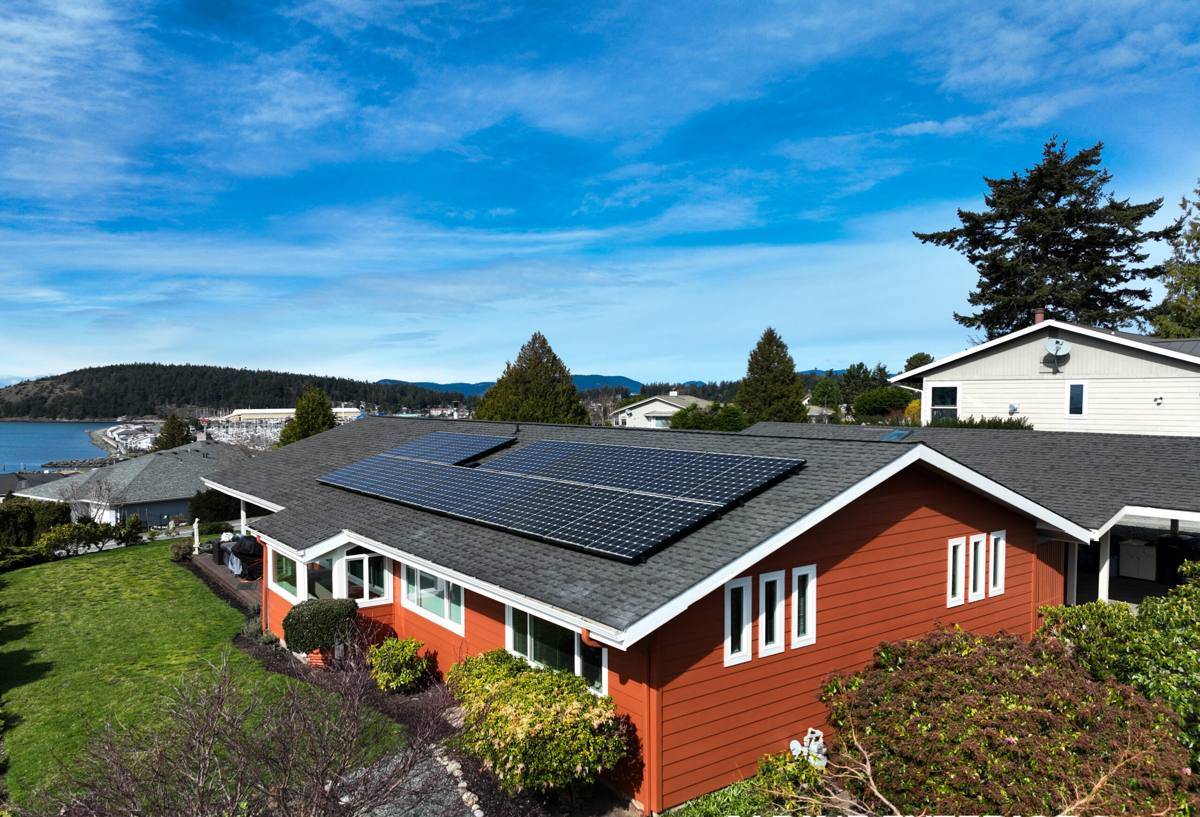
What Board and Batten Siding Actually Is
Board and batten is a vertical siding pattern: wide flat panels or boards installed vertically, with narrower strips (the battens) covering the seams between them. It's a classic Pacific Northwest look — you'll see it on farmhouses, craftsman-style homes, and modern builds alike — because the vertical lines and shadow lines the battens create give a home real depth and texture that flat lap siding can't match.
There are two common ways to build it:
- True board and batten — individual vertical boards installed with a small gap between them, then battens fastened over the gaps to cover the seam and shed water.
- Panel and batten — a single wide panel product installed vertically, with battens applied on top at regular intervals purely for the architectural look, since the panel itself is already a continuous water-shedding surface.
Both looks read the same from the curb, but they behave very differently in wet, salt-air climates. The panel-and-batten approach has fewer actual seams behind the battens, which means fewer opportunities for water to find its way behind the cladding. That's part of why we lean on engineered fiber cement panel systems for this look rather than traditional board-on-board wood construction.
Why the Style Fits Certain Marietta Homes Especially Well
Board and batten tends to look best as a full-elevation treatment, an accent on gables and dormers, or a mix with horizontal lap siding on the same home. In a neighborhood like Marietta, where homes range from older single-story cottages to newer builds, board and batten is often used to give a plainer home a stronger architectural identity without changing its footprint — it's as much a design decision as a protection decision, which is exactly why the material and installation quality behind it matter so much.
Why This Climate Punishes a Bad Batten Job
Three things specific to this part of Whatcom County make board and batten siding a job you don't want to hand to just anyone:
Salt Air
Airborne salt accelerates corrosion on fasteners, flashing, and any metal trim. Battens are fastened more densely than lap siding — every batten needs its own fastening schedule — so a job with the wrong fastener spec means more corrosion points, not fewer.
Driving Rain
Vertical siding sheds water differently than horizontal lap siding. Water runs down the face of the boards and battens rather than being broken up by overlapping courses, which means the seams behind each batten and the flashing at every horizontal transition (window heads, water tables, roof lines) have to be done right the first time. Wind-driven rain off the water will find any gap that's been left loose or under-caulked.
Long Moss Season
Shaded and north-facing walls near the water stay damp for extended stretches. Moss and algae growth on siding isn't just cosmetic — sustained moisture against the wrong substrate accelerates rot and paint failure. A siding material that doesn't absorb moisture, paired with proper ventilation gaps behind the boards, is the real defense here — not just power-washing moss off every spring.
What a Correct Board and Batten Installation Involves
This is where most of the failures we see in Marietta actually originate — not from the siding material itself, but from shortcuts taken during installation. A correct job includes:
- A continuous weather-resistive barrier installed and lapped correctly behind the entire wall assembly, before a single board goes up.
- A drainage gap behind the siding (typically achieved with a rainscreen or furring strips) so any moisture that does get behind the cladding has somewhere to drain and dry, instead of sitting against the sheathing.
- Correct flashing at every window, door, roofline, and horizontal trim transition — these are the spots where vertical siding is most vulnerable to wind-driven rain.
- Manufacturer-specified fastening for both the base panel or board and every batten, using corrosion-resistant fasteners appropriate for a marine-influenced climate.
- Correct gaps and sealant joints at panel seams, sized and treated per the manufacturer's installation instructions — not just caulked tight and hoped for.
- Proper clearance from grade, roof lines, and decks so the bottom edge of the siding isn't sitting in standing water or constant splash-back.
Skip any one of these and the siding can look fine for a year or two while moisture works its way in behind it — which is exactly the kind of failure that's expensive to diagnose and repair later, because by the time it shows on the surface, it's usually already done damage underneath.
Our Process for a Marietta Board and Batten Project
- On-site assessment. We look at wall orientation, existing moisture damage, drainage around the foundation, and how much wind and rain exposure each elevation actually gets — a north-facing wall near the water gets treated differently than a sheltered south wall.
- Tear-off and substrate check. We remove the existing siding and inspect the sheathing underneath for rot or water damage before anything new goes up. This step gets skipped by corner-cutting crews and it's the single most important part of the job.
- Weather barrier and drainage plane. A continuous, correctly lapped weather-resistive barrier goes on, with a drainage gap behind the siding field.
- Flashing at every penetration. Windows, doors, roof intersections, and trim transitions get flashed before siding installation starts.
- Board/panel and batten installation. Installed to the manufacturer's fastening schedule and gap specifications, with factory-finished material so field-cut edges get properly sealed.
- Final detailing and walkthrough. Caulking, trim, and touch-up, followed by a walkthrough so you know exactly what was done and why.
Why We Only Install James Hardie for This
Board and batten is a style we could build out of several different materials, and we've made a deliberate call to use James Hardie fiber cement panel and batten systems exclusively. Fiber cement doesn't absorb water the way wood does, so it isn't feeding rot or warping from the inside when Marietta's rain and moss season set in. It's also non-combustible, holds paint and factory-applied ColorPlus finishes far longer than site-primed wood or vinyl trim, and Hardie's HZ5 product line is specifically engineered for climates with sustained moisture exposure like ours.
We don't install vinyl board and batten because vinyl battens and panels expand and contract more with temperature swings, which stresses seams and fasteners over time, and vinyl's finish is baked into thin material that fades and becomes brittle years before fiber cement does. We don't install cedar or primed wood board and batten because, however good it looks on day one, real wood in a salt-air, high-moisture climate requires a maintenance commitment — re-caulking, repainting, watching for rot at end grain — that most homeowners don't want to sign up for indefinitely. We also don't install LP SmartSide, Cemplank, or Allura; they're reasonable products in the abstract, but we standardized on Hardie because we can install one system to spec, back it with a strong transferable warranty, and know exactly how it will perform in this specific climate over the long haul.
Material Comparison for Board and Batten Siding
| Material | Moisture Behavior in This Climate | Maintenance Burden | Typical Lifespan Here |
|---|---|---|---|
| James Hardie fiber cement | Does not absorb water or rot; engineered HZ5 line for wet climates | Low — occasional wash, repaint on a much longer cycle | 30+ years with correct install |
| Cedar / primed wood | Absorbs moisture; vulnerable at end grain and seams | High — regular repainting and caulk maintenance | 15-25 years, shorter with poor maintenance |
| Vinyl | Doesn't rot, but seams and battens flex with temperature swings | Low, but limited repair options once faded or cracked | 20-30 years, fading and warping common sooner near the coast |
| LP SmartSide / engineered wood | Better than raw wood, but still wood-based and moisture-sensitive at cut edges | Moderate — edge sealing and caulk maintenance matter | 20-30 years with diligent upkeep |
What This Costs and What Drives the Price
Board and batten typically costs somewhat more than a straight lap siding installation on the same wall, because of the extra material (battens) and the additional labor to fasten and seal every batten seam correctly. Rough cost drivers on a Marietta project include:
| Factor | Why It Matters |
|---|---|
| Wall complexity | More corners, gables, and dormers mean more cuts, more flashing detail, and more labor hours |
| Existing substrate condition | Rotten sheathing found during tear-off adds repair cost before new siding goes on |
| Full-elevation vs. accent use | Board and batten on gables or as an accent costs less than wrapping the whole home |
| Trim and color package | Factory ColorPlus finishes and matching trim add cost but remove years of future repainting |
| Site access | Water-adjacent lots with tight access or landscaping can add labor time |
We give firm, itemized quotes after an on-site look — not a ballpark over the phone — because the substrate condition and wall complexity are the biggest swing factors, and those can only be judged in person.
What to Check Before Hiring Anyone for This Job
- Do they show you the weather-resistive barrier and drainage plane plan, or just talk about the finished look?
- Will they inspect and document sheathing condition during tear-off before quoting a final price?
- Do they follow the manufacturer's published fastening and gap specifications, or their own shortcuts?
- Can they explain how they'll flash windows, doors, and roof transitions on a vertical siding job specifically?
- Do they carry a manufacturer-backed warranty that transfers if you sell the home?
- Have they worked in Marietta or similarly exposed, water-adjacent parts of Whatcom County before?
A crew that's worked this specific stretch of coastline knows which walls need extra flashing attention and which details matter most against driving rain — that's not something you get from a crew that mostly works inland.
Let's Look at Your Home
If you're considering board and batten siding for a home in Marietta, we're happy to come take a look, walk the exterior with you, and give you a straight assessment of what the job actually involves — no pressure, no inflated scope. Fill out the form below to schedule a free estimate.