 Ferndale
 Blaine's Climate Puts Real Stress on Exterior Siding
Blaine sits close enough to the water and to Whatcom County's marine weather patterns that homes here deal with a combination most inland siding never has to survive: salt-laden air rolling off the water, long stretches of driving rain pushed sideways by wind, and a moss and algae season that can stretch from fall through spring. None of these forces are dramatic on their own. The damage they cause is cumulative, and it shows up on the siding material that's weakest against moisture and organic growth first.
Salt air is corrosive to exposed metal fasteners and trim, and it accelerates the breakdown of finishes that aren't built to handle it. Driving rain doesn't just wet the surface of a wall — wind-driven moisture gets forced up under laps and around penetrations, which is why the drainage plane behind the siding matters as much as the siding itself. And moss doesn't just grow on roofs. On north-facing walls, under eaves, and anywhere shade and moisture linger, it takes hold on siding too, especially on textured or absorbent materials that hold surface moisture.
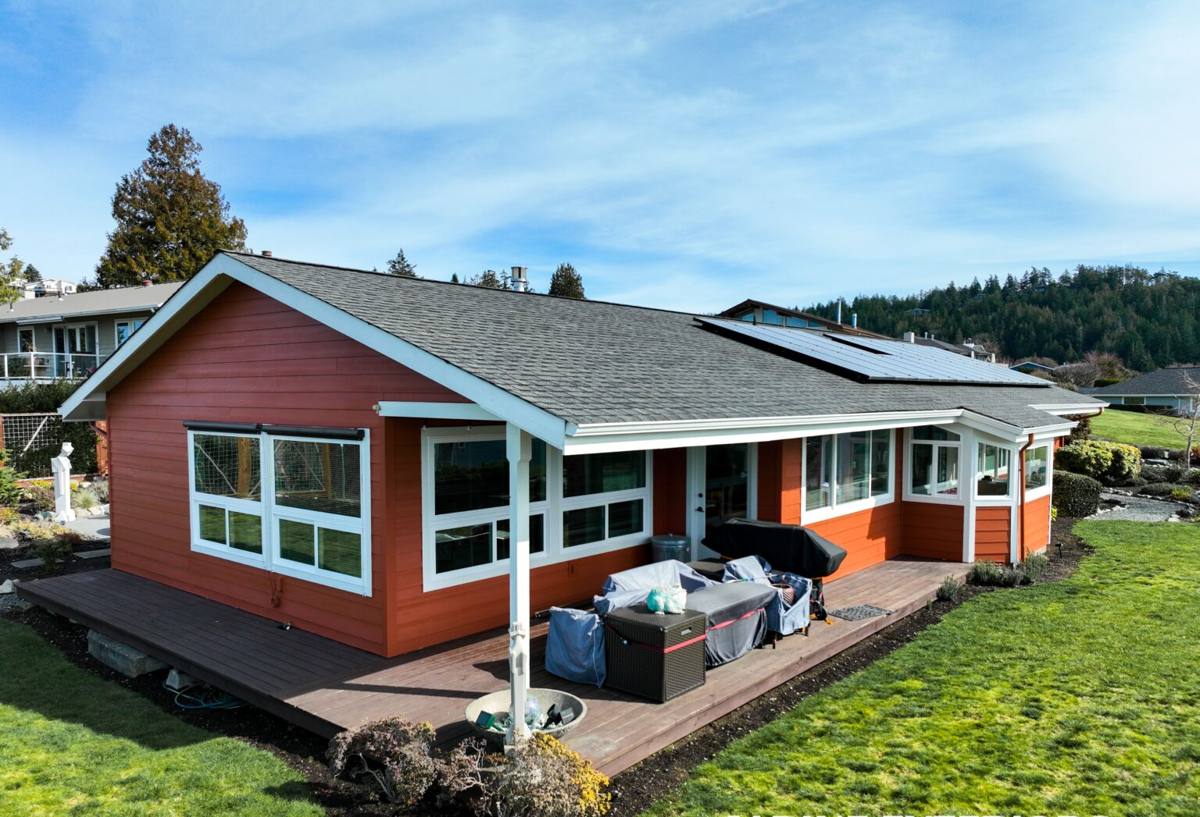
What Fiber Cement Needs to Do on a Blaine Home
Fiber cement siding is a good starting point for this climate because it's dimensionally stable and doesn't absorb moisture the way wood-based products do. But "fiber cement" isn't one product — the formulation, the factory finish, and the installation details all determine whether a given board actually performs here. For a Blaine home, the siding needs to:
- Resist moisture absorption at the core, not just at a surface coating
- Hold a factory-applied finish that won't chalk, fade, or peel under sustained damp and salt exposure
- Shed wind-driven rain rather than trap it against the wall sheathing
- Resist algae and moss growth on shaded and low-airflow elevations
- Tolerate freeze-thaw cycling at butt joints and cut edges without swelling
A board that checks the first box but not the others will still fail early in this environment — usually starting with soft spots at butt joints, streaking below fastener heads, or dark growth on north walls that no amount of pressure washing keeps ahead of.
Why We Only Install James Hardie
We install James Hardie fiber cement exclusively — not LP SmartSide, not vinyl, not Cemplank, not Allura, not primed spruce or cedar. That's a deliberate standard, not a sales preference, and it comes down to how each of those products behaves over time in exactly the conditions Blaine sees. Wood-based and engineered-wood products can perform well for a while, but they depend on an intact factory seal and diligent maintenance to keep moisture out of the core; once that seal is compromised at a cut edge or a fastener hole, water intrusion and rot follow. Vinyl is low-maintenance but it isn't rigid enough to be marine-grade, and it holds up worse to impact and long-term UV and salt exposure. Cedar is beautiful but it's a wood product first, and wood in a wet marine climate is a maintenance commitment most homeowners underestimate until year five or six.
James Hardie's fiber cement is engineered specifically for climate zones like ours — Hardie's HZ5 formulation is built for the freeze-thaw, moisture, and humidity conditions of the Pacific Northwest, and the factory-baked ColorPlus finish is designed to hold color and resist fading, chipping, and cracking far longer than a field-applied paint job would. It's non-combustible, it doesn't support the kind of moisture-driven rot that wood products can develop, and its finish is backed by a real, transferable warranty rather than a promise that depends on us maintaining it for you.
What a Correct Installation Actually Involves
Fiber cement siding is only as good as the wall assembly behind it. On a Blaine home, we treat the installation as a system, not just a cladding swap:
Drainage plane and rainscreen
Wind-driven rain will get behind any lap siding eventually — the question is whether the wall is built to let that moisture drain and dry out, or whether it gets trapped against the sheathing. A proper weather-resistive barrier, correctly lapped and taped, combined with a drainage gap behind the siding, is what keeps incidental moisture from becoming a rot problem.
Flashing at every penetration
Windows, doors, hose bibs, light fixtures, and vents are the places water actually gets in. Each one needs proper head flashing and integration with the weather barrier — caulk alone is not a substitute for flashing, and caulk-only details are one of the most common failure points we find on older siding jobs.
Fastening and clearances
Hardie has specific fastener spacing, nailing zone, and clearance requirements — including keeping siding a set distance above roofing, decks, and grade — that exist precisely because tight-to-grade or tight-to-roof installations trap moisture and invite the kind of rot and staining we see on non-compliant installs around the county.
Joint treatment
Butt joints are the most vulnerable seam in any lap siding installation. We treat them with a proper flashing or engineered joint approach rather than relying on caulk alone, since caulk is the first thing to fail under repeated wet-dry cycling.
Comparing Siding Options for a Blaine Home
| Material | Moisture Behavior in Marine Climate | Maintenance Burden | Typical Lifespan Here |
|---|---|---|---|
| James Hardie Fiber Cement | Dimensionally stable, engineered core, sheds moisture well when installed to spec | Low — factory finish, occasional wash | Multi-decade with proper install |
| Vinyl | Doesn't absorb water but isn't rigid; can warp, crack in impact, gaps widen over time | Low, but limited repair options | Moderate, shorter in high-wind/salt exposure |
| LP SmartSide / Engineered Wood | Depends on intact factory seal; vulnerable once cut edges or fasteners breach it | Moderate — seal and caulk upkeep needed | Shorter if seal is compromised early |
| Cedar | Absorbs moisture, prone to swelling, splitting, and rot without diligent upkeep | High — regular sealing/staining required | Shorter without consistent maintenance |
This isn't a knock on every one of these products in every climate. It's specific to what salt air, driving rain, and a long moss season do to a wall assembly over years, not months.
Our Process From Estimate to Finished Job
We start with a walk-around assessment of the existing siding, trim, and any visible moisture or rot damage, since that tells us what's happening behind the wall, not just what's peeling on the surface. From there we scope the tear-off, sheathing repair if needed, weather barrier and flashing details, Hardie product line and color selection, and trim treatment. We give homeowners a clear, written scope before work starts — no surprises about what's included in the flashing and drainage details, since those are the parts that actually determine how the job performs in five or ten years, not just how it looks on installation day.
Maintenance in a Salt Air, Moss-Prone Environment
Correctly installed Hardie siding is low-maintenance, but "low" isn't "none" in this climate. A short seasonal routine keeps it performing the way it's designed to:
- Rinse siding with a garden hose once or twice a year to clear salt residue and airborne buildup, especially on the side of the house facing prevailing weather
- Keep gutters clear so overflow doesn't run down and streak the siding
- Trim back vegetation and branches that shade walls and keep them damp longer than they need to be
- Check caulking at trim and penetration joints annually and touch up before gaps widen
- Watch shaded, north-facing, and low-airflow walls for early moss or algae growth and address it before it spreads
Why Hiring a Crew That Already Works Blaine Matters
A siding contractor who's done this work elsewhere in the country will still get the basic install right, but the details that matter in Blaine — how far up from grade to hold the bottom course given local rain patterns, which elevations need extra attention for moss and algae, how aggressive the salt exposure is on a given lot — are things you learn by working this specific stretch of Whatcom County repeatedly, not by reading a spec sheet once. We size up each Blaine home's exposure, orientation, and existing moisture issues as part of the estimate, not as a change order after something's already gone wrong.
If you're weighing a siding replacement or repair in Blaine, we're happy to walk the exterior with you, point out what we see, and put together a straightforward, no-pressure estimate — just fill out the form below and we'll set up a time to take a look.