 Ferndale
 Storm Damage Roof Repair Built for Everson's Weather
Everson sits inland along the Nooksack River in Whatcom County, which means it gets its own version of the weather that beats up every roof in this part of Washington: long stretches of driving rain, wind events that funnel through the river valley, and a moss season that never really ends because the ground rarely dries out. Add in the mature tree cover common on Everson properties and you have a roof that's under near-constant low-grade stress even in a "quiet" year. When an actual storm rolls through — high wind, heavy rain, or a hard freeze-thaw cycle — that stress turns into real damage fast.
We repair storm-damaged roofs for homeowners in Everson and the surrounding Whatcom County communities. This page covers what storm damage looks like here specifically, what a correct repair actually involves, and how we handle the job from the first call to the final walk-through.
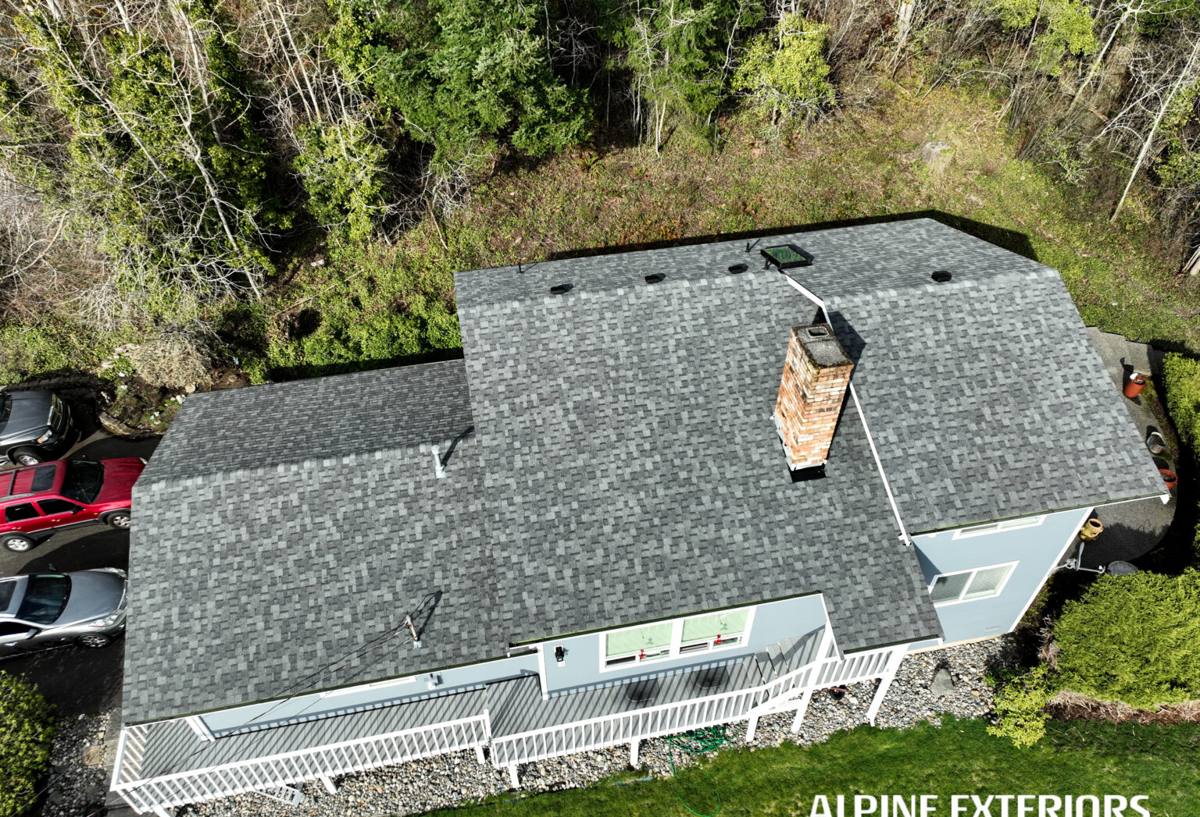
Why Everson Roofs Take Extra Punishment
Whatcom County's marine-influenced climate hits inland communities like Everson a little differently than it hits Ferndale or Bellingham right on the water. There's less direct salt exposure here, but the tradeoff is more standing moisture — river-bottom humidity, shaded rooflines, and slower drying times after every rain event. That combination is exactly what moss, algae, and slow-leak damage need to take hold.
Driving Rain
Wind-driven rain doesn't just fall straight down — it gets pushed sideways under shingle tabs, around flashing, and into any gap that's even slightly open. A roof that would shed a light rain without issue can take on water during a real Whatcom County storm if a seal has failed or a shingle has lifted.
Wind Events
The Nooksack valley can funnel and accelerate wind during fall and winter storm systems. Gusts don't have to be extreme to do damage — they just have to catch a shingle edge that's already brittle from age or UV exposure and peel it back.
The Long Moss Season
Between the rain frequency and the shade from mature trees, moss and moisture-loving growth get a long runway in Everson. Moss holds water against the roof surface, works its way under shingle edges, and accelerates granule loss — turning a roof that would otherwise last another decade into one that's vulnerable to storm damage well before its time.
What Storm Damage Actually Looks Like
Storm damage isn't always a dramatic hole in the roof. Most of what we find on Everson service calls is subtler than that, and it's often the subtler damage that causes the worst long-term problems because it goes unnoticed.
Wind and Debris Damage
- Lifted, cracked, or missing shingle tabs, especially along ridges and exposed roof edges
- Bent, loosened, or torn-off flashing around chimneys, vents, and skylights
- Impact marks or punctures from falling branches
- Gutters pulled loose or downspouts disconnected, which redirects water back toward the roofline
Water Intrusion
Water damage from a storm often shows up somewhere other than where it entered. A leak that starts at a failed flashing seal can travel along the decking and show up as a stain on a ceiling several feet away. This is why a proper storm inspection checks the attic and decking, not just the visible shingles.
Moss and Organic Buildup Following a Wet Stretch
After an extended wet period, moss and algae growth can accelerate quickly, especially on north-facing or shaded sections of roof. Left alone, it lifts shingles from underneath and holds moisture against the roof deck — damage that isn't caused by a single storm but that a storm will expose and worsen.
What a Correct Storm Damage Repair Involves
A repair that only addresses what's visible from the ground is a repair that will need to be redone. Doing it right means checking the whole system, not just the surface layer.
The Inspection
We walk the roof (not just look at it from a ladder) and check the attic from the inside where access allows. We're looking for the source of the damage, not just the symptom — a stained ceiling patch is a symptom; a torn flashing seal three feet away is the source.
Decking and Underlayment
If water has been getting in for any length of time, the decking underneath the shingles may be soft, delaminated, or rotting. Underlayment that's been compromised needs to be replaced, not patched over — reusing damaged underlayment is one of the most common shortcuts that leads to a repeat repair call within a year or two.
Flashing and Seals
Flashing around chimneys, vents, skylights, and roof-to-wall transitions is where most storm leaks actually originate. Correct flashing repair means proper overlap and sealing to shed water — not just a bead of caulk over the problem.
Matching Materials
Where we're doing a partial repair rather than a full replacement, we match shingle profile, color, and weight as closely as the market allows so the repair blends in rather than standing out as an obvious patch.
Repair vs. Replacement: How We Make the Call
| Sign | Usually Points to Repair | Usually Points to Replacement |
|---|---|---|
| Damage location | Isolated to one section or slope | Spread across multiple slopes |
| Roof age | Under 10-12 years, otherwise in good shape | Nearing or past expected lifespan |
| Decking condition | Solid, no soft spots found | Soft, rotted, or delaminated in multiple areas |
| Shingle granule loss | Minor, localized | Widespread and consistent across the roof |
| Prior repair history | First significant issue | Repeated patch jobs over the years |
We'll tell you honestly which category your roof falls into, and why — not steer you toward the bigger job by default.
Our Process, From Call to Closeout
- Initial contact and scheduling. We ask what you're seeing and when the damage occurred, then get a technician out to look at it in person.
- On-site assessment. Full roof walk, attic check where possible, and photo documentation of everything we find.
- Written scope and estimate. You get a clear explanation of what's damaged, what needs to happen, and a written price before any work starts.
- Repair. Decking, underlayment, flashing, and shingle work completed in that order — never shingles over a compromised deck.
- Cleanup and walk-through. Site cleaned of debris and old material, and we walk the completed work with you before we consider the job done.
Insurance and Storm Claims
If your storm damage is significant enough that you're considering a homeowner's insurance claim, our documentation from the inspection — photos, notes, and a written scope — can support that process. We're not a public adjuster and we won't promise a claim outcome, but we'll give your insurer accurate information about what happened to the roof and what it takes to fix it correctly.
Materials We Use and Why
For storm repairs, we use shingle and underlayment products rated for the wind and moisture exposure this region actually sees, and we install flashing to manufacturer spec rather than cutting corners to save an hour of labor. On older roofs where an exact shingle match isn't available, we'll walk you through the closest reasonable option and explain the tradeoffs honestly rather than guessing and hoping it blends.
After the Storm: A Homeowner's Quick-Check List
Before a professional inspection, here's what you can safely check from the ground or a window:
- Look for shingles in the yard or gutters after a wind event — that's a clear sign of roof damage
- Check ceilings and upper-floor walls for new stains, especially after several days of rain
- Look at gutters and downspouts for separation or sagging
- Note any visible sagging or unevenness along the roofline
- Check attic insulation for damp spots if you have safe access
- Avoid getting on the roof yourself after a storm — wet, damaged roofing is not safe footing
Why a Crew That Already Works Everson Matters
A contractor who already services this part of Whatcom County knows what the local moisture and moss patterns typically do to a roof over time, understands the permitting and code expectations that apply in the county, and isn't learning the area on your dime. That local familiarity translates into faster, more accurate assessments and repairs that account for what's actually likely to happen to your roof again next storm season — not just what's wrong with it today.
If you've got storm damage on your Everson home, or you're not sure whether what you're seeing needs a repair, request a free, no-pressure estimate using the form below. We'll take an honest look and tell you what we find.