 Ferndale
 Windows in Everson's River Valley Climate
Everson sits along the Nooksack River, a few miles inland from Ferndale and the rest of the Whatcom County coastline. That inland position changes the weather profile a little compared to homes right on Bellingham Bay — less direct salt exposure, but more valley fog, standing humidity off the river bottomland, and the same long, wet Pacific Northwest winter that soaks the whole county from October through May. Whatcom County's marine-influenced climate means driving rain, extended damp stretches, and a moss season that can run half the year on shaded or north-facing walls. Windows are one of the first places that moisture finds a way in if the installation wasn't done right the first time.
Older single-pane or early dual-pane windows in this area tend to show their age through fogged glass, swollen wood jambs, and soft trim below the sill — not because the window itself was bad, but because water worked its way behind the frame over years of freeze-thaw cycles and constant dampness. A correct installation is as much about how the window is sealed and flashed into the wall as it is about the window unit itself.
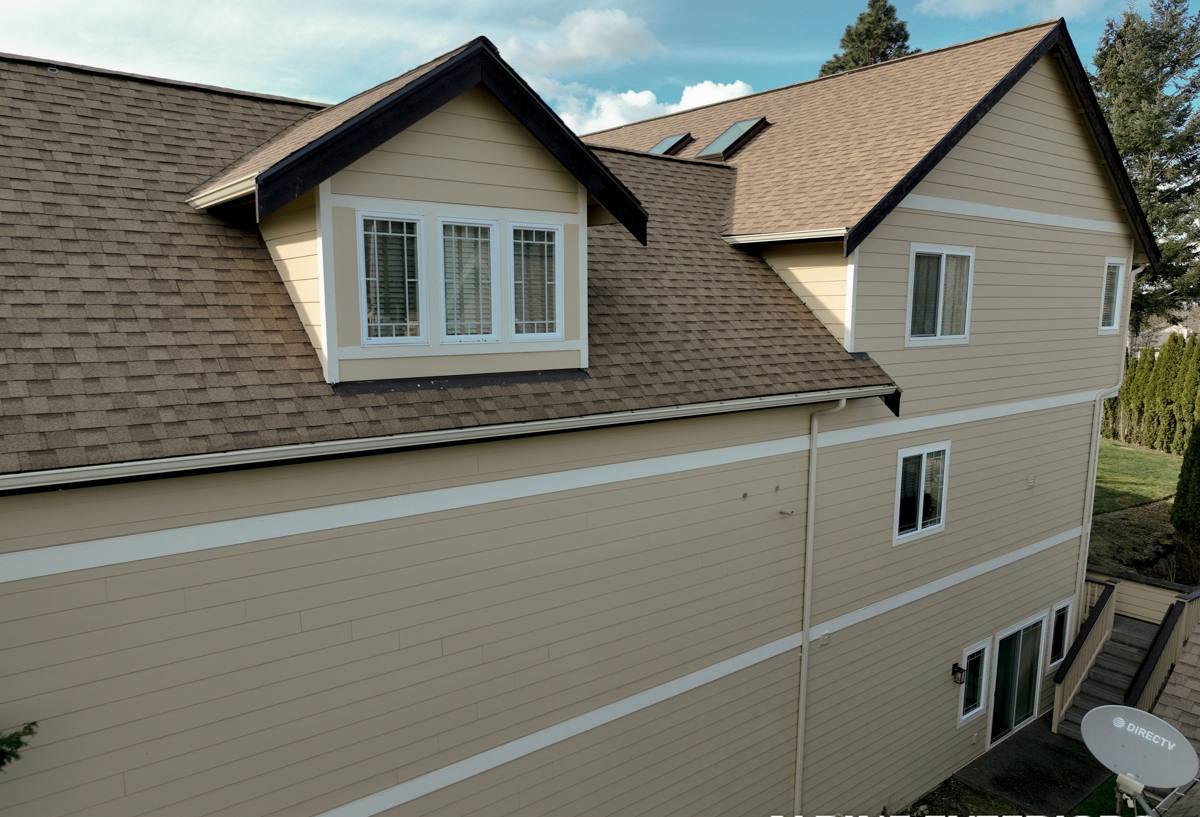
What Correct Window Installation Actually Involves
Swapping glass is the easy part. The work that actually protects a home for the next 20-30 years happens in the rough opening, behind the trim, where nobody sees it once the job is done.
Flashing and Water Management
Every opening needs a sill pan to catch and direct any water that gets past the window itself, plus properly lapped house-wrap and flashing tape at the head, jambs, and sill so water sheds outward and downward — never inward, and never trapped behind the siding. In a climate that sees this much sustained rain, a missed or reversed flashing lap is the single most common cause of hidden rot we find when we open up a wall.
Air Sealing and Insulation
The gap between the window frame and the rough opening needs to be sealed with a proper backer rod and low-expansion foam or sealant — not just caulked shut around the trim, which looks fine for a year or two and then cracks. Done right, this gap also becomes a thermal break that keeps heating bills down through Whatcom County winters.
Fastening and Structural Fit
Windows need to be shimmed plumb, level, and square, then fastened per the manufacturer's schedule — not just nailed through the flange wherever it's convenient. An out-of-square window binds, won't lock tight, and lets in more air and water than it should.
Signs an Everson Home Needs Window Attention
Most homeowners don't think about their windows until something is visibly wrong, but there are earlier warning signs worth catching before they turn into siding or framing repairs.
- Fogging or condensation between the panes of a double-pane window (the seal has failed)
- Soft, discolored, or peeling trim and siding directly below or beside a window
- Drafts you can feel with a hand near the frame on a windy day
- Windows that are hard to open, close, or lock — a sign the frame has shifted or swollen
- Visible moss or dark streaking on the wall surface near or below a window, especially on north- or shade-facing walls
- A noticeably colder room, or a heating bill that's crept up without an obvious cause
- Paint failure or bubbling on interior sills and jambs, which usually means moisture is already inside the wall
Any one of these is worth a look. A few together usually means water has already gotten behind the original installation, and the fix is more than just a new window.
Our Window Installation Process
We run the same process on every job because it's the process that actually holds up in this climate, not because it's the fastest way through a schedule.
- Assessment. We look at each opening individually — sill condition, framing, existing flashing, and any signs of prior water intrusion — before we quote anything.
- Removal, done carefully. The old window comes out without tearing up more siding or trim than necessary, and we inspect the framing underneath while it's exposed.
- Repair before install. If we find soft wood, missing flashing, or old caulk standing in for real weatherproofing, we address it before the new window ever goes in. Installing a good window into a bad opening just delays the same problem.
- Sill pan and flashing. A proper drainage plane goes in first, lapped correctly so water always moves outward and down.
- Set, shim, and fasten. The window is set plumb, level, and square, then fastened to the manufacturer's spec.
- Seal and insulate. Backer rod and sealant around the interior gap, low-expansion foam where appropriate, and exterior caulking at the trim joints.
- Trim and finish. Interior and exterior trim is reset or replaced to match the home, and everything is checked for smooth operation before we leave.
Insert Replacement vs. Full-Frame Replacement
Not every window needs the same approach. The right call depends on the condition of the existing frame, not just the age of the glass.
| Factor | Insert (Pocket) Replacement | Full-Frame Replacement |
|---|---|---|
| Best for | Sound existing frame, no rot or water damage | Damaged frame, sill, or evidence of past leaks |
| What's removed | Old sash and glass only; original frame stays | Entire window unit down to the rough opening |
| Access to flashing | Limited — existing flashing is reused | Full — flashing and sill pan can be replaced and upgraded |
| Exterior trim/siding disturbed | Minimal | Yes, trim and sometimes adjacent siding is opened up |
| Typical timeline | Faster, less labor per window | Longer, more labor per window |
| When we recommend it | Frame tests solid and dry on inspection | Any sign of rot, soft wood, or prior leaking around the opening |
We won't sell an insert replacement over a frame that's already compromised just because it's the cheaper path — that just seals the problem behind new glass. If the opening isn't sound, we say so before we quote it.
Choosing Windows for This Climate
Vinyl and fiberglass frames both perform well against the moisture and temperature swings common to Whatcom County, and both are common, sensible choices for Everson homes. Wood-clad windows can look excellent but demand more upkeep in a climate this wet — exposed wood surfaces need consistent maintenance to keep water from finding a way into the substrate, especially under eaves that stay shaded and damp through moss season. We're upfront about that maintenance trade-off rather than steering every homeowner toward the highest-end option regardless of what their home and habits can support.
For glass, a dual-pane, low-E unit is the practical standard here — it manages heat loss well through cold, wet winters and cuts down on interior condensation, which matters when indoor humidity stays elevated for months at a time. Argon-filled units add a modest efficiency bump; whether that's worth the incremental cost depends on the specific home and budget, and we'll walk through that honestly rather than upselling by default.
Cost Factors to Expect
Every home and every opening is different, so exact numbers only come after a look at the actual job. In general terms, cost is driven by a handful of factors:
| Factor | Effect on Cost |
|---|---|
| Insert vs. full-frame replacement | Full-frame costs more due to added labor, flashing, and trim work |
| Frame material (vinyl, fiberglass, wood-clad) | Material cost varies; wood-clad runs higher |
| Number and size of openings | Larger and more numerous windows increase total cost |
| Hidden damage found at removal | Rot or old water damage adds repair cost before install |
| Access and site conditions | Second-story or hard-to-reach openings add labor time |
| Trim and siding matching | Custom or matched trim work adds finishing time |
We give a written, itemized quote before any work starts, so there's no guessing about what's included.
Why a Ferndale-Based Crew Matters in Everson
A crew that already works this part of Whatcom County has seen how the same construction era of homes tends to fail here — where flashing was commonly skipped, which trim details hold up and which don't, and how differently a north-facing wall in a river valley behaves compared to a wall exposed to wind off the water closer to Ferndale itself. That's not something a crew coming in from outside the area picks up on the first visit. It also means we're a short drive away if a question comes up after the install, not managing the job from another county.
We're not a large outfit chasing volume across the region — we take on the jobs we can do properly and stand behind, in the towns we actually know.
Permits and Timing
Whatcom County and local jurisdictions may require permits for window replacement depending on the scope of the work, particularly if structural framing is altered. We handle that conversation as part of the quote so there are no surprises mid-project. As for timing, most homeowners in this area plan window work for a dry stretch when possible, but a properly run job with good weather protection during the opening can be done responsibly outside of peak summer too — we'll be straight with you about what the forecast means for your specific project before we schedule it.
If your windows in Everson are drafty, fogged, hard to operate, or showing water damage at the trim, we're happy to take a look and give you a straightforward, no-pressure estimate — just fill out the form below.