 Ferndale
 Building Decks for a Coastal Corner of Whatcom County
Homes in and around Lummi Nation sit close enough to the water that the air itself becomes part of the construction problem. Salt-laden moisture moves through fasteners, finishes, and framing differently here than it does ten miles inland in Ferndale proper. Add in the driving, sideways rain that this part of Whatcom County gets several months a year, plus a moss season that can run from October well into April, and you have a set of conditions that punishes decks built to a generic, one-size-fits-all spec. A deck that would hold up fine in a drier part of the state can start showing corrosion, soft spots, or slick, moss-covered boards within a few seasons out here.
This page is about what it actually takes to build a custom deck that holds up in this specific environment — not a general "how to build a deck" overview, but the material choices, hardware, drainage details, and maintenance realities that matter for homes in this part of the county.
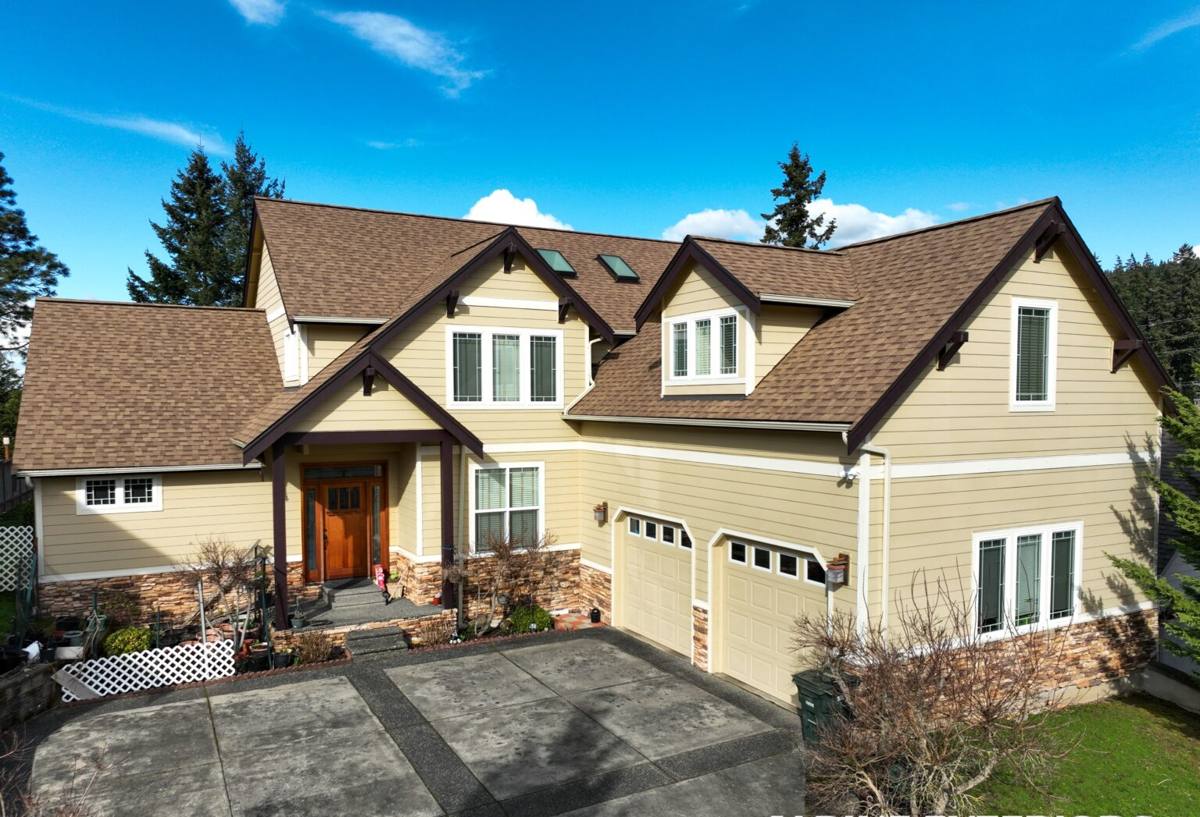
What Salt Air Does to a Deck Over Time
Fasteners and Hardware
Standard electro-galvanized screws and nails are not built for salt-air exposure. Over a few years, the zinc coating breaks down faster near the water than it would further inland, and once that coating is compromised, corrosion sets in at the fastener heads first — which is exactly where a deck's structural connections and visible surface both depend on that hardware staying solid. We use stainless steel or heavy-duty coated fasteners rated for coastal exposure on every deck we build in this area, not as an upsell, but because it's the only approach that makes sense given where the deck sits.
Metal Connectors and Flashing
Joist hangers, post bases, and ledger flashing are all metal, and all exposed to the same salt-air corrosion risk as fasteners. We spec coated or stainless connectors throughout the substructure, and we pay close attention to any point where dissimilar metals might touch — that kind of contact can accelerate corrosion in ways that aren't obvious until years later when the connection has already weakened.
Driving Rain, Ledger Attachment, and Waterproofing
Wind-driven rain doesn't just fall — it gets pushed sideways and upward under lap joints, behind ledger boards, and into any gap that a calmer climate could get away with. The ledger board (where the deck attaches to the house) is the single most common source of long-term rot and hidden water damage on decks in this region, because it's a connection point between two structures that are supposed to stay separate.
A correct ledger installation includes:
- Proper flashing that directs water away from the house band joist, not just a bead of caulk
- A gap or drainage plane between the ledger and the siding so trapped moisture has somewhere to go
- Lag bolts or through-bolts sized and spaced for the actual load, not just what's fast to install
- Sealant at every fastener penetration through the flashing
We've seen decks in this area fail at the ledger long before the decking boards themselves showed any wear, simply because the original installation treated flashing as optional.
Choosing a Decking Material for This Climate
There's no single "best" decking material — there's a best material for a given budget, maintenance tolerance, and exposure. Here's how the common options actually perform in a salt-air, high-rain, moss-prone environment:
| Material | Moisture & Salt Air Behavior | Moss/Algae Resistance | Maintenance |
|---|---|---|---|
| Cedar (real wood) | Naturally rot-resistant when sealed; needs re-sealing to stay that way | Moderate — moss will still colonize shaded, damp boards | Annual cleaning and re-staining or sealing |
| Pressure-treated pine | Good if fasteners and flashing are correct; treatment protects the wood, not the hardware | Low-moderate — needs regular cleaning | Cleaning plus periodic staining/sealing |
| Composite decking | Very good — doesn't absorb water or rot | Better than wood, but still needs cleaning in shaded, damp spots | Occasional washing; no staining or sealing |
| PVC/capped composite | Excellent — fully moisture-sealed surface | Best of the group, though nothing is fully immune in a wet, shaded yard | Lowest — soap and water as needed |
We'll walk you through this trade-off honestly during your estimate: real wood costs less up front and looks the way a lot of homeowners want a deck to look, but it asks for more of your time every year. Composite and PVC cost more initially but hand you back a lot of that annual maintenance, which matters if the deck sits somewhere shaded and damp for most of the year.
Framing and Footings Built for the Ground Here
Footing Depth and Soil
Footings need to be sized and set to the depth required for this part of Whatcom County, accounting for local frost depth and soil conditions. Soil near the water can also hold more moisture year-round, which affects how a footing settles over time. We don't guess on this — footing depth and size are calculated for the actual site, not copied from a generic plan.
Joist Spacing and Board Direction
Tighter joist spacing than code minimum gives decking boards more support and less flex, which matters more once boards are wet from rain for a large share of the year — wet wood and wet composite both behave differently under load than dry material. We also think about board direction and slope together, not separately, since the two decisions affect how well the deck sheds water in the first place.
Drainage and Slope: The Difference Between a Deck That Dries and One That Doesn't
A deck surface needs a slight slope away from the house — usually a small fraction of an inch per foot — so water actually runs off instead of pooling. On a deck that gets driving rain from multiple directions through the fall and winter, that slope is what determines whether the surface dries out between storms or stays damp long enough for moss and algae to take hold.
Before we consider a deck finished, we check for:
- Consistent slope across the full deck surface, not just near the house
- Gaps between boards sized correctly for the material, so water and debris pass through instead of sitting on top
- Clear space underneath the deck for airflow, so the underside can dry out between rain events
- No low spots where leaves and needles can collect and hold moisture against the boards
- Stair and landing surfaces that drain the same way the main deck does
Moss doesn't need much — shade, moisture, and time. A deck that's designed to shed water and dry out between storms will simply grow far less of it than one that wasn't.
Railings and Structural Connections for Exposed Sites
Many homes in this area have deck sites that are more exposed to wind off the water than a typical inland lot. Railing posts need to be through-bolted to the frame, not just screwed to the rim joist, and the connection between posts and framing has to be engineered for lateral load, not just for looking sturdy. We treat railing hardware the same way we treat the rest of the fasteners on the deck — rated for the exposure, not just whatever's on the shelf.
Our Process for Custom Deck Projects Here
Every deck we build starts with an in-person site visit, because the right approach depends on the specific lot — sun exposure, wind direction, how close the site is to the water, existing drainage patterns, and what the home's siding and foundation can support.
- Site visit and design conversation — we look at the site, talk through how you'll actually use the deck, and discuss material options and trade-offs honestly.
- Permitting — homes in and around Lummi Nation can fall under different permitting requirements than the surrounding county, depending on exactly where the property sits. We handle that determination and the permitting process as part of the job, so you're not left figuring out which jurisdiction applies.
- Footings and framing — built to the depth and spec the site actually calls for, with corrosion-rated hardware throughout.
- Decking, railings, and finish work — installed with attention to slope, drainage gaps, and fastener placement.
- Final walkthrough — we go over maintenance expectations for the specific material you chose, so there are no surprises in year two or three.
What to Expect for Upkeep, Season by Season
No deck in this climate is truly maintenance-free, even PVC and composite. What changes by material is how much upkeep and how often. Wood surfaces generally need a real cleaning and inspection before the wet season sets in, plus a check partway through winter for any moss getting a foothold in shaded corners. Composite and PVC decks need far less — mainly periodic washing to keep spores from settling into the surface texture — but "less" isn't "none," especially on a deck that sits mostly in shade for half the year.
We'll give you a realistic maintenance schedule for whatever material you choose, based on your site's actual sun and shade pattern, not a generic manufacturer pamphlet.
Why Local Experience Matters for This Job
A deck built from a generic national spec sheet will meet code. It won't necessarily hold up to years of salt air, driving rain, and moss season in this specific corner of Whatcom County. Hardware choices, ledger flashing, footing depth, drainage slope, and permitting all shift once you're building this close to the water, and a crew that already works in and around Lummi Nation has already made those adjustments — on real jobs, not in theory. That experience shows up less in how a deck looks on day one and more in how it holds up five and ten years in.
If you're planning a new deck or replacing one that's shown its age faster than it should have, we're happy to come take a look. We offer free, no-pressure estimates for custom deck projects in Lummi Nation and throughout the Ferndale area — just fill out the form below and we'll set up a time to walk the site with you.