 Ferndale
 Siding That Can Handle What Cordata's Weather Throws at It
Homes in the Cordata area sit close enough to the water and the lowland weather patterns that move through Whatcom County that siding here takes a different kind of beating than siding in a drier inland climate. Salt-tinged air, driving rain that comes in sideways during winter storms, and a moss season that can stretch from October through April all work on exterior walls year after year. Siding installation in this part of Ferndale's service area isn't just about appearance — it's about choosing a material and installation method that can shed water, resist rot, and keep moss and algae from getting a foothold on the parts of the house that matter.
This page focuses specifically on siding installation for homes in Cordata — what the climate demands, what a correct installation actually involves, and why the details our crews handle every day are the same details that separate siding that lasts twenty-plus years from siding that needs attention again in five.
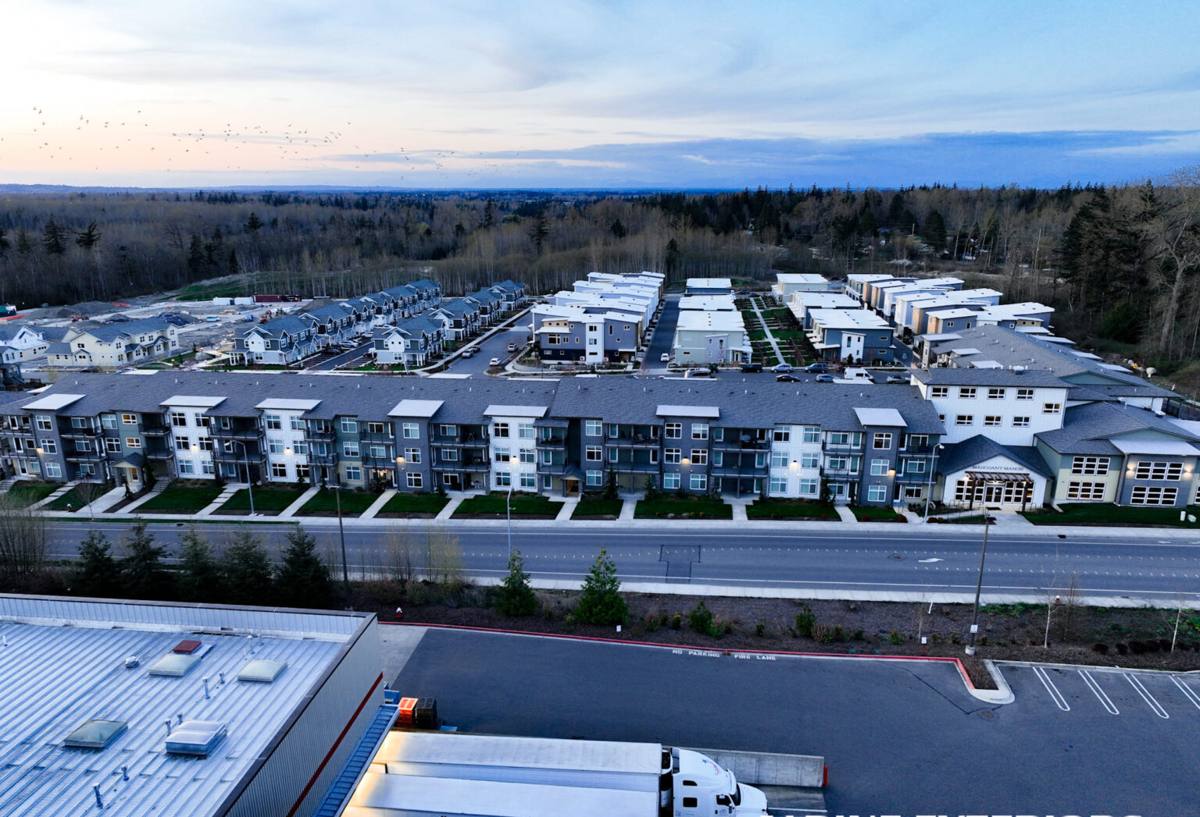
What Coastal Whatcom County Weather Does to Siding Over Time
Three conditions do most of the damage to siding in and around Cordata:
- Salt air: Airborne salt accelerates corrosion on fasteners, trim, and any metal flashing that isn't rated for a marine-influenced climate.
- Driving rain: Wind-driven rain doesn't just run down a wall — it gets pushed sideways and upward into laps, seams, and butt joints that weren't sealed or flashed correctly.
- Extended moss season: Cool, damp, shaded conditions for much of the year give moss and algae a long window to establish on siding that holds moisture, especially on north-facing walls and under tree cover.
None of these conditions are unusual for this part of Washington. The problem is that siding products and installation shortcuts that hold up fine in a drier climate tend to fail faster here, because the margin for error on moisture management is smaller.
Why We Install Only James Hardie Fiber Cement
We made a decision as a company to install one siding system — James Hardie fiber cement — and not vinyl, LP SmartSide, or the other engineered-wood and composite products on the market. That's not a marketing position; it's a standard we hold ourselves to because of what we've seen hold up in this climate and what hasn't.
Fiber cement is non-combustible, and it doesn't swell or delaminate the way wood-based products can when they take on moisture at cut edges or fastener penetrations. It's manufactured with a factory-applied ColorPlus finish that's baked on rather than field-painted, and Hardie engineers regional product formulations — including an HZ5 line suited to wetter climates like ours — specifically to perform in the high-moisture conditions this area sees for much of the year. We'd rather stand behind one system we trust completely than offer several and hope the cheaper ones hold up.
Hardie's product warranty is also transferable to a subsequent homeowner within its term, which matters to anyone evaluating a home in Cordata's resale market — a documented, factory-backed installation carries more weight than a stack of receipts for touch-up paint.
What a Correct Siding Installation Actually Involves
Siding is a system, not just a set of boards nailed to a wall. In a climate like Cordata's, the parts you don't see after the job is done matter more than the parts you do.
Moisture Management Behind the Siding
Every installation starts with a weather-resistant barrier applied correctly over the sheathing, with proper shingle-lap sequencing so water is always directed outward and down. Windows, doors, and any wall penetrations get flashed so water is shed away from the framing, not trapped behind the cladding.
Rainscreen Gap and Drainage
Where conditions call for it, we install a drainage gap between the weather barrier and the siding itself. That gap lets any incidental moisture that gets behind the siding drain and dry out instead of sitting against the back of the boards — a detail that matters far more in a climate with this much annual rainfall than it does somewhere dry.
Fastening and Clearances
Fasteners are set to manufacturer specifications for depth and placement, using corrosion-resistant fasteners appropriate for a coastal-influenced environment. Siding is held to proper clearances above rooflines, decks, and grade so splashback and standing water don't sit against the bottom courses.
Joints, Caulking, and Trim
Butt joints are sealed or flashed per manufacturer spec, not just caulked and hoped for. Trim and corners are installed so that end grain and cut edges — the places fiber cement is most vulnerable if left unsealed — are properly primed and sealed before they ever see weather.
Our Installation Process
- On-site assessment: We look at your home's exposure, existing siding condition, moisture damage if any, and specific trouble spots like north-facing walls or areas under tree cover.
- Scope and product selection: We walk through plank profiles, panel options, and color choices, and put the scope in writing before any work starts.
- Tear-off and inspection: Existing siding comes off and we inspect the sheathing and framing underneath for rot or water damage before anything new goes up.
- Weather barrier and flashing: House wrap, flashing, and drainage details are installed correctly the first time — this is the step that determines how the siding performs for decades.
- Siding installation: Siding is installed to manufacturer fastening, clearance, and joint specifications.
- Trim, caulking, and cleanup: Trim is finished, joints are sealed where specified, and the site is cleaned up before we walk it with you.
Timing matters too. We plan tear-off and weather-barrier work around forecasted dry windows whenever possible, since sheathing shouldn't sit exposed to Cordata's rain for longer than necessary. On multi-day jobs we sequence work so that any exposed wall area is protected or closed in before the next system moves through.
Choosing the Right Hardie Line for a Cordata Home
Hardie makes several product profiles, and the right one depends on your home's style and exposure as much as personal preference.
| Product | Typical Use | Why It Fits This Climate |
|---|---|---|
| HardiePlank Lap Siding | Most common choice for traditional and craftsman-style homes | Shingle-lap profile sheds driving rain effectively when installed to spec |
| HardiePanel Vertical Siding | Board-and-batten look, accent walls, gable ends | Fewer horizontal laps for water to work into on exposed elevations |
| HardieShingle | Cottage and shingle-style accents | Adds texture while keeping the same non-combustible, moisture-stable base material |
| HardieTrim | Corners, fascia, window and door trim | Resists the swelling and cracking wood trim shows first in wet climates |
All of these come with the factory-applied ColorPlus finish, which matters here specifically because a baked-on finish holds up better against the combination of UV, moisture cycling, and algae growth than field-applied paint typically does over time. Most homeowners in this area lean toward tones that hold their depth well under persistent cloud cover — we bring finish samples with us so you can compare colors in your own light before deciding.
What Affects the Cost of Siding Installation in Cordata
Every home is different, but the same handful of factors drive most of the cost variation we see on jobs in this area. We provide a written, itemized estimate so you can see exactly where the cost is going before any work begins.
| Factor | Why It Matters |
|---|---|
| Home size and wall complexity | More square footage and more corners, gables, and dormers mean more material and labor |
| Tear-off vs. new construction | Removing and disposing of existing siding, plus any sheathing repair, adds time compared to new builds |
| Existing moisture damage | Rotted sheathing or framing found during tear-off needs to be repaired before new siding goes on |
| Siding profile and trim detail | Vertical panel accents, shingle-style sections, and heavier trim packages take more labor than a simple lap job |
| Site access | Tight lot lines, second-story work, or limited staging area affect labor time |
We won't quote a number without seeing the home, but we're upfront about which of these factors apply to your project and why.
Signs a Cordata Home Needs New Siding
- Persistent moss or algae growth that comes back within a season of cleaning
- Soft, spongy spots when you press on siding, especially near the bottom courses
- Paint that's peeling, bubbling, or failing faster than it used to
- Visible cracking, warping, or gaps opening up at seams and trim
- Rising heating bills that suggest air and moisture are getting through the wall assembly
- Siding that feels swollen or looks discolored at butt joints and corners
Any one of these on its own isn't necessarily an emergency, but a home showing several of them at once is usually telling you the siding system has stopped doing its job.
Why Hiring a Crew That Already Works in Cordata Matters
Siding installed correctly on paper can still underperform if the crew doing the work hasn't dealt with this area's specific combination of rain exposure, humidity, and moss pressure. A crew that regularly works Ferndale and the surrounding Whatcom County communities already knows which elevations on a given lot need extra attention, how much drainage capacity a wall assembly actually needs here, and where cut corners tend to show up first in this climate. That local repetition is worth more than a generic installation manual — it's the difference between a crew that follows the spec and a crew that understands why the spec exists.
We've worked on enough homes in this pocket of Whatcom County to know that a rushed installation shows up as callbacks within a year or two — moss creeping back faster than it should, caulk failing at the same joints, finish issues that shouldn't happen with a factory-applied coating. Getting the underlying details right the first time doesn't cost more in materials; it just takes a crew willing to slow down on the parts nobody sees once the job is finished.
If you're weighing a siding project for your Cordata home, we're happy to take a look and walk you through what we'd recommend and why — no pressure, no obligation. Fill out the form below and we'll set up a time to come take a look.