 Ferndale
 Asphalt Shingle Roofing Built for Blaine's Coastal Weather
Blaine sits right on the water at the edge of Whatcom County, close to the Canadian border, and that location shapes what a roof has to survive here. Salt-laden air moves in off the coast and works on exposed metal and fasteners year-round. Driving rain off the water finds any weak seam in a roof system, not just the obvious ones. And because so many lots here sit under fir and cedar cover with limited afternoon sun, moss has months longer to establish itself on a north-facing slope than it would a few miles inland. An asphalt shingle roof that's installed correctly for this environment holds up. One that's installed to a generic spec, without those local conditions in mind, tends to show problems early — usually at the flashing, the fasteners, or the shaded slopes first.
This page covers what we look at specifically for asphalt shingle roofing jobs in the Blaine area — what the climate demands, what a correct install actually involves, and what to expect when you work with a crew that already knows this coastline.
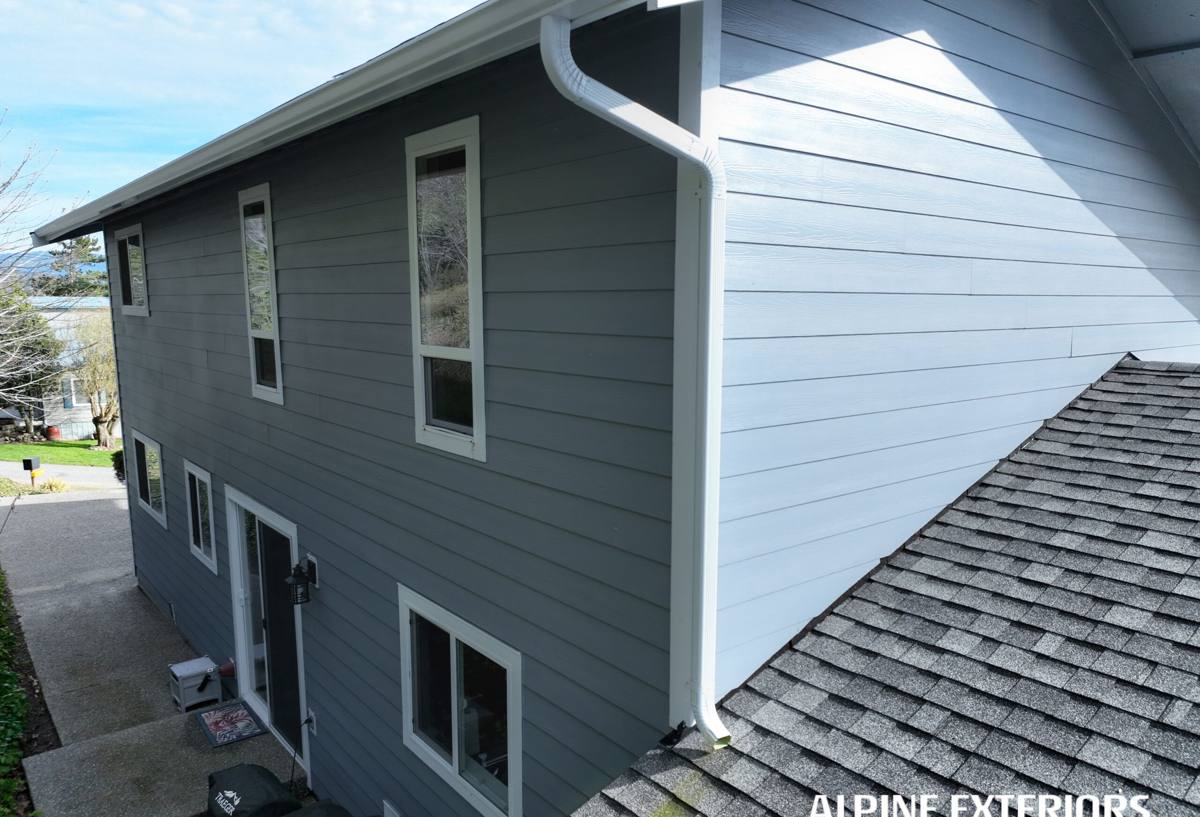
What the Climate Actually Does to a Shingle Roof
Salt Air and Corrosion
Salt in the air accelerates rust on unprotected steel fasteners, cheap flashing, and exposed nail heads. On a coastal roof, this shows up years before it would on the same roof twenty miles inland — as streaking, lifted flashing edges, or nails that back out because the shank has started to corrode. We spec corrosion-resistant fasteners and flashing on every roof we install in this area, not as an upsell, but because it's what the environment requires.
Wind-Driven Rain
Rain that comes in sideways off the water pushes water uphill under shingle tabs and into any gap in the underlayment or flashing detail. A roof built for a drier, calmer climate can get away with looser sealing at valleys, chimneys, and wall transitions. A roof exposed to regular wind-driven rain can't. This is where most leaks on older Blaine roofs actually originate — not through the shingle field, but at a transition point that wasn't detailed for sideways-moving water.
Long Moss Season
Moss needs moisture and shade to take hold, and Whatcom County's coastal properties often have both for most of the year. Once moss establishes on a shaded slope, it holds water against the shingle surface, lifts tabs, and shortens the roof's life if it's left alone. Moss isn't cosmetic — it's a maintenance issue that needs a plan, which we cover further down.
What a Correct Asphalt Shingle Install Involves
A shingle roof is a system, not a single product. Skipping or shortcutting any layer of that system is where premature failures come from, especially in a wet, wind-exposed climate. On every tear-off and re-roof, our process includes:
- Full removal of old roofing material and a decking inspection for soft spots, rot, or delamination before anything new goes down
- Ice-and-water membrane at eaves, valleys, and around penetrations, where wind-driven rain and ice damming are most likely
- A synthetic underlayment across the full field for a secondary water barrier under the shingles
- New metal drip edge at all eaves and rakes
- New flashing at chimneys, skylights, sidewalls, and any roof-to-wall transition — we don't reuse old flashing on a re-roof
- Correct nailing pattern and placement per the manufacturer's spec, adjusted for our wind exposure
- Balanced attic ventilation, checked and corrected as part of the job, not assumed to be fine
Any one of these steps done wrong or skipped is invisible from the ground for the first year or two — then it becomes the reason for a leak, a warranty denial, or an early re-roof.
Choosing the Right Shingle for a Blaine Home
Not every asphalt shingle is built for the same conditions. For coastal Whatcom County homes, we generally steer customers toward products with a higher wind rating and algae-resistant granules, since both address problems this climate actually causes.
| Shingle Type | Typical Lifespan | Wind Rating | Best Fit |
|---|---|---|---|
| 3-Tab | 15–20 years | Lower — often 60–70 mph | Budget re-roofs, sheds, secondary structures |
| Architectural / Laminate | 25–30 years | Higher — commonly 110–130 mph | Most primary homes exposed to coastal wind and rain |
| Impact-Resistant (Class 4) | 30+ years | 110–130 mph | Homes wanting extra durability against wind-driven debris |
We also favor shingles with copper- or zinc-infused granules in this area specifically because they help slow algae and moss growth on shaded slopes — a real advantage given how long our moss season runs. We'll walk through manufacturer options and honest trade-offs at the estimate rather than pushing one brand; the right choice depends on your roof's pitch, sun exposure, and how long you plan to stay in the home.
Signs Your Blaine Roof Needs a Closer Look
Most shingle roof problems give warning signs well before a leak shows up inside the house. Worth checking for, or having us check for you:
- Granules collecting in gutters or piling at downspout outlets
- Shingles curling, cupping, or losing their flat profile
- Dark streaking or thick moss growth, especially on north-facing or shaded slopes
- Rusting, lifting, or gapping flashing around chimneys, vents, and wall transitions
- Soft spots or noticeable give when the roof is walked — this should be checked by a pro, not tested by climbing up yourself
- Visible daylight or damp decking in the attic
Catching these early is almost always cheaper than waiting for interior water damage to show up.
How We Handle a Blaine Roofing Project
Inspection and Estimate
We start with a roof and attic inspection, not just a look from the ground. That's where ventilation problems, moisture staining, and decking issues actually show up. You get a written estimate with the shingle options and scope of work laid out plainly.
Tear-Off and Deck Check
Old material comes off, and we inspect the decking underneath before installing anything new. Any rotten or delaminated sheathing gets flagged and replaced — this is a common point where corners get cut on cheaper re-roofs.
Underlayment, Flashing, and Shingles
Ice-and-water membrane, underlayment, drip edge, and new flashing go in first, then the shingle field, installed to the manufacturer's nailing spec for our wind exposure.
Ventilation Check
We confirm intake and exhaust ventilation is balanced before closing out the job — critical in a marine climate where trapped moisture in an attic causes its own set of problems.
Cleanup and Walkthrough
Full site cleanup, including a magnetic sweep for stray nails, and a walkthrough so you know what was done and what to watch for going forward.
Ventilation and Moisture Control in a Marine Climate
Attic ventilation matters everywhere, but it matters more where humidity stays high for long stretches of the year. Without balanced intake (soffit vents) and exhaust (ridge or roof vents), moist air gets trapped in the attic, condenses against the underside of the decking, and can cause rot, mold, and premature shingle failure from underneath — damage you won't see from the outside until it's advanced. On every re-roof, we check existing ventilation and correct it if it's undersized or unbalanced, rather than leaving a known problem in place under new shingles.
Maintenance After Installation
A well-installed shingle roof in this climate still needs some upkeep to reach its full lifespan:
- Keep gutters clear, especially heading into fall storm season, so water isn't backing up under the eaves
- Address moss early on shaded slopes rather than letting it establish and lift shingle tabs
- Avoid pressure washing shingles — it strips granules and shortens the roof's life; a soft wash or manual clearing is safer
- Have flashing and penetrations checked periodically, since that's where salt-air corrosion shows up first
- Get a quick visual check after any major windstorm
Why Local Experience in Blaine Matters
A roofing crew that works this stretch of Whatcom County regularly already knows which slopes hold moss longest, how much wind exposure to plan for near the water, and which flashing details actually hold up against salt air and driving rain — because they've seen what happens when those details are skipped. That's the difference between a crew reading a manufacturer's generic install sheet and a crew that's installed and repaired roofs in these specific conditions. It shows up in fewer callbacks and a roof that performs the way it's supposed to for its full expected lifespan.
What Affects the Cost of a Shingle Roof in Blaine
| Factor | Why It Matters Here |
|---|---|
| Roof pitch and access | Steeper or harder-to-access roofs take more time and safety setup |
| Number of tear-off layers | Removing old layers or repairing decking underneath adds labor but is often necessary on coastal homes |
| Shingle class chosen | Higher wind-rated architectural shingles cost more upfront but hold up better against coastal wind |
| Ventilation upgrades | Adding or correcting ridge and soffit venting reduces moisture problems tied to our marine humidity |
| Flashing and detail work | Salt air corrodes old flashing faster, so we typically recommend replacing it rather than reusing it |
We're happy to walk through your roof, explain what we're seeing, and put together a straightforward, no-pressure estimate — no obligation, just an honest look at what your roof actually needs. Use the form below to get started.