 Ferndale
 Cordata Roofs Take a Specific Kind of Beating
Cordata sits close enough to the water and the open farmland north of Bellingham that its roofs deal with a combination most inland neighborhoods don't: salt-laden air moving in off the Strait, wind-driven rain that doesn't fall so much as get pushed sideways under eaves and flashing, and a wet season that runs long enough to keep moss and moisture working on a roof for most of the year. None of that means Cordata roofs fail faster than roofs anywhere else in Whatcom County. It means storm damage here tends to be subtler than a dramatic missing shingle, and it tends to get worse quietly if nobody looks closely after a bad windstorm or a stretch of hard rain.
This page is specifically about storm damage roof repair for homes in and around Cordata — what causes it, what a correct repair actually involves, and how our process works when you call us after a storm.
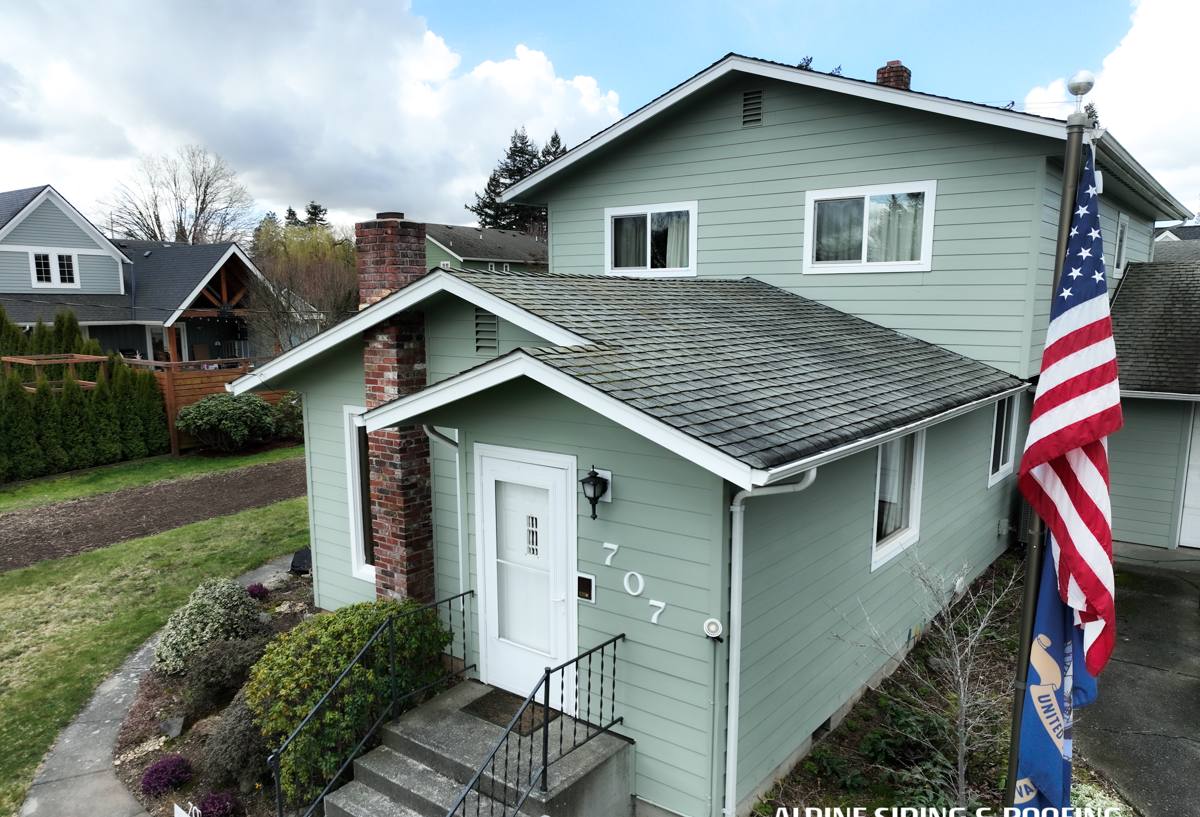
What Storm Damage Actually Looks Like Here
Storm damage on a Cordata roof rarely announces itself the way people expect. Homeowners picture a tree limb through the roof deck, and sometimes that does happen during a strong windstorm. But most of the storm damage we get called out for is less obvious:
- Shingles lifted or creased at the tab by sustained wind, then re-settled — they look fine from the ground but no longer seal properly
- Flashing around chimneys, skylights, and roof-to-wall transitions worked loose by repeated freeze-thaw and wind flex
- Wind-driven rain forced up under shingle edges and into the underlayment, especially on the windward side of the roof
- Granule loss from wind abrasion that thins a shingle's UV and weather protection without an obvious hole
- Gutters pulled away from fascia by wind load, redirecting runoff into places it shouldn't go
Any one of these can sit for months without an interior leak showing up, because water often finds a path along the deck or down a rafter before it drips through drywall. By the time a homeowner sees a ceiling stain, the damage has usually been active for a while.
The Long Moss Season Factor
Whatcom County's wet season isn't a few weeks — it's most of the year, and that matters for storm-damaged roofs in particular. Once a storm lifts or cracks a shingle tab, that spot holds moisture longer than the rest of the roof. Moss and algae take hold there first, and moss doesn't just sit on top of a shingle — it works its rhizoids under the tab edge and holds water against the granule surface, which accelerates exactly the kind of wear that storm wind already started.
That's why we treat moss growth concentrated in one area of a roof as a possible storm-damage marker, not just a maintenance issue. A roof that's evenly mossy from age is a different conversation than a roof that's clean everywhere except a patch downwind of the last big storm.
Why This Matters for Timing
A shingle that's been creased or lifted by wind but not yet leaking is a repair. The same shingle left through another two or three months of Whatcom County rain, with moss taking hold underneath it, is often a deck-level repair or a full section replacement. The window between "quick fix" and "bigger job" is narrower here than in drier climates, which is the main reason we recommend a roof check after any storm with sustained wind, not just after ones that make the news.
What a Correct Storm Damage Repair Involves
A storm repair done right isn't just replacing what's visibly broken. It has a few consistent steps regardless of how big or small the damage is:
1. Full-Roof Inspection, Not Just the Reported Spot
Wind damage is rarely confined to one shingle. We check the whole roof plane, the flashing details, and the gutter line — not just wherever the homeowner noticed a problem — because the same wind event that caused the visible damage usually stressed nearby areas too.
2. Deck Assessment Before Any Shingle Goes Back Down
If water got under the shingle layer, the deck itself may have taken on moisture. Covering a soft or damp deck with new shingles just traps the problem. Any area with sustained water intrusion gets checked at the deck level before we close it back up.
3. Matching Materials and Method, Not Just Color
A patch repair needs to integrate with the existing roof's shingle type, nailing pattern, and flashing style — not just look similar from the street. A mismatched repair is often where the next leak starts, especially at flashing transitions.
4. Flashing and Underlayment Get the Same Attention as Shingles
Storm damage that compromises flashing around a chimney, vent, or wall transition is a common source of repeat leaks if the flashing gets reused instead of replaced or properly resealed.
Our Process, Start to Finish
| Step | What Happens |
|---|---|
| Initial call | We talk through what you noticed — visible damage, a leak, or just wanting a check after a storm |
| On-site inspection | We walk the roof (or use a ladder/drone where pitch or access requires it) and document what we find |
| Written findings | You get a plain explanation of what's damaged, what's normal wear, and what we'd recommend — no pressure to do more than the roof needs |
| Repair or replacement scope | For contained damage, we scope a targeted repair; if damage is widespread or the roof is near end of life, we'll say so honestly |
| The work | Repairs are completed with matched materials, proper flashing and underlayment detail, and cleanup of debris |
| Follow-up | We confirm the repair is holding, particularly through the next heavy rain |
Repair or Replace: How We Help You Decide
Not every storm-damaged roof needs a full replacement, and we don't default to recommending one. The decision usually comes down to a few honest factors:
| Factor | Leans Toward Repair | Leans Toward Replacement |
|---|---|---|
| Extent of damage | Isolated to one section or a handful of shingles | Spread across multiple roof planes |
| Roof age | Roof has significant life left | Roof is already near the end of its expected service life |
| Deck condition | Deck is dry and sound | Deck shows rot or sustained saturation |
| Prior repairs | This is the roof's first significant repair | Roof has a history of repeated patch repairs |
| Material availability | Matching shingles are still available | Original shingle line is discontinued, making a clean match impossible |
We'll walk you through where your roof falls on this before recommending anything.
Insurance and Documentation
Wind and storm damage is often covered under homeowners insurance, but claims move faster and cleaner when the damage is documented properly. We provide clear photos and a written description of what we found and what caused it, which you're free to submit with a claim. We're not a public adjuster and won't tell you what your policy covers — that's a conversation with your insurer — but we make sure the roof-side documentation holds up.
Why a Crew That Already Works Cordata Matters
Roofing crews who work Cordata and the surrounding Ferndale area regularly see the same storm patterns repeat — which roof orientations take the worst wind-driven rain, which flashing details tend to fail first in this climate, and how quickly moss takes hold once a shingle is compromised. That's not a substitute for a careful on-site inspection of your specific roof, but it does mean we're not guessing at what's normal for this area versus what's actual storm damage. A crew unfamiliar with Whatcom County's wet season can miss the early signs that matter most, or over-recommend work a roof doesn't need yet.
Signs Your Roof Should Be Checked After a Storm
- Any shingles found in the yard or gutters after high wind
- New or worsening ceiling stains, even faint ones
- Gutters pulled loose, sagging, or separated from fascia
- Visible moss or dark streaking concentrated in one area rather than spread evenly
- Daylight visible through the attic roof deck
- A noticeable increase in attic humidity or a musty smell after rain
- Flashing that looks bent, lifted, or separated around chimneys and vents
If any of these sound familiar, it's worth having someone look before the next round of Whatcom County rain finds the weak spot for you.
Get a Straightforward Look at Your Roof
If a recent storm has you wondering whether your Cordata home's roof took real damage or just a scare, we're glad to come take an honest look. The estimate is free, there's no pressure to move forward with anything, and you'll walk away knowing exactly where your roof stands. Use the form below to get started.