 Ferndale
 Siding Repair for Everson-Area Homes
Homes in and around Everson sit inland from Bellingham Bay, but "inland" doesn't mean sheltered. This stretch of Whatcom County still gets pushed by damp westerly weather, long stretches of low-angle sun that never quite dries a north wall, and a wet season that can run from October well into April. Siding here doesn't fail because it's old — it fails because water found a way in and nobody caught it early. Our job on a repair call is simple: figure out exactly where that entry point is, fix it correctly, and make sure the repair matches the performance of the wall around it, not just the color.
We get calls on everything from a single cracked panel near a downspout to soft trim boards along an entire elevation. Some of it is cosmetic. A lot of it is the first visible sign of moisture that's already been working behind the surface for a season or two. Knowing the difference is most of the job.
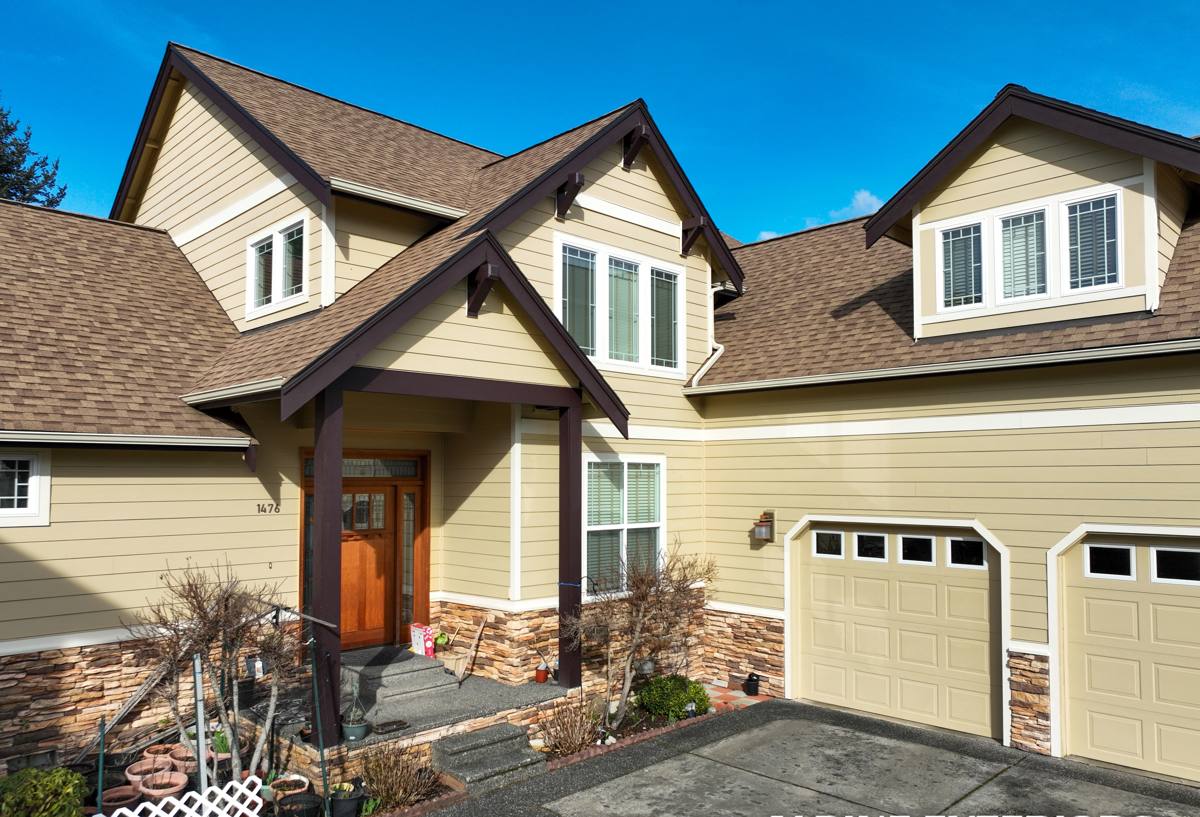
What Whatcom County Weather Does to Siding Over Time
Three things drive most of the repair work we see in this part of the county:
Driving Rain
Storms coming off the water don't just fall straight down — they drive sideways into walls, especially on west and south-facing elevations and anywhere a roofline, deck, or dormer creates a channel for wind-blown water. Siding systems are built to shed that water, but only if every joint, seam, and penetration is flashed and caulked correctly. One missed detail and driving rain finds it, every storm, for years.
Salt-Tinged, Humid Air
Whatcom County's proximity to the Strait of Georgia and Bellingham Bay means the air carrying that rain also carries salt and constant moisture, even a few miles inland. That combination is hard on fasteners, caulk, and any siding product that isn't engineered to handle repeated wet-dry cycling. Salt-laden humidity accelerates corrosion at nail heads and trim connections faster than dry-climate weather ever would.
Moss Season
Shaded, north-facing walls and anything near overhanging trees stay damp longer here than most homeowners expect — often most of the year. Moss and algae don't just look bad; they hold moisture directly against the siding surface, which is exactly the kind of sustained dampness that breaks down caulk joints, softens wood trim, and, over time, works its way behind panels that aren't lapped or sealed correctly.
Signs an Everson Home Needs Siding Repair
Most siding damage announces itself quietly before it becomes expensive. Walk your exterior a couple of times a year and look for:
- Soft or spongy spots when you press on siding or trim, especially near the bottom of walls and around windows
- Visible cracking, chipping, or panels that have pulled away from the wall
- Persistent dark streaking, moss, or algae growth that keeps returning after cleaning
- Bubbling, peeling, or discolored paint — a sign moisture is moving behind the finish
- Gaps or failed caulk at trim joints, window and door casings, and corner boards
- Rust staining running down from fastener heads or metal flashing
- A musty smell or visible staining on interior walls that share an exterior wall with a damaged section
- Warped or buckled panels, particularly on walls that take direct, driving rain
Any one of these is worth a call. Several at once usually means water has been getting in longer than it looks from the ground.
What a Correct Siding Repair Actually Involves
A siding repair that just replaces the damaged piece and stops there often fails again within a year or two, because it never addressed why that spot failed in the first place. A repair done right includes:
Finding the Real Cause
Before anything gets replaced, we trace the water path — often that means pulling back more siding than the visible damage suggests, checking flashing at windows, doors, and roof-to-wall transitions, and confirming the weather-resistive barrier underneath is intact.
Repairing the Water Management System, Not Just the Panel
Siding is one piece of a larger system that includes house wrap, flashing, kick-out flashing at roof lines, and properly lapped joints. If we replace a panel without correcting a flashing detail underneath it, we've just delayed the next repair call.
Matching Materials and Fastening Correctly
New sections need to be fastened, primed, and finished to the same standard as a full installation — not patched in loosely. Mismatched materials or shortcuts at this stage are usually where the next round of trouble starts.
Addressing Moss and Moisture Sources
If overhanging branches, poor grading, or a clogged gutter are keeping a wall wet, we'll flag it. Fixing the siding without addressing the moisture source just resets the clock on the same problem.
Repair or Replace? What Actually Determines the Answer
| Factor | Repair Usually Makes Sense | Replacement Is Likely the Better Call |
|---|---|---|
| Extent of damage | Isolated to one or two sections or elevations | Present across multiple walls or the whole exterior |
| Underlying material | House wrap and sheathing test dry and sound | Sheathing is soft, delaminated, or water-stained |
| Siding material | James Hardie fiber cement in otherwise good condition | Original material is a product we no longer install (see below) |
| Age of the siding | Well within its expected service life | Nearing or past the manufacturer's expected lifespan |
| Cause of damage | A single fixable detail (flashing, caulk, impact damage) | Systemic moisture intrusion behind large sections of the wall |
We'll tell you honestly which category your home falls into. A repair that's likely to fail again within a couple of seasons isn't a good use of your money, and we'll say so instead of patching it anyway.
Our Process on Everson-Area Repair Calls
- Inspection. We look at the damaged area and the surrounding wall assembly — not just the panel that's visibly failing.
- Diagnosis. We identify the actual water path and any contributing factors like grading, gutters, or overhanging vegetation.
- Honest recommendation. We tell you whether a targeted repair will hold, or whether the damage points to a bigger issue worth addressing now rather than later.
- Correct repair. Flashing and water-resistive barrier details get fixed first, then siding and trim are replaced and finished to match.
- Walkthrough. We show you what we found and what we did before we consider the job finished.
Why We Only Repair and Install James Hardie Fiber Cement
When we're called out to repair siding that isn't James Hardie, we'll still assess it honestly and tell you what we're seeing. But when the conversation turns to replacing a damaged section, or a homeowner asks what we'd install in its place, our answer is always the same: James Hardie fiber cement, and nothing else.
That's not a sales preference — it's a standard we built after seeing which products actually hold up to years of Whatcom County weather and which ones require constant attention. Fiber cement doesn't absorb water the way wood-based products can, it's non-combustible, and Hardie's ColorPlus factory finish is engineered to resist the fading and moisture damage that plain field-painted trim struggles with in a climate this consistently wet. Hardie's HZ5 product line in particular is engineered for cold, wet, freeze-prone climates like ours. We'd rather stand behind one product we trust completely than install several we'd have to caveat.
Why Hiring a Crew That Already Works in Everson Matters
Siding repair isn't just carpentry — it's knowing what this specific climate does to a wall over time and where problems tend to originate on homes built for this region. A crew that regularly works Whatcom County knows to check kick-out flashing at roof-wall intersections, understands how long moss season really runs here, and isn't guessing at what "normal wear" looks like on a home that's weathered a decade of Pacific Northwest storms. That local pattern recognition is often the difference between a repair that solves the problem and one that just replaces the symptom.
We also stand behind our own work locally — if a repair we did needs a follow-up look, we're not far away and not guessing at what was done the first time.
Get an Honest Look at Your Siding
If you're seeing soft spots, cracked panels, persistent moss, or just want a second opinion before a small repair turns into a bigger one, we're happy to take a look. Estimates are free, there's no pressure, and we'll tell you straight whether you're looking at a simple repair or something more. Use the form below to get started.