 Ferndale
 Sandy Point Sits Right at the Edge of What Siding Has to Handle
Sandy Point is about as exposed as siding gets in Whatcom County. Homes here sit close to open water, with little in the way of tree cover or terrain to slow down wind and weather before it reaches an exterior wall. That's part of why people live out here — the water views and the openness are the draw — but it means the siding on a Sandy Point home is doing more work, more often, than siding on a similar house set back from the water in Ferndale proper. Salt air, wind-driven rain, and a moss season that barely lets up all put steady pressure on a wall assembly, and the material and installation choices behind that siding matter more here than almost anywhere else in the county.
This page is specifically about James Hardie fiber cement siding for homes in Sandy Point — what the exposure actually does to a wall over time, what a correct installation needs to include out here, and why we think it's worth hiring a crew that already understands this stretch of waterfront rather than a contractor who's never worked this close to the water before.
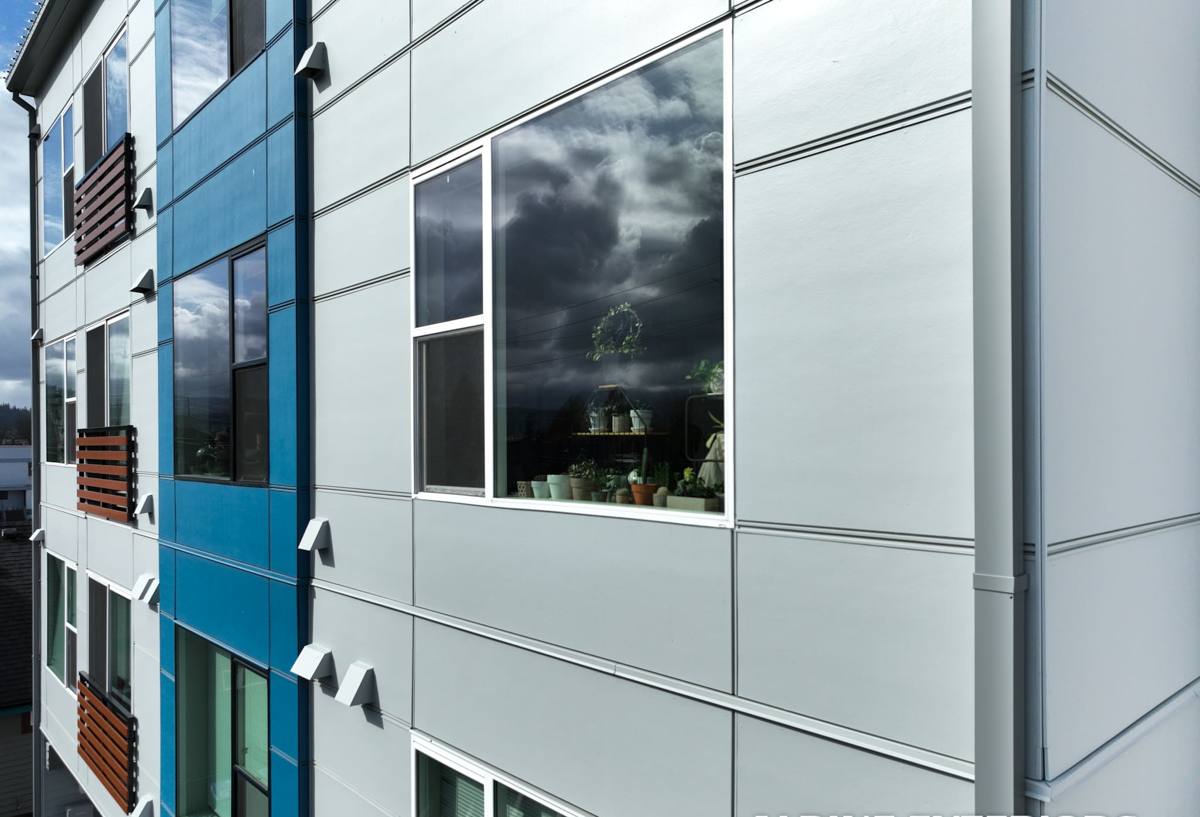
What Sandy Point's Exposure Actually Does to Siding
Salt Air
Air moving off open water carries salt with it, and that salt settles on every exterior surface of a home — siding, trim, fasteners, flashing. Over time it accelerates corrosion in anything metal, which matters more than it sounds like it should, because a corroding fastener loses holding strength and can open a small gap right where it penetrates the siding. That gap doesn't heal itself; it gets slightly worse with every wet cycle. Salt film also holds moisture against a surface longer than plain rainwater would, which is part of why homes directly on the water tend to show weathering sooner than homes even a few blocks inland.
Wind-Driven Rain
Straight-down rain is easy for almost any siding to shed. Rain that's being pushed sideways by open-water wind is a different problem, because it drives into laps, seams, and trim lines that were only designed to handle water moving downward. Waterfront homes in Sandy Point take this kind of exposure regularly, especially on walls that face the prevailing weather, and it tests every seam, corner, and window or door penetration in the siding system at once. Where flashing is missing or undersized, or where the water-resistive barrier behind the siding has a gap, this is exactly where water finds its way through.
A Long Moss Season
Mild, damp conditions keep moss and mildew active across most of the year on shaded or north-facing walls, and organic growth doesn't just look bad — it holds moisture against the siding surface longer than it would otherwise sit there, stretching out every wet-dry cycle the material goes through. On a property this close to water, with consistent ambient humidity, that growing season tends to start earlier and run longer than it does further inland.
Why James Hardie Fits a Waterfront Property Like This
We install James Hardie fiber cement siding exclusively, and Sandy Point is one of the clearest examples of why. Hardie's siding is engineered by climate zone, and the HZ5 product line used in this region is built for exactly the kind of cold, wet, coastal-influenced conditions Sandy Point sees — it's formulated to resist moisture absorption and hold up under sustained damp exposure rather than just tolerating occasional rain. The material itself is a mix of cement, sand, and cellulose fiber, which makes it dimensionally stable: it doesn't swell, cup, or warp with moisture the way wood-based products do, and it won't corrode the way metal siding can in a salt-air environment.
Hardie's ColorPlus factory finish is also worth mentioning specifically for a property this exposed. It's baked on in a controlled factory environment rather than applied on-site, which gives it better adhesion and UV resistance than field-applied paint typically achieves — a real advantage on a wall that's facing constant sun reflection off open water in addition to salt and rain. And because fiber cement is non-combustible, it doesn't add fuel-load risk the way some engineered wood products can, which matters on any home, waterfront or not.
None of this means fiber cement is maintenance-free or immune to the elements Sandy Point throws at it. It means the base material starts from a much stronger position than wood-based or vinyl alternatives, so the installation details around it are working with the material instead of fighting it.
What a Correct Installation Has to Include Out Here
On a typical inland home, a siding crew can get away with slightly looser detailing and the wall assembly still performs fine for years. On a Sandy Point waterfront property, there's much less margin for that. The details below are the ones we treat as non-negotiable on this stretch of coastline specifically.
| Detail | Why It Matters at Sandy Point |
|---|---|
| Corrosion-resistant fasteners and flashing | Salt air accelerates corrosion on standard hardware; stainless or hot-dip galvanized components hold up meaningfully longer this close to the water |
| Drainage gap behind the siding | Gives incidental wind-driven moisture somewhere to go instead of sitting against the sheathing in a high-exposure marine setting |
| Continuous, correctly lapped water-resistive barrier | Any gap becomes a direct entry point when rain is being driven sideways into the wall rather than falling straight down |
| Flashing sequencing at windows, doors, and penetrations | Wind-driven rain tests every seam and opening simultaneously during coastal storms; sequencing has to shed water outward and down with no shortcuts |
| Sealed and primed cut edges | Manufacturer-specified edge treatment keeps moisture from wicking into a cut edge left exposed to salt-laden, humid air |
| Clearance from grade, decks, and roof lines | Waterfront lots often have limited elevation to work with; proper clearance keeps splashback and standing moisture off the bottom courses |
Every one of these is largely invisible once the job is finished — you won't see any of it standing on the sidewalk looking at a finished wall. That's exactly why it's worth asking a contractor to walk through these specifics before they start, rather than assuming a good-looking finished product means the wall behind it was built the same way.
Choosing the Right Hardie Product for the Look and the Location
James Hardie makes several siding profiles, and the right one for a Sandy Point home usually comes down to the style of the house and how much of the exterior faces open water. HardiePlank lap siding is the most common choice for traditional home styles and gives that classic horizontal-lap look. HardiePanel works well for more modern or vertical board-and-batten styles, often paired as an accent. HardieShingle is an option where a homeowner wants a shingled texture without the moisture behavior of real wood shakes. All three come through the same ColorPlus finish system and the same HZ5 climate engineering, so the choice is mostly aesthetic — the underlying performance is consistent across the line.
Our Process for a Sandy Point Job
- On-site assessment. We walk the property, note which walls take the most direct water and wind exposure, and check the condition of existing siding, trim, and flashing before quoting anything.
- Preparation and removal. Old siding comes off carefully so we can inspect the sheathing and water-resistive barrier underneath — this is often the first real look anyone's had at that layer in years, and it tells us if there's already hidden moisture damage to address before new siding goes up.
- Installation. Hardie siding goes on with corrosion-resistant fasteners, a drainage gap where the application calls for it, and flashing sequenced correctly at every window, door, and penetration — the details covered above, applied specifically to that home's exposure.
- Final walkthrough. We go over the finished work with the homeowner, confirm caulking and trim lines are clean, and explain what maintenance to expect given the property's specific exposure.
Long-Term Care for Hardie Siding This Close to the Water
Fiber cement is low-maintenance compared to wood or vinyl, but "low-maintenance" isn't the same as "no maintenance," especially on a waterfront lot. A few habits go a long way:
- Rinse siding periodically to clear accumulated salt film, particularly on walls that face the water directly
- Keep gutters and downspouts clear so water is directed away from the base of the walls rather than sheeting down the siding
- Check caulk joints around windows, doors, and trim every year or two, since caulk is the one part of the system that wears out faster than the siding itself
- Address moss or mildew on shaded walls promptly rather than letting it sit through another wet season
- Watch for any early corrosion staining around fasteners or metal trim and have it looked at before it spreads
Why It's Worth Hiring a Crew That Already Works Sandy Point
Sandy Point is a gated waterfront community, and that comes with its own logistics — site access, and often exterior material or color guidelines that a homeowners' association reviews before work starts. A crew that's already done jobs out here knows how to navigate that process instead of learning it for the first time on your project. More importantly, a crew that's actually worked this stretch of coastline understands, firsthand, how differently the wind and rain behave on an exposed waterfront lot compared to a sheltered inland one — which walls take the worst of it, where flashing tends to get missed on rushed jobs, and what it actually takes to make a wall assembly hold up out here rather than just look good on installation day.
A few things worth confirming with any contractor before they start work on a Sandy Point home:
- Current Washington state contractor licensing and insurance
- Specific experience installing siding on waterfront or high-wind-exposure properties, not just general siding experience
- A clear explanation of how they'll handle flashing, drainage gap, and fastener choice for this specific exposure
- Familiarity with any HOA or community guidelines that may apply to exterior work in Sandy Point
- A written estimate that spells out the Hardie product line, profile, and color rather than a vague "siding replacement" line item
If you're planning a re-side on a Sandy Point property, dealing with siding that's showing its age from years of direct water exposure, or just want a straight answer on what your home's walls are actually facing, we're happy to take a look. Reach out below for a free, no-pressure estimate.