 Ferndale
 Why Sandy Point Decks Wear Differently Than Decks Inland
A deck built five miles inland from Ferndale and a deck built on a canal-front lot in Sandy Point are not fighting the same battle, even though they might use the same lumber and the same fasteners. Sandy Point sits low and close to the water, which means more direct salt air, more standing moisture in the ground under and around footings, and less afternoon sun reaching shaded sides of the house to dry things out. Add in Whatcom County's long stretch of driving rain from fall through spring and a moss season that can run half the year, and you have conditions that push deck problems along faster than most homeowners expect.
None of this means a Sandy Point deck is doomed — it means the repair has to account for what's actually attacking the structure, not just patch what's visible on top.
Signs Your Deck Needs Repair, Not Just Cleaning
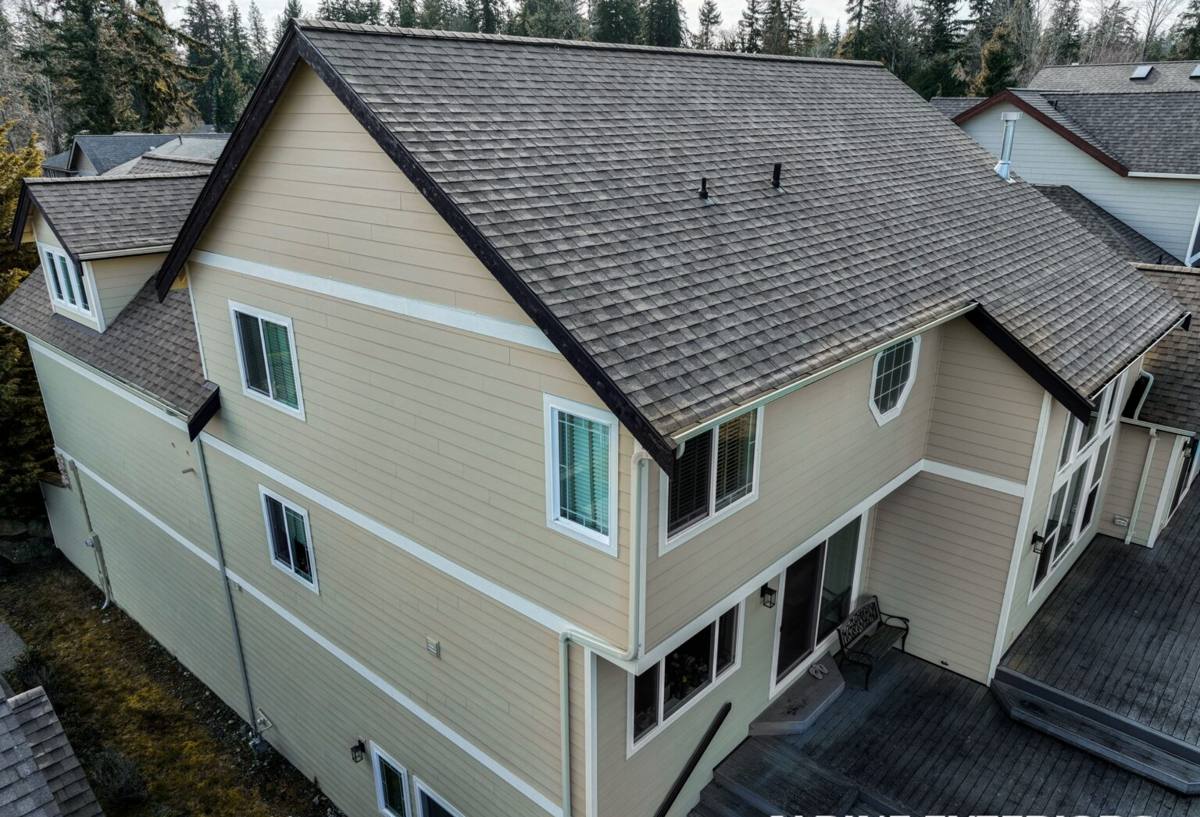
Homeowners often call us for a "quick fix" and it turns into a real repair conversation once we're underneath the deck. A pressure wash can make boards look fine while the framing underneath is already compromised. Before you decide a deck just needs a scrub, walk it and check for these:
- Soft or spongy spots when you walk across the boards, especially near the house or over low-traffic corners
- Rust streaks bleeding out from screw heads, joist hangers, or bolts
- A gap, dark staining, or soft wood where the deck ledger meets the house siding or rim joist
- Any wobble in the guardrail posts when you push on them — this is a safety issue, not cosmetic
- Thick moss or algae buildup that stays green and damp for weeks at a time, especially on the north or shaded side
- Stair stringers that flex or feel uneven underfoot
- Visible daylight gaps opening up between deck boards that weren't there when the deck was newer
Any one of these on its own might be minor. Two or three together usually means moisture has been working on the structure for a while.
What a Correct Deck Repair Actually Involves
A repair that only replaces the boards you can see is a cosmetic fix, not a structural one. A correct repair starts underneath and works up.
The Ledger Board and Flashing
Where the deck attaches to the house is the single most common failure point we find on older decks in this area, and it's almost always a flashing problem rather than a lumber problem. If water has been getting behind the ledger board for years — through missing flashing, cracked caulk used as a substitute for flashing, or a flashing detail that was never installed correctly — the rim joist and even the wall framing behind it can be soft before the deck boards show any sign of trouble. This is the part of the job that should never be skipped just because it's hidden.
Framing, Joists, and Fasteners
Joists, beams, and posts get inspected for rot, checking (splitting along the grain), and any hardware that's corroding faster than the wood around it. In salt-exposed areas, galvanized hardware that would last decades inland can start showing rust in a fraction of that time. Sistering a joist (bolting a new piece alongside a weakened one) or swapping out corroded joist hangers is often more valuable to the life of the deck than anything done to the surface.
Decking Surface and Guardrails
Board replacement, re-fastening loose boards, and guardrail repair happen last, once we know the structure underneath is sound. Guardrail posts in particular need to be checked for how they're actually attached to the framing — a rail that looks solid can still be attached with methods that don't meet current structural standards.
Repair vs. Replacement: How We Decide
Not every deck problem calls for a full rebuild, and not every deck is worth saving as-is. We look at the framing condition first, since that drives the real answer.
| Situation | Usually Points To | Why |
|---|---|---|
| Solid framing, a few bad boards or loose fasteners | Targeted repair | The structure is sound; only the surface layer has worn out |
| Rot at the ledger or rim joist, framing otherwise solid | Localized structural repair | Fixing the water source and rebuilding that section stops the problem from spreading |
| Widespread joist or beam rot, undersized original framing | Full rebuild | Patching individual pieces won't bring the whole structure up to a safe, lasting standard |
| Deck is structurally sound but heavily mossed, gray, or worn-looking | Cleaning and refinishing, minimal repair | Cosmetic wear doesn't require touching the frame |
Cost follows the same logic: a handful of board swaps and hardware upgrades is a modest job, localized framing repair costs more because it involves demolition and rebuild of hidden structure, and a full rebuild is a bigger investment but resets the clock on the whole deck. We'll always show you what we found underneath before recommending which category your deck falls into.
Materials That Actually Hold Up Near Salt Water
What goes into a repair matters as much as the workmanship. A few standards we hold to on jobs in this area:
- Fasteners and hardware: stainless steel or heavy coated fasteners rated for exterior and ground-contact use, matched to whatever decking material is being installed — mismatched metals accelerate corrosion on both sides
- Flashing: a proper metal or membrane flashing detail at the ledger, not caulk alone — caulk fails, flashing sheds water
- Framing lumber: pressure-treated for ground contact where it belongs, sized to actually carry the load rather than just meeting a bare minimum
On decking surfaces themselves, both quality wood and composite boards can work well here — the right choice depends on how much upkeep you want to do. Wood costs less up front and can be repaired board-by-board, but it needs periodic cleaning and refinishing to keep moss and gray weathering in check. Composite costs more initially and won't need staining, but it still needs to be kept clean of moss and debris, and the substructure underneath still has to be built and flashed correctly — composite decking does nothing to protect a poorly built frame underneath it. We'll walk through the honest maintenance trade-offs for your situation rather than push one product as a cure-all.
Our Process, Start to Finish
- Walk the deck with you. We look at the surface, but more importantly we get underneath and check the ledger, framing, and footings before making any recommendation.
- Show you what we find. Photos and a plain explanation of what's cosmetic and what's structural, before any work starts.
- Scope the repair. A clear plan — what gets replaced, what gets reinforced, what hardware and materials we're using and why.
- Do the work in the right order. Structure first, then surface, then rails and finish details — never the reverse.
- Walk it with you again when it's done, so you know what was done and what to watch for going forward.
Permits and Code Basics Worth Knowing
Whatcom County and the local jurisdiction may require a permit for structural deck repair or rebuild work, particularly anything touching footings, framing, or guardrails — cosmetic board replacement typically does not trigger the same requirements. Guardrail height and baluster spacing follow current residential code regardless of when the deck was originally built, which matters if we're repairing an older rail system rather than replacing it outright. We handle the permit conversation as part of scoping the job so there are no surprises partway through.
Why Hiring a Crew That Already Works Sandy Point Matters
Sandy Point isn't a typical in-town lot. Waterfront and canal-front properties here often have their own access considerations, and homes are spaced and oriented differently than a standard Ferndale street grid. A crew that's already worked in the area knows what to expect before showing up — how salt exposure tends to concentrate on certain sides of a house, which older construction habits show up repeatedly in decks built decades ago, and how to plan a repair day around tide, weather, and access rather than working those things out for the first time on your property. That familiarity translates into fewer surprises, a more accurate first estimate, and a crew that isn't learning the neighborhood on your dime.
It also means a faster, more realistic response when something needs attention — we're not routing a job through unfamiliar territory to reach you.
Keeping Your Deck in Good Shape After Repair
A good repair buys you years, but the climate doesn't take a break. A few habits keep moss and moisture from undoing the work:
- Sweep debris and standing organic matter off the deck regularly, especially in fall when leaves and needles pile up in corners
- Clean moss and algae off before it builds a thick mat — a light annual cleaning is far easier than scraping years of growth
- Keep gutters and downspouts near the deck clear so runoff isn't dumping directly onto or under it
- Recheck fastener tightness and rail stability once a year, particularly after a hard winter
- Reseal or restain wood decking on a schedule rather than waiting until it visibly grays and cracks
If you're seeing soft spots, rust staining, or a deck that just feels less solid than it used to, it's worth getting eyes on it before the damage spreads further into the framing. We'd be glad to take a look and give you a straight, no-pressure estimate on what your Sandy Point deck actually needs — just fill out the form below.