 Ferndale
 Roofing in Blaine Means Building for the Water
Blaine sits right on the water, close enough to the Strait of Georgia and Semiahmoo Bay that salt-laden air is part of daily life for every roof in town. Add in Whatcom County's long, wet winters and the driving rain that comes off the water sideways during a real blow, and you've got a climate that is genuinely harder on a roof than most inland parts of the Pacific Northwest. A roof that would hold up fine forty miles inland can start showing its age early in Blaine if it wasn't installed with that exposure in mind.
We install roofs across Whatcom County out of Ferndale, and Blaine jobs get treated differently from the start — not because the construction techniques change, but because the material choices, flashing details, and ventilation strategy all need to account for salt exposure, near-constant humidity, and a moss season that can run eight months out of the year.
What Blaine's Climate Actually Does to a Roof
Salt Air
Airborne salt accelerates corrosion on any exposed metal — flashing, fasteners, vent caps, and gutter hardware. Standard fasteners and unprotected metal components corrode faster near the water than they would even a few miles inland, which is why material grade matters more in Blaine than it does in a landlocked neighborhood.
Driving Rain
Wind off the water pushes rain sideways and up under roof edges, not just straight down. That means the details around eaves, valleys, and any roof penetration have to be sealed and lapped correctly, or water finds its way in during exactly the storms a roof is supposed to protect against.
Moss and Algae
Shade, moisture, and mild temperatures give moss a long growing season here. Moss holds water against the roof surface, works its way under shingle edges, and lifts granules and tabs over time. A roof that isn't detailed and ventilated to dry out between storms will grow moss faster and shed its protective coating sooner.
Signs a Blaine Home Needs a New Roof, Not Another Repair
Repairs make sense when a roof has isolated damage and years of usable life left. Replacement makes sense once the roofing material itself is worn out system-wide. Look for:
- Granules collecting in gutters and downspouts, or bald patches on shingles
- Shingles that are curling, cupping, or cracking across large sections of the roof
- Moss or algae established in more than isolated patches, especially on north-facing slopes
- Soft or spongy spots underfoot, which usually mean the decking underneath is compromised
- Daylight visible through the roof deck from inside the attic
- Repeated leaks in different spots after storms, rather than one recurring leak
- A roof approaching or past its material's expected service life, especially if it's never been re-flashed or re-ventilated
What a Correct Installation Actually Involves
A new roof is only as good as what happens under the visible surface. In a coastal climate like Blaine's, skipping any of these steps is where premature failures start.
Tear-Off and Deck Inspection
We remove the old roofing down to the deck rather than layering over it. That lets us actually see the plywood or OSB underneath and replace any sections that have soft spots or water staining before they're covered up and forgotten.
Underlayment
A synthetic or self-adhered underlayment goes down as the roof's real waterproof layer — the shingles or panels on top are the wear surface, but the underlayment is what keeps water out if wind-driven rain gets past them. Ice-and-water shield gets used at eaves, valleys, and around penetrations, which matters more here given how often rain arrives with wind behind it.
Flashing
Flashing around chimneys, skylights, walls, and valleys is where most roof leaks actually originate — not the field of the roof itself. We use corrosion-resistant metal and correct step-and-counter-flashing techniques, which is a bigger deal near the water than it is a few miles inland.
Ventilation
Balanced intake and exhaust ventilation keeps the attic close to outdoor temperature and lets moisture escape instead of condensing on the underside of the deck. Poor ventilation shortens shingle life, encourages moss on the roof surface, and can lead to rot in the deck and framing over time.
Choosing Materials for a Coastal Climate
There isn't one "right" roofing material for every Blaine home — it depends on the roof's exposure, the home's style, and the owner's maintenance tolerance. Here's how the common options actually compare for this climate:
| Material | Salt Air Resistance | Moss Resistance | Maintenance |
|---|---|---|---|
| Architectural asphalt shingles | Good with corrosion-resistant fasteners and flashing | Moderate — benefits from algae-resistant granules | Periodic moss removal recommended |
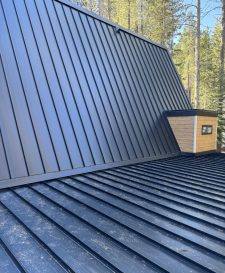
| Standing seam metal | Very good with a marine-grade coating and stainless fasteners | Excellent — sheds moss and debris well | Low, but coating quality matters near salt air |
| Synthetic/composite shingles | Good, resists corrosion since it's not metal-based | Moderate to good depending on product | Low to moderate |
Architectural asphalt shingles remain the most common choice because they balance upfront cost, appearance, and durability well, especially when paired with algae-resistant granules and stainless or coated fasteners. Standing seam metal costs more up front but handles wind uplift and moss shedding better than almost anything else, which is worth considering on homes with heavy tree cover or a very exposed waterfront position. We'll walk through the honest trade-offs for your specific roof rather than pushing one option across the board.
Our Installation Process
- Inspection and estimate — we assess the current roof, decking condition, ventilation, and any problem areas, and walk you through material options.
- Material selection — you choose the product and color; we make sure it's rated appropriately for wind and moisture exposure at your property.
- Permitting — we handle the permit process required for reroofing under Whatcom County and City of Blaine building code.
- Tear-off and deck repair — old roofing comes off, the deck gets inspected, and any damaged sheathing is replaced.
- Underlayment and flashing — waterproofing layers and new flashing go in at every eave, valley, and penetration.
- Installation — the roofing material is installed to manufacturer specifications, which matters for both performance and warranty coverage.
- Ventilation check — intake and exhaust are balanced or upgraded as needed.
- Cleanup and walkthrough — the property is cleared of debris and nails, and we go over the finished roof and warranty paperwork with you.
What Drives the Cost of a New Roof in Blaine
We won't quote a number without seeing the roof, but these are the factors that actually move the price up or down:
| Factor | Why It Matters |
|---|---|
| Roof size and pitch | More surface area and steeper pitches mean more material and labor time |
| Material choice | Metal and premium synthetic products cost more upfront than standard architectural shingles |
| Number of tear-off layers | Removing multiple old layers takes longer and adds disposal cost |
| Deck condition | Rotted or soft sheathing needs replacement before new roofing goes on |
| Ventilation upgrades | Adding or correcting intake/exhaust vents adds labor but pays off in roof lifespan |
| Roof complexity | Valleys, dormers, skylights, and chimneys each add flashing work |
| Site access | Steep lots, limited driveway access, or tall trees can affect equipment and staging |
Why It Matters That We Already Work in Blaine
A crew that's only worked drier, more sheltered neighborhoods can miss the details that matter on a Blaine roof — how far to run ice-and-water shield given the wind direction, which fastener grade actually holds up near the water, or where moss tends to establish first on a particular roof orientation. We've built and repaired enough roofs along this stretch of Whatcom County to know which shortcuts show up as callbacks two winters later, and we don't take them.
We also handle the permitting and inspection requirements that apply specifically in Blaine and unincorporated Whatcom County, so there's no guesswork about whether the job is done to code. That local familiarity is part of what you're paying for with any roofing contractor — it's the difference between a roof that's built to spec on paper and one that's actually built for the place it sits.
Get a Straight Answer About Your Roof
If your roof is showing granule loss, moss buildup, or leaks that keep coming back, it's worth having someone look at it before another wet season goes by. We offer free, no-pressure estimates for Blaine homeowners — use the form below and we'll take a look and give you an honest read on where your roof actually stands.