 Ferndale
 Building a Deck in Sandy Point: What the Site Actually Demands
Sandy Point sits close enough to the water that every deck built here is, in effect, being built in a marine environment. That changes the calculus on materials, hardware, and even how a deck should be framed compared to a similar project a few miles inland in Ferndale proper. A deck that would hold up fine in a dry, sheltered yard can start showing corrosion, soft spots, or slick green growth within a couple of seasons out here if it wasn't built with the local conditions in mind.
This page is about one job in one place: building decks that are meant to actually last in Sandy Point's combination of salt-laden air, wind-driven rain off the water, and the long stretch of gray, wet months that keep everything damp for weeks at a time. It's not a generic deck-building overview — it's what we've learned building and repairing decks specifically in this kind of setting.
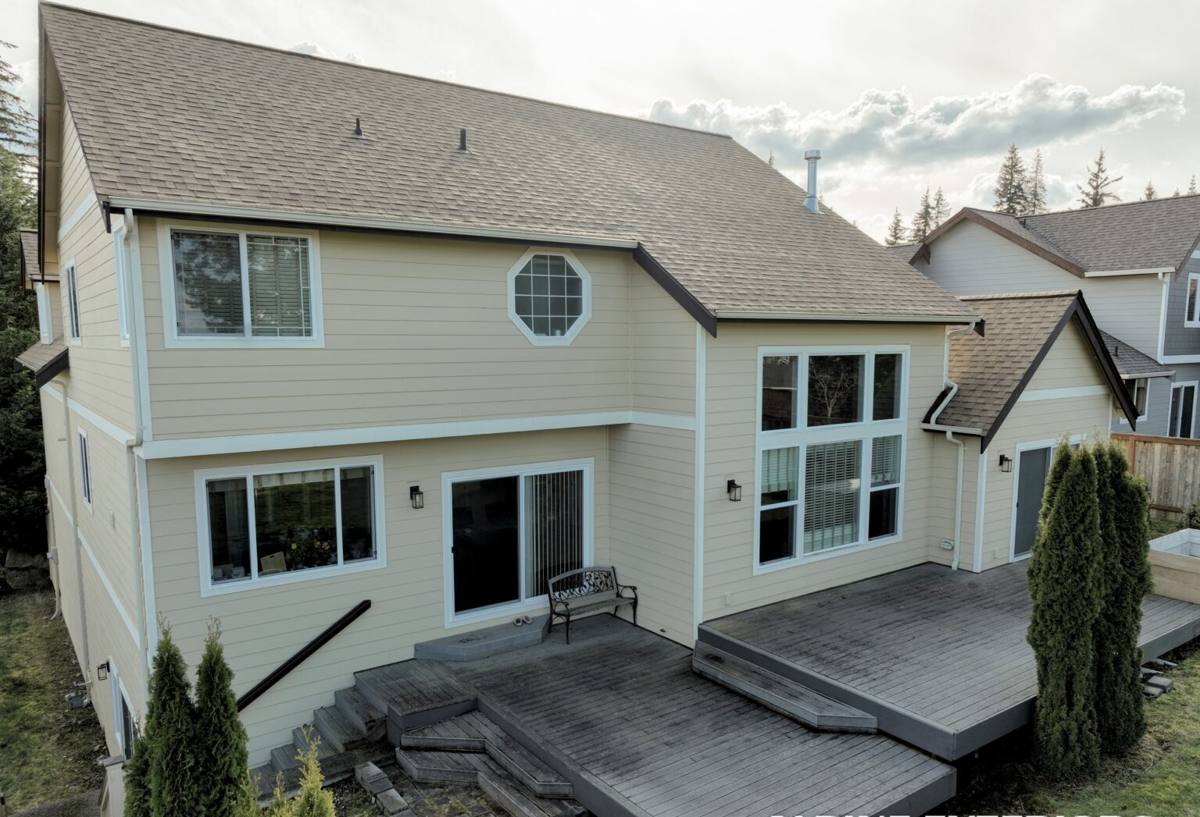
Salt Air, Driving Rain, and Moss: The Three Things That Wreck Decks Here
Salt Air and Corrosion
Airborne salt doesn't just affect homes right on the beach — it travels on the wind and settles on any exposed metal in the area, slowly. Standard galvanized fasteners, brackets, and screws can start corroding well before they would in a non-coastal setting. Once a fastener starts to rust, it weakens, stains the wood or decking around it, and eventually needs to be replaced — which usually means partially disassembling whatever it was holding.
Wind-Driven Rain
Whatcom County gets a lot of rain generally, but wind off the water pushes it sideways and up under things — ledger boards, railing posts, stair stringers — that a calmer inland rain would never reach. Water intrusion at the point where a deck attaches to the house is one of the most common (and most expensive) failure points we see, and it's almost always preventable with correct flashing at the time of construction.
Moss and Algae
Between the moisture and the amount of shade many Sandy Point lots get from surrounding trees, moss and algae growth on deck surfaces is a near-constant battle. Beyond looking bad, a mossy deck surface gets genuinely slick and dangerous, especially on stairs. Board spacing, airflow underneath the deck, and surface texture all affect how fast moss takes hold — and they're all decisions made at build time, not after the fact.
What a Correctly Built Deck Looks Like in This Climate
Footings and Framing
Footings need to be set below the local frost line and sized appropriately for the soil they're sitting in. Sandy or loose soils, which are common near the water, sometimes need larger or deeper footings than the same deck would require on firmer inland ground. We also pay attention to ground clearance under the deck — enough airflow to let framing dry out between rain events matters more here than in a drier climate, since wet-dry cycling is what eventually rots untreated framing lumber.
Fasteners and Hardware
This is where a lot of decks in coastal areas fail early, and it's an easy thing to get wrong if a crew isn't used to building near salt water. We use stainless steel or high-grade coated fasteners and structural hardware rated for corrosive environments, not standard galvanized parts that are fine sixty miles inland but marginal here. It costs a bit more up front. It's not optional if you want the connections to still be sound in fifteen years.
Ledger Board and Flashing
Where the deck attaches to the house is the single most important waterproofing detail on the whole project. Correct flashing — installed in the right order relative to the house's existing weather barrier, with proper sealant at penetrations — keeps wind-driven rain from working its way behind the ledger board and into the house framing. This is invisible once the deck is finished, which is exactly why it's worth asking about before construction starts, not after.
Decking Surface and Railings
Board spacing needs to allow water to drain through and air to move underneath, both of which slow moss growth. Railings need to meet Washington building code guardrail requirements, and post attachment needs to be strong enough to meet code lateral load requirements — a detail that's easy to shortcut and hard to fix later without removing decking.
Choosing the Right Decking Material for a Salt-Air Site
There's no single "best" decking material for every project — it depends on budget, how much maintenance you want to take on, and how close to the water your lot sits. Here's how the common options actually compare in this kind of environment:
| Material | Salt-Air Durability | Moss/Algae Resistance | Maintenance | Typical Lifespan |
|---|---|---|---|---|
| Pressure-treated wood | Good, if fasteners and finish are correct | Needs regular cleaning/treatment | Annual cleaning, periodic staining or sealing | 15-20 years with upkeep |
| Cedar | Naturally decay-resistant, but softer | Needs cleaning; grays without sealant | Sealing every 1-2 years to hold color and grain | 15-20 years with upkeep |
| Composite/PVC decking | Excellent, does not rot or corrode | Better resistance; capped boards shed moss more easily | Periodic washing, no staining/sealing | 25-30+ years, manufacturer-warrantied |
Composite and PVC products (brands like TimberTech or Trex are common examples) tend to make the most sense for lots with heavy shade and direct salt exposure, simply because they don't give moisture and salt a wood surface to work on. Wood costs less up front and has a look plenty of homeowners still prefer — it just asks for more consistent maintenance to get a full lifespan out of it in this climate. We'll walk through the real trade-offs for your specific lot rather than push one product line.
Our Deck Building Process
Site Assessment and Design
We start by walking the site — sun and shade exposure, wind exposure relative to the water, existing drainage patterns, and the condition of the house wall where the deck will attach. That assessment drives material recommendations and framing decisions, not the other way around.
Permitting
Deck construction typically requires a permit through Whatcom County or the City of Ferndale depending on the property's location, and inspections happen at set points during construction (footings, framing, and final). We handle the permit application and coordinate inspections as part of the build, so you're not the one tracking down inspectors.
Construction
Footings and framing go in first, with all structural connections using corrosion-resistant hardware. Ledger flashing and any necessary house-side waterproofing come next, before decking goes down. Decking, railings, and stairs are the last visible layer, and we check board spacing and drainage slope as we go rather than after the fact.
Final Walkthrough
Once construction and inspections are complete, we walk the finished deck with you — how it drains, what maintenance (if any) the material needs, and what to watch for as the seasons change.
Maintenance Checklist for Sandy Point Decks
Whatever material you choose, a few habits go a long way toward getting the full lifespan out of a deck in this environment:
- Rinse salt residue and debris off the deck surface a few times a year, especially after storms
- Sweep leaves and needles out of corners and off railings before they trap moisture
- Check and clear gaps between boards so water keeps draining through instead of pooling
- Inspect fasteners and hardware annually for early signs of corrosion or loosening
- Reseal or re-stain wood decking on schedule rather than waiting until it looks worn
- Keep an eye on the ledger board area at the house wall for staining or soft wood, which can signal a flashing issue
- Treat moss and algae early with an appropriate cleaner rather than letting it establish
Why Hire a Crew That Already Works in Sandy Point
A deck built by someone unfamiliar with this specific stretch of coastline will often look fine on completion day and then start showing problems in year two or three — corroding fasteners, a ledger board that's holding water, moss that comes back no matter how often it's cleaned. Those are the predictable results of details that weren't adjusted for a marine environment, not bad luck.
We're based in Ferndale and have built and repaired decks throughout the surrounding Whatcom County communities, including Sandy Point. That means we already know which fastener grades hold up here, how local soil conditions affect footing requirements, and what the permitting process looks like for this area — none of which has to be figured out on your project for the first time.
If you're planning a new deck or replacing one that's showing its age, we're happy to come take a look and give you a straightforward, no-pressure estimate — just fill out the form below.