 Ferndale
 Windows Built for a Waterfront Address
Sandy Point sits right up against the water, and that changes what a window has to survive out there compared to a house a few miles inland in Ferndale proper. Homes here take a steady diet of salt-laden air, wind-driven rain that hits glass and trim at an angle instead of straight down, and a wet season that stretches long enough to grow moss on anything that stays damp. A window that's fine on a sheltered inland lot can fail years early on a lot like this if it wasn't chosen and installed with that exposure in mind.
We're not talking about anything exotic. It's the basics done right for the conditions: the right frame material, the right glazing, and flashing and sealant work that actually accounts for wind-driven water instead of assuming rain falls straight down. Get those right and a set of custom windows can go decades without giving you trouble. Get them wrong and you're dealing with fogged glass, soft trim, and drafts inside of ten years.
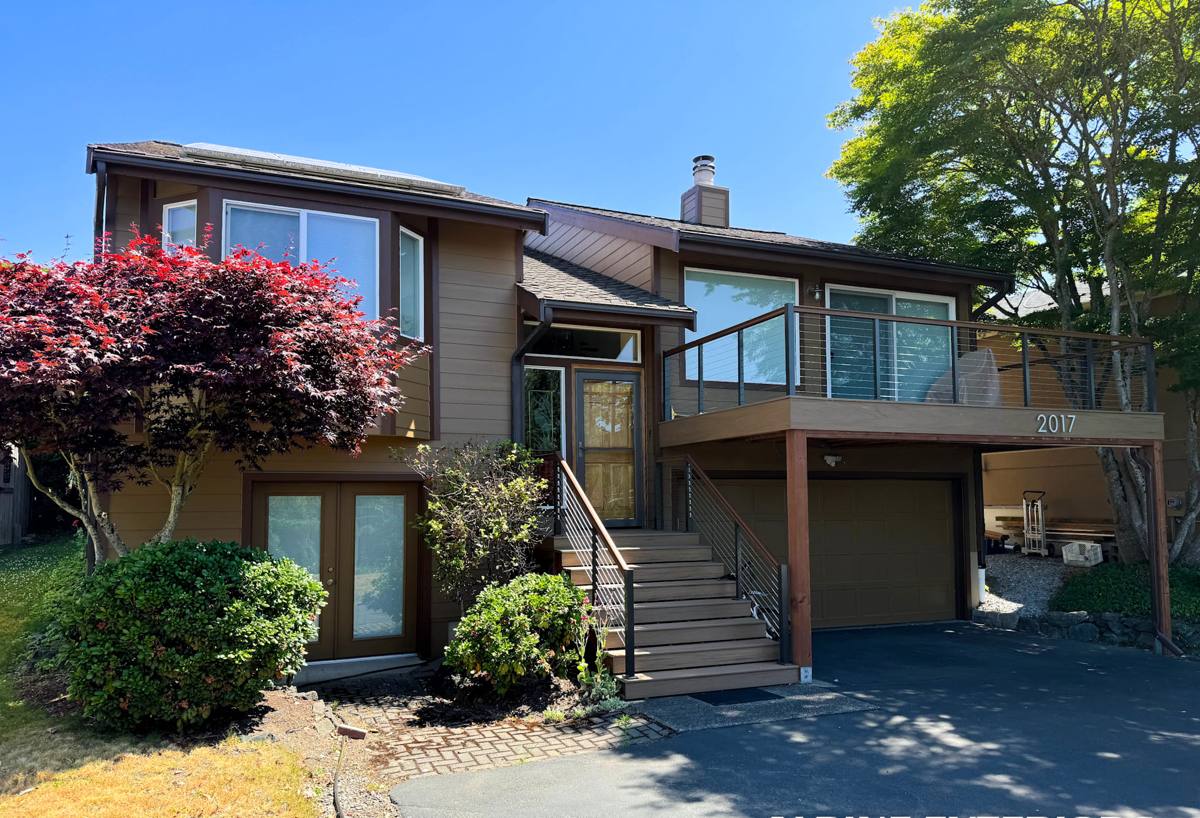
What "Custom" Actually Means Here
Custom windows just means windows built to your home's actual openings and needs, rather than pulled off a shelf in a handful of stock sizes. On a lot exposed to wind and salt spray, that matters more than it does elsewhere in Whatcom County, because the standard off-the-shelf answer isn't always the right one for this exposure.
Things worth deciding on purpose, not by default
- Frame material rated for coastal or high-moisture exposure, not just a general-purpose line
- Glazing package matched to which side of the house catches the worst wind and rain
- Hardware and fasteners that won't corrode faster than the rest of the window
- Sizing that fits the actual rough opening instead of forcing a stock size to work
- Trim and sill details that shed water instead of trapping it
None of this needs to be complicated or expensive to get right. It just needs someone measuring and speccing the job to actually think about where the house sits, not just what's in stock.
Signs Your Current Windows Are Losing the Fight
Most window failures near the water show up gradually, and homeowners often chalk them up to "just an old house" when they're actually a sign the windows or their installation weren't suited to the exposure.
- Fogging or moisture between the panes of double-pane glass — the seal has failed
- Soft, discolored, or bubbling paint on the wood trim around a window
- A draft you can feel with your hand near the frame on a windy day
- Moss or dark streaking building up on the sill or the trim below a window faster than elsewhere on the house
- Hardware that's stiff, corroded, or won't latch tight anymore
- Visible daylight or a gap where the frame meets the siding
Any one of these on its own might not mean much. Two or three together, especially on the side of the house that takes the worst of the wind and rain, usually means it's time to look at replacement rather than another round of caulk and paint.
What a Correct Installation Actually Involves
The window itself is maybe half the job. The other half — the part that determines whether it holds up — is how it's flashed, sealed, and tied into the wall around it. This is where a lot of window jobs go wrong, and it's not usually the window's fault.
The parts that matter most in this climate
- Flashing sequenced correctly — installed so water is shed down and out, layer over layer, the same way shingles work, so a wind-driven rain doesn't get behind it
- Sill pan protection — a sloped, sealed pan under the window opening so any water that does get past the outer defenses drains back out instead of soaking into the framing
- Sealant that's actually compatible — the wrong caulk or sealant can fail in a season near salt air, while the right product holds for years
- Proper shimming and fastening — a window that's not square or plumb will stress its own seals and hardware over time
- Interior and exterior trim done in the right order — so the whole assembly works as a system instead of being a good window surrounded by gaps
Skip or rush any one of these steps and you can end up with a well-made window that still leaks, drafts, or rots the framing around it within a few years. This is the part of the job that doesn't show up in a sales brochure but is the actual difference between a window that lasts and one that doesn't.
Comparing Frame Materials for a Coastal Lot
There's no single "best" window material for every situation — it depends on budget, the look you want, and how much upkeep you're willing to do. Here's how the common options generally hold up in a salt-air, high-moisture setting like Sandy Point.
| Material | How it handles salt air and moisture | Upkeep | Typical trade-off |
|---|---|---|---|
| Vinyl | Doesn't corrode or rot; handles moisture well | Low — occasional cleaning | Fewer color and trim options than wood or fiberglass |
| Fiberglass | Very stable in temperature swings and moisture; resists corrosion | Low | Higher upfront cost than vinyl |
| Wood | Classic look, but exposed wood is the most vulnerable to a wet, salty climate | High — regular painting/sealing needed | Best reserved for interior-facing or well-protected openings, or paired with a clad exterior |
| Wood-clad (wood interior, aluminum or vinyl exterior shell) | Exterior shell protects the wood from weather; a solid middle ground | Moderate — interior wood still needs occasional attention | Cladding seams need good detailing to avoid trapping moisture |
| Aluminum | Can corrode over time in salt air unless it's a marine-grade or well-coated product | Moderate | Conducts heat and cold more than other materials, affecting comfort near the glass |
For most Sandy Point homes we work on, vinyl or fiberglass ends up being the practical choice for full sun-and-salt exposure, with wood or wood-clad reserved for openings that are more sheltered — a covered porch, a protected entry, or a wall that doesn't take direct weather. We'll walk your house with you and point out which openings can support which materials rather than applying a blanket answer to every window.
Glass matters as much as frame
Whatever frame material you choose, the glazing package should be matched to the exposure. On the wind- and rain-facing sides of a house, a well-sealed double or triple-pane unit with a quality low-E coating does more for comfort and durability than upgrading the frame alone. On more sheltered sides, a lighter glazing spec can save money without giving anything up.
How We Approach a Sandy Point Window Job
- On-site assessment — we look at each window opening individually, noting which ones take the worst exposure, which show existing water or rot damage, and which are in reasonable shape
- Honest recommendation — you get a straight answer on what needs replacing now, what can wait, and what material and glazing make sense for each opening, not a one-size upsell
- Precise measurement — every window is measured to the actual opening, not assumed to match a stock size
- Removal and inspection — when we pull the old window, we check the framing underneath for hidden moisture damage before anything new goes in
- Correct flashing and sealing — done in the right sequence, with materials suited to a coastal, wet climate
- Finish work and cleanup — trim finished inside and out, site cleaned up, and a walkthrough so you know what was done and why
Why It Matters That We Already Work This Area
Whatcom County covers a lot of ground, from inland farmland to hillside lots to waterfront communities like Sandy Point, and each one puts different demands on exterior work. A crew that mostly works inland jobs isn't wrong about windows in general — they just may not default to the coastal-grade details this exposure calls for unless they're used to seeing what happens when those details get skipped.
Working Sandy Point regularly means we've seen which sides of a house take the worst of the wind, how fast moss builds up on a north-facing sill here compared to elsewhere, and which installation shortcuts show up as callbacks two or three winters later. That's not a marketing point — it's just the practical benefit of familiarity with one specific kind of exposure.
What to check before hiring anyone for coastal window work
- Do they ask about which side of the house faces the worst wind and rain, or treat every opening the same?
- Can they explain their flashing and sill-pan approach without reading it off a script?
- Are they proposing a frame material and glazing spec suited to this exposure, or just their standard package?
- Do they carry proper licensing and insurance for exterior work in Washington?
- Will they put the warranty terms — on both the product and their labor — in writing?
- Are they willing to walk the house with you and explain the reasoning opening by opening?
Living With Custom Windows Through Moss Season
Even a well-installed window benefits from a little seasonal attention in this climate. Rinsing salt residue off glass and frames a few times a year, keeping gutters and nearby drainage clear so water isn't sitting near the sill, and brushing moss or organic buildup off trim and sills before it takes hold all go a long way. None of this is heavy maintenance — it's the kind of upkeep that takes an hour or two and saves you from bigger repairs down the line. We're glad to walk through what makes sense for your specific windows once they're in.
Let's Take a Look at Your Windows
If you're dealing with drafts, fogged glass, or trim that's starting to show its age on a Sandy Point property, we're happy to come take a look and give you a straight read on what's going on and what it would take to fix it right. There's no pressure and no cost to get an estimate — just a local crew giving you an honest assessment of your options. Use the form below to get started.