 Ferndale
 Roofs in the Everson Area Face a Specific Set of Conditions
Homes in and around Everson sit a little further inland than Ferndale proper, but they still ride out the same weather systems that move through Whatcom County off the water. That means long stretches of steady rain, wind that drives moisture sideways under roof edges instead of straight down, and a moss season that can run most of the year in shaded spots. It also means marine air still reaches this far inland often enough to accelerate corrosion on exposed metal — maybe not as aggressively as a roof two miles from the bay, but enough that it shouldn't be ignored.
What that adds up to is a roof that ages differently than one in a drier climate. Shingles here don't usually fail from sun and heat first — they fail from sustained moisture exposure, moss undermining the granule layer, and small leaks at flashing points that go unnoticed until they've done real damage to the decking underneath. A repair that doesn't account for those specific failure patterns tends to come back within a year or two.
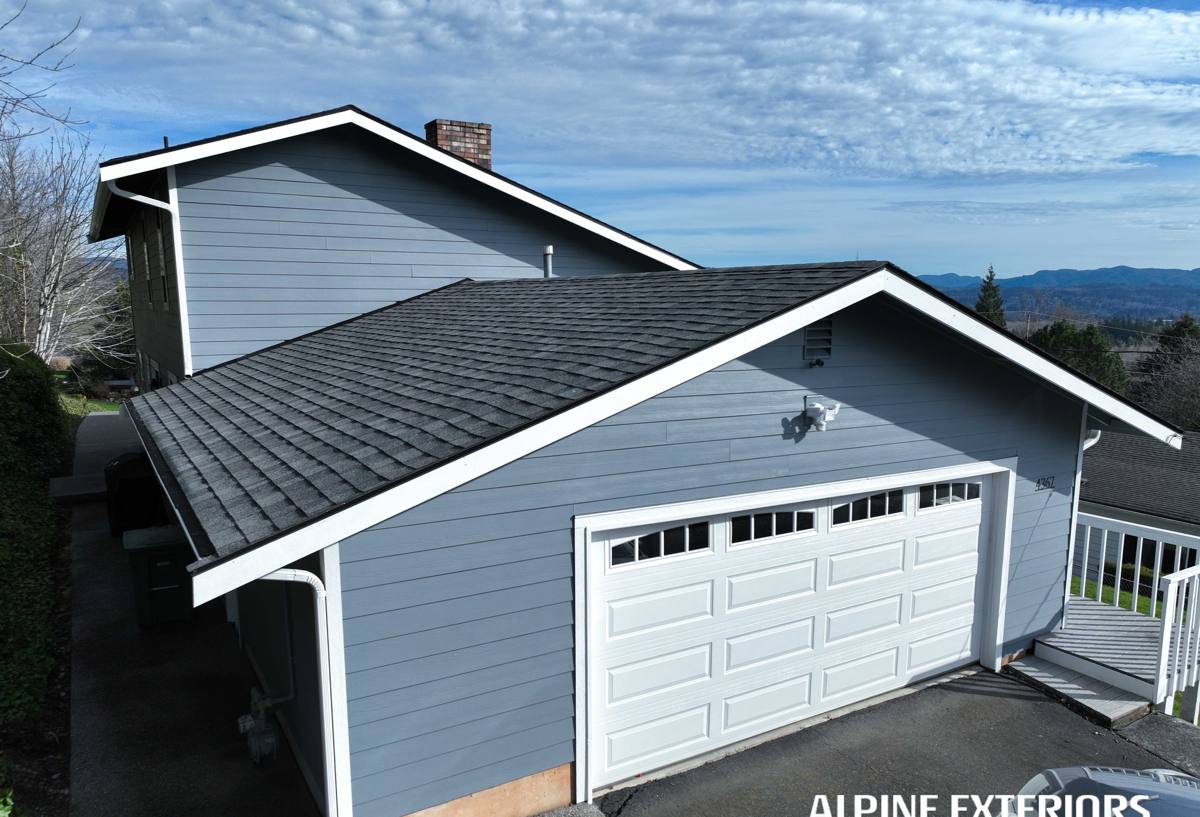
Signs Your Roof Needs Repair, Not Replacement
Most roofs don't need a full tear-off. They need someone to catch the problem early and fix it correctly. Here's what typically points to a repair rather than a replacement:
- A stain on a ceiling or in the attic that appears after heavy rain but the roof still looks intact from the ground
- A handful of missing, cracked, or curled shingles concentrated in one area rather than spread across the whole roof
- Rust or separation at flashing around a chimney, vent pipe, or skylight
- Moss buildup in one valley or on one shaded slope while the rest of the roof looks fine
- Granules collecting in gutters after a storm, but only in isolated patches
- A roof under 15–20 years old with damage from a specific event — wind, a fallen branch, ice
If the damage is widespread, the decking has soft spots in multiple areas, or the roofing material is simply at the end of its service life, replacement becomes the more honest recommendation. Part of our job on the first visit is telling you which situation you're actually in, not steering you toward whichever job is bigger.
The Repairs We See Most Often in This Area
Certain problems show up again and again on roofs in this part of Whatcom County. Knowing the pattern helps in diagnosing a new complaint quickly and correctly.
| Issue | What Usually Causes It | Why It Matters |
|---|---|---|
| Leaks at chimney or vent flashing | Sealant breakdown or corroded metal after years of wet cycles | Small leaks here travel along framing before they ever show up as a ceiling stain |
| Moss-lifted shingles | Moss growing under shingle tabs and prying them up as it thickens | Lifted shingles let wind-driven rain get underneath, not just moss itself |
| Wind-driven rain intrusion at eaves and rakes | Underlayment or drip edge that wasn't detailed for sideways rain | Water gets pushed uphill under the shingle line even with no visible damage |
| Valley wear | Valleys carry the most water volume on the roof and take the most abrasion | A worn valley liner is one of the most common single sources of a "mystery" leak |
| Corroded fasteners | Standard fasteners reacting to sustained moisture and marine air | A corroded nail backs out over time, breaking the shingle's seal |
Moss: The Slow Damage That Turns Into a Leak
How Moss Actually Gets In
Moss doesn't sit harmlessly on top of a roof. It roots into the texture of the shingle, holds moisture against the surface far longer than open air would allow, and gradually lifts the shingle edges as it grows thicker. Once shingles are lifted even slightly, wind and rain have a path underneath them. Shaded roof sections, north-facing slopes, and areas under overhanging trees are the most common starting points, and in a climate with a moss season this long, a roof that isn't checked periodically can go from a light green tint to a real problem in a couple of seasons.
Removal and Prevention Done Right
Pressure washing moss off a roof is one of the fastest ways to shorten a roof's life — it drives water under the shingles and strips granules that protect the asphalt from UV damage. The correct approach is a gentle removal method, working from the ridge down, followed by a treatment that kills what's left without harming the roofing material or the plants below it. For long-term prevention, zinc or copper strips installed near the ridge release trace metal ions with every rain that inhibit new moss growth on the slopes below. Combined with keeping overhanging branches trimmed back to let light and air reach the roof, this is a realistic way to stretch the time between moss cleanings.
Salt Air and Driving Rain: How Coastal Exposure Changes the Job
Fasteners and Flashing
Everson sits far enough inland that salt exposure is lighter than it is right on the water, but the same marine weather systems still move through, and standard fasteners and flashing will corrode faster here than they would in a dry inland climate. On a repair, that means using corrosion-resistant fasteners and flashing rated for the conditions rather than whatever is cheapest at the supply house — a detail that costs little at the time of the repair but matters a great deal five and ten years down the line.
Ventilation and Wind-Driven Rain
Proper attic ventilation does double duty in this climate. It reduces the condensation that builds up inside a roof system during long wet stretches, and it helps the roof deck dry out between storms instead of staying damp. On top of that, we detail vulnerable points — eaves, rakes, and valleys — with self-adhering underlayment that seals around fastener penetrations, because ordinary felt underlayment alone isn't enough when rain is being pushed sideways by wind rather than falling straight down.
Our Roof Repair Process, Step by Step
- Inspection. We walk the roof and check the attic where accessible, looking for the actual source of a leak, not just the spot where the stain shows up — those are often several feet apart.
- Diagnosis and options. We explain what we found in plain language, including whether a repair is realistic or whether the roof's age and condition point toward replacement instead.
- Scope and materials. Once you approve the work, we source materials that match your existing roof as closely as possible and confirm the plan before anything is torn open.
- The repair itself. We remove only what needs to come out, replace damaged decking if we find it, and install new flashing, underlayment, and roofing material to the same standard we'd use on a full roof.
- Cleanup. Debris is hauled off and we run a magnetic sweep of the work area and the ground below to pick up stray nails.
- Follow-up. You get a clear explanation of what was done and what, if anything, warranty coverage applies to it.
Cost Factors in Roof Repair
We won't quote a number without seeing the roof, but these are the factors that actually move the price up or down on most repair jobs:
| Factor | Why It Affects Cost |
|---|---|
| Roof pitch and access | A steep or hard-to-access roof takes longer and requires more safety setup |
| Decking condition | Rotted plywood underneath means extra material and labor beyond the surface repair |
| Material match | Discontinued or uncommon shingle colors and profiles can be harder and pricier to source |
| Scope of damage | One isolated spot costs far less than several unrelated problem areas on the same roof |
| Season and urgency | An active leak needing immediate attention is handled differently than a scheduled repair |
Checklist: What to Ask Before You Hire Anyone for Roof Work
- Are you licensed and insured to do roofing work in Washington State?
- Will the estimate be in writing and specific about what's being repaired?
- Who is actually doing the work — your crew, or a subcontractor?
- What happens to the price if you find rotted decking once the roof is opened up?
- Will the materials match what's already on my roof, or come close to it?
- What's covered under warranty, and for how long, in writing?
Any contractor who hesitates on these questions, or pressures you to sign before answering them, is worth a second look before you commit.
Why a Crew That Already Works the Everson Area Matters
A roofer who's worked on homes throughout Whatcom County already has a feel for how roofs in this specific climate age — which slopes tend to hold moss, which flashing details tend to fail first, and how long a given roofing material typically lasts once you factor in the region's rain and moisture patterns rather than a manufacturer's generic estimate. That experience shortens the diagnosis step and reduces the chance of a repair that misses the real cause. It also means someone who can get back out to your property quickly if a problem shows up again, rather than a crew based hours away that only comes through the area occasionally.
If you're dealing with a leak, moss buildup, or damaged shingles on a home in the Everson area, we're happy to take a look and give you a straightforward assessment — no pressure, no inflated scope, just an honest read on what your roof actually needs. Reach out using the form below to schedule a free estimate.