 Ferndale
 Windows Built for a Peninsula That Doesn't Get a Break
Point Roberts sits on its own peninsula south of the Canadian border, cut off from the rest of Washington by water and land, and that geography shapes how hard its homes get hit by weather. Salt-laden air moves off the water and onto every wall and window frame in town. Rain doesn't fall straight down here nearly as often as it comes in sideways, driven by wind off the Strait of Georgia. And between the marine humidity and the shade a lot of lots get from mature trees, moss and mildew season runs long — often most of the year on north-facing exposures. Windows sit right at the center of all three problems. A window opening is a manufactured hole in the wall assembly, and every seam, joint, and piece of trim around it is a place water and salt can find a way in if the installation wasn't done with this exposure in mind.
We install windows for homes throughout Ferndale and the rest of Whatcom County, and Point Roberts is part of our regular service area. That matters more than it might sound like, because a window installation that would hold up fine on a sheltered inland lot can fail years early out here if the person installing it wasn't accounting for what this specific exposure does to frames, flashing, and finishes.
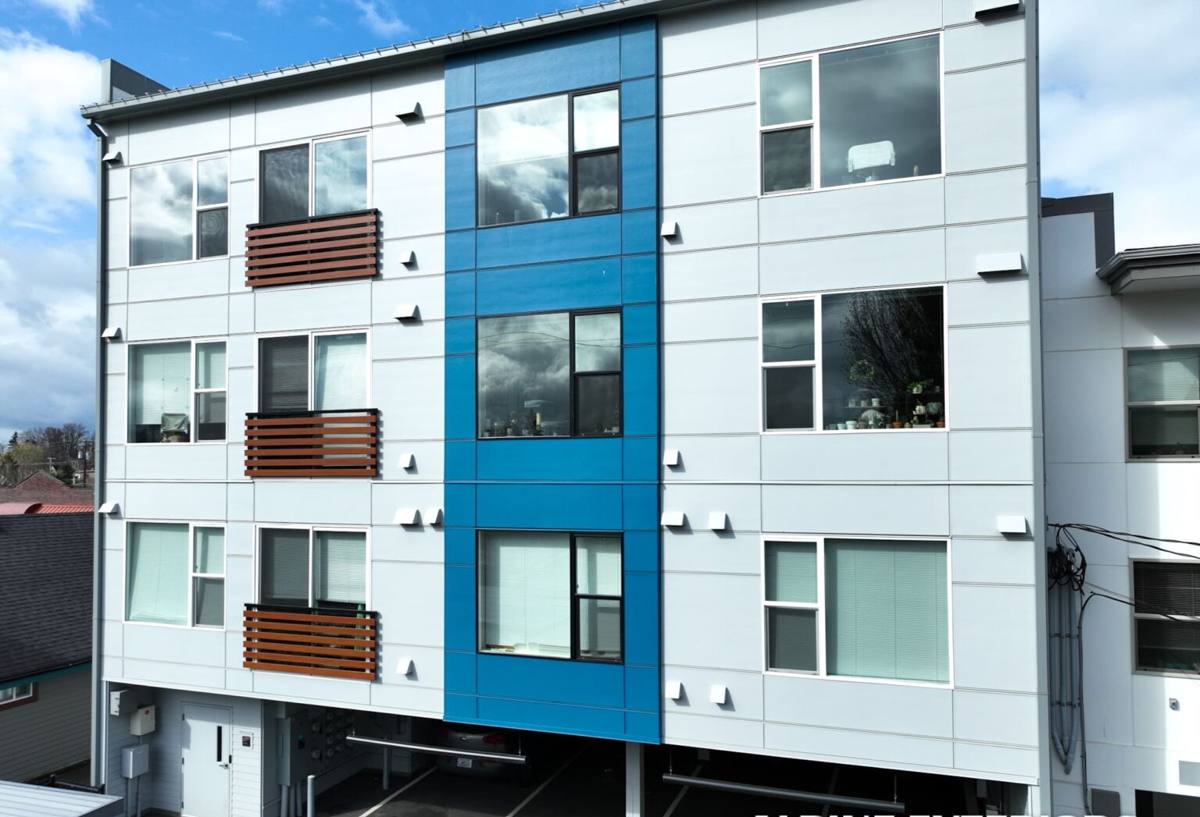
What Salt Air, Driving Rain, and Moss Season Actually Do to Windows
Salt Air and Corrosion
Salt-laden moisture in the air accelerates corrosion in fasteners, hinges, and hardware, and it breaks down lower-grade finishes faster than a drier climate would. Aluminum-clad windows and hardware without a marine-grade finish can start showing pitting, chalking, or corrosion well ahead of schedule on a peninsula lot like this. It also degrades weaker caulks and sealants faster, which is exactly what you don't want around a window seam.
Wind-Driven Rain at the Seams
Wind off open water turns ordinary rain into a sideways problem. Instead of running off a sill the way it would in a calm, straight-down rain, driving rain gets pushed up under sills, into corner joints, and behind trim that isn't sealed and flashed correctly. A window that's simply caulked around the outside, rather than flashed with a proper drainage path, is a common failure point in exactly this kind of weather.
A Long Moss and Mildew Season
Constant dampness plus shaded exposures adds up to moss and mildew that stay active for most of the year on this peninsula. Around windows, that usually shows up first on the exterior trim and sill — growth there holds moisture against the wood or composite longer than it would otherwise sit, which is the exact condition that leads to rot behind the trim if it isn't cleaned and sealed properly. Once trim starts to soften, the flashing and seal behind it are compromised even if the window itself is fine.
Wind Loading and Seasonal Storms
Peninsula and near-waterfront lots also tend to see stronger, more sustained wind during winter storm systems than more sheltered inland properties. That matters for how a window unit is fastened into the rough opening and how well the frame resists flexing under sustained pressure, since a unit that isn't seated and shimmed correctly can develop gaps at the frame over time under repeated wind loading.
What a Correct Window Installation Actually Involves
Getting a new window into a wall is the easy part. Getting the water management right around it is what determines whether that window is still performing in ten years. On a Point Roberts home, we treat every one of these steps as non-negotiable, not optional upgrades:
- Full removal and opening inspection: Before anything new goes in, we check the rough opening, sheathing, and framing for hidden rot or old moisture damage — a common find on older homes in this climate, especially around lower-story windows.
- Sill pan flashing: A sloped, sealed sill pan under the window gives any water that gets past the window itself a controlled path back outside, instead of into the wall cavity.
- Proper integration with house wrap: Flashing tape and house wrap need to be layered correctly — upper layers overlapping lower ones — so water sheds down and out rather than working its way behind the wrap at a seam.
- Correct shimming and fastening: The window has to sit square and supported at the right points so it doesn't rack, bind, or develop gaps under wind load or as the house settles.
- Low-expansion foam and backer rod at the frame gap: This seals and insulates the gap between the window frame and rough opening without bowing the frame inward, which cheaper spray foam can do if overused.
- Exterior trim and caulking as the last line of defense, not the only one: Trim and sealant matter, but they're backup to the flashing system underneath, not a substitute for it.
Skip any one of these steps and the window can still look fine from the curb for a year or two. On a lot that takes this much wind-driven rain, the problems that show up later, soft trim, staining on interior sills, a musty smell near the window, usually trace straight back to a step that got rushed during install.
Choosing the Right Window for This Climate
Material and glass package matter almost as much as installation quality. Here's how the common options actually compare for a marine, high-moisture exposure like Point Roberts:
| Window Type | How It Handles This Climate | Maintenance Burden |
|---|---|---|
| Vinyl | Resists moisture well and doesn't corrode; can expand and contract more with temperature swings | Low — no painting, occasional hardware and weep-hole cleaning |
| Fiberglass | Very stable dimensionally, holds paint and finish well, strong resistance to moisture and salt exposure | Low to moderate — occasional exterior cleaning and finish upkeep |
| Aluminum-clad wood | Attractive interior wood look with a protective exterior shell, but cladding seams and corners are places water can work in if not detailed well | Moderate — interior wood finish maintenance, exterior seams need periodic inspection |
| Bare wood | Traditional look but the most vulnerable to sustained marine moisture and rot without diligent upkeep | High — regular painting or sealing on all exposed surfaces |
We'll walk through what actually makes sense for your home's exposure and your maintenance appetite rather than pushing a single product on every job. A shaded, north-facing wall that stays damp most of the year calls for a different conversation than a sunnier, more sheltered elevation on the same house.
Glass Packages Worth Asking About
Beyond frame material, the glass package affects both comfort and moisture performance. Double-pane, Low-E glass with an argon or krypton gas fill is standard on most quality residential windows now, and it does more than cut heating bills — a well-sealed insulated glass unit reduces the condensation that shows up on interior glass during cold, damp stretches, which is a common complaint we hear on older single-pane or failed-seal windows in this area.
Our Installation Process, Step by Step
- On-site assessment: We look at existing windows, framing condition, and the home's specific exposure — orientation, shade, proximity to water — before recommending anything.
- Measurement and product selection: Exact rough opening measurements and a window and glass package matched to that specific opening and exposure.
- Careful removal: Old windows and trim come out without damaging surrounding siding or sheathing any more than necessary.
- Opening repair if needed: Any rot, soft sheathing, or old moisture damage found during removal gets addressed before the new window goes in — not covered up.
- Flashing and sill pan installation: Sloped sill pan, properly lapped flashing tape, and house wrap integration, done in that order.
- Window setting, shimming, and fastening: Set square, plumb, and level, fastened per manufacturer spec.
- Insulation and air sealing: Low-expansion foam and backer rod at the frame gap.
- Exterior trim and finish sealing: Trim reinstalled or replaced, caulked at the right joints, and finished to match the home.
- Final walkthrough: Operation check on every window, interior and exterior inspection, and a walk-through with you before we consider the job done.
The Point Roberts Access Factor
Point Roberts is a genuine exclave. Getting a crew and materials there means crossing an international border, which means real scheduling and logistics considerations that don't apply to a typical Ferndale job a few miles up the road. Border crossing times, documentation for tools and materials, and coordinating a full day's work around that trip all have to be planned for, not figured out on the fly. A contractor who's made that trip before knows how to plan a job so a full crew and everything they need arrives ready to work, instead of losing half a day to logistics that a first-timer wouldn't have anticipated. That's a practical, unglamorous reason local, repeat experience in this specific area is worth something beyond just familiarity with the climate.
Signs Your Current Windows Are Already Losing the Battle
- Soft, discolored, or spongy trim around the window frame, especially on shaded or north-facing walls
- Persistent moss or dark staining on exterior trim that returns quickly after cleaning
- Condensation or fogging between panes, which usually means a failed seal on an insulated glass unit
- Drafts you can feel near the frame even when the window is fully closed and locked
- Difficulty opening, closing, or locking a window that used to operate smoothly
- Visible gaps, cracked caulk, or daylight around the exterior trim line
- A musty smell near a window that wasn't there before, which can point to trapped moisture in the wall
- Rising heating bills without any other obvious explanation
Cost Factors for a Point Roberts Window Project
| Factor | What It Affects | Why It Matters Here |
|---|---|---|
| Frame material and glass package | Upfront unit cost and long-term maintenance | Marine exposure makes low-maintenance, moisture-resistant materials pay off faster than in a drier climate |
| Opening condition | Whether repair work is needed before the new window goes in | Long-term moisture exposure on this peninsula makes hidden rot around older windows more common |
| Number and size of openings | Total material and labor scope | Larger or more numerous openings mean more flashing detail work, which is where quality is actually won or lost |
| Site access and border logistics | Crew scheduling and travel time | Point Roberts' exclave location adds planning considerations a typical Whatcom County job doesn't have |
| Exposure and orientation | Which windows need the most attention to flashing and sealing detail | Shaded, water-facing, or north-facing openings take a heavier version of this climate's punishment |
Exact pricing depends on your home's specific openings and condition, which is why we look at the property in person rather than quoting from a generic price list.
Maintenance After Installation
A correctly installed window in this climate still benefits from a little seasonal attention. Rinsing salt residue off exterior frames periodically helps finishes and hardware last longer. Keeping moss and organic growth cleared off exterior trim, rather than letting it sit through a wet season, protects the seal underneath. And a quick visual check of caulk lines and weep holes once a year catches small issues while they're still small, long before they turn into a callback.
Why a Crew That Already Works Point Roberts Matters
Anyone can install a window on a calm, dry day. What separates a good installation from one that fails early is attention to the details that only show themselves under sustained salt air, driving rain, and a long moss season, exactly the conditions Point Roberts sees more of than most of Whatcom County. A crew that already works this peninsula regularly has a feel for which orientations need the most flashing attention, how the border logistics affect scheduling a job correctly, and what this specific climate does to different window materials over years, not just on install day. That experience shows up in fewer callbacks and windows that are still sealing correctly a decade from now.
If you're dealing with drafty, foggy, or failing windows on your Point Roberts home, or you're planning ahead for a remodel, we're happy to take a look and walk you through your options honestly. Reach out using the form below to schedule a free, no-pressure estimate.