 Ferndale
 Siding Replacement Built for Point Roberts' Exposure
Point Roberts sits in a strange spot: a small peninsula hanging off the bottom of British Columbia, surrounded on three sides by the Strait of Georgia and Boundary Bay. That geography is part of what makes it a beautiful place to own a home — and part of what makes siding here work harder than it does almost anywhere else in Whatcom County. Homes get salt-laden air coming off the water, driving rain that hits siding at an angle instead of straight down, and a long, damp moss season that can run from fall through spring. Siding that isn't built or installed for that combination fails early, and it usually fails quietly, behind the surface, before anyone notices a problem.
We install siding replacement projects on the Point Roberts peninsula and understand what the local exposure actually does to a wall system over time. This page walks through what that means for your home, what a correct siding replacement job looks like out here, and why the crew you hire matters as much as the material.
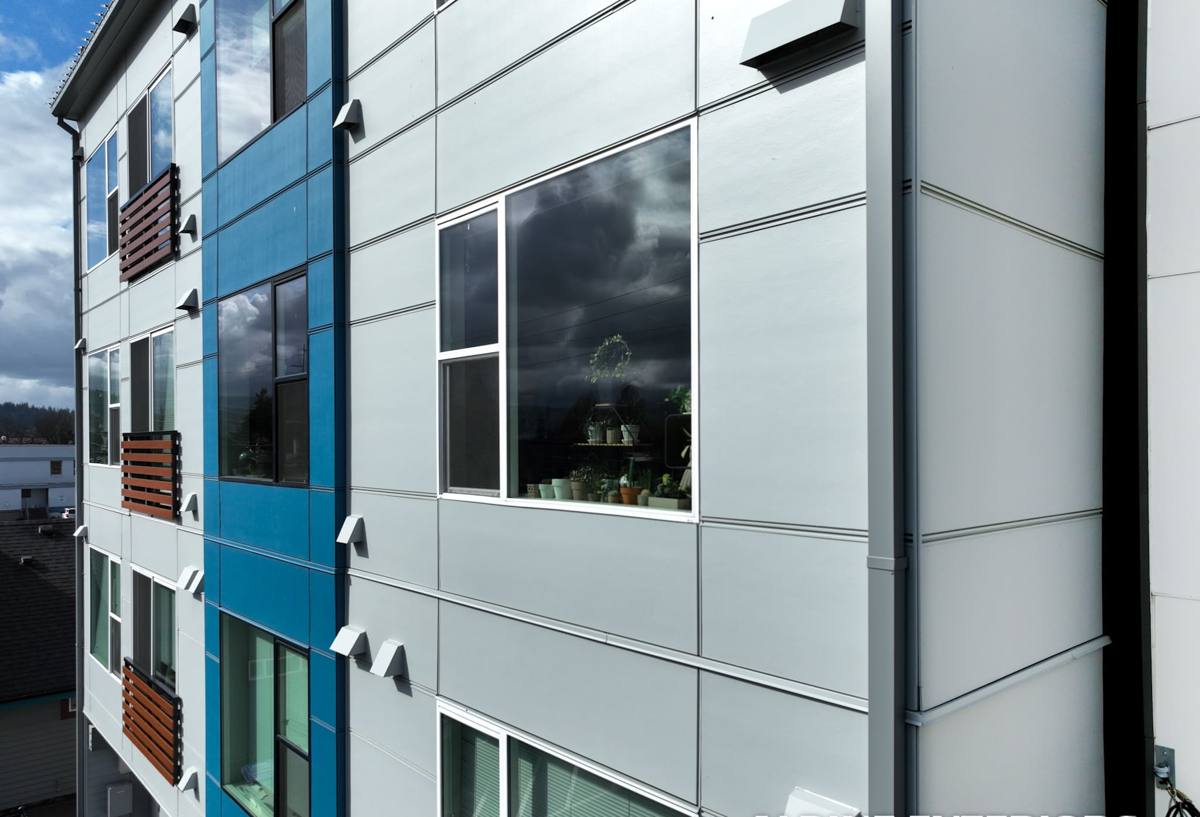
What Point Roberts' Climate Does to Siding
Salt air and coastal moisture
Airborne salt is corrosive to metal fasteners, flashing, and trim — and it accelerates the breakdown of finishes that aren't formulated to resist it. Over years, salt-laden moisture works into seams, joints, and any spot where the original installation left a gap. It doesn't take a storm to cause damage; steady low-level exposure day after day is what wears materials down.
Driving rain off the water
Because Point Roberts is exposed on multiple sides with little in the way of windbreaks compared to inland Whatcom County, rain frequently arrives sideways rather than straight down. Wind-driven rain finds every weak lap, every under-caulked joint, and every spot where flashing was skipped or installed backward. Siding systems that rely on caulk and paint alone to keep water out — rather than proper shingle-style lapping and drainage — tend to show their limits here first.
A long moss season
Combine coastal humidity with tree cover and mild temperatures, and you get moss and algae growth that can persist most of the year, not just in the deep winter months. Moss holds moisture against the siding surface long after a rain event has passed, which is exactly the condition that promotes rot in wood-based products and accelerates the breakdown of finishes on lower-grade materials.
Signs Point Roberts homeowners should watch for
- Dark streaking or green/black growth that keeps coming back within weeks of cleaning
- Soft or spongy spots near the bottom courses, around windows, or at butt joints
- Peeling, bubbling, or chalky paint that reappears faster than a normal repaint cycle
- Visible gaps at trim, corners, or where siding meets the roofline
- Rust staining below nail heads or metal flashing
Why We Only Install James Hardie Fiber Cement Here
We don't install vinyl, LP SmartSide, cedar, primed spruce, Cemplank, or Allura on any home we work on — including in Point Roberts, where the exposure makes material choice matter even more than usual. James Hardie fiber cement is non-combustible, doesn't rot or feed moss the way wood-based products can, and its ColorPlus factory-applied finish is baked on under controlled conditions rather than field-painted, which gives it far better resistance to the kind of coastal weathering this area sees. Hardie also engineers specific product lines (HZ5, HZ10) for different climate zones, so the plank installed on a Point Roberts home is spec'd for wet, coastal conditions rather than a generic inland climate.
That doesn't mean Hardie is maintenance-free — no siding is. But it holds a factory finish longer, resists moisture intrusion better when installed correctly, and comes with a strong transferable warranty that's worth something because the material genuinely performs. We'd rather explain honestly why we don't install other products than sell a homeowner something we don't believe will hold up on this peninsula.
What a Correct Siding Replacement Job Involves
Replacing siding is not just removing old boards and nailing up new ones. On an exposure like Point Roberts, the details underneath the siding matter as much as the siding itself.
Tear-off and inspection
Full removal of the old siding lets us actually see the sheathing, framing, and any hidden rot or moisture damage that's been building behind the old material — often for years without visible signs on the surface. This is the point where problems get fixed, not covered up.
Weather-resistive barrier
A correctly lapped, sealed weather-resistive barrier is the layer that actually stops bulk water before it reaches the sheathing. Given how much wind-driven rain Point Roberts sees, seams, penetrations, and terminations here need to be done right — not just stapled up quickly.
Flashing at every penetration
Windows, doors, hose bibs, vents, and any other penetration need proper flashing that directs water back out, not into the wall cavity. This is one of the most commonly rushed steps in siding work anywhere, and one of the most consequential to skip in a high-rain, coastal environment.
Correct fastening and clearances
Hardie siding has manufacturer-specified nailing patterns, fastener types, and minimum clearances from grade, roof lines, and decks. Getting these wrong voids warranty coverage and creates entry points for moisture — exactly the failure mode that shows up first in salt air and heavy rain exposure.
Factory-finished ColorPlus panels, field-cut and caulked to spec
Cut edges get properly sealed, joints get backed and caulked per Hardie's installation instructions, and the finished wall is built to shed water at every lap rather than depend on caulk alone to keep it out.
Comparing Siding Approaches for a Coastal Peninsula Property
| Factor | Vinyl | Untreated/Primed Wood | James Hardie Fiber Cement |
|---|---|---|---|
| Salt air resistance | Can become brittle over time; fasteners and trim more exposed | Absorbs moisture, prone to rot without diligent upkeep | Non-combustible, engineered for coastal/wet climate zones |
| Moss/algae resistance | Growth sits on surface, doesn't feed material | Traps moisture against wood, accelerates decay | Doesn't feed rot; factory finish resists staining longer |
| Finish longevity | Color can fade unevenly in coastal UV/salt exposure | Field-applied paint needs frequent recoating | Factory-baked ColorPlus finish, longer color retention |
| Wind-driven rain performance | Depends heavily on installation quality of laps/seams | Weak point if joints open up or paint fails | Strong when installed to Hardie's lap and flashing spec |
| Warranty | Varies by manufacturer, often prorated | Typically none beyond the paint product itself | Strong transferable material warranty |
Our Process for Point Roberts Projects
Working on the peninsula comes with logistical realities — border crossing coordination for materials and crew, tighter weather windows, and a smaller pool of contractors who regularly work this specific area. Our process is built around that:
- On-site assessment — we walk the exterior, check for moss buildup patterns, soft spots, and existing flashing condition before quoting anything
- Scope and material plan — we specify the correct Hardie product line and trim package for the home's exposure, not a one-size-fits-all spec
- Scheduling around weather and logistics — we plan material delivery and crew timing to account for the peninsula's access and typical rain patterns
- Tear-off, barrier, and flashing work — the hidden layers get done to spec before a single finished plank goes up
- Installation and final inspection — correct fastening, caulking, and clearances, followed by a walkthrough with the homeowner
Why Hiring Local Experience Matters
A crew that hasn't worked Point Roberts before doesn't know, until they see it firsthand, how much moss buildup a north-facing wall can develop, or how differently wind-driven rain behaves on an exposed peninsula lot versus a sheltered inland property. Contractors who already work this area understand the logistics — including border-related material and scheduling considerations — and they've already seen what happens when siding is installed without accounting for the salt air and rain exposure specific to this location. That experience shows up in fewer callbacks and siding that actually performs for the decades it's supposed to.
What to Ask Before Hiring a Contractor for This Job
- Have you installed siding on Point Roberts or similarly exposed coastal properties before?
- What weather-resistive barrier and flashing details do you use at windows, doors, and penetrations?
- Which James Hardie product line will you specify for this home's exposure, and why?
- Are you a certified Hardie installer, and what does that certification actually require?
- What does your warranty cover, and is it transferable if the home sells?
- How do you handle material delivery and scheduling logistics specific to the peninsula?
Get a Straight Answer on Your Home's Siding
If your Point Roberts home is showing moss that won't quit, soft spots near the bottom courses, or a finish that's fading faster than it should, it's worth having someone look at it before those signs turn into structural repairs. We're happy to walk your property, explain what we see, and give you a straightforward, no-pressure estimate for siding replacement done right for this climate — reach out through the form below to get started.