 Ferndale
 Roof Repair on a Peninsula: Why Point Roberts Is Its Own Case
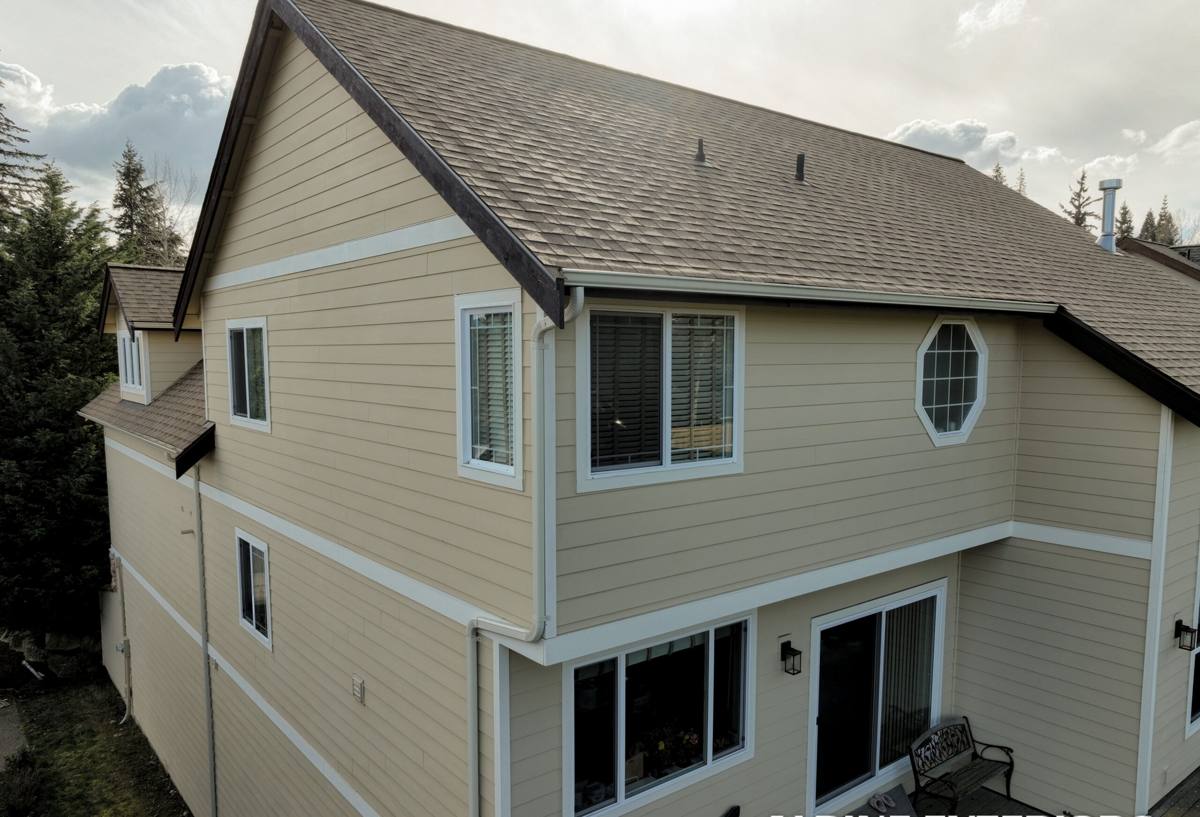
Point Roberts sits on the tip of a peninsula, with water on most sides and no real shelter from the weather systems that move through this part of Whatcom County. Roofs out here take on salt air more or less constantly, not just during storms, and driving rain gets pushed sideways and up under roofing edges in a way that flatter, more sheltered inland lots rarely deal with. Add a long moss season on shaded or north-facing slopes, and you end up with roofs that can look fine from the driveway while several small problems are already working on them at once.
Roof repair here isn't just smaller-scale roof replacement. It's a different kind of job — one that depends on correctly diagnosing what's actually failing, whether that's a section of damaged flashing, a handful of lifted shingles, or something that's been leaking slowly into the deck for longer than it's been visible. This page covers what typically goes wrong with roofs in Point Roberts, what a correct repair actually involves, and why hiring a crew that already works this specific stretch of coastline — border crossing included — makes a real difference in how the job gets done.
What Actually Wears Down a Point Roberts Roof
Salt Air and Metal Fatigue
Being surrounded by water means salt-laden air reaches roofs here from more directions than it would on a typical inland property. That air works quietly on exposed fasteners, flashing metal, and any unprotected hardware, speeding up corrosion well before it's visible from the ground. A rusted-through flashing detail or a fastener that's lost its grip is one of the more common causes of a leak that seems to appear "out of nowhere," when in reality it's been developing for years.
Driving Rain and Wind Exposure
With little to break the wind on an exposed peninsula, rain here doesn't just fall — it gets driven into roof edges, valleys, and anywhere shingles or flashing have even a slight gap. That kind of wind-driven rain finds weaknesses that straight-down rainfall never would, which is why repair work in Point Roberts has to pay close attention to how water moves across a roof under real wind, not just how it drains in calm conditions.
A Long Moss Season
Roof planes that stay shaded through the wetter months hold moisture long enough for moss to take hold and spread, and that moss season tends to run longer here than it does further inland. Moss doesn't just look bad — it holds water against the roof surface and can lift shingle edges over time, giving wind-driven rain an easier way in underneath.
Repair or Replacement? How We Tell the Difference
Not every problem on an aging roof calls for full replacement, and telling the two apart correctly is the actual job of a good repair estimate. The table below covers the signs we look at most often.
| Symptom | Usually a Repair | Often Points to Replacement |
|---|---|---|
| A handful of lifted or missing shingles in one area | Yes — localized fix | Only if surrounding shingles are also brittle or failing |
| Isolated flashing leak at a chimney or valley | Yes — flashing rebuild | Rarely, unless the deck underneath is also compromised |
| Granule loss concentrated in one section | Sometimes | Often, if it's spread across the whole roof field |
| Heavy moss across multiple slopes | Sometimes — cleaning plus targeted repair | If shingles underneath are already lifted or soft |
| Soft or spongy roof deck underfoot | No | Yes — deck damage usually means a larger scope |
| Roof is past 20-25 years old with widespread wear | Rarely a lasting fix | Usually — repairs at this stage tend to be short-term |
A repair makes sense when the problem is contained and the rest of the roof still has useful life left in it. When damage is spread across the whole roof, or when what looks like a small leak turns out to be deck-level rot once we're up there, an honest estimate says so rather than patching around a bigger issue.
What a Correct Roof Repair Actually Involves
Finding the Real Source of the Leak
Water rarely shows up inside the house directly below where it entered the roof — it travels along the deck or framing before it drips or stains somewhere else. A repair that starts by chasing the visible symptom instead of tracing the actual entry point often ends up being redone within a season or two.
Flashing Repair, Not Just Sealant
Most leaks on roofs out here start at flashing — valleys, chimneys, skylights, and wall intersections — rather than in the open field of shingles. A correct repair rebuilds and properly laps the flashing as part of the roofing system. Caulking or roofing cement smeared over a failing flashing joint is a short-term patch, not a repair, and it tends to fail again within a year or two once weather works its way back in.
Matching Shingles and Underlayment Properly
Replacing a damaged section means tying new material into the existing roof correctly — matching the shingle profile where possible, and making sure the underlayment and fasteners underneath meet the same standard as the rest of the roof, not a lower one just because it's a smaller job.
Moss and Debris Removal Done Right
Moss and organic debris need to come off without damaging the granule surface underneath, since aggressive pressure washing can strip away the very layer that protects the shingle. Treating the roof afterward to slow regrowth matters more here than in less shaded, less damp parts of the county.
Checking Attic Ventilation While We're Up There
A repair estimate that only looks at the outside of the roof misses half the picture. Poor attic ventilation traps moisture against the underside of the deck, which accelerates both rot and moss growth from below — and it's a detail that's easy to check while a crew is already on the roof for a repair.
How Our Process Works
- In-person inspection: We walk the roof and check the attic ourselves, rather than estimating from a photo or a description over the phone.
- Honest diagnosis: We tell you plainly whether what you're dealing with is a contained repair or something that's grown into a larger issue, and why.
- Written estimate: You get an itemized scope covering exactly what's being repaired, what materials are being used, and what it costs — not a single vague line item.
- Scheduling that accounts for the crossing: We build the border crossing into our scheduling as a normal part of working in Point Roberts, not something that turns into a delay on your end.
- The repair itself: Flashing, shingles, underlayment, and any deck repair get done to the same standard we'd use on a full roof, sized appropriately to the actual scope of the job.
- Final walkthrough: We review the completed repair with you and do a cleanup sweep of the site before we call the job done.
Cost Factors Worth Understanding
Roof repair estimates can vary quite a bit for what sounds like the same problem on the phone, and the difference usually comes down to real scope once someone is actually up on the roof.
| Factor | What It Affects |
|---|---|
| Size and location of the damaged area | How much tear-out and rebuild is actually needed |
| Flashing scope | Whether the fix addresses the real leak source or just the visible symptom |
| Deck condition underneath | Whether rotted decking needs to be replaced before new roofing goes back down |
| Shingle matching and availability | How closely a repaired section can be matched to the existing roof |
| Roof pitch and access | Staging, safety equipment, and labor time on site |
| Moss or debris removal needed | Extra time and care required to clean the roof surface without damaging it |
A written estimate that breaks these factors out line by line is worth far more than a single number, and it's fair to ask any roofer to walk you through exactly what's driving the cost before you decide.
Why Hiring a Crew That Already Works Point Roberts Matters
Point Roberts is separated from the rest of Whatcom County by water and the international border — getting a crew and materials there means crossing into Canada and back out again as a normal part of the job, every time. That's a logistical reality a lot of roofing contractors based elsewhere simply aren't set up to deal with on a regular basis, which can mean longer waits to get someone out for what might otherwise be a quick repair. A crew that already works this route on a routine basis has that logistics problem solved before your call ever comes in.
Beyond logistics, familiarity with the peninsula itself matters. A crew that's worked roofs here before already knows how aggressively salt air corrodes underspecified hardware, how far wind-driven rain can travel under a poorly lapped flashing detail, and which roof orientations hold moss the longest through the wet season. That's practical knowledge that shapes real decisions on the job, not something picked up on a first visit.
A Practical Checklist Before You Choose a Roofer
- Do they diagnose the actual source of the leak, or just patch where water is showing up inside?
- Does the estimate specify flashing work by name, not just "seal and patch"?
- Do they check the attic and deck condition, not only the visible roof surface?
- Do they factor the Point Roberts crossing into scheduling upfront, rather than treating it as an afterthought?
- Do they carry current WA contractor licensing, liability insurance, and workers' compensation?
- Does the estimate separate manufacturer material warranty from the contractor's own workmanship warranty?
Signs Your Point Roberts Roof Needs Attention Now
Roof problems out here tend to build slowly and give warning signs well before a leak actually shows up inside the house. Catching them early is often the difference between a contained repair and a much bigger job.
- Granules building up in the gutters, which points to shingles wearing thinner than they should be at this stage
- Lifted, curling, or missing shingles, especially on the sides of the roof most exposed to wind off the water
- Visible moss or dark streaking that keeps returning on shaded or north-facing slopes
- Water staining on ceilings or in the attic, particularly near valleys, chimneys, or skylights
- Rust staining running down from flashing or fasteners
- Any soft spot underfoot when walking the roof for inspection
If any of that sounds familiar, it's worth getting the roof looked at before the next stretch of driving rain rather than waiting for a leak to force the issue.
If you'd like an honest, no-pressure look at your Point Roberts roof and a written estimate you can actually compare against anything else you've received, we're glad to make the trip out. Use the form below to request a free estimate.