 Ferndale
 Windows on a Peninsula Take a Different Kind of Beating
Point Roberts sits out on its own point of land, surrounded on three sides by water and exposed to weather that never has to slow down before it reaches the house. That's a different environment than a sheltered lot a few miles inland. Salt-laden air off the water works on metal hardware and finishes year-round. Driving rain, pushed sideways by wind off the Strait, finds every gap in an old window's seal. And Whatcom County's long, wet moss season keeps wood trim, sills, and cladding damp for months at a time. Windows here don't fail because they're old — they fail because they were never built or installed for this specific exposure.
When we talk about "custom windows" for a Point Roberts home, we don't mean a fancy shape or a special grid pattern. We mean windows and an installation matched to what this particular stretch of coastline actually does to a house.
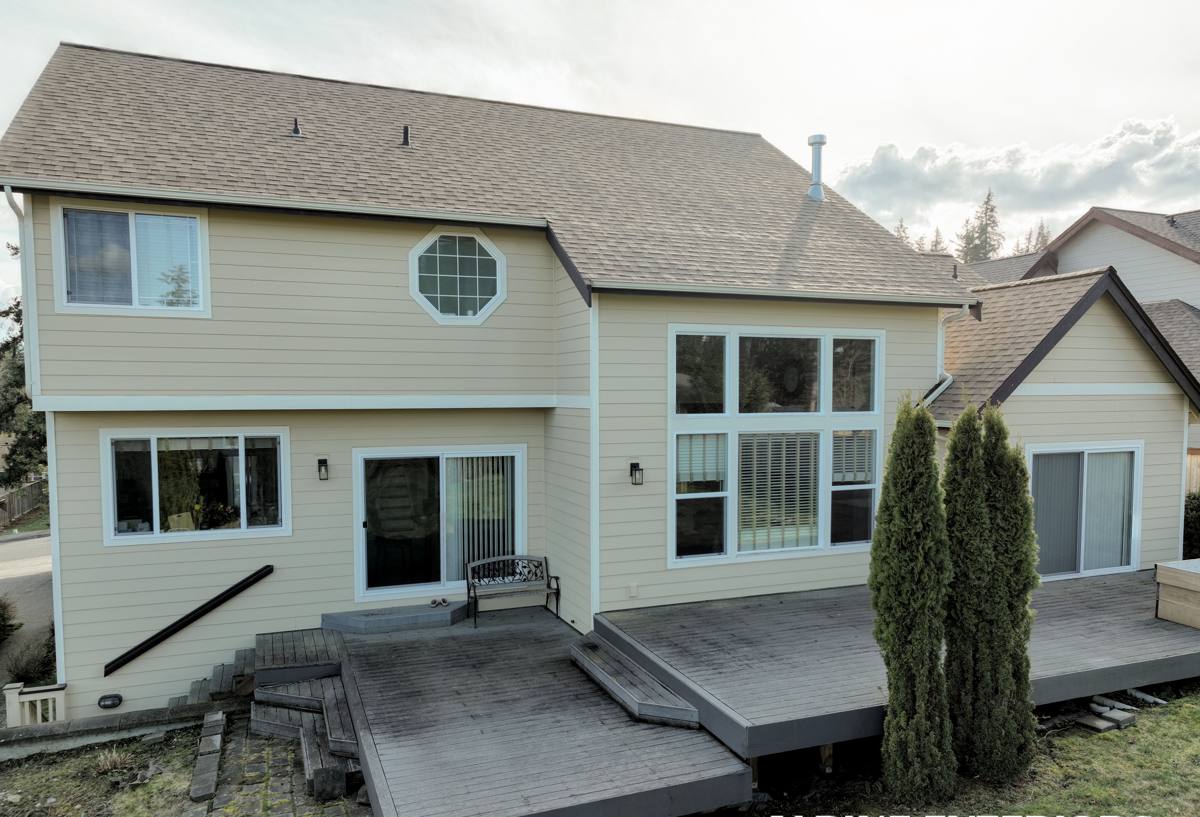
What Salt Air, Rain, and Moss Actually Do to a Window
Salt Air
Airborne salt is corrosive to exposed metal — hinges, locks, cranks, and screws — especially on windows that face open water or take the brunt of onshore wind. Cheaper hardware finishes pit and seize up faster here than they would twenty miles inland. It also accelerates the breakdown of some paints and finishes, which is why we pay attention to hardware grade and finish, not just glass and frame.
Driving Rain
Wind-driven rain doesn't just fall — it's forced sideways and even slightly upward under eaves and around frames. A window that would stay dry in a calm rain can leak on this peninsula if the flashing, sealant, and window orientation weren't handled correctly. Most of the water damage we find around older windows here started as a small, slow leak at a sill or corner joint that got worse every wet season.
Moss and Prolonged Moisture
A long wet season means wood trim and sills stay damp longer than they do in drier parts of the state. That extended dampness is exactly what moss, mildew, and eventually rot need to take hold. Once moisture gets behind a window's exterior trim, it can sit there quietly for a season or two before you see the soft wood, bubbling paint, or interior stains that tell you something's wrong.
Signs Your Current Windows Are Losing the Battle
- Fogging or a permanent haze between the panes of a double-pane window (a failed seal, not a cleaning problem)
- Drafts you can feel with a hand near the frame on a windy day
- Hardware that's stiff, corroded, or won't latch tightly anymore
- Soft, discolored, or bubbling wood or trim around the frame
- Visible daylight or gaps where the sash meets the frame
- Condensation forming on the inside of the glass regularly, even in mild weather
- Paint that keeps failing on the exterior trim faster than the rest of the house
Any one of these on its own might just mean it's time for maintenance. Several together, especially on a wall that faces open water, usually means the window and its installation are done doing their job.
What "Custom" Means for a Point Roberts Home
Custom starts with the opening, not the catalog. A lot of homes on the peninsula are older or were built or added onto over the years, which means openings are rarely a perfectly standard size. Custom windows are built to the actual opening — accounting for any settling, out-of-square framing, or non-standard dimensions — rather than forcing a stock size to fit with shims, extra trim, or gaps that become future leak points.
Custom also means matching the window to its exposure. A window on the water-facing side of a house doing the most work against wind and rain doesn't need to be spec'd identically to a sheltered window on the lee side. We look at orientation, wall exposure, and existing water damage before recommending frame material, glass package, and hardware — not a one-size answer for the whole house.
Material and Glass Choices That Hold Up in This Climate
There's no single "best" window material for every home — it depends on your budget, the home's style, and how exposed that particular wall is. Here's how the common options actually perform against salt air, driving rain, and a long wet season:
| Frame Material | Salt Air / Moisture Resistance | Maintenance | Notes for This Area |
|---|---|---|---|
| Vinyl | Good — won't rust or rot | Low | Solid value option; look for reinforced corners and quality weatherstripping for wind exposure |
| Fiberglass | Very good — dimensionally stable, resists moisture and corrosion | Low | Handles temperature and moisture swings well; often the best fit for exposed, water-facing walls |
| Wood | Fair — needs a sound finish and upkeep to resist prolonged dampness | High | Beautiful, especially on older homes, but the wettest, most exposed walls are hard on unprotected wood |
| Wood-Clad (wood interior, metal or vinyl exterior) | Good — exterior shell shields the wood | Moderate | Good compromise where wood look matters but exposure is a concern |
| Aluminum | Fair — conducts cold and can corrode without a marine-grade finish | Moderate | Generally not our first recommendation for water-facing walls here unless it's a marine-rated finish |
On glass, a quality double- or triple-pane unit with a low-E coating and a durable spacer system does more for this climate than most homeowners expect — it cuts condensation on the inside of the glass, reduces heat loss during our cold snaps, and holds its seal longer under constant humidity than a builder-grade unit. Argon or krypton gas fill between panes adds a bit more insulating value, which is worth it on the walls taking the most weather.
Why Installation Quality Matters More Out Here Than Almost Anything Else
We'll say this plainly: the window itself is only half the equation. Most of the leaks and rot we get called out to fix on the peninsula didn't start with a bad window — they started with an installation that didn't account for wind-driven rain. Correct flashing integration with the existing wall assembly, proper sill pan drainage, and sealant applied in the right places (and not as a substitute for proper flashing) are what actually keep water out during a sideways rain event.
A window installed a little too fast, without integrating the flashing correctly into the house wrap or siding, can look perfectly fine for a year or two before a slow leak shows up as a stain, a soft spot, or a mildew smell. On an exposed peninsula like this one, that gap between "looks fine" and "actually sealed" shows up faster than it would on a sheltered inland lot.
Our Process
1. On-Site Assessment
We look at each opening individually — exposure, existing damage, framing condition — not just take a quick measurement and quote a number. On a water-facing wall, we're also checking the condition of the wall assembly behind the trim, since that's often where the real story is.
2. Product and Glass Recommendation
Based on that assessment, we recommend frame material and glass package per opening, explaining the trade-offs honestly — including where a lower-cost option is genuinely fine and where it isn't worth the risk on an exposed wall.
3. Precise Measurement and Ordering
Because Point Roberts is only reachable from the rest of Whatcom County by crossing the international border, we plan material orders and delivery timing carefully so a job isn't held up waiting on a part that should have been on the truck the first time. Getting measurements and specs right the first time matters more here than almost anywhere else we work.
4. Installation
Old windows out, opening inspected and repaired if there's hidden damage, new flashing and drainage detailing installed correctly, then the new window set, sealed, and insulated properly around the frame — not just caulked at the surface.
5. Walkthrough
We check operation, look at the finished exterior detailing with you, and explain what to keep an eye on given the specific exposure of your home.
Why It Matters to Hire a Crew That Already Works Point Roberts
Point Roberts is a unique place to schedule a construction project. Because it's separated from the rest of Whatcom County by land and only reached by crossing into Canada and back, a crew that doesn't regularly work out there can end up making extra trips for a forgotten tool, a missed measurement, or a part that wasn't ordered right the first time — and each of those trips costs real time. A crew that already works the peninsula plans differently: full material lists confirmed before the trip out, tools and fasteners packed for contingencies, and a realistic schedule that accounts for the crossing instead of pretending it isn't a factor.
There's also the climate knowledge itself. A contractor who mostly installs windows on sheltered inland lots may not think twice about hardware finish, flashing detail, or glass spacer quality — because on their typical job, it doesn't matter as much. Out here, those choices are the difference between a window that's still tight in ten years and one that's leaking in three. Experience with this specific exposure isn't a nice-to-have; it's most of what you're actually paying for.
Keeping New Windows Performing in This Climate
- Rinse salt residue off exterior frames and glass periodically, especially after wind events
- Lubricate hardware (hinges, locks, cranks) on a regular schedule to prevent salt-air corrosion from taking hold
- Keep gutters and downspouts clear so runoff isn't sheeting down across window openings
- Check exterior caulking and sealant lines once a year for cracking or separation
- Watch for moss or mildew starting on sills or trim and clean it early, before it holds moisture against the surface
- Wipe down interior sills and tracks if condensation collects during cold snaps
None of this is complicated, but it's the kind of light, regular attention that adds years to a window's life in a climate that doesn't let up.
Let's Take a Look at Your Windows
If you're dealing with drafts, fogged glass, stuck hardware, or trim that's starting to show what a Point Roberts winter does over time, we're happy to come take a look. We'll give you an honest read on what's actually going on, what your real options are, and a straightforward estimate — no pressure, no upsell. Use the form below to get started.