 Ferndale
 Building a Deck in Point Roberts Takes More Planning Than Most Places
Point Roberts sits in a spot most contractors never have to think about. It's part of Whatcom County, but it's cut off from the rest of the county and the rest of Washington by water and an international border. Materials, crews, and equipment either come in by the long way through Canada or by boat, and that changes how a deck project gets planned from day one. Scheduling has to be tighter, material orders have to be right the first time, and the contractor doing the work needs to already have a rhythm for working out there — not be figuring it out on your dime.
On top of the logistics, Point Roberts homes sit right up against Boundary Bay and the Strait of Georgia, which means the deck itself has to be built for conditions that are noticeably harder on wood, metal, and fasteners than a typical inland Whatcom County lot. Salt air, driving rain off the water, and a moss season that runs long and wet all work against a deck that isn't built and finished correctly.
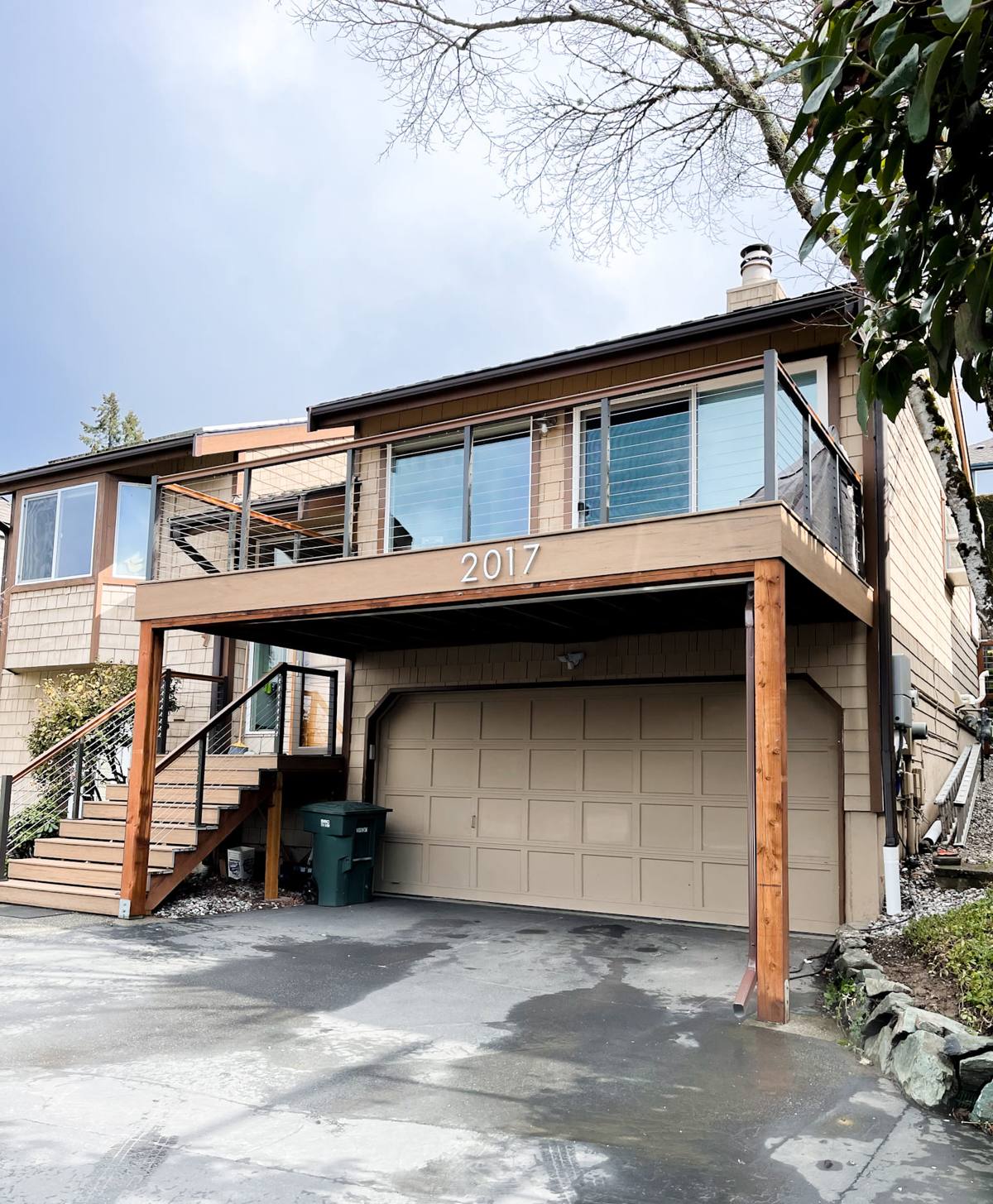
What Salt Air, Rain, and Moss Actually Do to a Deck
Salt Air
Airborne salt off the bay accelerates corrosion on anything metal — fasteners, joist hangers, railing hardware, and structural connectors. A deck built with standard-grade hardware in a salt-exposed location can start showing rust and staining well before an equivalent deck built a few miles inland. This isn't cosmetic; corroded fasteners and hangers lose holding strength over time, which is a structural problem, not just an appearance one.
Driving Rain
Wind-driven rain off the water doesn't just fall straight down — it gets pushed sideways into ledger connections, under railing posts, and into any gap in the decking where water can sit instead of shed. Over years, that moisture finds every weak point in the build: a ledger board without proper flashing, end grain that wasn't sealed, or fastener holes that weren't sized correctly.
Moss and Prolonged Dampness
Western Washington's moss season is long, and a deck that stays shaded or doesn't drain well gives moss and algae plenty of time to establish. Beyond making boards slippery, moss holds moisture against the decking surface for extended periods, which speeds up rot in wood decking and can stain and degrade the surface of composite products if it isn't kept in check.
Choosing Decking Material for a Point Roberts Lot
There's no single "best" decking material for every home — it depends on your budget, how much upkeep you want to do, and how exposed your specific lot is to wind and salt air. Here's how the common options actually compare for this climate.
| Material | Salt Air / Moisture Performance | Maintenance | Typical Lifespan Here |
|---|---|---|---|
| Pressure-treated lumber | Good if hardware and fasteners are properly rated; needs sealing | Annual cleaning and periodic staining/sealing | Shorter without upkeep, longer with consistent maintenance |
| Cedar | Naturally rot- and insect-resistant, but softer and needs regular sealing near salt air | Regular cleaning, periodic oiling or sealing | Moderate; depends heavily on maintenance |
| Composite decking | Doesn't rot or absorb moisture like wood; still needs correct fastener selection | Periodic washing to keep moss/algae from staining the surface | Longer, more consistent performance with less upkeep |
| PVC decking | Very strong moisture resistance; unaffected by rot | Low; occasional washing | Long, generally the lowest-maintenance option |
Whichever material you choose, the hardware underneath it matters just as much as the decking on top. We use fasteners and structural connectors rated for the exposure level of your specific site — that's a bigger factor in how long a deck holds up here than the brand name on the boards.
What a Correctly Built Deck Requires Below the Surface
Ledger Attachment and Flashing
The ledger board — where the deck attaches to your house — is the single most common failure point on decks in wet coastal climates. It has to be flashed correctly so water is directed away from the house framing, not into it. This is the connection we spend the most care on, because a failure here is expensive and often hidden until real damage has already occurred.
Footings and Framing
Footings need to be sized and set to local frost and soil conditions, and framing needs proper spacing and blocking for whatever decking material goes on top — composite and PVC products often have different joist-spacing requirements than solid wood. We don't treat framing as one-size-fits-all; it's specified for the decking you choose and the loads the deck will actually see.
Fasteners and Hardware
Given the salt exposure around Point Roberts, we default to corrosion-resistant fasteners and connectors rated for coastal or treated-lumber contact, rather than standard-grade hardware that's fine inland but underperforms here.
Drainage and Airflow Underneath
A deck that traps moisture underneath — from poor grading, no airflow, or ground-level framing sitting too close to soil — sets up the exact damp, shaded conditions moss and rot need to take hold. Correct drainage and clearance under the structure is part of the build, not an afterthought.
Permitting and Site Access in Point Roberts
Point Roberts falls under Whatcom County's permitting and building requirements like the rest of the county, but because it's physically separated from the mainland, coordinating inspections, deliveries, and crew scheduling takes more advance planning than a typical job. Material orders need to be accurate up front — running back for a missed item isn't a quick trip — and scheduling needs to account for the realities of getting people and equipment to the site.
This is one of the biggest practical reasons the contractor matters as much as the deck design itself: a crew that's already built a rhythm for working in Point Roberts plans around these constraints instead of discovering them mid-project.
Our Process From Estimate to Finished Deck
1. On-Site Assessment
We look at your home's exposure to wind and salt air, existing drainage, soil conditions, and how the deck will tie into your house structurally before we talk materials.
2. Material and Design Conversation
We walk through the honest trade-offs between wood and composite or PVC options for your specific site and budget — no pushing a single product because it's easier to sell.
3. Planning and Permitting
We handle the Whatcom County permitting requirements and plan the material delivery and crew schedule around Point Roberts' access realities so the project timeline is realistic from the start.
4. Construction
Footings, framing, ledger flashing, decking, and railing are all built to the exposure level of your lot, not a generic inland spec.
5. Final Walkthrough
We go over the finished deck with you, including what maintenance it actually needs given your location, before we consider the job done.
What Upkeep Looks Like for a Deck Out Here
No deck in this climate is maintenance-free, even the low-upkeep materials. What changes by material is how much and how often. A little regular attention goes a long way toward keeping a deck safe and good-looking for the long run:
- Sweep or rinse off standing debris and organic buildup regularly, especially in shaded areas prone to moss
- Check railing posts, stair connections, and ledger areas periodically for movement or staining that could signal a hardware or flashing issue
- Clean wood decking and reapply sealant or stain on the manufacturer's recommended schedule
- Wash composite or PVC decking periodically to prevent moss and algae staining, especially in shaded spots
- Keep gutters and downspouts near the deck clear so runoff isn't dumping extra water onto or under the structure
- Trim back vegetation that keeps sections of the deck shaded and damp longer than the rest
Why Hiring a Crew That Already Works Point Roberts Matters
A deck built to a generic spec, by a crew unfamiliar with the access and exposure realities of Point Roberts, is more likely to run into scheduling problems during construction and performance problems afterward. We already account for the border-crossing logistics, the salt air off the bay, and the long wet moss season in how we plan materials, hardware, and framing — so you're not the one absorbing the learning curve.
If you're planning a new deck or replacing one that's showing its age, we're happy to come take a look and talk through what makes sense for your home. There's no pressure and no obligation — just a straight assessment and an honest estimate. Fill out the form below to get started.