 Ferndale
 Roofing Built for Marietta's Coastline, Not a Generic Spec Sheet
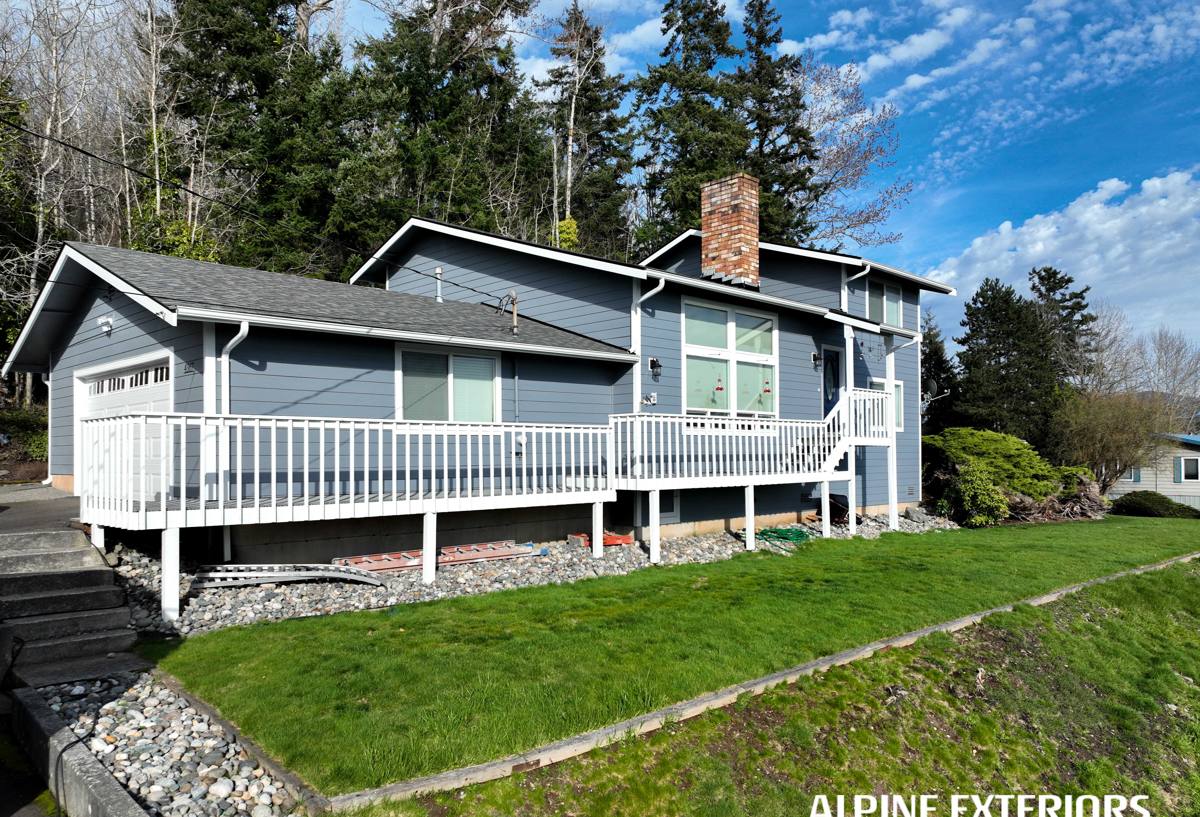
Marietta sits close enough to the water that homes here take a different kind of weather beating than roofs a few miles inland in Ferndale or Bellingham. Salt-laden air off the bay works on metal fasteners and flashing year-round. Driving rain off Puget Sound doesn't fall straight down — it comes in sideways during winter storms and finds every weak seam. And the deep shade from mature evergreens combined with our long wet season means moss isn't an occasional nuisance here, it's a permanent tenant unless the roof is built and maintained to discourage it. A new roof installation in this neighborhood has to account for all three of those forces at once, not just meet a generic Western Washington spec.
This page walks through what that actually means in practice: what local homes need, what a correct installation looks like from tear-off to final inspection, and why a crew with real Marietta and Whatcom County experience matters more here than it might in a drier, calmer climate.
What Salt Air, Driving Rain, and Moss Actually Do to a Roof
Salt Air and Corrosion
Airborne salt accelerates corrosion on any exposed metal — nails, flashing, drip edge, vent stacks, and gutter hardware. On a roof installed with the wrong fastener grade or unprotected flashing, that corrosion can start showing up as rust streaks and weakened attachment points well before the shingles themselves are due for replacement. The fix isn't complicated, but it has to be specified up front: corrosion-resistant fasteners and flashing rated for coastal exposure, not the cheapest option in the supplier's bin.
Driving, Wind-Driven Rain
Wind-driven rain off the bay doesn't respect the assumption that water only needs to shed downhill. It gets pushed sideways and upward under improperly lapped shingles, around poorly sealed valleys, and through any flashing detail that was installed "close enough." A roof that would perform fine in a calmer inland location can leak in Marietta if the underlayment, valley work, and flashing weren't installed with wind-driven rain specifically in mind.
Long Moss Season
Whatcom County's wet, mild climate and heavy tree cover give moss and algae a long growing window — often nine or ten months of the year on a shaded roof. Moss holds moisture against the roofing material, works its way under shingle tabs as it grows, and accelerates granule loss on asphalt shingles. It also blocks the flow paths that keep water moving off the roof instead of pooling. A roof designed with airflow and shade in mind sheds moss far more slowly than one that isn't.
Signs a Marietta Home May Need a New Roof, Not Another Repair
Not every roof problem calls for full replacement, but there's a point where patching stops making financial sense. Before recommending a new installation, we look for these signs specifically because they show up often on homes in this area:
- Shingles that are cupping, curling, or losing granules in patches, especially on north- and west-facing slopes that stay shaded and damp longest
- Moss growth that returns within a few months of cleaning, which usually means it has already worked under the shingle mat
- Rust staining at valleys, flashing, or fastener heads — a sign salt-air corrosion has already started
- Soft spots or sagging in the decking, often found only once old shingles are pulled and the sheathing underneath is exposed
- Daylight or water staining in the attic near eaves, valleys, or chimney flashing after a wind-driven rain event
- A roof that's 20+ years old and has never had a full tear-off, meaning the decking and underlayment have never actually been inspected
- Multiple past repairs in different spots, which usually signals the underlying materials are past their service life rather than a series of unrelated problems
What a Correct Roof Installation Involves
A new roof is only as good as what's underneath the shingles. For Marietta homes, we treat these steps as non-negotiable rather than optional upgrades:
Full Tear-Off and Deck Inspection
We remove the old roofing down to the deck rather than layering over it. That's the only way to actually see the condition of the sheathing, catch any soft or water-damaged sections, and confirm there's no hidden moisture problem from years of moss or slow leaks. Any damaged decking gets replaced before anything new goes down.
Ice-and-Water Protection at Vulnerable Areas
Valleys, eaves, and areas around chimneys and skylights get self-adhering waterproof underlayment, not just standard felt. These are the exact spots where wind-driven rain finds its way in, so they get the highest level of protection on the roof.
Synthetic Underlayment Across the Field
The rest of the deck gets a synthetic underlayment layer built to handle sustained wet-weather exposure during installation and to serve as a reliable secondary water barrier for the life of the roof.
Corrosion-Resistant Metal Work
Drip edge, valley metal, flashing, and fasteners are specified for coastal exposure. This is one of the details that separates a roof that looks fine for five years from one that actually performs for its full warranty period near the water.
Balanced Ventilation
Intake at the eaves and exhaust at the ridge, sized to move air through the attic space. Good ventilation reduces the moisture buildup that feeds moss and rot, and it protects the shingles from underside heat and condensation damage.
Comparing Roofing Materials for Marietta's Climate
Every material handles salt air, rain, and moss differently. Here's how the common options stack up for this specific setting:
| Material | Rain Performance | Moss Resistance | Coastal Durability |
|---|---|---|---|
| Architectural asphalt shingle | Strong when properly lapped and flashed | Moderate; benefits from algae-resistant granules | Good with corrosion-resistant fasteners and flashing |
| Standing seam metal | Excellent; minimal seams for water to find | High; sheds moss faster on steeper slopes | Very good with marine-grade coatings and fasteners |
| Composite/synthetic shake | Strong; engineered for water shedding | Good; less porous surface than wood | Good; consistent material performance over time |
| Cedar shake (untreated) | Moderate; more seams and joints to maintain | Lower; organic material is more moss-prone | Requires more frequent maintenance near salt air |
We don't push one material on every home. The right choice depends on the roof's pitch, how much shade it gets, the home's architectural style, and the owner's tolerance for maintenance. What we won't do is install a product in a way that ignores its known weak points — for example, we won't skip algae-resistant shingle options on a heavily shaded slope just because the standard version is cheaper, since that trade-off shows up as a moss problem within a couple of years.
How Our Installation Process Works
- On-site assessment. We inspect the current roof, attic ventilation, and any visible trouble spots specific to the home's exposure to wind, shade, and rain.
- Written scope and material selection. You get a clear breakdown of tear-off scope, decking allowance, underlayment plan, flashing details, ventilation plan, and material options — no vague line items.
- Scheduling around weather. Roofing in this area means working around rain windows. We plan installation days with enough buffer that the deck isn't left exposed longer than necessary.
- Tear-off and deck repair. Old roofing comes off, decking is inspected and repaired as needed, and the deck is dried in with underlayment before any weather can get in.
- Flashing, valleys, and vents. These details go in before the field shingles or panels, since they're the parts doing the real work during a wind-driven rain event.
- Final installation and cleanup. Roofing material goes down to manufacturer and code specifications, the site is cleared of debris and fasteners, and gutters are checked for proper flow.
- Walkthrough. We review the finished roof with you, including basic maintenance expectations for moss control given the home's shade exposure.
Ventilation and Moss Prevention Aren't Optional Extras
A new roof is a chance to fix ventilation problems that may have shortened the life of the previous one. Poor attic airflow traps moisture, which condenses on the underside of the decking and creates the damp, dark conditions moss and mold prefer even before growth reaches the outside surface. We size intake and exhaust ventilation to the home's attic volume and roof geometry rather than installing a one-size-fits-all vent count.
On slopes that stay shaded most of the day — common on tree-lined lots throughout Marietta and Ferndale — we also talk through simple ongoing maintenance: periodic gentle cleaning, keeping overhanging branches trimmed back where practical, and choosing algae-resistant shingle products where the roof design allows for it. None of this replaces good installation, but it extends the life of a roof that's already built correctly.
What Affects the Cost of a New Roof Here
Every roof is priced individually, but these are the main factors that move the number up or down for homes in this area:
| Factor | Why It Matters Locally |
|---|---|
| Roof pitch and complexity | More valleys and dormers mean more flashing detail work to protect against wind-driven rain |
| Decking condition | Hidden moisture damage from past moss or leaks may require deck replacement discovered during tear-off |
| Material choice | Metal, composite, and asphalt options carry different material and labor costs |
| Ventilation upgrades | Adding proper intake/exhaust venting where none existed adds scope but reduces future moisture problems |
| Access and site conditions | Tree cover, steep lots, and staging space affect labor time |
We'd rather walk a homeowner through these factors honestly during the estimate than quote a number that doesn't reflect what the roof actually needs.
Why a Crew That Already Works in Marietta Makes a Difference
A roofing crew that regularly works Marietta and the surrounding Ferndale area has already seen how salt exposure, wind-driven rain, and heavy moss growth play out on homes with this specific combination of climate and tree cover. That experience shows up in small decisions — which flashing detail to reinforce, where corrosion-resistant hardware actually matters versus where it's overkill, and how to size ventilation for a shaded, damp attic space. It also means a crew that understands realistic scheduling around Whatcom County's wet season, so your deck isn't sitting exposed longer than it needs to be.
If your roof is showing signs of wear, or you'd simply like an honest read on how many years it has left, we're glad to come take a look. A free, no-pressure estimate gives you a clear picture of the roof's condition and what a correct installation would involve for your home — use the form below to get started.