 Ferndale
 Why Lummi Island Roofs Wear Differently Than Roofs Inland
Lummi Island sits fully exposed to Puget Sound weather in a way that most of Whatcom County doesn't. Homes here take a steady dose of salt-laden air, wind-driven rain coming off the water, and a moss season that runs longer than it does just a few miles inland in Ferndale or Bellingham. None of that is dramatic on its own, but stacked together over years, it shortens the useful life of a roof and changes what "correct installation" actually means for this specific island.
Salt air is corrosive to exposed metal fasteners, flashing, and vent components. Driving rain finds any weak point in a roof's water-shedding layers, not just the shingles themselves, and pushes moisture sideways under laps and around penetrations that would stay dry in a calmer climate. And moss doesn't just sit on the surface — its root structure holds moisture against the roofing material and lifts shingle edges, which accelerates granule loss and shortens shingle life well before the manufacturer's rated lifespan.
None of this means Lummi Island homes need exotic materials or gimmicks. It means the installation details — fastener choice, flashing method, ventilation, and underlayment — need to be handled correctly and consistently, because there's less margin for error here than on a roof in a more sheltered part of the county.
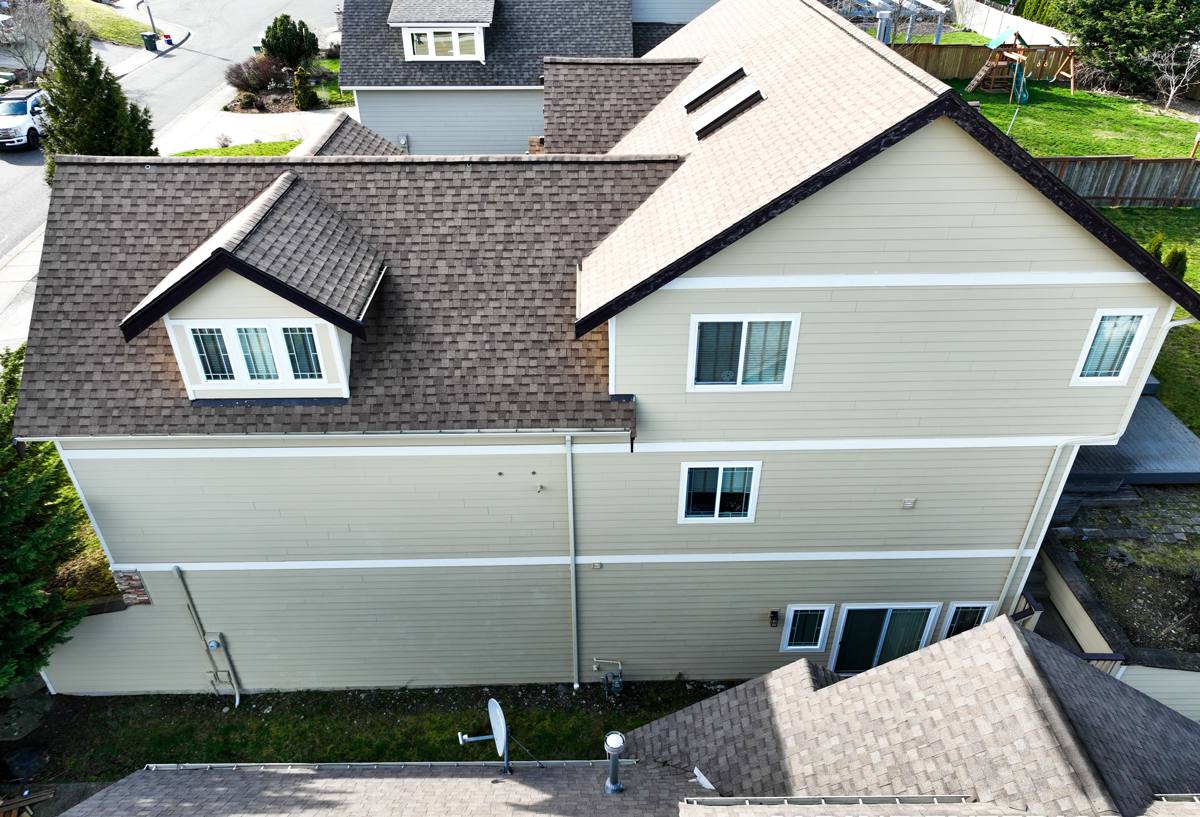
Signs a Lummi Island Roof Needs Replacement, Not Another Repair
Not every aging roof needs full replacement. But on an island with this weather exposure, patch repairs sometimes buy less time than homeowners expect, because the underlying decking or underlayment has already absorbed moisture damage that a surface patch won't fix. Some signals that point toward replacement rather than repair:
- Granule loss heavy enough that shingles look patchy or bare in spots, especially on south- and west-facing slopes that catch the most weather
- Persistent moss or algae growth that returns within a season or two of cleaning
- Soft or spongy spots underfoot, which usually mean the decking underneath has taken on water
- Curling, cupping, or cracked shingles across large sections rather than isolated spots
- Daylight visible through the roof deck from inside the attic, or water staining on rafters
- A roof that's already had two or more rounds of repair in the last several years
If a roof is showing two or more of these at once, a full replacement is usually the more honest recommendation — not because repair is impossible, but because repeated patching on a roof that's already compromised tends to cost more over time than doing the job right once.
What a Correct New Roof Installation Actually Involves
Tear-Off and Deck Inspection
A proper installation starts with full tear-off down to the deck, not a layover on top of existing shingles. That's the only way to actually see the condition of the plywood or OSB underneath. On Lummi Island homes, we routinely find sections of decking that have softened from long-term moisture intrusion around old flashing or vent boots — those get replaced before anything new goes down, because installing a new roof over compromised decking just hides the problem instead of solving it.
Underlayment and Ice-and-Water Protection
Given the amount of wind-driven rain this stretch of coastline sees, underlayment choice matters more here than it would in a drier climate. We use synthetic underlayment across the field of the roof and self-adhering ice-and-water membrane at the vulnerable points — eaves, valleys, and around every penetration — where wind-driven rain is most likely to get pushed backward under a shingle lap.
Flashing
Flashing failure, not shingle failure, is the most common source of roof leaks we see on coastal homes. Step flashing at wall intersections, counter-flashing at chimneys, and properly lapped valley flashing all need to be installed in a specific sequence with the underlayment and shingle courses — not caulked over as an afterthought. On a salt-exposed island roof, we also pay close attention to flashing and fastener material, since standard galvanized components corrode faster here than they would inland.
Ventilation
Proper intake and exhaust ventilation keeps moisture from building up in the attic space, which matters for both the roof deck's longevity and the shingles' warranty. A roof that's improperly vented can trap humid air against the underside of the deck, encouraging rot from the inside even while the topside looks fine — a problem we see more often on older island homes with undersized or blocked soffit vents.
Roofing Materials: What Actually Holds Up on Lummi Island
There's no single "best" roofing material for every home — the right choice depends on the home's exposure, roof pitch, and budget. Here's how the common options compare for this specific climate:
| Material | Coastal Performance | Moss Resistance | Typical Lifespan |
|---|---|---|---|
| Architectural asphalt shingle | Good with proper flashing and fasteners; widely proven in this climate | Moderate — benefits from algae-resistant granules | 25-30 years |
| Standing seam metal | Excellent shedding of wind-driven rain; needs corrosion-rated fasteners near salt air | High — sheds moisture quickly, little surface for moss to grip | 40-50+ years |
| Cedar shake | Traditional look but higher maintenance in wet, salty conditions | Low without regular treatment and cleaning | 20-30 years with upkeep |
| Synthetic composite shingle | Good; consistent performance, resists moisture absorption | Moderate to high depending on product | 30-50 years |
Most of the new roofs we install on the island are algae-resistant architectural asphalt shingle or standing seam metal — both hold up well against salt air and driving rain when installed correctly, and both are practical to source and maintain for a homeowner who isn't looking to take on the upkeep that cedar demands in this climate.
The Ferry Factor: Why Logistics Matter for Roofing Work Here
Lummi Island is only reachable by ferry, and that changes how a roofing project has to be planned compared to a job on the mainland. Material deliveries, dumpster drop-off and pickup for tear-off debris, and daily crew scheduling all have to work around the ferry timetable rather than a normal drive-to-the-jobsite routine. A crew that hasn't worked the island before can lose real time — and add real cost — figuring this out on the fly.
Weather adds another layer. A tear-off day needs a dry forecast window that accounts for ferry crossings on both ends, since a roof left open to the weather overnight is never the goal. Planning material orders and dumpster timing around the ferry schedule, rather than around it, is part of what makes an island roofing project run smoothly instead of dragging out over unplanned delays.
Our Installation Process, Step by Step
- On-site inspection and estimate — we assess the existing roof, decking condition where visible, ventilation, and any problem areas before quoting the job
- Material selection — we walk through the options that make sense for the home's exposure and the homeowner's budget, without pushing a single product
- Scheduling around ferry logistics and weather — we plan material delivery, dumpster timing, and the tear-off window to keep the roof closed in as quickly as possible
- Tear-off and deck repair — full removal of old roofing, inspection of the deck, and replacement of any damaged sheathing
- Underlayment and flashing installation — synthetic underlayment, ice-and-water membrane at vulnerable points, and properly sequenced flashing throughout
- Roofing material installation — installed to manufacturer specification to keep material warranties intact
- Ventilation check — intake and exhaust venting confirmed adequate for the attic space
- Final walkthrough and cleanup — site cleared of debris and nails, and the finished roof reviewed with the homeowner
Moss and Maintenance: Planning for the Long Wet Season
Whatcom County's moss season runs long, and Lummi Island's damp, shaded, and salt-humid air keeps conditions favorable for growth even longer than on the mainland. A new roof doesn't make a home immune to moss — but the right shingle selection, proper ventilation, and a few basic maintenance habits go a long way toward slowing regrowth:
- Keep overhanging branches trimmed back to reduce shade and debris buildup on the roof
- Clear gutters and valleys of needles and leaf litter each fall, before the heavy rains set in
- Have moss growth gently removed before it spreads, rather than waiting until it's established
- Avoid pressure washing shingles directly, which can strip protective granules and shorten shingle life
- Schedule a roof check every year or two, especially after a hard winter
What Drives the Cost of a New Roof on Lummi Island
Every home is different, but the same handful of factors drive most of the cost variation we see on island roofing projects:
| Factor | Why It Affects Cost |
|---|---|
| Roof size and pitch | More surface area and steeper pitches mean more material and labor time |
| Material choice | Standing seam metal costs more upfront than asphalt shingle but lasts significantly longer |
| Deck condition | Sections of rotted or soft decking found during tear-off need to be replaced before roofing |
| Roof complexity | Valleys, dormers, chimneys, and multiple roof planes all add flashing and labor time |
| Ferry and access logistics | Material transport and disposal both run through the ferry schedule |
| Ventilation upgrades | Adding or correcting intake/exhaust venting during the reroof is more cost-effective than doing it later |
We give straightforward, itemized estimates so homeowners can see exactly what they're paying for and where — not a vague lump sum.
Why a Ferndale Crew That Already Works Lummi Island Matters
A roofing crew based in Ferndale that regularly works Lummi Island isn't guessing at ferry timing, weather windows, or how salt exposure affects fastener and flashing choices — that's built into how the job gets planned from the estimate onward. It also means we're a short trip away if a question comes up after the job is done, rather than a mainland crew that treats the island as an occasional one-off.
We hold the same installation standard on Lummi Island that we do everywhere else we work in Whatcom County: full tear-off, deck inspection and repair where needed, correct flashing sequencing, and ventilation that actually protects the investment — not shortcuts because the jobsite happens to be across the water.
Ready to Talk About Your Roof?
If your Lummi Island home's roof is showing its age — or you just want an honest read on how much life it has left — we're happy to come take a look. We offer a free, no-pressure estimate with a clear breakdown of what we find and what it would take to fix it right, whether that's a straightforward repair or a full replacement built for this island's weather.