 Ferndale
 Roofing Built for Everson's Weather, Not Just Its Rooflines
Everson sits inland from the coast but still lives under the same wet, gray weather pattern that defines Whatcom County for most of the year. Moisture-laden marine air moves up the valley, rain settles in for days at a time, and the tree cover common around Everson properties keeps roofs shaded and damp long after a storm passes. That combination — driving rain, salt-tinged coastal air drifting inland, and a moss season that can run eight months or longer — is hard on a roof in ways that homeowners in drier climates never have to think about.
A roof that gets installed correctly for this climate looks the same as any other roof on the day it goes on. The difference shows up two, five, and ten years later, in whether the decking underneath is still solid, whether moss has undermined the shingle mat, and whether the attic above the living space stayed dry through every wet season in between. New roof installation in Everson isn't a different product than what we install anywhere else in the region — it's the same materials, installed with more attention to the details that matter most here: underlayment, ventilation, flashing, and moss resistance.
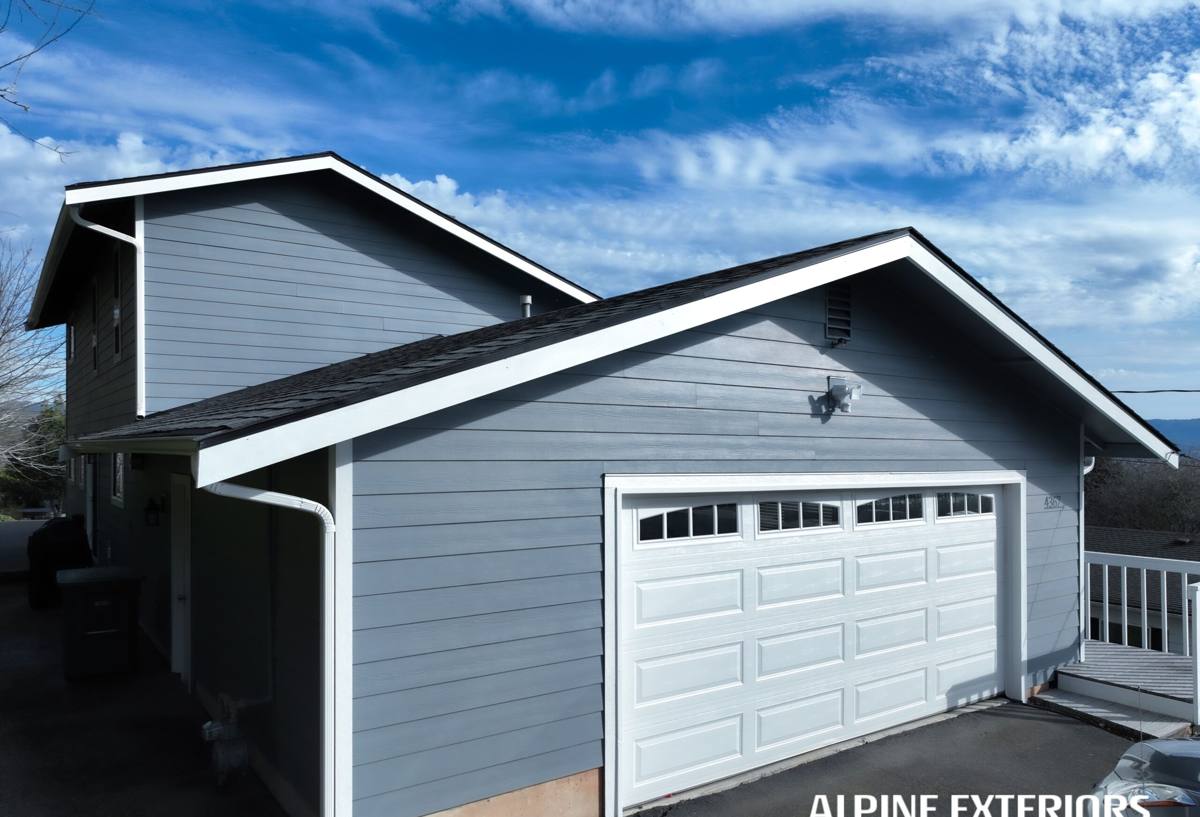
Signs an Everson Home May Be Due for a New Roof
Roofs rarely fail all at once. They give warning signs for months or years before a leak actually shows up inside the house. Because Everson's moss and moisture cycle accelerates wear compared to drier parts of the state, it's worth checking a roof more often than the "look at it every few years" advice you'll hear elsewhere.
- Granules collecting in gutters or at downspout outlets — a sign the shingle surface is wearing thin
- Moss or algae streaking that keeps returning within a season or two of cleaning
- Shingles that are curling, cupping, or lifting at the edges
- Soft or spongy spots when walking the roof, which often means the decking underneath has taken on moisture
- Daylight visible through the roof boards from inside the attic
- Rusting, cracked, or separated flashing around chimneys, vents, and skylights
- A roof that's approaching or past 20-25 years old for asphalt shingle, especially if it's never been re-roofed
Any one of these on its own might just mean a repair. Several together, especially on a roof already in its second or third decade, usually means it's more cost-effective to replace the whole system than to keep patching it.
What a Correct Roof Installation Actually Involves
"New roof" gets used loosely, but a properly done installation is a specific sequence of steps, and skipping or rushing any one of them is where most premature roof failures in this region start.
Tear-Off and Deck Inspection
We remove the old roofing down to the deck rather than layering new shingles over old — layering traps moisture and voids most manufacturer warranties. With the deck exposed, we can actually see what's underneath: soft plywood, rotted sheathing near valleys and eaves, or old, undersized ventilation. Any damaged decking gets replaced before anything new goes down. Installing new shingles over a compromised deck just hides the problem for a year or two.
Underlayment and Ice-and-Water Protection
This layer is arguably more important to how long the roof lasts than the shingle brand on top of it. In a climate that sees sustained rain rather than short bursts, a synthetic underlayment that actually sheds water — rather than an older felt product that can wick moisture — matters. We install self-adhered ice-and-water shield at the eaves, valleys, and around every roof penetration, since those are the spots where wind-driven rain and ice dams (on the rare cold snap) find their way in first.
Flashing
Flashing around chimneys, skylights, sidewalls, and roof-to-wall transitions is where the majority of roof leaks actually originate — not through the shingle field itself. We replace flashing rather than reuse old, corroded pieces, and we detail it to shed water correctly rather than rely on caulk or sealant to do the job flashing is supposed to do.
Ventilation
A roof deck that can't breathe traps warm, moist attic air against the underside of the sheathing, which speeds up rot and helps moss and algae take hold on the shingle surface from below as well as above. Balanced intake and exhaust ventilation is part of every installation, not an upsell.
Shingle or Material Installation
Correct nailing pattern, proper exposure, and manufacturer-specified fastening are what let a roofing product actually hit its rated wind and warranty performance. This is also where moss-resistant shingle options, copper or zinc strips, and starter/ridge details get handled correctly.
Choosing a Roofing Material for This Climate
Most Everson homes are well served by architectural asphalt shingles, but the right choice depends on the roof's slope, sun exposure, tree cover, and how long the homeowner wants to go between maintenance cycles.
| Material | Moss/Moisture Resistance | Typical Lifespan | Maintenance Needs |
|---|---|---|---|
| Architectural asphalt shingle | Good, especially with algae-resistant granules | 25-30 years | Periodic moss treatment and gutter clearing |
| 3-tab asphalt shingle | Fair — thinner profile wears faster in constant damp | 15-20 years | More frequent moss and granule-loss monitoring |
| Standing seam metal | Excellent — moss struggles to gain a foothold | 40-50+ years | Low; occasional debris clearing |
| Synthetic composite shingle | Very good, engineered to resist moisture uptake | 30-50 years | Low to moderate |
We don't push one product on every roof. A heavily shaded, low-slope roof under mature trees is a very different job than an open, sun-exposed roof, and the material recommendation should reflect that rather than a one-size answer.
What Drives Cost on a New Roof Installation
Every roof is priced individually after a real inspection, but the factors below are what actually move the number up or down on most Everson jobs. Broad, honest ranges only — an accurate quote requires seeing the roof.
| Factor | Why It Matters |
|---|---|
| Roof size and number of facets | More squares and more complex geometry mean more material and labor |
| Roof pitch | Steeper roofs take longer to work safely and need more fall protection |
| Number of layers to remove | Tear-off of two or more old layers adds disposal and labor time |
| Decking condition | Rotted sheathing found during tear-off adds replacement cost |
| Penetrations | Chimneys, skylights, and multiple vents each need custom flashing |
| Material selection | Asphalt, metal, and composite carry different material and install costs |
| Access and site conditions | Steep driveways, limited staging area, or heavy tree cover affect logistics |
How Our Installation Process Works
- On-site inspection and estimate. We walk the roof, check the attic, and give a written estimate based on what we actually find — not a guess from the ground.
- Material selection. We go over the tradeoffs for the specific roof — slope, shade, budget — so the homeowner picks a product that fits the house, not just a catalog favorite.
- Scheduling around the weather. Roofing in Whatcom County means working around real rain windows. We schedule tear-off days when the forecast gives us the dry stretch we need to keep the deck protected.
- Tear-off and deck inspection. Old roofing comes off, the deck gets inspected, and any needed sheathing repair happens before anything new goes on.
- Underlayment, flashing, and ventilation install. The parts that don't show once the shingles are down, done to spec.
- Final roofing installation. Shingles, metal panels, or composite material go on per manufacturer specification to protect the warranty.
- Cleanup and walk-through. Job site and yard cleared of debris and nails, then a final walk-through so the homeowner sees the finished roof and asks any last questions.
Why a Crew That Already Works in Everson Matters
A roofer who only shows up in Everson occasionally doesn't have the same feel for this area's rain patterns, tree cover, and moss pressure as a crew that works Ferndale and the surrounding Whatcom County communities regularly. That local familiarity shows up in practical ways: knowing which weeks of the year actually give a reliable dry-weather window for tear-off, understanding how much moss pressure a shaded, tree-lined lot is likely to see compared to an open one, and having existing relationships with local material suppliers so a job doesn't stall waiting on a special order. It also means the crew that installs the roof is reachable afterward — not a name from an out-of-area company that's moved on to the next county.
Protecting the New Roof After Installation
A correctly installed roof still needs basic upkeep to hit its full lifespan in a climate this wet. None of it is complicated, but skipping it is how a 30-year roof becomes a 20-year roof.
- Clear gutters and downspouts at least twice a year so water actually drains instead of backing up under the shingle edge
- Trim back tree limbs that overhang the roof to cut down on shade, debris, and moss-friendly conditions
- Treat moss growth early rather than letting it establish, using methods appropriate to the specific roofing material
- Check flashing and sealant points around chimneys and skylights once a year
- Have the attic checked periodically for proper airflow and any signs of moisture
- Address any small leak or soft spot immediately rather than waiting for it to spread
A new roof is one of the largest investments a homeowner makes in a house, and in Whatcom County's climate, the installation quality matters as much as the material choice. If you're seeing warning signs on your Everson roof or it's simply reaching the end of its service life, we're happy to come take a look and put together a straightforward, no-pressure estimate — just fill out the form below.