 Ferndale
 Windows in Marietta Take a Different Kind of Beating
Marietta sits close enough to Bellingham Bay that salt air is a constant, low-grade factor in how building materials age here. Add in Whatcom County's long stretch of driving rain each fall and winter, plus a moss season that can run from October well into spring, and you've got a set of conditions that are genuinely harder on windows than what you'd find twenty miles inland. Aluminum hardware corrodes faster near the water. Wood-clad frames hold moisture longer under a persistent moss and lichen load. Wind-driven rain finds gaps that would never leak in a drier climate.
None of this means Marietta homes need exotic solutions. It means the details that get skipped on an easy job — flashing sequence, sill pan drainage, the right sealant for a marine environment — are the details that actually matter here. This page covers what window replacement looks like when it's done right for this specific area, not a generic rundown of window shopping.
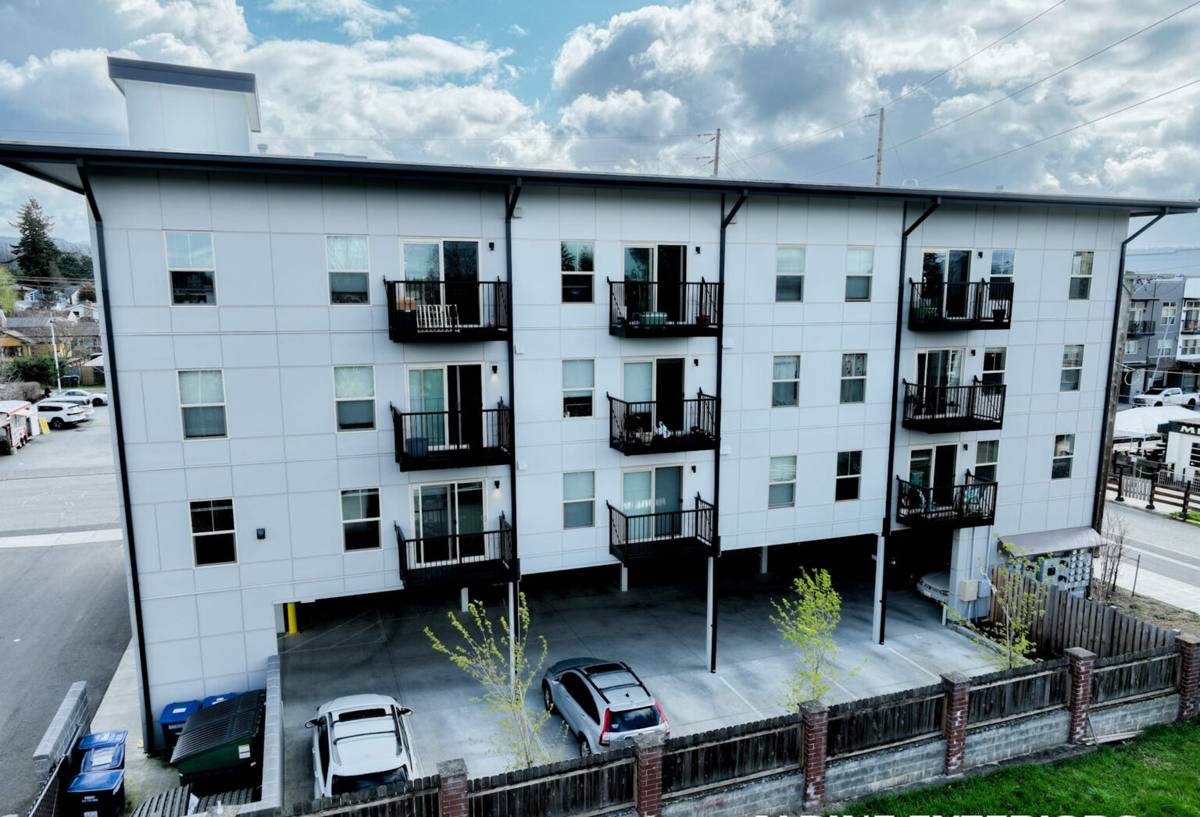
Signs a Marietta Home Is Due for Window Replacement
Most homeowners call us after noticing one or two of these, not because they went looking for a project:
- Condensation forming between the panes (a sign the seal has failed, not something you can fix with a rag)
- Visible fogging or a milky haze that won't clean off the inside of the glass
- Drafts you can feel near the frame on a windy day off the bay
- Wood sills that feel soft, spongy, or show dark staining at the corners
- Difficulty opening, closing, or latching windows — frames can swell and warp with repeated wet-dry cycles
- Visible moss or black streaking building up on the frame or sill that keeps coming back after cleaning
- Noticeably higher heating bills in a house that hasn't changed otherwise
Any one of these on its own isn't an emergency. But in a marine climate, moisture problems at a window rarely stay contained to the window — they tend to travel into the framing and siding around it, which is where a manageable repair turns into a bigger one.
What a Correct Window Replacement Actually Involves
Swapping the glass unit itself is the easy part. The work that determines whether a window lasts 20 years or leaks in year three happens in the rough opening, before the new window ever goes in.
Removal and inspection
We pull the old window and inspect the framing underneath — sill, jack studs, header — for rot or moisture damage. In a house near the water, this step matters more than in a dry-climate install, because moisture that's been sneaking past a failing seal for years often hasn't shown itself yet on the interior side.
Sill pan and flashing
A sill pan gives any water that does get past the window a way out, instead of a place to sit. Flashing tape gets layered shingle-style — bottom piece first, sides next, top last — so water sheds down and out rather than working its way behind the siding. This sequencing is the single most common thing we find done wrong on older or lower-budget installs, and it's the reason otherwise fine-looking windows leak.
Setting and shimming
The window gets shimmed level and plumb, fastened per the manufacturer's schedule, and the gap around the frame gets insulated — not packed solid, which can bow the frame, but filled enough to stop air movement.
Sealing and trim
Exterior sealant goes on with a product rated for sustained wet exposure, not a general-purpose caulk that'll crack and open a gap within a couple of wet seasons. Interior and exterior trim gets reset or replaced to match.
Choosing Windows That Hold Up Near the Bay
Frame material matters more here than in a lot of the county, simply because of the salt air. Here's how the common options stack up for a home in the Marietta area:
| Frame Material | How It Handles Salt Air & Moisture | Maintenance |
|---|---|---|
| Vinyl | Doesn't corrode or rust; handles humidity well; can flex slightly in temperature swings | Low — occasional washing |
| Fiberglass | Very stable in wet and salty air, resists warping, matches wood's insulating properties | Low — occasional washing |
| Aluminum | Prone to corrosion and pitting near salt air over time; conducts cold, which can worsen condensation | Moderate — needs monitoring for corrosion |
| Wood / wood-clad | Handsome, but exposed wood is the most vulnerable to the moss-and-moisture cycle here | High — regular painting/sealing required |
We're not going to tell you wood windows are a bad product everywhere — they're not. But on a home exposed to salt air and long wet seasons, the maintenance burden of keeping exposed wood sealed and moss-free is real, and it's a trade-off worth going in with your eyes open on. Vinyl and fiberglass are what we recommend for most Marietta-area homes because they take that maintenance variable off the table without giving up performance.
Energy Performance in a Marine Climate
Whatcom County's climate isn't extreme cold, but it is persistently damp and moderately cool for much of the year, which changes what matters in a window's performance numbers.
- U-factor (how well the window resists heat loss) matters more than solar heat gain here — we don't have the intense summer sun that drives Southwest homeowners to prioritize shading. A lower U-factor keeps heat in during our long wet season.
- Low-E coatings help reduce heat loss and can cut down on interior condensation, which is a bigger day-to-day annoyance here than in drier climates.
- Double vs. triple pane: Double-pane with a good low-E coating is sufficient for most homes in this area. Triple-pane adds cost and weight without a clear payoff unless you're right on an exposed, wind-heavy site.
- Gas fill (argon) is a low-cost upgrade that improves insulation slightly and is worth including on most orders.
Our Process, Start to Finish
- Free on-site estimate — we look at your existing windows, framing condition, and take measurements. No pressure, no obligation.
- Window selection — we walk through material, style, and glass options based on your home's exposure and your budget.
- Scheduling around the weather — we plan installs for dry weather windows whenever possible, which does mean some flexibility during our wetter months.
- Removal, inspection, and any needed framing repair — flagged and discussed with you before we proceed, not discovered after the fact on the invoice.
- Proper flashing, setting, and sealing — the steps outlined above, done the same way whether it's one window or the whole house.
- Cleanup and walkthrough — we clear debris and walk the finished work with you.
What Affects the Cost
We won't quote a price without seeing the job, but these are the factors that move the number up or down:
| Factor | Why It Matters |
|---|---|
| Frame material | Vinyl is typically the most budget-friendly; fiberglass and wood-clad cost more upfront |
| Number of windows | Per-window cost usually drops on larger orders due to shared labor and scheduling efficiency |
| Framing condition | Rot or water damage found during removal adds repair time before the new window can go in |
| Window size and style | Larger units, custom shapes, or specialty operating styles (casement, sliders, picture windows) cost more than standard double-hungs |
| Access and site conditions | Second-story windows or tight access can add labor time |
A Homeowner's Checklist Before You Sign a Contract
- Does the estimate specify frame material, glass package, and U-factor — not just "vinyl window"?
- Does it clearly describe flashing and sill pan installation, not just "install window"?
- Is there a plan in writing for what happens if rot or damage is found in the framing?
- Does the contractor carry current WA state licensing and insurance you can verify?
- Is the manufacturer's warranty explained, along with what's covered by the installer separately?
- Will cleanup and disposal of old windows be included?
Why It Matters That We Already Work in Marietta
A crew that mostly installs windows in drier parts of the state can still do competent work — but they're often applying general best practices to a house that has more specific needs than average. Working regularly around Ferndale and the Marietta area means we already know which details tend to fail first on homes with this kind of salt and rain exposure, we're used to scheduling around our wet season instead of fighting it, and we're not learning the local permitting process on your job. That familiarity shows up less in any single dramatic decision and more in a dozen small ones done right the first time — the kind of thing that's cheap to get correct during installation and expensive to fix five years later.
If your windows are drafty, fogged, hard to operate, or just original to a home that's due for an upgrade, we're happy to take a look and give you a straightforward, no-pressure estimate. Use the form below to get started.