 Ferndale
 Marietta's Exposure Is Not the Same as Inland Ferndale
Marietta sits low and close to the water on the western edge of the Ferndale area, and that position changes what siding has to survive here. Homes a few miles inland deal with Whatcom County's normal wet-season rain. Homes in Marietta deal with that same rain plus a steady dose of salt-laden air moving off the water, wind-driven moisture that hits walls sideways instead of straight down, and a moss season that runs longer than it does on higher, drier lots. Siding installation here is a different job than siding installation on a dry ridge lot in town, and it should be planned that way from the first measurement.
None of this means Marietta is a hard place to keep a house looking good. It means the installation details that get skipped on an easy job — the ones that don't show up as a problem for a year or two — are exactly the details that matter most here.
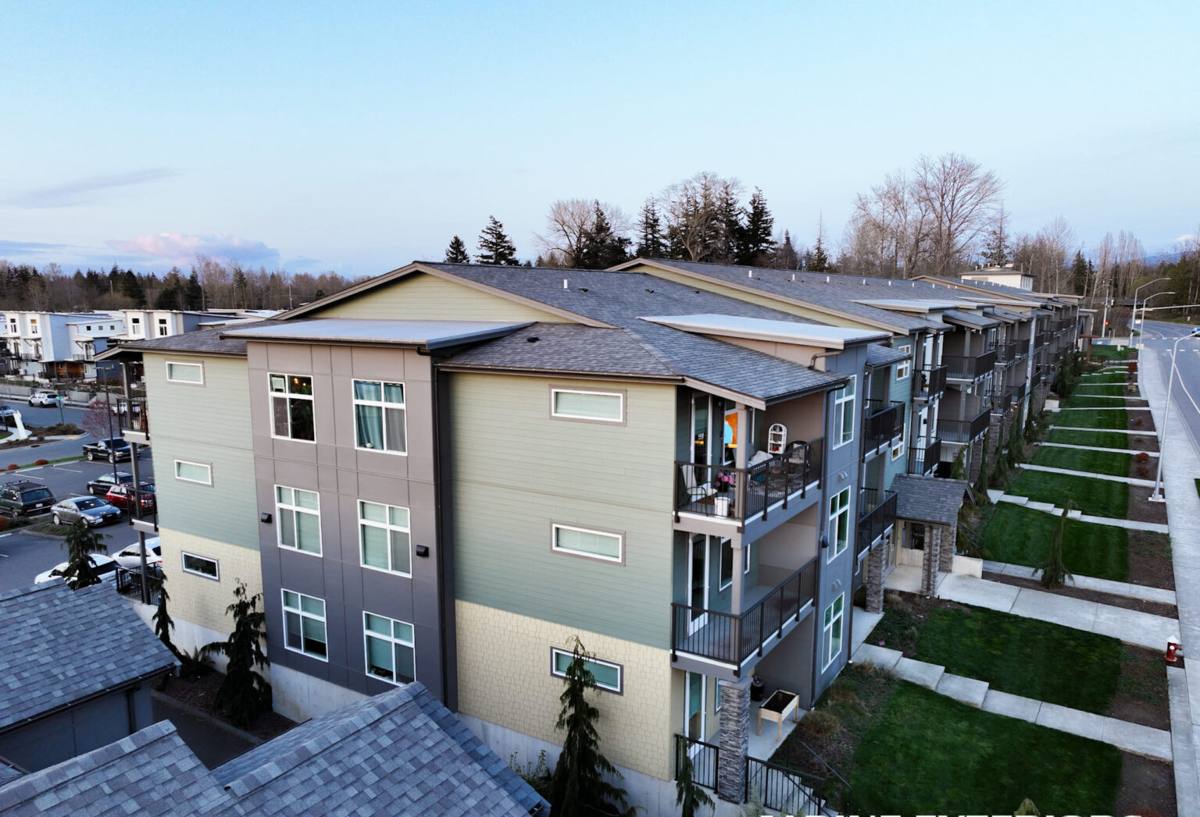
What Salt Air, Driving Rain, and Moss Actually Do to Siding
Salt air
Airborne salt is corrosive to exposed metal fasteners, flashing, and trim edges, and it accelerates the breakdown of finishes that aren't built to take it. On a house near the water, a siding product's factory finish and the corrosion resistance of its fasteners matter more than they would three miles inland.
Driving rain
Wind off the water pushes rain sideways into wall assemblies, not just down over them. That means laps, joints, and penetrations (hose bibs, vents, light fixtures) take on water pressure that a calm-day installation never gets tested against. Gaps and shortcuts that look fine on a dry install day become active leak points the first real storm that rolls through.
Moss and organic growth
Shade, moisture, and mild temperatures are a perfect combination for moss, algae, and mildew, and Marietta gets a long stretch of the year where siding simply doesn't fully dry out between rain events. Porous or absorbent siding materials hold that moisture longer, which feeds growth and, over time, softens the material underneath it.
Put together, these three conditions are hardest on siding that absorbs water, on fasteners and trim that corrode, and on paint or coatings that weren't engineered for a marine-influenced climate. That's the filter we run every material and every installation detail through before it goes on a Marietta home.
What a Correct Siding Installation Involves Here
Good siding installation is mostly invisible once the job is done — it's in the layers you don't see. In a location like Marietta, a few of those layers carry more weight than usual:
- Weather-resistive barrier: A continuous, properly lapped barrier behind the siding, with seams taped and penetrations sealed, so any moisture that does get past the siding has somewhere to go besides the sheathing.
- Flashing at every transition: Windows, doors, decks, roof-to-wall intersections, and anywhere trim meets siding need flashing detailed to shed water outward, not just caulk relied on as the only defense.
- Correct clearances: Siding held up off decks, patios, and grade by the manufacturer's specified gap so wicking moisture and splash-back don't sit against the bottom edge.
- Fastener choice: Corrosion-resistant fasteners, driven at the manufacturer's spacing and depth — not just "close enough" — since fastener failure near the water shows up faster than it does inland.
- Proper joint treatment: Butt joints and panel seams sealed and shimmed per manufacturer instruction, not just butted tight and caulked over.
- Ventilation behind the cladding: A drainage plane that lets incidental moisture drain and the wall assembly dry, rather than trapping it against the back of the siding.
Every one of these is a standard part of a manufacturer-specified installation. The problem is that skipping any single one rarely causes an immediate, visible failure — it shows up as a soft spot, a stain, or a moss-covered panel two or three winters later, by which point it's a repair instead of a five-minute detail during install.
Why We Install Only James Hardie Fiber Cement
We don't install vinyl, LP SmartSide, Cemplank, Allura, or primed wood siding, and Marietta's climate is a big part of why. Fiber cement doesn't absorb and swell with water the way engineered wood products can, it doesn't soften or warp under sustained damp conditions, and it's non-combustible. James Hardie's ColorPlus factory-applied finish is baked on and bonded specifically to resist fading and moisture intrusion better than field-applied paint, which matters on a wall that's drying slower than average for a good chunk of the year.
Hardie also builds region-specific HZ5 formulations engineered for wetter, harsher climates like the Pacific Northwest — the product itself is designed around the exposure a home near the water actually sees, not a one-size-fits-all national spec. Combined with a strong transferable warranty, that's the combination we're willing to stand behind on a Marietta install. We'd rather turn down a lower-cost material than install something we know will need earlier maintenance, earlier repainting, or premature replacement in this specific exposure.
How Our Installation Process Works
- On-site assessment: We walk the exterior, check current siding condition, look at drainage patterns around the foundation, and note anything specific to the lot's exposure — wind direction, shade patterns, proximity to grade.
- Tear-off and sheathing check: Old siding comes off and we inspect the sheathing underneath for rot or soft spots before anything new goes on. Problems found here get addressed, not covered up.
- Weather barrier installation: A new, continuous weather-resistive barrier goes on with proper laps and taped seams.
- Flashing and trim: Windows, doors, and all penetrations get flashed before siding starts, so water is directed outward at every transition.
- Hardie siding installation: Panels or lap siding installed to James Hardie's fastening schedule, clearances, and joint treatment specifications.
- Final detail and walkthrough: Caulking, touch-up, and a walkthrough so you know what was done and why.
We don't shortcut steps to hit a lower number on a bid. In a location like Marietta, the steps that get skipped are exactly the ones that come back as a problem.
Comparing Siding Options for a Marietta Home
| Factor | Vinyl | Engineered Wood (LP/OSB-based) | James Hardie Fiber Cement |
|---|---|---|---|
| Moisture / rot resistance | Doesn't rot, but seams can let water behind it | Can swell or degrade if moisture gets past the coating | Won't rot; performs well in sustained damp conditions |
| Salt air / coastal exposure | Can become brittle and fade over time | Coating and edges vulnerable near salt air | ColorPlus finish engineered for fade and moisture resistance |
| Fire resistance | Combustible | Combustible | Non-combustible |
| Moss / algae resistance | Growth can develop on surface, especially in shaded areas | Absorbent surface can feed growth if not maintained | Dense, factory-finished surface resists sustained growth better |
| Typical warranty | Varies by product | Varies, often shorter | Long-term, transferable manufacturer warranty |
| Installation sensitivity | Moderate | High — moisture management is critical | High — must follow manufacturer spec exactly |
The last row matters as much as any other: every product on this list performs closer to its potential when installed correctly, and worse than its potential when it isn't. That's true of Hardie too, which is why we treat the installation spec as non-negotiable rather than a suggestion.
Signs a Marietta Home May Need New Siding
- Persistent moss, algae, or dark streaking that returns shortly after cleaning
- Soft or spongy spots when you press on the siding, especially near the bottom edge or corners
- Visible warping, buckling, or panels pulling away from the wall
- Peeling or bubbling paint, particularly on walls facing prevailing wind and rain
- Rusting or corroded fasteners and trim visible at seams and edges
- Rising heating or cooling costs with no other clear explanation
- Water stains on interior walls near exterior corners or window openings
Any one of these on its own isn't necessarily an emergency, but a few together are usually a sign the wall assembly behind the siding is taking on more moisture than it should.
Why a Crew That Already Works in Marietta Matters
Whatcom County covers a lot of ground, and conditions vary a surprising amount between an inland lot and one close to the water. A crew that installs siding across a wide mix of coastal and inland conditions already knows to flash a windward wall differently than a sheltered one, to plan tear-off around this area's wetter working windows, and to spot the early signs of salt and moisture stress before they become a bigger repair. That's not a marketing point — it's the difference between an installation crew that's guessing at the right details for this exposure and one that's already accounted for it on the last several homes nearby.
It also matters for accountability. A crew working in the area regularly is easy to reach if a question comes up after the job, and stands behind its work locally rather than as a one-time visiting contractor.
What to Expect After Installation
Correctly installed James Hardie siding is genuinely low-maintenance, but "low-maintenance" doesn't mean zero attention, especially this close to the water. A periodic rinse to clear salt residue and organic buildup, a visual check of caulking and trim after the wetter months, and prompt attention to any landscaping that's grown up against the siding will keep a correctly installed system performing the way it's designed to for the long term.
If you're weighing a siding replacement in Marietta, we're glad to take a look at the house, walk through what we'd do differently for this specific location, and put together a straightforward, no-pressure estimate — no invented urgency, just an honest read on where things stand.