 Ferndale
 Building Decks for Marietta's Waterside Climate
Marietta sits close to the water on the edge of Whatcom County, and that proximity shapes everything about how a deck should be built here. Salt-laden air off the bay works on metal hardware year-round, driving rain off the water finds its way into gaps that would stay dry a few miles inland, and the long, wet moss season keeps every horizontal surface damp for months at a stretch. None of these are dealbreakers for a deck — they're just conditions that have to be designed for from the start, not patched after the fact.
A deck built with generic, catalog-standard methods can still look fine going in. The problems show up eighteen months later, when fasteners start weeping rust stains, a railing post gets soft at the base, or moss turns the walking surface into a slip hazard every morning from October through April. We build for the conditions Marietta actually has, not the conditions a deck spec sheet assumes.
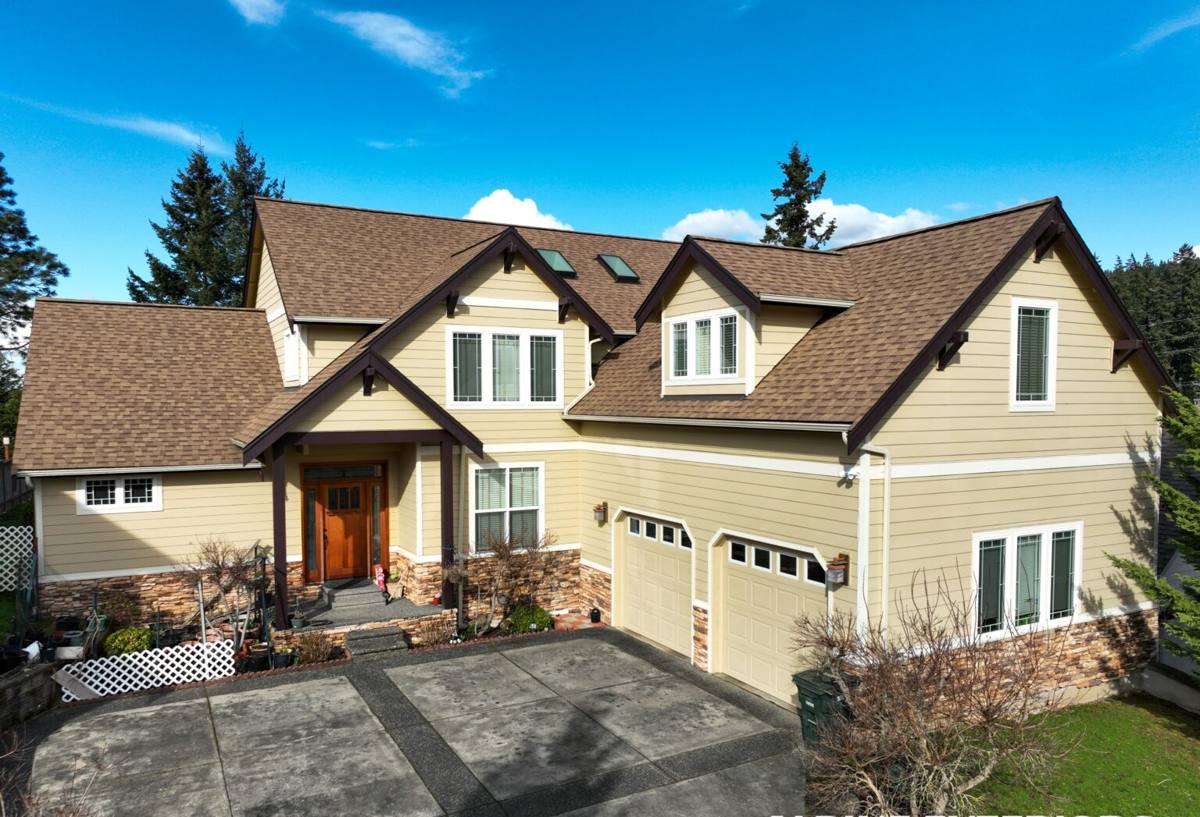
What Marietta Homes Need From a Deck
Homes in this part of Whatcom County deal with a specific combination of stressors: salt air accelerates corrosion on anything but the right grade of hardware, wind-driven rain pushes moisture sideways into places a vertical rain shield wouldn't normally reach, and prolonged damp periods during moss season feed both moss growth and slow rot in end grain and fastener holes. A deck that holds up here needs a few things working together:
- Fasteners and connectors rated for coastal or corrosive exposure, not standard interior-grade hardware
- Framing details that shed water fast instead of letting it pool or wick into joints
- Board spacing and airflow underneath the deck so damp conditions don't linger
- A walking surface that stays reasonably slip-resistant when it's wet, which in this area is much of the year
- Flashing at the house connection that actually blocks driving rain, not just vertical rainfall
None of this is exotic. It's standard good practice applied consistently, which is exactly where a lot of decks fall short — usually because one detail got value-engineered out to save time.
Choosing the Right Decking Material for This Climate
There's no single "best" decking material — there's a best material for a given budget, maintenance appetite, and how close the deck sits to salt air and standing moisture. We walk every Marietta homeowner through the honest trade-offs rather than pushing one product line.
| Material | Moisture & Moss Resistance | Maintenance | Typical Lifespan |
|---|---|---|---|
| Pressure-treated wood | Good if sealed regularly; end grain and fastener holes are the weak points | Annual cleaning and periodic re-sealing/staining | 15–20 years with upkeep |
| Cedar | Naturally decay-resistant but still needs sealing near the water | Regular cleaning, occasional oiling to prevent graying and moss | 15–20 years with upkeep |
| Capped composite | Very good — the cap resists moisture absorption and moss doesn't get a foothold as easily | Periodic washing, no sealing or staining | 25–30 years |
| PVC decking | Excellent — essentially impervious to moisture, best choice right along the water | Periodic washing only | 25–30+ years |
Wood costs less up front and can look great, but in a salt-air, high-moisture area it asks for more maintenance discipline than most homeowners realistically keep up with. Composite and PVC cost more initially but shift the long-term burden from "annual maintenance" to "occasional cleaning," which matters when moss season runs half the year. We'll give you real numbers for your project rather than a generic price range — every deck's size, height, and access changes the cost.
Under-Deck and Substructure Considerations
Whatever decking surface you choose, the framing underneath matters just as much. In a wet climate, we favor treated or naturally resistant framing lumber, joist tape or a similar barrier over the tops of joists to keep fasteners from sitting in standing moisture, and enough clearance underneath for air to actually move. A deck that can't breathe underneath stays damp longer, and damp wood is what moss and rot both need to get started.
What a Correctly Built Deck Involves
Footings and Framing
Footings need to be sized and set to local frost depth and soil conditions, not just "deep enough to look right." Undersized or shallow footings are one of the most common causes of a deck that develops a wobble or a sag within a few years — and it's a problem that's expensive to fix after the fact because it means pulling up decking to get at the structure.
Flashing and Ledger Attachment
Where a deck ties into the house is the single most important detail on the whole structure. Done wrong, it's the number one source of water intrusion into the house itself — not just deck rot, but rot and moisture damage behind the siding and into the rim joist. Proper flashing, correctly lapped with the house's water-resistive barrier and sealed at the right points, is non-negotiable, especially with the kind of driving rain that comes off the water here.
Fasteners and Hardware
This is where salt air does the most damage if it's overlooked. We use stainless steel or hot-dip galvanized fasteners and structural connectors rated for corrosive or coastal exposure. Standard zinc-coated hardware can start showing rust streaks and losing strength well before the decking itself needs replacing — it's a small cost difference up front that prevents a much bigger problem later.
Railings and Surfaces Built to Handle Salt Air and Moss
Railings take a lot of direct weather exposure and get touched constantly, so material choice matters both for durability and for how the deck feels to use. Metal railing components need the same corrosion-resistant hardware as the structure below. Wood railings need the same sealing discipline as wood decking. Composite and aluminum rail systems tend to hold up with the least ongoing attention in this kind of climate.
For the walking surface, we pay attention to board spacing and grain direction (on wood) or surface texture (on composite and PVC) to help water shed and reduce the film of algae and moss that builds up during the wet months. No decking surface is maintenance-free in a moss-prone climate, but some need far less scrubbing than others to stay safe underfoot.
Our Process From Estimate to Finished Deck
We keep the process straightforward and communicate what's happening at each stage:
- Site visit and consultation — we look at grade, drainage, sun/wind exposure, and how the deck connects to the house before recommending anything
- Design and material selection — honest trade-offs on decking material, railing style, and layout based on your budget and how you'll use the space
- Permitting — most elevated or attached decks require a permit through the local building department; we handle that paperwork rather than leaving it on you
- Construction — footings, framing, flashing, decking, and railing, built in that order with each stage checked before moving to the next
- Final walkthrough — we go over the finished deck with you, including what maintenance it actually needs (and doesn't)
Maintenance Through Moss Season
Whatever material you choose, a little seasonal attention goes a long way in this climate. A basic maintenance routine we recommend to Marietta homeowners:
- Sweep debris off the deck regularly in fall — trapped leaves hold moisture and feed moss growth
- Wash the surface at least once before winter and once in spring with a deck-safe cleaner to knock back algae and moss before it takes hold
- Check fastener heads and connectors annually for early rust staining, especially on wood decks
- Keep gutters and downspouts near the deck clear so runoff isn't dumping extra water onto or under it
- Re-seal or re-stain wood decking on the schedule the product actually calls for, not "whenever it looks bad"
- Trim back vegetation that shades the deck and keeps it from drying out between rains
Why Hire a Crew That Already Works in Marietta
A deck built to a generic national spec can still fail here in ways it wouldn't inland — because the spec doesn't account for salt air on the hardware, driving rain at the ledger, or a moss season that keeps everything damp for months. We work in this part of Whatcom County regularly, which means we're not guessing at how these conditions affect a deck over time — we've seen which details matter and which shortcuts cause callbacks. That local familiarity also makes the permitting and inspection process smoother, since we know what the local building department expects to see.
If you're planning a new deck or replacing one that hasn't held up to the weather here, we'd be glad to take a look and talk through what makes sense for your home. Reach out for a free, no-pressure estimate using the form below.