 Ferndale
 Storm Damage Roofing Is Its Own Problem on the Lummi Nation Peninsula
Homes on the Lummi Nation reservation sit in one of the more exposed roofing environments in Whatcom County. It's a low-lying peninsula with water on multiple sides, which means wind doesn't lose much energy before it hits a roofline, and salt-laden air is a constant rather than an occasional visitor. Add in the long stretch of wet, low-sun months that Western Washington is known for, and you have a climate that finds every weak point in a roof faster than most other parts of the county. A roof that would coast along fine for another decade a few miles inland can start failing here after one bad windstorm, simply because the underlying materials were already worn down by salt and moisture before the storm ever hit.
This page is specifically about storm damage roof repair for homes in and around the Lummi Nation community. It's not a generic storm damage page — the fixes, the inspection priorities, and even the permitting path can look different here than they do in a typical Ferndale subdivision.
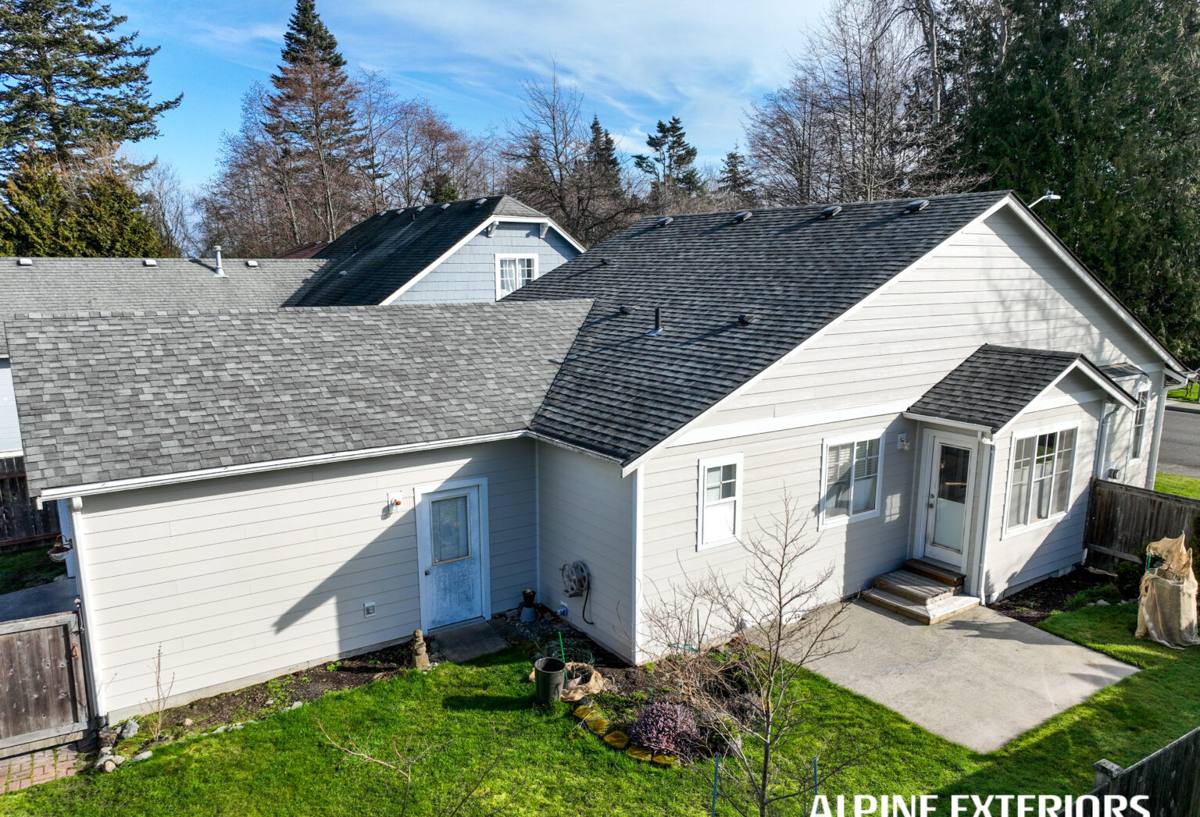
What Salt Air, Wind, and Moss Actually Do to a Roof Here
Salt Air and Metal Fasteners
Airborne salt accelerates corrosion on anything metal — nail heads, flashing, gutter fasteners, ridge vents, and the metal components inside some shingle systems. Once a fastener starts to corrode, it loses grip strength, and that's exactly what lets a shingle or piece of flashing lift in a wind event that a sound roof would have shrugged off. A lot of what we find during storm inspections here isn't "storm damage" in isolation — it's a storm finishing off a fastener or flashing seam that salt exposure had already been working on for years.
Wind Off the Water
Roofs on open, waterfront-adjacent lots take wind loads that don't match the county's average. Wind doesn't just push on a roof — it creates uplift, especially at edges, ridges, and any spot where a shingle tab or flashing piece has even a slightly loose edge. That's why storm damage here so often shows up first at eaves, rakes, and ridge lines rather than in the middle of a roof slope.
The Long Moss Season
Whatcom County's wet season runs long, and shaded or north-facing slopes on Lummi Nation homes near tree cover or water often stay damp for extended stretches. Moss and algae growth on those slopes hold moisture against the roofing material, soften and lift shingle edges over time, and can clog the small drainage paths under ridge caps and around penetrations. A moss-softened shingle is far more likely to tear or blow off in a storm than a clean, dry one — so moss isn't just a cosmetic issue, it's a storm-vulnerability issue.
What Actually Counts as Storm Damage
Homeowners often assume storm damage means missing shingles you can see from the driveway. In practice, storm damage covers a wider range of issues, and some of the most costly ones are the least visible:
- Lifted, cracked, or missing shingles or shakes, including tabs that are loose but haven't fully detached yet
- Bent, lifted, or separated flashing around chimneys, skylights, vents, and roof-to-wall transitions
- Damaged or torn ridge caps, which are often the first thing wind gets under
- Gutter and downspout damage that redirects water back under the roof edge instead of away from the house
- Impact damage from wind-driven debris or falling branches, which can bruise or puncture roofing material without an obvious hole
- Hidden water intrusion at the decking level that only shows up later as a stain on an interior ceiling
Because several of these are only visible from the roof itself, we always recommend a physical inspection after any significant wind or rain event, not just a look from the ground.
A Note on Permitting for Homes on Lummi Nation Land
One thing that catches homeowners off guard: roofing work on homes located on the Lummi Nation reservation can fall under the Nation's own land-use and building authority rather than Whatcom County's permitting process, depending on the property's status. This isn't something we treat as a technicality — it affects who needs to sign off on a repair or replacement before work starts. Part of doing this work correctly and respectfully in this community is knowing which authority applies to a given property and making sure the right approvals are in place before a crew ever gets on the roof. If you're not sure which jurisdiction your property falls under, that's a question worth sorting out before scheduling repair work, and it's something we can help you think through.
Our Storm Damage Repair Process
1. Inspection First, Sales Pitch Never
We start with a full roof inspection — not just the obviously damaged section, but the whole roof, because storms rarely damage only one spot. We're looking at shingles, flashing, ridge caps, gutters, and decking where accessible, and we document what we find with photos.
2. Temporary Protection When It's Needed
If there's an active leak or exposed decking, we'll get a tarp or temporary seal on it the same visit if possible. The goal is to stop water intrusion from getting worse while repair materials or insurance approval are sorted out — not to leave a homeowner exposed for days waiting on paperwork.
3. Honest Repair-or-Replace Assessment
Not every storm-damaged roof needs full replacement, and not every roof can be safely patched. We'll tell you plainly which category your roof falls into and why, including what we found that supports that call — not just a number.
4. Documentation for Insurance
If you're filing an insurance claim, we provide a written inspection report and photo documentation you can hand directly to your adjuster. We don't handle the claim for you or promise a specific payout — that's between you and your insurer — but we make sure the roof's actual condition is documented clearly and accurately.
Repair vs. Replace: What Actually Drives the Decision
Homeowners often want a simple yes-or-no answer, but the honest answer depends on a handful of factors working together. Here's how we weigh it:
| Factor | Favors Repair | Favors Replacement |
|---|---|---|
| Extent of damage | Isolated to one slope or section | Spread across multiple slopes or the whole roof |
| Age of existing roof | Roof is under roughly half its expected lifespan | Roof was already near the end of its service life |
| Underlying decking condition | Decking is sound and dry | Decking shows rot or soft spots from long-term moisture |
| Fastener and flashing condition elsewhere on the roof | Minimal corrosion found outside the damaged area | Widespread salt corrosion on fasteners and flashing |
| Moss and algae history | Roof has been kept relatively clean | Heavy, long-term moss growth on multiple slopes |
As a rough guide, a targeted repair — a section of shingles, a flashing detail, a ridge cap run — can often be handled for a few hundred to a couple thousand dollars depending on scope and access. A full slope or roof replacement is a much larger investment, and we'll walk you through that range specifically once we know your roof's size and materials. We won't quote a number until we've actually seen the roof.
Materials We Use for Coastal Storm Repairs
Material choice matters more here than in a drier, more sheltered part of the county. When we're repairing or replacing sections on a Lummi Nation home, we lean toward materials and fasteners rated for corrosion resistance — stainless or coated fasteners instead of standard galvanized where budget allows, and flashing metals that hold up better against salt exposure over time. We're not going to tell you a manufacturer's standard product is "bad" — most roofing materials perform fine in normal conditions. Our standard here is simply matching the material to the environment: in a high-salt, high-wind location, spending a bit more upfront on corrosion-resistant hardware is usually cheaper than replacing failed fasteners again in five years. We'll explain the trade-offs for your specific roof rather than pushing one option by default.
What to Do Right After a Storm
What you do in the first day or two after a storm can affect how straightforward the repair — and any insurance claim — turns out to be.
- Do a ground-level visual check for obvious missing or displaced shingles, but don't get on the roof yourself
- Check ceilings and attic spaces (if accessible) for new water stains or damp spots
- Photograph any visible damage from the ground, including debris in gutters or on the lawn
- Clear debris away from downspouts and drains so water can keep moving away from the foundation
- Call for a professional inspection promptly rather than waiting to see if a small issue gets worse
- Avoid signing anything or making payment commitments to door-to-door storm chasers before getting an independent look
Why a Crew That Already Works This Community Matters
Storm response work brings out traveling crews who show up in a neighborhood right after bad weather, do quick repairs, and are gone before anyone can call them back. On the Lummi Nation reservation specifically, there's the added layer of land-use and permitting authority we mentioned earlier — a crew that doesn't already understand that distinction can create real headaches for a homeowner down the line, even with well-intentioned work. We're a Ferndale-based crew that works this area regularly, which means we're still around for warranty follow-up, we already understand which jurisdiction applies to work here, and we have a working sense of how the local wind and salt exposure behaves on specific lots — not just what a general Whatcom County roof needs.
Keeping the Roof From Getting Storm-Damaged Again
Once a repair is done, a little ongoing attention goes a long way toward keeping the next storm from causing a repeat visit. Regular gutter clearing keeps water moving off the roof edge instead of backing up under shingles. Periodic moss treatment on shaded or north-facing slopes prevents the kind of long-term moisture retention that softens roofing material. And a quick visual check after any major wind event — even if nothing looks obviously wrong — catches small lifted edges before the next storm turns them into a full repair. We're happy to point out what your specific roof needs during the inspection, rather than handing you a generic maintenance flyer.
If you've got storm damage, a suspected leak, or just want an honest opinion on what your roof needs before the next big wind event, we're glad to come take a look. Fill out the form below for a free, no-pressure estimate.