 Ferndale
 Decks Near the Water Wear Differently
A deck in Lummi Nation doesn't age the same way one does twenty miles inland. Being close to Puget Sound and Bellingham Bay means salt-laden air is a constant, low-grade attack on metal hardware and finishes. Add Whatcom County's long wet season — driving rain that comes in sideways off the water, followed by months of shade and dampness that feed moss and algae — and you get decks that can look fine on the surface while quietly failing underneath. We've repaired enough of them to know the pattern: the damage that actually matters is rarely where the homeowner first noticed a problem.
This page is specifically about deck repair for homes in this area, not a general "how decks work" overview. If you're dealing with soft boards, a wobbly railing, rust streaks, or a deck that's just never felt quite right, this is what you need to know before you call anyone — including us.
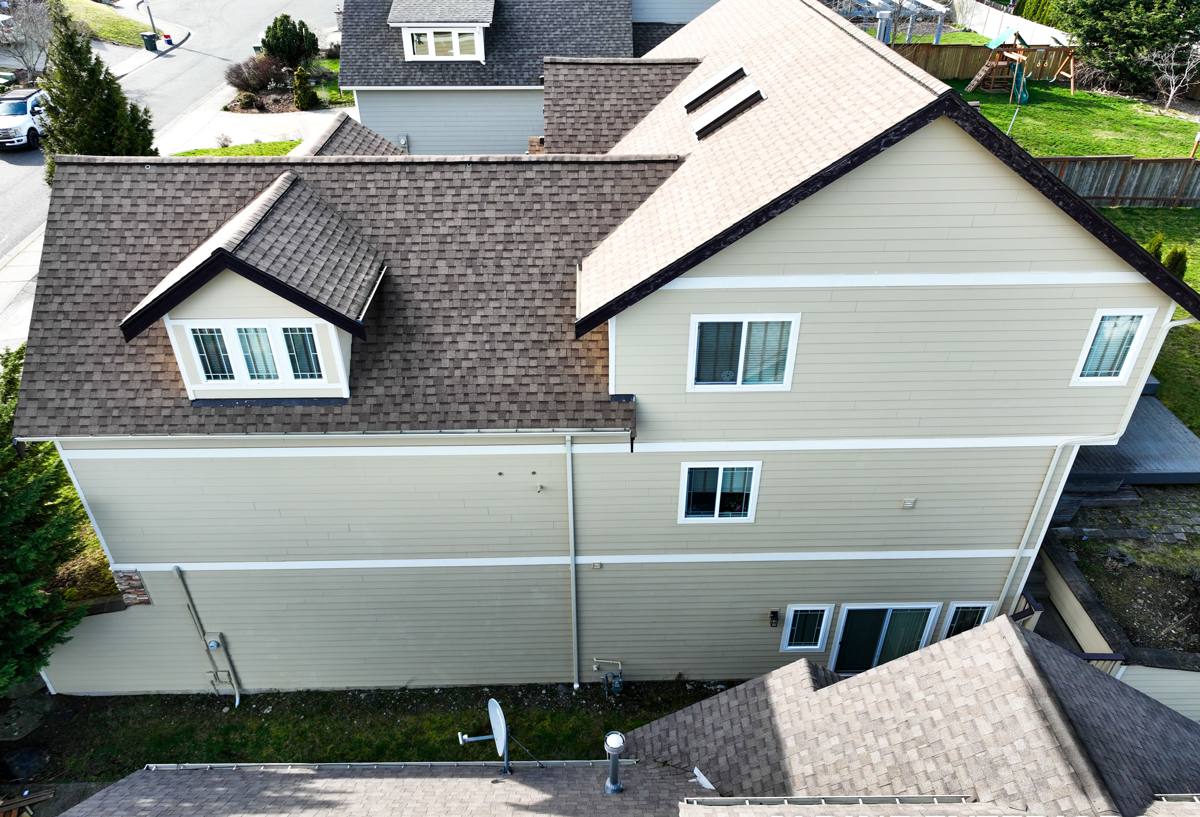
What the Local Climate Does to a Deck
Salt Air and Metal Hardware
Every deck depends on hardware you can't see once it's built — joist hangers, ledger bolts, structural screws, post bases. In a coastal air environment, standard fasteners corrode faster than their rated lifespan suggests. Corrosion doesn't announce itself; a bolt can look solid on the surface while it's lost real strength underneath. This is the single biggest reason "just replace the boards" isn't always an honest repair near the water.
Driving Rain and Water Intrusion
Wind-driven rain finds its way into gaps that would stay dry in a calmer climate — around the ledger board where the deck attaches to the house, at butt joints between boards, and under poorly flashed rail posts. Once water gets behind flashing or into end grain, it doesn't dry out quickly here. Whatcom County's humidity and mild temperatures mean wet wood stays wet for weeks, which is exactly the environment rot needs.
The Long Moss Season
Shaded decks, north-facing decks, and anything under overhanging trees will grow moss for a good chunk of the year in this region. Moss isn't just cosmetic — it holds moisture directly against the wood surface and works into board grain and fastener holes, accelerating rot in exactly the spots that are hardest to inspect visually.
Signs Your Deck Needs Repair
Some of these are obvious once you know to look for them. Others hide in plain sight for a season or two before they become a safety issue.
- Boards that feel spongy, springy, or noticeably softer than the rest of the deck when you walk on them
- Rust streaks bleeding out from screw heads or bolts
- A gap opening up, or dark staining, where the deck meets the house at the ledger board
- Railings or posts that flex or wobble when pushed
- Stair stringers that feel uneven or bounce slightly
- Persistent moss or black algae staining that keeps coming back after cleaning
- Visible daylight or gapping at joist connections underneath the deck
- Footings or posts that look like they've shifted, tilted, or sunk
Any one of these on its own might be minor. Two or three together usually means it's worth a real inspection before it turns into a bigger project.
What an Honest Deck Repair Actually Involves
Structure First, Surface Second
A repair that only replaces what's visible — swapping out a few gray or splintered boards — can leave the actual problem in place. We check the ledger board attachment, joists, beams, and posts before we touch decking material, because that's where structural failures start. Cosmetic damage on top of solid framing is a straightforward fix. Cosmetic damage on top of compromised framing is a different job entirely, and it's important to know which one you're actually dealing with before agreeing to a scope of work.
Fastener Upgrades Matter Here
When we're replacing hardware on a deck in a salt-air environment, we don't just match what was there. Stainless steel or high-grade coated fasteners cost more up front than standard hardware, but on a coastal property they're the difference between a repair that lasts and one you're redoing in a few years.
Drainage and Airflow
A big part of preventing repeat problems is making sure water actually sheds off the deck and out from underneath it instead of pooling. That means correct board spacing, working flashing at the ledger, and clearing vegetation or debris that's trapping moisture against the structure — especially relevant given how much moss and organic buildup this area produces over a wet fall and winter.
Repair vs. Rebuild: What Actually Drives That Decision
Homeowners often ask upfront whether their deck can be repaired or needs to be torn out and rebuilt. The honest answer depends on which components are affected and how deep the damage goes.
| Deck Component | Why It Matters | Typical Cost Impact |
|---|---|---|
| Ledger board condition | This connects the deck to your house; rot here is a structural and safety issue, not cosmetic | Major driver if compromised — often the deciding factor between repair and rebuild |
| Joists and framing | Hidden under the decking; damage usually means removing boards to assess and repair | Moderate to major, depending on how many joists are affected |
| Decking boards | The most visible surface, but usually the least structurally critical | Minor to moderate — often the most affordable part of a repair |
| Railings and posts | Safety-critical for code compliance; wobble or rot here should not be ignored | Minor to moderate, depending on post embedment and connection type |
| Footings and posts | If these have shifted or settled, everything built on top is affected | Major — this is usually the most involved and costly repair scenario |
| Hardware and fasteners | Often overlooked, but corrosion here undermines everything else | Minor per piece, but should be factored into every repair near saltwater |
In most cases we see, a deck with isolated board or railing damage and a sound structure underneath is a straightforward repair. A deck with ledger rot, multiple failed footings, or widespread joist damage usually makes more financial sense to rebuild — patching that much structure piecemeal often costs more over time than starting clean.
Materials: What We Recommend and Why
Wood Decking
Cedar and pressure-treated lumber remain solid, honest choices for this climate as long as they're properly finished and maintained. The trade-off is upkeep: wood needs periodic sealing or staining to keep moisture out, especially on a deck that sees heavy rain exposure and shade-driven moss growth.
Composite Decking
Composite boards resist rot and don't need staining, which appeals to a lot of homeowners who are tired of the maintenance cycle. The trade-off there is that composite can still grow surface algae or moss film in a persistently damp, shaded spot — it just won't rot the way wood can. It's also a bigger upfront investment. We'll walk you through both honestly rather than push whichever is more profitable for us to install.
Hardware and Fasteners
Regardless of decking material, we default to corrosion-resistant fasteners and connectors on repairs in this area. It's a small line item in the overall job and the one place we don't cut corners, given what salt air does to standard hardware over time.
Our Deck Repair Process
- On-site inspection — We check the deck from both above and below, including the ledger connection, framing, footings, and hardware condition, not just the visible surface.
- Honest scope assessment — We tell you plainly whether you're looking at a repair, a partial rebuild, or a full rebuild, and why.
- Written estimate — Clear line items so you know what you're paying for and can make an informed decision.
- Repair or rebuild work — Structural issues are addressed first; cosmetic and surface work follows.
- Hardware and drainage check — We confirm fasteners, flashing, and drainage are correct before calling the job done, since these are what determine how long the repair actually lasts.
- Final walkthrough — We go over what was done and what maintenance, if any, will keep it in good shape going forward.
Why Local Experience Matters for This Kind of Work
Deck repair isn't complicated in the abstract, but doing it right in this specific environment means understanding how salt air, sustained rain, and a long moss season interact with wood, fasteners, and framing over years, not just at the moment of installation. A crew that mostly works drier, inland climates can miss the hidden ledger rot or corroded hanger that a crew working Whatcom County's coastal conditions checks by habit. We've built our repair process around what actually fails here, not a generic checklist.
We also know that homes in this area vary — some sit close to the water and take the brunt of salt air and wind, others are more sheltered but deal with heavier shade and moss. A correct repair accounts for your deck's specific exposure, not a one-size-fits-all approach.
Get a Straightforward Deck Assessment
If your deck has soft spots, rust stains, a stubborn moss problem, or just doesn't feel as solid as it used to, it's worth having someone look at it before the damage grows past the point of a simple repair. We offer free, no-pressure estimates for deck repair in Lummi Nation and the surrounding Ferndale area — use the form below and we'll take a look and give you an honest read on what your deck actually needs.