 Ferndale
 Decks Built for an Island, Not Just a Backyard
A deck on Lummi Island lives a different life than one built a few miles inland. The island sits out in the marine air of northern Puget Sound, which means every board, fastener, and footing on an outdoor structure is dealing with salt exposure, near-constant humidity, and long stretches of the year when surfaces simply don't fully dry out. Add in the driving rain that comes through Whatcom County off the water, and a deck built with inland assumptions will show its age fast — cupped boards, rusted hardware, black streaking, and a ledger board that's rotting quietly where you can't see it.
We build custom decks for homes in and around Ferndale, and Lummi Island projects get treated as their own category. The island setting, the ferry-dependent logistics, and the exposure to open water all change how a deck should be designed, what it should be built from, and how it should be maintained. This page covers what actually matters for a Lummi Island deck — not a generic list of deck features, but the specific things that determine whether a deck lasts fifteen years or needs major repair in five.
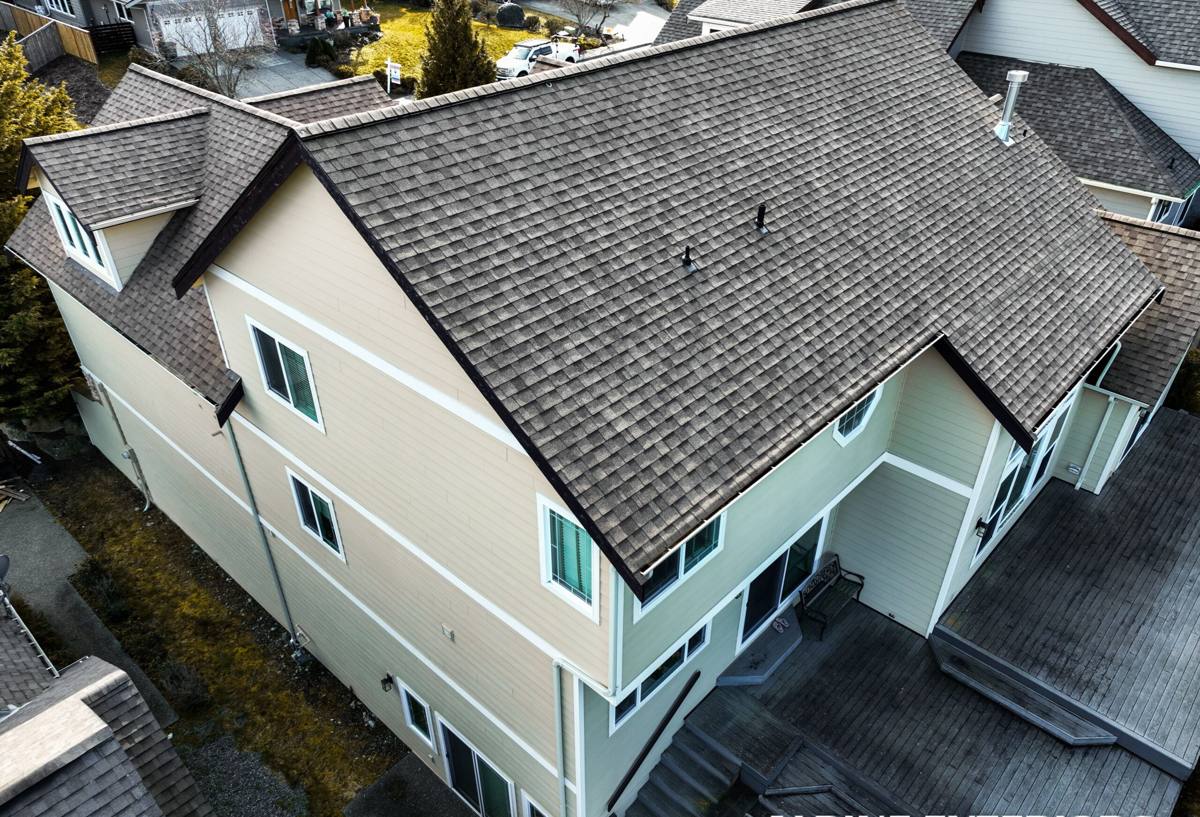
What Salt Air, Rain, and Moss Actually Do to a Deck
Salt Air and Corrosion
Salt-laden air accelerates corrosion on anything metal — screws, joist hangers, bolts, post bases. On an inland deck, standard exterior-rated fasteners can hold up fine for decades. On Lummi Island, the same hardware can start rusting and staining the decking around it within a few seasons. This isn't cosmetic only; corroded fasteners lose holding strength over time, and a structural connection that's quietly weakening is a much bigger problem than a rust streak.
Driving Rain and Hidden Rot
Wind-driven rain off the water doesn't just fall straight down — it gets pushed sideways into ledger boards, post bases, and any gap in flashing. The most common failure point on a deck attached to a house is the ledger board connection, where water works its way behind the flashing and rots the rim joist or sheathing from the inside. It's invisible until the deck starts to feel spongy or pull away from the house, at which point the fix is much bigger than it needed to be.
The Long Moss Season
Western Washington's moss season runs long, and on a shaded or waterside lot it can be nearly year-round. Moss and algae aren't just a slip hazard on stair treads and low-traffic corners — they hold moisture against the wood surface, which speeds up graying, splintering, and rot in untreated or poorly finished wood decking. A deck built without moss and mildew resistance in mind will need pressure washing and re-staining far more often than one built with the right surface material and drainage from the start.
Choosing the Right Decking Material for a Coastal Lot
There's no single "best" decking material — it depends on how much maintenance you want to do, your budget, and how exposed your specific lot is. Here's how the common options compare for Lummi Island conditions specifically:
| Material | Salt/Moisture Resistance | Moss & Mildew Resistance | Maintenance | Typical Cost Tier |
|---|---|---|---|---|
| Cedar (natural wood) | Good if sealed regularly; naturally rot-resistant but not maintenance-free | Moderate — needs periodic cleaning and re-sealing | Highest — annual inspection, cleaning, and re-staining | Budget to mid |
| Pressure-treated wood | Fair — treatment resists rot but fasteners and framing hardware still corrode | Moderate — same cleaning needs as cedar | High — regular sealing to prevent checking and warping | Budget |
| Composite decking | Very good — doesn't absorb moisture like wood | Good — many boards have algae-resistant capping | Low — occasional washing | Mid to premium |
| PVC/capped polymer decking | Excellent — fully sealed surface, no wood fiber to rot | Good to very good | Lowest — soap and water is usually enough | Premium |
Our general recommendation for exposed, waterside, or heavily shaded Lummi Island lots is composite or capped polymer decking, specifically because it removes moisture absorption and rot as ongoing risks. Cedar still has a place on more sheltered, sun-exposed lots for homeowners who want a natural look and are willing to keep up with the maintenance schedule — it's a legitimate choice, just a different maintenance commitment.
The Structure Underneath Is What Actually Determines Lifespan
The decking surface is what you see, but the framing, flashing, and fasteners underneath are what determine whether the deck is still solid in fifteen years. On every Lummi Island deck we build, this is where we spend the most attention:
- Ledger flashing: A properly flashed and sealed ledger board is the single most important detail on an attached deck — it's the difference between a dry rim joist and a hidden rot problem.
- Fastener grade: Stainless steel or heavy hot-dip galvanized fasteners and hardware, sized for coastal exposure rather than standard exterior-rated hardware.
- Footings sized for the site: Whatcom County frost depth and local soil conditions determine footing depth — this isn't a place to guess, especially on sloped or waterside lots.
- Joist protection: Taping or sealing the tops of joists so water can't sit in fastener holes and start rot from the inside out.
- Airflow underneath: Decks built low to the ground or over damp soil need enough clearance and drainage to let air move — a deck that never dries underneath will rot from the bottom up regardless of what's on top.
Railings, Elevation, and Code
A lot of Lummi Island homes sit on sloped lots or want a deck that takes advantage of a water view, which means railings aren't just a safety add-on — they're a major part of the design. Washington building code sets minimum railing heights and baluster spacing for any deck above a certain height off the ground, and elevated decks may need engineered guardrail posts rather than standard deck-post attachment. Common railing choices include:
- Wood or composite rail systems — matches the decking, most budget-friendly, blocks the least amount of view.
- Cable railing — thin horizontal lines that preserve sightlines, popular for view lots, requires correct post spacing and tensioning to meet code.
- Glass panel railing — maximizes the view and blocks wind, higher cost, needs tempered safety glass and proper structural framing.
Whichever style fits the home, the railing posts have to be attached to structure that can actually take the load — this is another place where a deck can look finished but fail an inspection, or worse, fail in use.
Permits, Engineering, and Getting Materials to the Island
Deck projects in unincorporated Whatcom County — which includes Lummi Island — generally require a building permit once the deck exceeds a certain size or height, and elevated or waterfront-adjacent structures often need engineered drawings for footings and railings. We handle the permit process as part of the project so homeowners aren't the ones tracking down requirements.
The other factor that's specific to Lummi Island is logistics. Materials, equipment, and crew all have to get to the island on the ferry, which means a project runs smoother when it's scheduled around ferry timing rather than treated like a mainland job. Underestimating this is one of the most common reasons off-island contractors go over schedule or make repeat trips for things they forgot — a crew that already builds on the island plans deliveries and crew days differently from the start.
How We Build a Custom Deck on Lummi Island
- Site visit and assessment: We look at sun exposure, wind direction, soil, existing drainage, and how sheltered or exposed the site actually is — this drives the material and structural recommendations, not a generic package.
- Design and material selection: We walk through decking, railing, and layout options against your budget and how much maintenance you want to take on long-term.
- Permitting and engineering: We prepare and submit what Whatcom County requires, including engineered details for elevated or waterfront-adjacent structures where needed.
- Scheduled build: Framing, flashing, and structural work first — this is the part that doesn't show but matters most — followed by decking, railings, and finish work.
- Final walkthrough: We go over the finished deck together, including what maintenance (if any) it needs and on what schedule.
Checklist: What a Properly Built Lummi Island Deck Should Have
- Ledger board with correct flashing and sealing where it meets the house
- Stainless or heavy galvanized fasteners and hardware rated for coastal exposure
- Footings sized to local frost depth and soil conditions, not a one-size guess
- Adequate airflow and drainage underneath the framing
- Decking material matched to the site's actual sun, shade, and moisture exposure
- Railings that meet code height and load requirements, especially on elevated decks
- A maintenance plan you actually understand before the crew leaves
Why It Matters to Hire a Crew That Already Works Lummi Island
A deck built by a crew that treats Lummi Island like any other job site is more likely to underestimate salt exposure, miss ferry-dependent scheduling, or spec hardware and materials that are fine inland but undersized for the coast. A crew that already works the island knows to plan trips around the ferry, order coastal-grade fasteners as the default rather than an upsell, and design for moss and driving rain instead of reacting to them after the fact.
We work throughout Ferndale and the surrounding Whatcom County coastline, and Lummi Island projects are a regular part of that work — not an exception we figure out on the fly. If you're planning a new deck or replacing one that's showing its age, we're happy to come take a look and put together a straightforward, no-pressure estimate using the form below.