 Ferndale
 Sandy Point's Waterfront Climate Asks More of Your Siding
Sandy Point sits close enough to the water that the air itself works against your house. Salt-laden wind comes straight off the Strait, driving rain hits the exterior at an angle instead of falling straight down, and the combination of shade, moisture, and mild temperatures keeps moss and algae active for most of the year. None of that is unique to any one house on the point — it's a property-wide condition, which is exactly why siding decisions here can't be copied from a catalog page written for a dry climate.
Whatcom County generally sees a long wet season, but waterfront exposure adds a layer most inland Ferndale homes don't deal with: airborne salt. Salt accelerates corrosion on fasteners and trim hardware, it degrades certain finishes faster than plain rainwater would, and it combines with constant moisture to create ideal conditions for mold and mildew growth on anything that can't shed water cleanly. A siding system that performs fine in a sheltered inland neighborhood can fail years early on a lot like this.
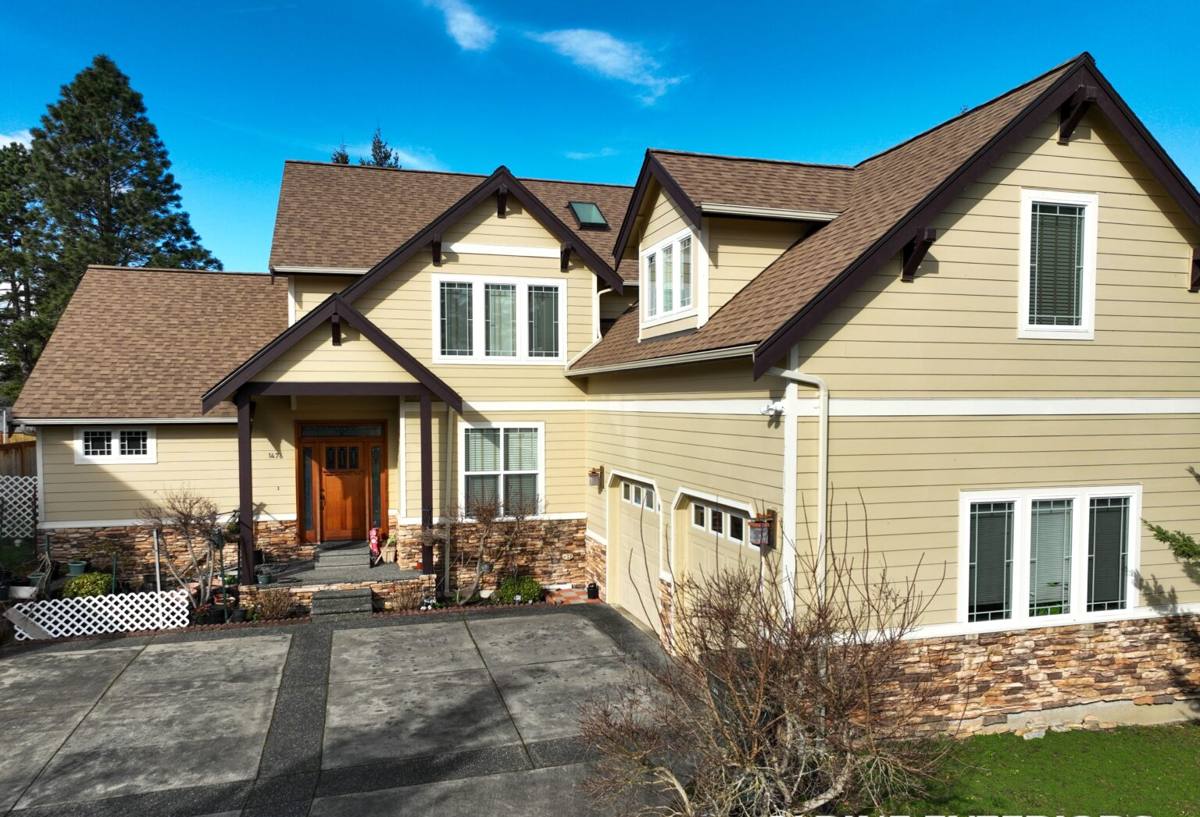
What Sandy Point Homes Actually Need From Siding
Strip away the marketing language and a Sandy Point home needs siding that does four things well:
- Resists moisture absorption — swelling and softening are the root cause of most siding failures near the water
- Holds a factory finish through salt exposure without chalking, fading, or peeling within a few seasons
- Sheds water and dries out fast enough that moss and algae can't establish a permanent foothold
- Stays dimensionally stable through the area's freeze-thaw swings and constant humidity shifts
This is the filter we run every material through before it goes on a Sandy Point house. It's also why some very popular siding products get ruled out here even though they work fine elsewhere.
Why We Install Only James Hardie Fiber Cement
We don't install vinyl, LP SmartSide, cedar, primed spruce, or other fiber cement brands. That's not a marketing position — it's a standard we set after weighing how each material actually behaves in a marine environment over decades, not just the first few years.
Wood-based products, including engineered wood siding, rely on a factory coating to keep moisture out of a wood-fiber core. That coating has to stay intact everywhere, permanently, including at every cut edge and fastener hole made on site. In a salt-air environment with near-constant moisture, any lapse in that seal gives water a path into a substrate that swells, softens, and eventually rots. Vinyl handles water fine on its own, but it's a thin plastic panel that flexes and can crack in cold snaps, fades under UV and salt exposure over time, and simply can't take paint or texture the way homeowners often want for a coastal-style home.
James Hardie fiber cement is cement, sand, and cellulose fiber — it has no wood core to rot and won't support combustion. It doesn't absorb water the way wood-based sidings do, and its ColorPlus factory finish is baked on with a process built specifically to outlast UV and weather exposure far longer than field-applied paint. That combination is why it's the only siding system we put on Sandy Point homes.
How the Materials Actually Compare Here
| Material | Moisture behavior in salt air | Finish durability | Long-term maintenance |
|---|---|---|---|
| James Hardie fiber cement | Does not swell or rot; engineered for moisture exposure | Factory ColorPlus finish, backed by product warranty | Periodic washing; no repainting on the standard cycle |
| Vinyl siding | Sheds water but flexes and can crack in cold | Fades and chalks with sustained UV/salt exposure | Low upkeep but limited repair options once faded |
| LP SmartSide / engineered wood | Wood-strand core vulnerable if coating is compromised | Field-caulked seams need ongoing inspection | Regular caulk and touch-up checks, especially at cuts |
| Cedar / primed spruce | Natural wood; absorbs moisture without diligent upkeep | Paint or stain needs recoating on a shorter cycle | Highest maintenance of the group in this climate |
The Hardie Product Lines That Make Sense on the Point
Not every Hardie product is interchangeable, and matching the right line to a waterfront lot matters. James Hardie engineers its siding by climate zone, and homes with direct marine exposure benefit from the HZ5 formulation, which is built for wetter, more variable climates rather than the drier HZ10 version used in the Southwest and similar regions.
For Sandy Point specifically, we typically discuss:
- HardiePlank lap siding — the standard horizontal siding choice, available in several textures and widths, engineered for the Pacific Northwest's moisture profile
- HardieTrim boards for corners, fascia, and window surrounds, so the whole exterior envelope — not just the field siding — is fiber cement rather than mixed with wood trim that will fail on a different timeline
- ColorPlus finishes in colors chosen with the coastal light and surrounding landscape in mind, since factory color avoids the repaint cycle a field-primed product requires
James Hardie's warranty on ColorPlus products is also transferable, which matters on a waterfront property where resale value and buyer due diligence tend to be more exacting than average.
What a Correct Fiber Cement Installation Involves
Fiber cement is only as good as its installation. Most of the siding failures we get called out to inspect on the water aren't material failures — they're installation shortcuts that let moisture behind the siding where it was never supposed to go. On a Sandy Point lot, we pay particular attention to:
Water Management Behind the Siding
Correct house wrap or weather-resistive barrier, properly lapped and taped, with rainscreen or drainage detailing where the wall assembly calls for it. In a driving-rain, high-humidity environment, siding needs to be able to dry out on both faces, not just shed water on the outside.
Fasteners and Flashing
Corrosion-resistant fasteners driven to Hardie's specified pattern and depth — not just "close enough." Flashing at every window, door, and roof intersection, since these transitions are where salt-air corrosion and wind-driven rain find the weak points first.
Clearances and Sealant
Proper gap at the foundation, decks, and roof lines so siding never sits in standing water or constant splash-back, plus manufacturer-approved sealant at joints exposed to the elements — critical details when the site itself is already fighting moisture.
Our Process for Sandy Point Projects
- On-site assessment — we look at wind exposure, existing moisture damage, current wall assembly, and how the specific lot sits relative to the water
- Product and color selection — HZ5 Hardie products and ColorPlus finish selected for the site's exposure and the homeowner's preferences
- Removal and inspection — old siding comes off and we inspect sheathing and framing for existing moisture damage before anything new goes up
- Weather barrier and flashing — installed and inspected before a single piece of siding is hung
- Installation to manufacturer spec — fastener pattern, clearances, and joint treatment done to James Hardie's published requirements, not shortcuts
- Final walkthrough — trim, caulking, and touch-up review with the homeowner before we call the job done
Living With Fiber Cement Siding on the Water
One advantage homeowners notice quickly: maintenance drops off compared to whatever they had before. It doesn't mean zero maintenance — no siding on a waterfront lot is maintenance-free — but the tasks are simpler and less frequent.
- Rinse the siding with a garden hose or soft wash a couple of times a year to clear accumulated salt residue and organic growth before it takes hold
- Keep gutters clear so water isn't overflowing directly onto siding runs below
- Trim back vegetation and clear debris that keeps sections of the wall shaded and damp longer than the rest of the house
- Inspect caulking at trim joints and penetrations annually, since sealant is the one component that does age faster than the siding itself
- Address any moss or algae promptly with a gentle wash rather than pressure-washing, which can force water behind panels
Why Local Experience in Sandy Point Matters
A siding crew that mostly works dry inland neighborhoods will make different assumptions than one that regularly works this stretch of Whatcom County waterfront. Knowing how far wind-driven rain travels up a wall on an exposed lot, which sides of a house stay shaded and moss-prone longest, and how quickly salt residue builds up on a finish isn't something you learn from a spec sheet — it's something you learn from doing the work here repeatedly. That local pattern recognition shows up in small decisions during installation that add years to how long the siding performs.
We install James Hardie fiber cement exclusively because, in our experience across homes like these, it's the system that holds up to this specific set of conditions with the least drama over time. We're not going to tell you every other product is worthless — we're telling you why we chose not to put our name behind them for a climate like this one.
If you're planning a siding project on Sandy Point or anywhere else in the Ferndale area, we're happy to walk your property, talk through what your exposure actually calls for, and give you a straightforward, no-pressure estimate using the form below.