 Ferndale
 Building a Deck That Holds Up in Everson
Everson sits in a part of Whatcom County where decks work harder than they do almost anywhere else in the state. The rain doesn't just fall here, it sits — soaking into end grain, pooling under railings, and feeding the moss and algae that show up every fall and don't fully let go until late spring. A deck built without that reality in mind might look fine the first summer. By year three, you're looking at soft boards, rusted fasteners, and a surface that turns into a skating rink every time it drizzles.
We build decks for homeowners throughout Ferndale and the surrounding Whatcom County communities, including Everson, and the approach doesn't change from job to job because the climate doesn't change from job to job. Long wet seasons, humid air moving in off the Sound and up the river valleys, and short building windows between storms all shape how we plan, frame, and finish a deck here. This page walks through what that actually means for a deck at your home — not marketing language, just what a correctly built deck in this region needs.
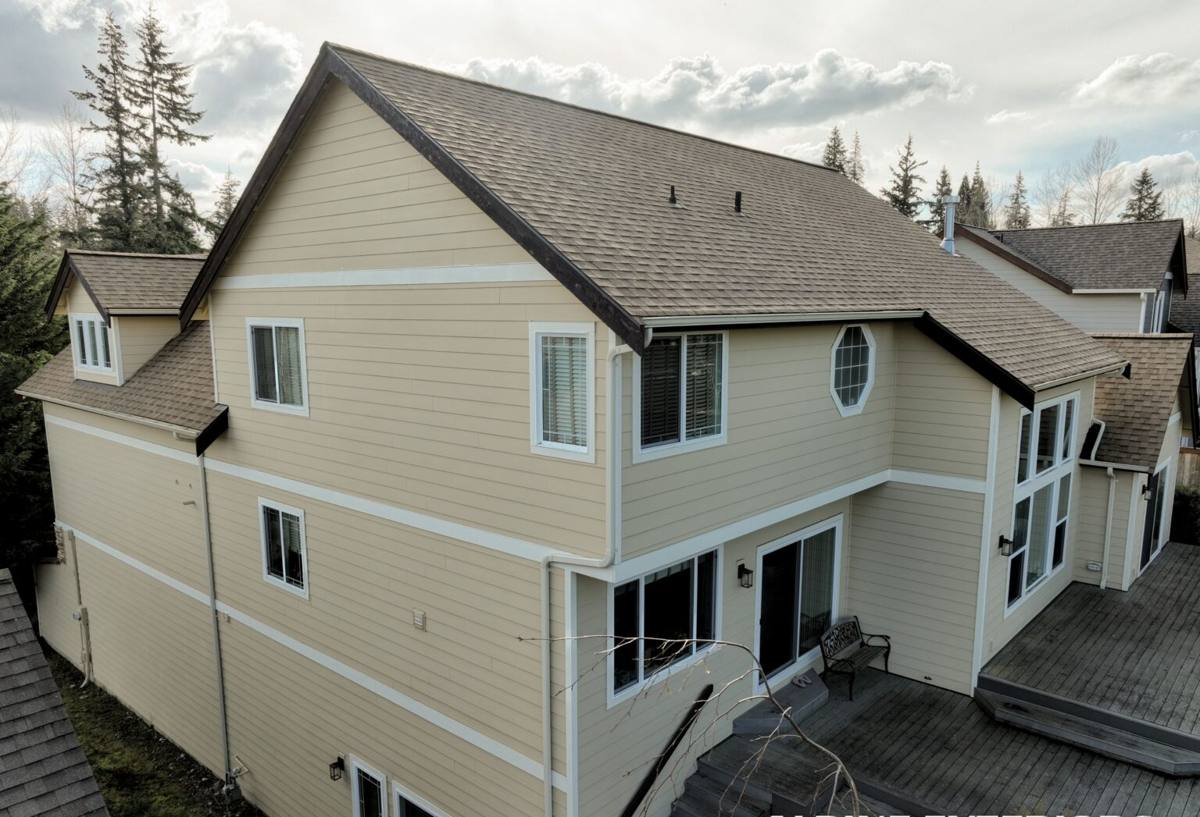
What This Climate Does to a Deck Over Time
A deck fails in predictable ways in Whatcom County, and almost all of them trace back to moisture that had nowhere to go.
- Trapped water at ledger boards and posts — where a deck attaches to the house or sits on a footing, water that isn't flashed or sloped away will find the seam and start rot from the inside out, often before it's visible from above.
- Moss and algae buildup — shaded decks, or ones under trees, grow a slick green film during the wet months that makes stairs and walking surfaces genuinely dangerous, not just unattractive.
- Fastener corrosion — cheap or mismatched screws and hangers rust and streak the decking, and once a fastener weakens, it's a structural issue, not a cosmetic one.
- Cupping and splitting in lower-grade wood — boards that swell wet and shrink dry repeatedly, season after season, eventually crack or cup even with regular care.
None of this is unusual or a sign of bad luck. It's what happens to a deck in this region when the details that manage moisture — flashing, spacing, fastener grade, drainage — get treated as optional.
Choosing the Right Decking Material
There's no single "best" decking material — there's the right material for how you'll use the deck, your budget, and how much upkeep you actually want to do. We'll walk through the honest trade-offs rather than push one product line.
| Material | Upfront Cost | Maintenance | How It Handles This Climate |
|---|---|---|---|
| Pressure-treated wood | Lowest | Annual cleaning, periodic sealing/staining | Performs well if sealed and maintained on schedule; neglect shows up fast in wet years |
| Cedar | Moderate | Regular sealing to hold color and resist checking | Naturally rot-resistant but still needs upkeep against moss and UV graying |
| Composite decking | Higher | Occasional washing, no sealing/staining | Doesn't absorb water like wood; still needs airflow underneath and periodic cleaning to prevent surface algae |
| PVC/capped polymer | Highest | Lowest — mostly rinsing | Best moisture resistance of the group; strongest warranty structures, higher material cost |
Composite and PVC products cost more up front but remove a lot of the seasonal maintenance burden that wood carries in a climate this wet. Wood costs less initially but only holds up if someone actually keeps up with sealing on schedule — which, honestly, most homeowners intend to do and then don't. We'll give you a straight read on which direction makes sense for your household and your plans for the deck, rather than defaulting to whatever's easiest to install.
A Note on Railings and Fascia
Railing systems and fascia boards take direct weather exposure with almost no protection from the roofline, so material choice there matters as much as the decking surface itself. Metal components need a coating rated for wet, humid exposure, and any wood trim needs the same sealing discipline as the deck boards or it will fail first.
What Happens Below the Surface: Framing and Substructure
The part of a deck that fails first is almost never the part you can see. Framing and substructure decisions are where a deck's real lifespan gets decided.
Footings and Posts
Footings need to sit below frost depth and bear on solid, undisturbed soil — in areas with heavier clay or poor drainage, that sometimes means adjusting footing size or depth beyond the minimum. Post bases should hold the post above grade and off standing water, not buried or sitting flush with wet soil.
Ledger Attachment and Flashing
Where a deck ties into the house, the ledger board needs proper flashing that directs water out and away from the wall assembly, not just lag bolts and caulk. This is the single most common shortcut we see on decks that are failing early, and it's also the hardest one to fix after the fact without pulling the deck apart.
Joist Spacing and Protection
Joist spacing should match the decking material's span rating, not just whatever's fastest to frame. Joist tape or a comparable moisture barrier on top of the joists keeps water from sitting directly on the wood under the deck boards, which meaningfully extends the life of the framing in a climate that stays damp for months at a time.
Fasteners and Hardware That Actually Hold Up Here
Hardware grade is one of those details that's invisible until it isn't. In a marine-influenced, high-humidity climate like Whatcom County's, we use fasteners and structural connectors rated for wet exposure — not standard interior-grade hardware that will streak, weaken, or corrode within a few wet seasons. The same goes for hangers, post bases, and any structural screws. It costs a little more upfront and it's the difference between hardware that's still sound in fifteen years and hardware that's the reason the deck needs rebuilding in five.
Our Process, Start to Finish
We keep the process straightforward because a deck build shouldn't feel like a mystery to the homeowner paying for it.
- On-site assessment — we look at your yard's grade, drainage, sun and shade exposure, and how the deck ties into the house before we talk materials.
- Honest material walkthrough — we go over the real trade-offs between wood and composite/PVC options for your specific situation and budget.
- Written estimate — clear scope, materials, and timeline, no vague allowances buried in the fine print.
- Permitting — we handle the permit application and inspections required for your project so you're not chasing paperwork.
- Build — footings, framing, decking, railings, and finish work, sequenced to work around Whatcom County's weather windows rather than fighting them.
- Final walkthrough — we go over the finished deck with you, including basic care guidance specific to the material you chose.
Permits and Local Requirements
Most deck projects above a certain height or size require a building permit in Whatcom County, and structural elements like footings and railings are inspected against current code, including guardrail height and baluster spacing for safety. Requirements can vary depending on your specific property and the deck's size and height, so we confirm what applies to your project rather than assuming. We handle the permit process as part of the job so you're not left figuring out county requirements on your own.
Keeping a Deck Looking Good Through Moss Season
Even a well-built deck needs some seasonal attention in this climate. Here's what actually matters:
- Clear leaves and debris out of gaps between boards regularly — trapped organic matter is what moss and algae feed on.
- Rinse or lightly scrub the surface before moss gets established in fall, rather than after it's taken hold.
- Check that under-deck areas and drainage paths aren't blocked, especially before the heaviest rain months.
- For wood decks, keep sealing or staining on the schedule the product calls for — skipping a cycle is how small problems become expensive ones.
- Inspect railings and stair connections once a year for looseness or corrosion at the hardware.
None of this is complicated, but it's the difference between a deck that looks the same at year ten and one that needs early repairs because moisture got a foothold somewhere small.
Why It Matters That We Already Work in Everson
A crew that already builds and repairs decks around Ferndale and Everson isn't guessing at how this climate behaves — we've seen what a full wet season does to different materials, framing details, and hardware choices over time, and we build accordingly from the start instead of learning it on your project. That local familiarity shows up in small decisions: how footings are sized for the soil conditions common in this area, which flashing details actually hold up through a Whatcom County winter, and which materials are worth the extra cost here versus in a drier climate. It's the difference between a deck built to a generic spec sheet and one built for the place it's actually going to sit for the next few decades.
If you're planning a new deck or replacing one that's past its prime, we're glad to come take a look and give you a straightforward, no-pressure estimate — just fill out the form below and we'll get in touch.