 Ferndale
 Why Decks in the Cordata Area Wear Differently
A deck built the same way in Arizona or Ohio won't last the same number of years once it's sitting outside in Whatcom County. The Cordata area gets a specific combination of punishment: salt-tinged air drifting in off the Puget Sound region, long stretches of driving rain that don't let up for days, and a moss season that can run from October clear through April. None of these show up all at once as a dramatic failure. They show up slowly, as soft spots, loose railings, and a deck surface that never quite dries out between storms.
Salt air accelerates corrosion on any metal fastener, bracket, or hanger that isn't rated for it. Driving rain finds every gap in flashing and every unsealed end-cut and pushes water where it doesn't belong. And moss doesn't just look bad — it holds moisture against the wood surface for months at a time, which is exactly the condition that lets rot get started. A deck repair in this area has to account for all three, not just patch the board that's currently sagging.
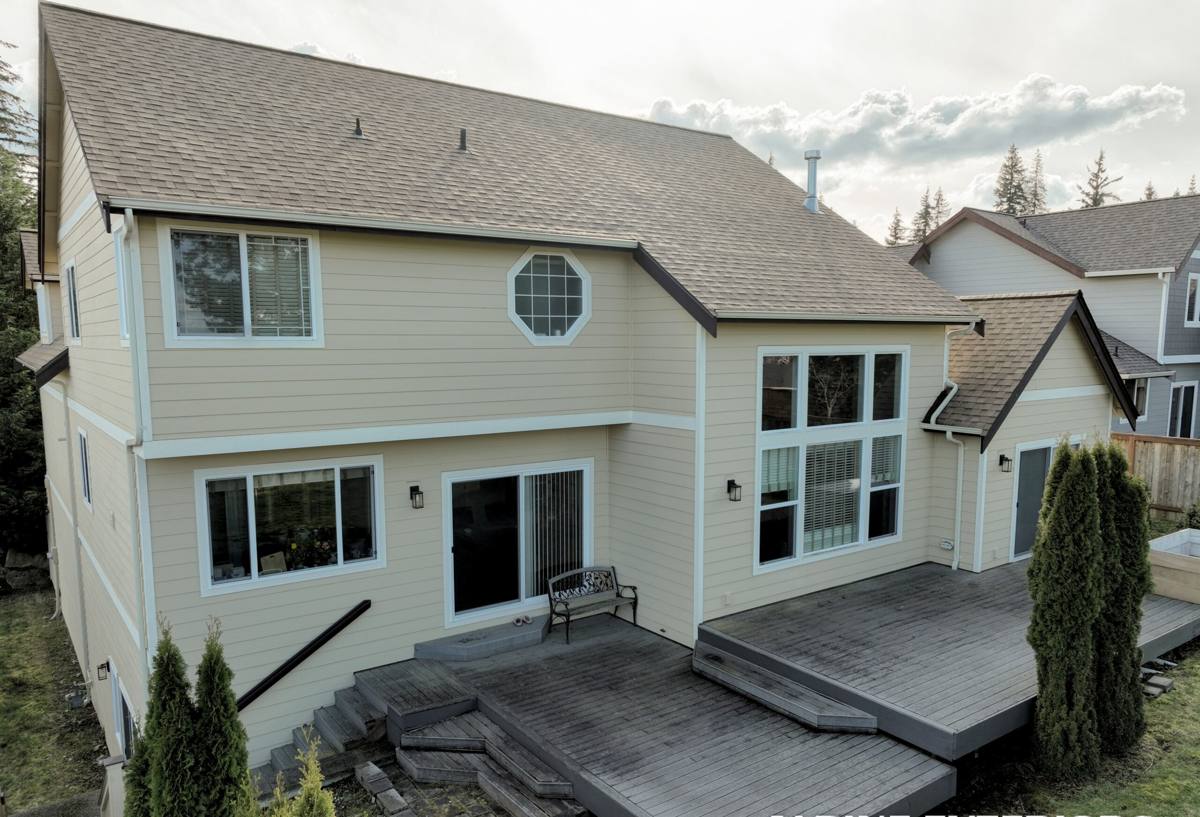
Signs a Cordata Deck Needs Repair, Not Just a Cleaning
Pressure washing and a coat of sealant will make a tired deck look better for a season, but it won't fix what's underneath. Before you spend money on cosmetic maintenance, it's worth knowing which symptoms mean there's an actual structural or moisture problem developing.
- Boards that feel spongy, springy, or slightly give when you walk across them
- Railings or posts that wiggle more than a firm push should allow
- Dark staining or a soft, crumbly texture where the deck meets the house (the ledger board)
- Persistent moss or green film that comes back within weeks of cleaning
- Fasteners with rust streaks bleeding down the wood around them
- Gaps opening up between boards that weren't there a year or two ago
- A noticeable dip, slope, or bounce in one section of decking
- Stairs that feel less solid than the rest of the structure
Any one of these on its own might be minor. Two or three together, especially in the same area of the deck, usually means water has been getting in for a while and the repair needs to address the cause, not just the symptom.
What a Correct Deck Repair Actually Involves
The Substructure Comes First
The part of a deck nobody sees — joists, beams, posts, and the ledger board bolted to the house — is the part that actually holds everyone up. A repair that replaces surface boards but ignores soft or rotted framing underneath is a cosmetic fix on top of a real problem. We check the substructure before we touch a single visible board, because in a climate that drives moisture this hard, the framing is usually where the real story is.
Fasteners Matter More Here Than Most Places
Standard hardware corrodes faster with salt-influenced air moving through the region. Once a fastener starts to rust, it loosens its grip on the wood fibers around it, and that creates a path for water to get in even deeper. Proper repair means replacing corroded fasteners with hardware rated for wet, coastal-influenced exposure — not just driving a new screw in next to the old one.
Flashing and Ledger Connections
Most serious deck failures trace back to the ledger board — the piece bolted directly to the house framing — and whether it was flashed correctly to shed water away from the house. A repair here isn't just replacing wood; it's making sure water is directed off the structure instead of trapped against it, which matters even more given how many wet days this area gets in a typical year.
Decking Boards and Surface Repair
Once the structure underneath is sound, surface repair is straightforward: replacing individual boards that have cupped, split, or rotted, resetting fasteners, and addressing any moss or algae staining that's worked into the wood grain rather than sitting on top of it.
Repair vs. Replace: What Actually Drives the Decision
Homeowners often assume any deck problem means a full rebuild. In our experience, that's true less often than people expect — but it depends on which component is affected and how far the damage has spread.
| Component | Usually Repairable | Usually Needs Replacement |
|---|---|---|
| Ledger board / house connection | Minor surface weathering, no soft spots | Soft wood, staining that goes deep, missing or failed flashing |
| Joists and framing | Isolated soft spot, sound wood everywhere else | Widespread softness, sagging, or movement under load |
| Decking boards | A handful of cupped or split boards | Most boards showing the same wear at once |
| Railings and posts | Loose hardware, minor wobble | Rotted post base, code-noncompliant spacing or height |
| Fasteners and hardware | Localized rust, structure otherwise sound | Corrosion throughout, hardware pulling out of wood |
The pattern that matters most: damage concentrated in one area is usually a repair. Damage spread evenly across the whole deck — because the whole thing was built or fastened the same way at the same time — usually means everything is aging out together, and patching one section just means you're back for another repair next year.
How Our Deck Repair Process Works
- On-site inspection. We walk the deck, check the substructure from underneath where possible, and test boards, railings, and connections by hand rather than just looking at the surface.
- Honest scope, in writing. We tell you what's cosmetic, what's structural, and what we'd genuinely recommend if it were our own deck — including if the right call is a smaller repair than you expected.
- Address the cause, not just the symptom. If water is getting in somewhere, we fix the entry point (flashing, gaps, drainage) alongside the damaged wood, so the same repair isn't needed again in two years.
- Rebuild with weather-appropriate materials and fasteners. Hardware and lumber matched to the exposure the deck actually faces, not generic materials that happen to be cheaper.
- Final check and homeowner walkthrough. We show you what was done, what to keep an eye on, and what basic upkeep will extend the life of the repair.
Materials: What We Use and Why
Pressure-treated lumber remains a solid, honest choice for deck framing and often for decking boards themselves — it's affordable, widely available, and performs well when properly sealed and maintained. The trade-off is that it does require periodic upkeep: cleaning, sealing, and attention to end-cuts where treatment doesn't fully penetrate.
Composite decking is a reasonable alternative for homeowners who want to minimize surface maintenance, particularly given how much moss and algae pressure this region puts on any exposed wood surface. The trade-off there runs the other direction — composite costs more upfront, and if the substructure underneath isn't built and fastened correctly, the composite surface won't fix that problem, it'll just hide it for a while.
We don't push one material over the other as universally "better." We tell you honestly what each option costs to install, what it costs to maintain over ten years in this climate, and let the decision match your budget and how much upkeep you actually want to do.
Maintaining a Repaired Deck Through Whatcom County Winters
A properly repaired deck still needs some seasonal attention, especially heading into the wetter months. Clearing leaf and needle debris out of gaps between boards before the rains set in prevents moisture from sitting trapped. A moss treatment or gentle cleaning in early fall, before the moss season really takes hold, keeps growth from working into the wood grain rather than just sitting on the surface. And checking fasteners and railings once a year catches loosening hardware before it becomes a bigger repair.
None of this is complicated, but it's the difference between a repair that lasts a decade and one that needs revisiting in three years.
Why a Crew That Already Works Cordata Makes a Difference
Deck repair isn't a one-size-fits-all trade. A crew that regularly works homes in and around Ferndale and the greater Whatcom County area has already seen how salt-influenced air, sustained rain, and a long moss season interact with local building styles and materials. That means fewer surprises during the inspection, more accurate estimates, and repairs built to hold up against the specific conditions your deck actually faces — not generic conditions from a manual written for a different climate.
It also means we're not guessing at what "normal wear" looks like here versus what's an early warning sign. That judgment only comes from doing this work, on decks like yours, in this exact region, repeatedly.
If your deck has a soft spot, a wobble, or just doesn't feel as solid as it used to, we're happy to take a look and give you a straight answer — repair, partial rebuild, or full replacement — with no pressure either way. Use the form below to request a free estimate.