 Ferndale
 Building Decks for Blaine's Coastal Conditions
Blaine sits right up against Semiahmoo Bay and Drayton Harbor, which means any deck here is exposed to something most inland Whatcom County homes don't deal with as heavily: salt-laden air moving off the water. Combine that with the long stretches of driving rain typical of a Pacific Northwest winter and the moss season that follows, and you have a set of conditions that will find every weak point in a deck's construction within a few years if it wasn't built for them. We've done deck work throughout the Ferndale and Blaine area long enough to know which shortcuts show up as problems, and which details actually hold up.
A deck built the same way you'd build one in a dry inland climate will age faster in Blaine. Salt air accelerates corrosion on fasteners and connectors, moisture gets trapped in ledger boards and joist bays if flashing isn't done right, and moss and algae take hold on any surface that stays damp and shaded for too long. None of this means a deck can't last decades here — it just means the build has to account for the environment from the start, not patch around it later.
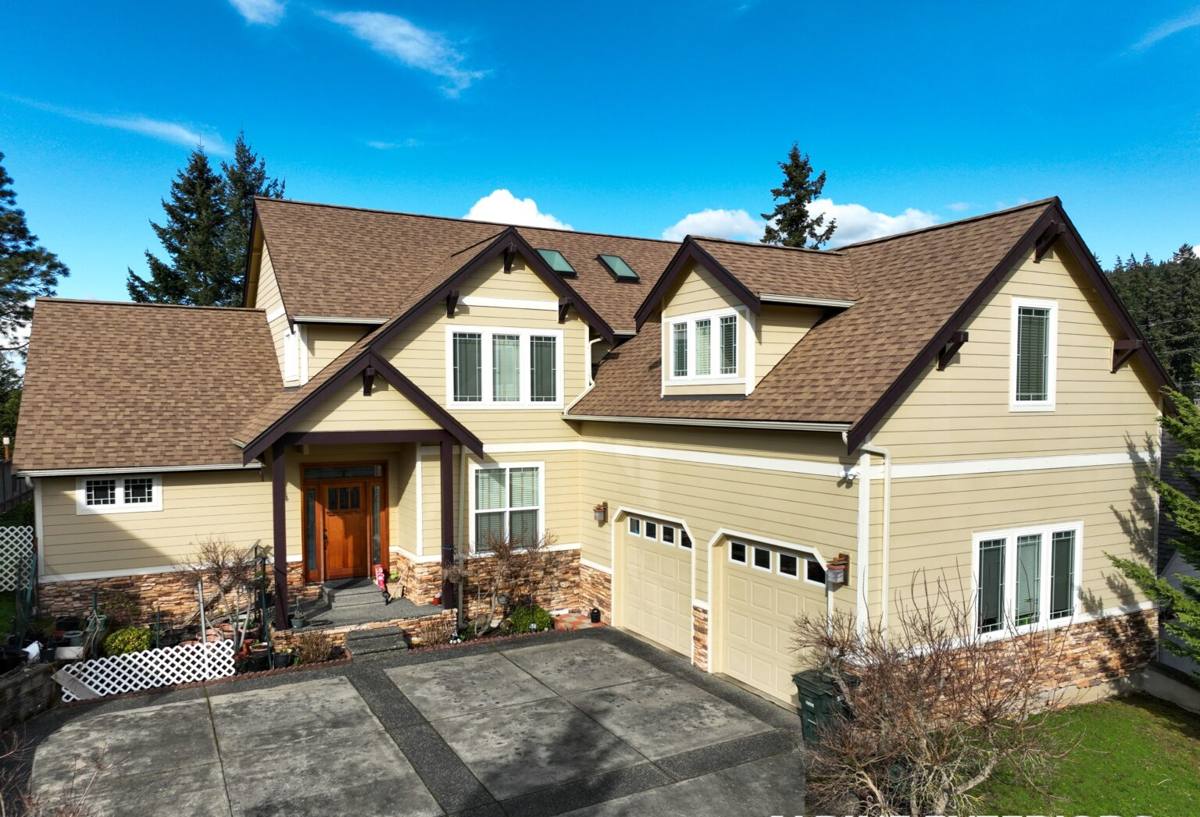
What a Blaine Property Actually Needs From a Deck
Wind and Moisture Exposure
Waterfront and near-waterfront lots in Blaine often get more direct wind and wind-driven rain than properties set back from the bay. That affects how a deck should be oriented, how railings are braced, and how much attention goes into keeping water from being pushed sideways into seams and connections rather than just running off the top.
Salt Air and Metal Hardware
Standard galvanized fasteners can start showing surface corrosion within a few years this close to the water. It's not usually a structural failure right away, but corroded fastener heads streak the decking, weaken over time, and are a sign the rest of the hardware is degrading too. This is one of the first things we account for in material selection.
Moss and Shade
Many Blaine lots have mature trees or sit close to neighboring structures that shade part of the deck for much of the day. Shaded, damp wood is exactly what moss and algae need to establish. Board spacing, airflow underneath the deck, and surface texture all affect how quickly that happens.
Choosing Decking Material for This Climate
There's no single "best" decking material for every home — the right choice depends on budget, how much maintenance you want to do, and how close you are to the water. Here's how the common options actually compare for a Blaine property specifically:
| Material | How It Handles Salt Air & Rain | Maintenance | Typical Lifespan Here |
|---|---|---|---|
| Pressure-treated wood | Needs sealing and upkeep to resist moisture and salt exposure | Annual cleaning, periodic re-staining/sealing | 10-15 years with consistent maintenance |
| Cedar | Naturally rot-resistant but still affected by prolonged salt and moisture exposure | Regular oiling or sealing to maintain appearance and protection | 15-20 years with upkeep |
| Composite decking | Resists moisture absorption and salt corrosion well; won't rot | Occasional washing to prevent surface algae/moss buildup | 25+ years, backed by manufacturer warranty |
| PVC/capped polymer | Fully sealed surface, best resistance to moisture and salt | Low — mainly periodic washing | 25+ years, backed by manufacturer warranty |
For homes closer to the water in Blaine, we generally steer clients toward composite or capped polymer decking simply because it removes the ongoing sealing and staining maintenance that salt air makes more demanding. Wood and cedar are still good choices for homeowners who want that traditional look and are willing to keep up with maintenance — we're upfront about that trade-off rather than pushing one product on everyone.
What's Underneath Matters More Than the Surface
Ledger Board and Flashing
The ledger board — where the deck attaches to the house — is the single most common point of failure we find on older decks in this area. Without proper flashing, water gets behind the ledger and works its way into the rim joist and wall framing. In a climate with as much driving rain as Blaine sees, this isn't optional detail work; it's the difference between a deck that lasts and one that causes hidden rot behind the siding.
Joists, Beams, and Footings
Framing needs to be sized and spaced for the actual loads and spans involved, and footings need to be set below frost depth and on solid bearing soil — which can vary across Blaine's mix of waterfront and inland lots. We don't guess at this; it's calculated for each deck.
Fasteners and Connectors
Given the salt air exposure, we use fasteners and structural connectors rated for corrosion resistance appropriate to coastal conditions, not just standard exterior-grade hardware. It costs a little more up front and saves the deck from hardware failure well before the decking itself would need replacing.
Railings and Hardware Built for Salt Exposure
Railings take direct weather exposure and get handled constantly, so hardware choice matters as much here as anywhere on the structure. Depending on the design, we work with wood, composite, and metal railing systems, and in every case the fasteners and brackets are selected to resist the corrosion that comes with being this close to the bay. A railing system that looks fine the first season but starts rusting at the connections within a couple of years isn't actually built for where it sits.
Drainage, Airflow, and Fighting Moss Long-Term
Moss doesn't show up because a deck was built wrong — it shows up because moisture had somewhere to sit. A few things we build into every deck to reduce that:
- Proper board gapping so water drains through rather than pooling on the surface
- Adequate clearance and airflow underneath the deck to let the substructure dry out between rain events
- Grading and drainage paths that move water away from footings instead of toward them
- Surface material and finish choices that don't trap moisture against the wood
- Realistic guidance on seasonal cleaning, since even the best-built deck benefits from a wash before moss season sets in
None of this eliminates maintenance entirely, but it's the difference between hosing off some algae once a year and dealing with soft, slick boards that need to be replaced early.
Permits and Local Considerations
Deck projects in Whatcom County generally require permitting depending on size, height, and attachment to the home, and waterfront-adjacent properties in Blaine can carry additional setback or shoreline considerations depending on the specific lot. We handle the permitting process as part of the job rather than leaving it for the homeowner to sort out, and we build to code rather than cutting corners to avoid the paperwork.
How the Process Works
Estimate and Design
We start with an on-site look at the property — layout, sun/shade exposure, proximity to the water, and how the deck will actually be used — and talk through material and design options honestly, including the trade-offs of each.
Permitting and Planning
Once a design and material are settled, we handle the permitting steps required for the project before any work begins.
Build
Footings, framing, ledger flashing, decking, and railing are installed in sequence, with the structural work — the part that determines how the deck ages — done to the standard we'd want on our own homes, not just to pass inspection.
Walkthrough
We go over the finished deck with the homeowner, including basic maintenance expectations specific to the material chosen, so there are no surprises about upkeep down the road.
Why Hire a Crew That Already Works in Blaine
A contractor who mostly works inland or in drier parts of the region may not think about salt-rated fasteners or ledger flashing the same way a crew that regularly builds this close to the water does. Working in Blaine and along the Whatcom County coastline regularly means we've already seen how decks age here, not just how they look on install day. When you're comparing quotes or contractors, it's worth asking directly:
- What fastener and hardware grade will be used, and is it rated for coastal/salt exposure?
- How will the ledger board be flashed against the house?
- What's the plan for drainage and airflow under the deck?
- Is the quote based on an in-person site visit, or a generic estimate?
- Will permitting be handled as part of the project?
If you're considering a new deck or need an old one repaired or replaced in Blaine, we're happy to come take a look and give you a straightforward, no-pressure estimate — just fill out the form below.