 Ferndale
 Fiber Cement Siding for Cordata Homes
Cordata sits in the Ferndale and north Whatcom County area, a community with a mix of newer construction and older homes spread across open and tree-shaded lots alike. Whatever the age of the house, the exterior deals with the same regional weather every year: salt-tinged marine air moving in off the water, driving rain that gets pushed sideways by wind rather than falling straight down, and a moss season that can run most of the year on shaded walls and north-facing exposures. That combination is hard on siding that isn't built for it, and it's a big part of why a material choice that looks identical to another product on install day can perform very differently five or ten years out.
We install James Hardie fiber cement siding exclusively for homes in Cordata and the surrounding area. This page is specifically about that one service in this one community: what the local climate demands from a fiber cement wall, what a correct installation actually involves, and why the crew doing the work matters as much as the material itself.
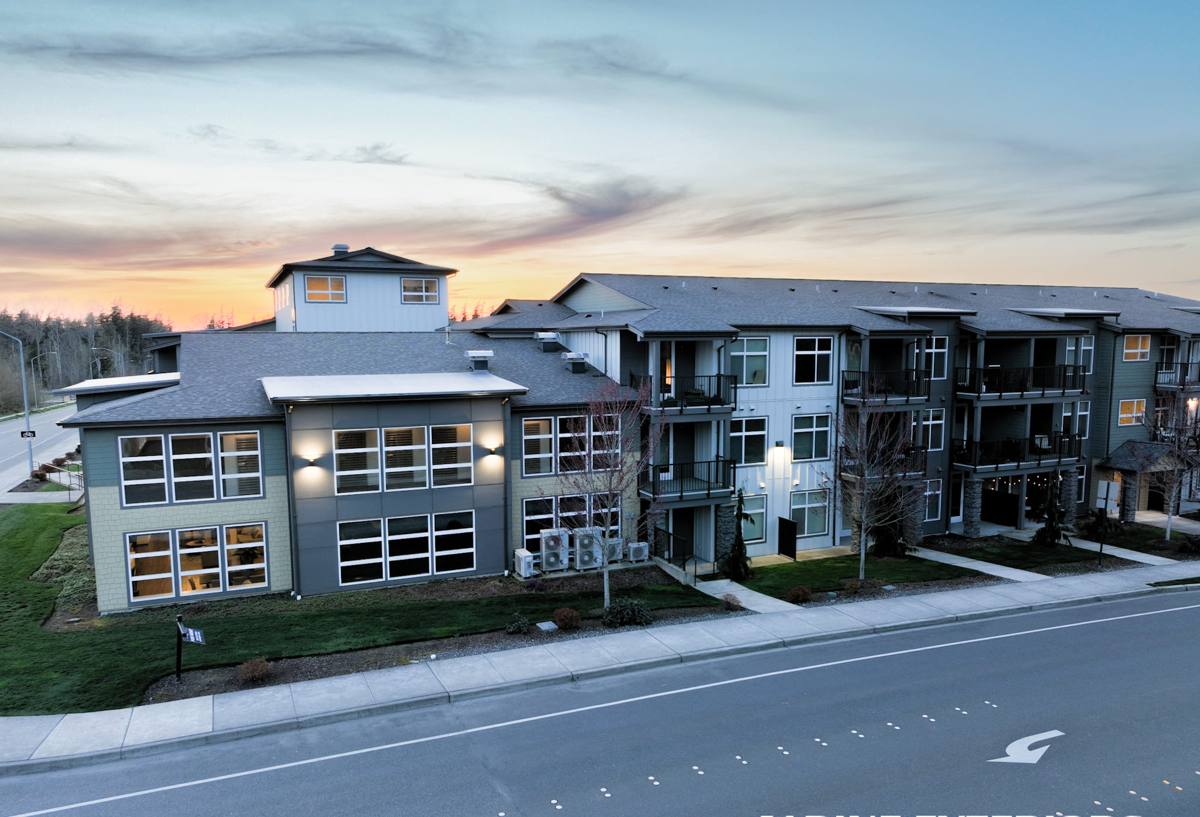
What Cordata's Climate Asks of Fiber Cement Siding
Salt Air and Fastener Corrosion
Homes in this part of Whatcom County take on a steady, low-grade dose of salt-laden air even when they aren't sitting right on the water. Over years, that exposure works on anything metal in the wall assembly, fasteners, flashing, trim hardware, and it can dull or break down lower-grade finishes faster than the same materials would age in a drier inland climate. Getting the fastener and flashing spec right matters more here than a generic national installation standard accounts for.
Wind-Driven Rain
Rain in this region rarely arrives straight down. Wind carries it sideways into wall surfaces, lap joints, and trim details, which puts more load on a siding system's seams and laps than a simple annual rainfall total would suggest. A wall that would hold up fine somewhere calm and dry can still take on moisture here specifically because water is finding its way in from the side rather than from above.
A Long Moss and Mildew Season
Mild temperatures, tree cover on many Cordata lots, and consistent regional moisture add up to a moss and mildew season that runs long compared to drier parts of the country. Any siding material that holds moisture at the surface, rather than shedding it, becomes a growth surface over time. It typically shows up first on shaded, north-facing walls, well before it's obvious from the street or driveway.
Why We Only Install James Hardie Fiber Cement
We narrowed our siding offering down to one product line after seeing, repeatedly, how different materials actually held up in this exact climate over the long run. The reasoning is practical, not promotional:
- Non-combustible core: Fiber cement doesn't feed a fire the way wood-based siding products can, which matters for household safety and often for insurance considerations as well.
- Factory-applied ColorPlus finish: The color is baked on under controlled factory conditions rather than brushed on in the field, which holds up longer against salt-tinged air and repeated wet-dry cycling than site-applied paint.
- Climate-engineered HZ product lines: Hardie's HZ5 formulation is built for regions with heavy moisture exposure and freeze-thaw cycling, which is a close match for this part of Whatcom County.
- Dimensional stability: Fiber cement doesn't swell, cup, or warp the way engineered wood siding can after repeated wet-season moisture cycles.
- Strong transferable warranty: Hardie backs correctly installed products with one of the more substantial warranty structures in the siding industry.
We don't install LP SmartSide, vinyl siding, Cemplank, Allura, primed spruce, or cedar. Each of those is a legitimate product, and other contractors install them competently. We made a professional decision that in a climate with this much sustained moisture and salt exposure, standing fully behind one system we trust is worth more to a homeowner than offering a cheaper alternative that quietly shifts maintenance and moisture risk onto them down the road.
Comparing Common Siding Materials in This Climate
| Material | Moisture Behavior | Maintenance in Cordata's Climate | Realistic Lifespan |
|---|---|---|---|
| James Hardie fiber cement | Dimensionally stable; resists swelling, cupping, and warping | Low; factory finish resists moss, fading, and moisture intrusion | 30+ years with correct installation |
| Vinyl siding | Can trap moisture behind panels and warp in temperature swings | Low upfront, but hidden moisture problems are hard to catch early | 20-30 years, variable |
| LP SmartSide (engineered wood) | Wood-based core is moisture-sensitive at cut edges and joints | Moderate; edge sealing needs regular upkeep in a wet climate | 15-25 years, climate-dependent |
| Cedar / primed wood | Absorbs and releases moisture readily | High; needs recurring repainting or resealing | 15-25 years with consistent maintenance |
The pattern across every wood-based or vinyl option is the same: something in the system, the core material, the finish, or the seams, is sensitive to sustained moisture in a way fiber cement simply isn't. That difference compounds year after year in a climate that doesn't give a wall many long dry stretches to recover between wet spells.
What a Correct Fiber Cement Installation Involves
The material is only half of the equation. A James Hardie installation that actually performs the way the product is engineered to depends on a set of installation details that are easy to skip and hard to notice until years later:
- House wrap or a weather-resistive barrier installed and correctly lapped before any siding goes up
- Proper clearance from grade, roof lines, and decks so the bottom edge of the siding isn't sitting in standing moisture
- Corrosion-resistant fasteners installed at the manufacturer's specified pattern and spacing, not just enough to hold the board up
- Correctly lapped and sealed joints at seams, corners, and trim, since these are the first places wind-driven rain tries to get behind the wall
- Flashing integrated properly at every window, door, and roof-to-wall transition
- Field-cut edges primed before installation, since the factory ColorPlus finish only protects the face and edges Hardie cuts at the plant
Skip any one of these steps and the wall can still look correct on the day the crew leaves. The problems that follow, trapped moisture, soft sheathing, premature finish failure at a seam, usually take a couple of wet seasons to surface, which is exactly why a rushed or corner-cutting install is easy to get away with until the homeowner is the one dealing with the consequences.
Repair vs. Full Replacement
Not every siding issue on a Cordata home calls for a full tear-off. A section damaged by storm impact, or trim that's failed around a single window, can sometimes be repaired and matched into existing Hardie siding. But when moisture has been tracking behind the wall for a while, or the existing siding is an older product that's reached the end of its service life, patching it usually just delays a larger job. We'll give you a straight answer about which situation you're actually in rather than defaulting to whichever option pays better.
Our Process for a Cordata Fiber Cement Project
Walkthrough and Assessment
We start by walking the property and looking at how exposure varies wall by wall, since a sun-exposed south wall and a shaded, tree-covered north wall on the same Cordata home can be dealing with very different moisture loads. We also check for any existing damage or hidden moisture issues in the wall assembly that need to be addressed before new siding goes on, since covering an existing problem with new material just buries it.
Detailing the Job Before Install Day
We work out fastening pattern, flashing details, and how the siding will meet windows, trim, and rooflines before crews start cutting material. Planning these details on paper first, rather than improvising them in the field, is a big part of what keeps a job from developing the kind of subtle problems that only show up after a few wet seasons.
Installation to Manufacturer Spec
Every fastener, clearance, and flashing lap follows James Hardie's published installation requirements for this climate zone. That's what keeps the manufacturer's warranty intact, and it's also simply what makes the wall perform the way it's supposed to for decades rather than just for the first few years.
Final Walkthrough
We walk the finished job with you, explain what little maintenance fiber cement actually needs, and make sure you know what a healthy wall looks like if you ever want to check on it yourself down the road.
Why Hire a Crew That Already Works Cordata
A siding installation rewards experience with a specific local climate in ways that aren't obvious from a spec sheet. A crew that has installed fiber cement across Cordata and the surrounding area through multiple wet seasons has already seen which wall orientations need extra flashing attention, how much clearance actually holds up in a climate this damp, and where a drainage detail earns its keep rather than being an optional upgrade. That judgment is the difference between a fiber cement wall that still looks and performs the same in fifteen years and one that starts showing seam staining or soft spots within the first five.
A Simple Checklist Before Hiring for Siding Work in Cordata
- Ask which siding product they install and why, and whether it comes with a written, transferable manufacturer warranty
- Confirm current Washington contractor licensing and active liability insurance
- Ask how they handle fastener and flashing details for wind-driven rain, not just general weatherproofing
- Ask about their experience with Whatcom County's salt air and moss conditions specifically, not just general remodeling
- Get a clear, written scope of work and timeline before signing anything
Cost Factors for Fiber Cement Siding in Cordata
| Factor | Why It Matters |
|---|---|
| Home size and wall complexity | More corners, dormers, and trim mean more joints where wind-driven rain can intrude |
| Tear-off vs. overlay | Full tear-off reveals hidden moisture damage that's common under older siding in this climate |
| Substrate condition | Years of trapped moisture behind failing siding can rot sheathing and framing, adding repair cost before new siding goes on |
| Trim and color selection | ColorPlus factory finishes hold up better against salt air and UV than field-applied paint, and cost can vary by color and profile |
| Site access and lot conditions | Tree-shaded or sloped lots can add setup, staging, and cleanup time |
Exact numbers depend on the specific home, which is why we walk the property in person and give a real, written estimate rather than quoting off square footage alone. Two similarly sized Cordata homes can have meaningfully different costs depending on tear-off scope, substrate condition, and site access.
Signs Your Cordata Home's Siding Needs Attention
- Moss or dark staining that returns quickly after cleaning, especially on shaded or north-facing walls
- Soft or spongy siding, particularly low on the wall or around window and door trim
- Peeling paint, bubbling, or visible warping on siding boards
- Cracked, chipped, or missing sections after storms or wind events
- Visible gaps at seams, corners, or trim joints where water can track in
- Rising energy bills that may point to a wall assembly that's no longer sealing properly
If you're weighing fiber cement siding for a home in Cordata, we're happy to walk the property, talk through what your specific walls need given their orientation and exposure, and give you a straightforward, no-pressure estimate. There's a form below, reach out and we'll set up a time to take a look.