 Ferndale
 Decking in Lummi Nation Faces a Different Set of Problems
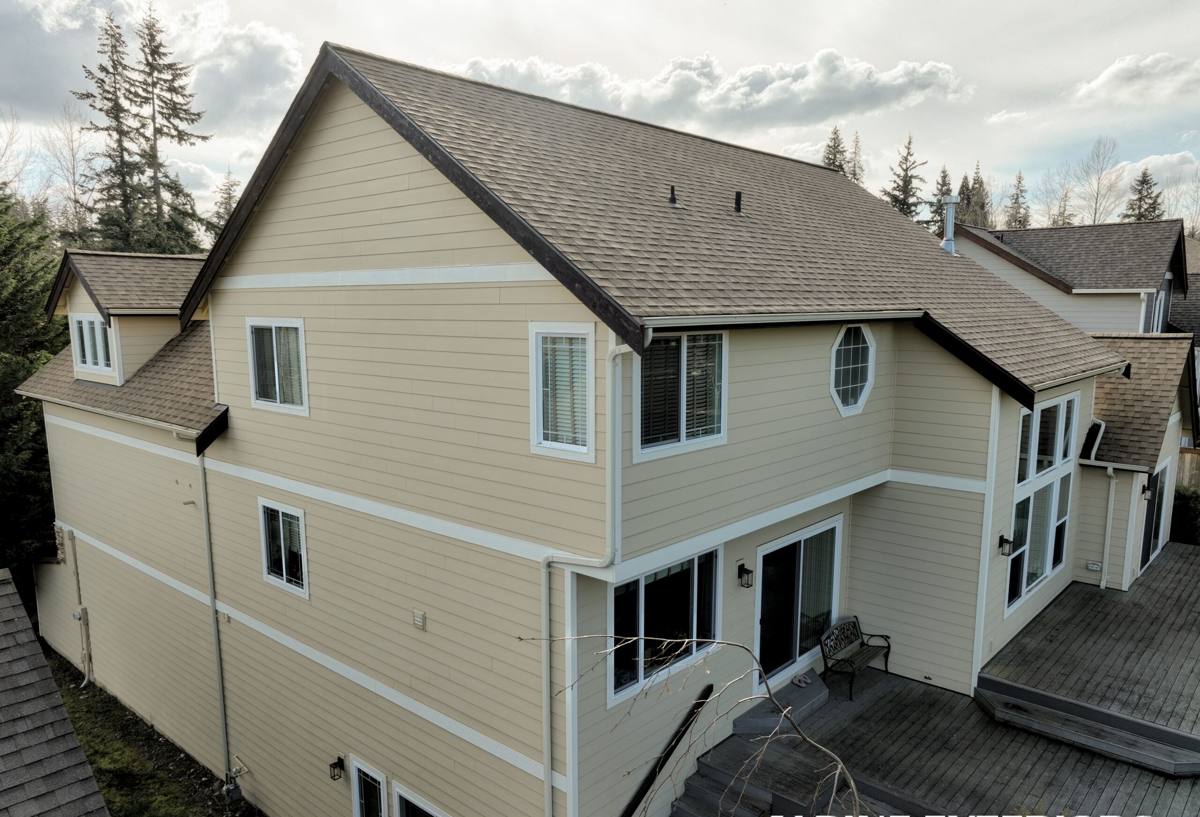
Homes in and around Lummi Nation sit close to the water, and that proximity changes what a deck has to survive. Salt-laden air off the bay works its way into fasteners, flashing, and any exposed wood grain. Driving rain off the Salish Sea comes in sideways more often than straight down, which means it finds its way under railings and into ledger connections that a drier climate would never test. And for a good chunk of the year, low sun angles and tree cover keep deck surfaces damp long after the rain stops, which is exactly what moss and algae need to take hold.
None of this is unique to one lot or one street — it's the general condition for waterfront and near-waterfront properties throughout Whatcom County. But it does mean a deck built to a generic spec, without accounting for salt exposure and moisture load, tends to show problems earlier here than it would twenty miles inland.
Why Composite Holds Up Better Than Wood in This Environment
Wood decking can be built well and last a long time anywhere, including here — but it asks for a level of upkeep that most homeowners underestimate until they're a few seasons in. In a salt-air, high-moisture environment, wood decking wants annual cleaning, periodic sealing, and close attention to any spot where water can sit — around fasteners, at board ends, under planters or furniture. Skip a year and moss gets a foothold; skip a few and you're dealing with soft spots and premature board replacement.
Composite decking was developed largely to solve this exact problem. It doesn't absorb water the way wood does, so it doesn't swell, cup, or rot from moisture cycling. It doesn't need sealing or staining. And modern capped composite boards resist the surface staining and mold growth that plain wood is prone to in a shaded, damp yard. That doesn't mean composite is maintenance-free — more on that below — but it removes the specific failure modes that salt air and constant moisture cause in wood.
Where Composite Still Has Real Trade-Offs
We're straightforward with clients about this: composite decking costs more upfront than pressure-treated wood, it can run warmer underfoot in direct summer sun (less of an issue here than in drier climates, but worth knowing), and if it's ever damaged — say, a scorch mark or a deep gouge — you're replacing the board rather than sanding it out. For most homes in this area, the trade-off favors composite because the climate punishes low-maintenance materials less than it punishes wood. But it's a decision with real trade-offs, not a universal upgrade.
What a Correctly Built Composite Deck Looks Like Here
The decking boards themselves get most of the attention, but in this climate the structure underneath and the details around the edges matter just as much — arguably more, since that's where salt air and standing moisture do the most damage.
Substructure and Fasteners
Composite decking is only as good as what it's fastened to. In a salt-air environment, standard hardware corrodes faster than it would inland, so joists, hangers, and fasteners rated for coastal or ACQ-treated lumber exposure aren't optional — they're the difference between a deck that's solid in ten years and one with hidden structural rot at the ledger. We use fasteners and connectors rated for the corrosion exposure this area actually sees, not just what a generic building code minimum allows.
Ledger Attachment and Flashing
Where the deck attaches to the house is the single most common point of hidden water damage on any deck, anywhere. In an area with frequent driving rain, that connection needs proper flashing that sheds water away from the house band joist, not just a ledger bolted flush against siding. We treat this as a non-negotiable step, even when it adds a little time to the job.
Airflow Underneath
Composite doesn't rot, but the framing under it still can, and trapped moisture under a low deck is a common source of mold and mildew smell that homeowners notice indoors before they notice it outdoors. Adequate ventilation and drainage slope under the deck matter as much with composite decking as with wood — sometimes more, since composite surfaces shed water fast and that water has to go somewhere.
Board Spacing and Drainage
Board gapping needs to account for this region's humidity and rain volume — too tight, and boards trap moisture and debris between them, which is exactly what feeds moss and mildew. Too loose, and you get an uncomfortable walking surface and debris falling through onto framing below. Getting this dialed in for actual Whatcom County rainfall, not a generic spec sheet number, is part of doing the job right.
Comparing Decking Options for a Salt-Air, High-Rain Property
| Factor | Pressure-Treated Wood | Capped Composite | PVC Decking |
|---|---|---|---|
| Upfront cost | Lowest | Moderate to higher | Highest |
| Moisture/rot resistance | Depends on upkeep | Strong | Strongest |
| Moss/algae resistance | Weak without regular cleaning | Good, especially capped products | Good |
| Annual maintenance | Cleaning + periodic sealing | Occasional wash-down | Occasional wash-down |
| Salt-air fastener/hardware needs | High — corrosion-prone if not addressed | High — same underlying structure needs | High — same underlying structure needs |
| Repair if damaged | Sand, patch, or replace board | Replace board section | Replace board section |
| Typical lifespan with proper install | 15–20 years | 25–30+ years | 25–30+ years |
The structural and fastener requirements are the same regardless of which decking material sits on top — that's a point worth underlining, since it's the part homeowners are least likely to see or ask about, and the part most likely to cause problems later if it's cut corners.
Our Process for Composite Decking Projects in Lummi Nation
We start with an on-site look at the specific conditions of the property — sun exposure, tree cover, proximity to water, drainage patterns, and the condition of any existing deck or ledger connection. That determines the substructure spec, fastener grade, and drainage detailing before we ever talk about which composite board color or profile the homeowner wants.
From there:
- Assess and, if needed, repair or upgrade the ledger connection and flashing
- Build or reinforce the substructure with corrosion-appropriate hardware
- Confirm slope and drainage path under and around the deck
- Install composite decking with manufacturer-specified fastening and gapping
- Detail railings, stairs, and any picture-frame borders to shed water rather than trap it
- Walk the finished deck with the homeowner and explain the maintenance it actually needs
We work in Ferndale and throughout Whatcom County regularly, which means we've seen how decks in this specific climate age over years, not just how they look on installation day. That's the kind of knowledge that only comes from doing the work locally and following up on it.
Living With a Composite Deck in This Climate
Composite decking cuts down maintenance dramatically, but "low-maintenance" isn't "no-maintenance" here. A rinse or light wash a couple of times a year — more often in shaded areas prone to moss — keeps surfaces looking good and prevents organic buildup from etching into the board texture. Keeping gutters and downspouts clear so runoff doesn't sheet directly onto the deck also matters more here than in drier regions, since that runoff carries the moisture load that feeds moss and mildew.
Homeowners considering composite decking in this area should also plan for periodic inspection of the substructure — not because composite fails, but because the framing underneath is still wood or metal and still lives in a coastal, high-rain climate. A five-minute look underneath once a year catches small issues before they become expensive ones.
Signs an Existing Deck Needs Attention
- Persistent moss or dark staining that comes back within weeks of cleaning
- Soft, spongy spots anywhere on the deck surface
- Visible rust or corrosion on fasteners, hangers, or railing hardware
- Gaps or movement where the deck meets the house
- Standing water that doesn't drain within an hour or two after rain stops
Why It Matters to Hire a Crew That Already Works This Area
A lot of decking problems in coastal Whatcom County trace back to a build that was done correctly for a generic climate but not for this one — standard fasteners where corrosion-resistant ones were needed, ledger flashing that assumed less driving rain, or drainage that didn't account for how much moss pressure this area's shade and moisture create. A contractor who works Lummi Nation and the surrounding Ferndale area regularly has already seen which shortcuts show up as callbacks two or three years later, and builds to avoid them from the start.
If you're weighing a new composite deck or replacing an aging one, we're happy to walk the property, look at what's there now, and give you a straightforward assessment of what it needs — no pressure, no upsell, just an honest read on the job. Reach out for a free estimate and we'll go from there.