 Ferndale
 Board & Batten Siding Built for Point Roberts' Coastal Exposure
Point Roberts sits on its own peninsula at the far edge of Whatcom County, surrounded on three sides by the Strait of Georgia and cut off by land from the rest of Washington. That geography is part of what makes the community special, and it's also exactly why siding here has to work harder than siding almost anywhere else in the county. Homes on this peninsula take a steady diet of salt-laden marine air, driving rain off the water, and a moss season that seems to stretch longer every year. Board and batten siding, with its crisp vertical lines and strong shadow reveals, is one of the most requested looks for Point Roberts homes — but it's also one of the least forgiving siding profiles when it's installed without the local climate in mind.
We're based out of Ferndale and work throughout Whatcom County, and Point Roberts is a regular part of our route. This page covers what board and batten siding actually needs to hold up out there, what a correct installation looks like, and why the product we use — James Hardie fiber cement — is the only one we put on these homes.
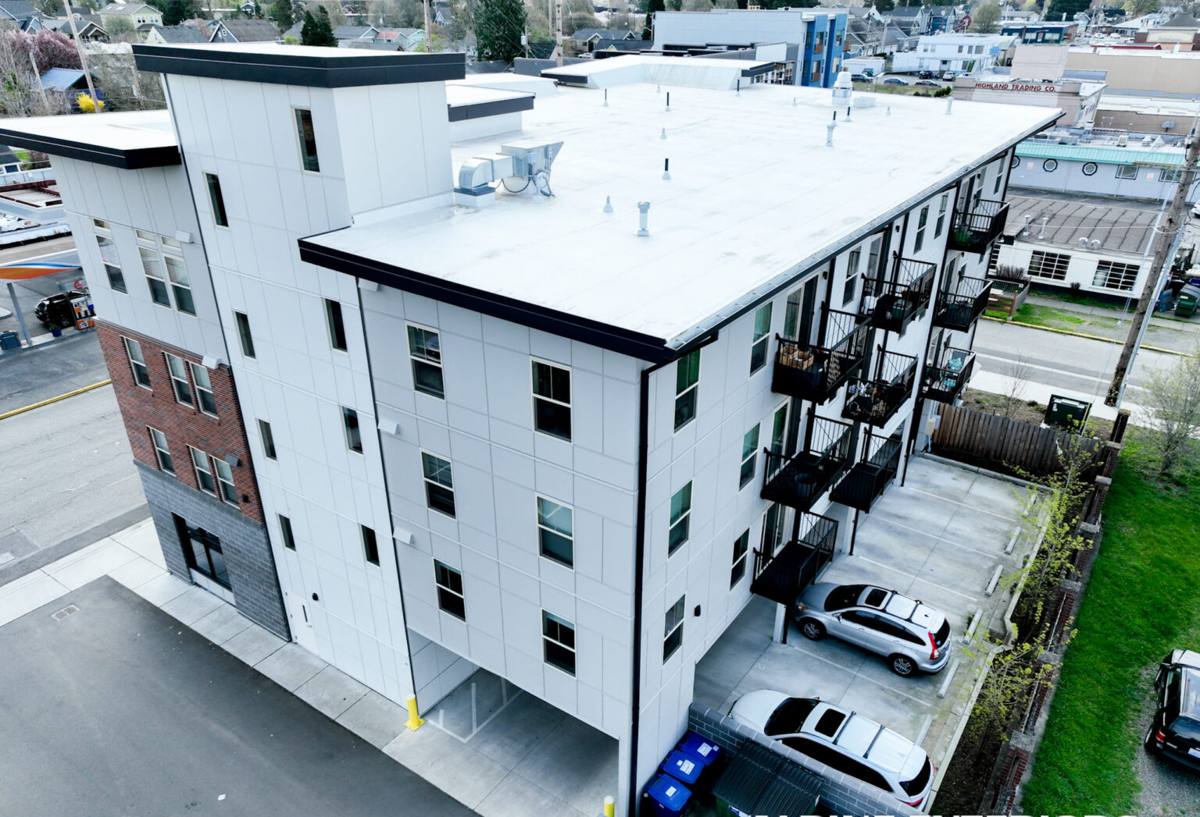
What Salt Air, Driving Rain, and a Long Moss Season Do to Vertical Siding
Salt and Airborne Moisture
Salt air doesn't just affect boats and metal railings. It's corrosive to exposed fasteners, it accelerates the breakdown of cheap coatings, and it holds moisture against exterior surfaces longer than dry inland air does. On a peninsula with open water exposure on multiple sides, this isn't an occasional issue — it's a constant, year-round condition that every board and batten installation has to be designed around, from the fastener choice down to the finish coat.
Wind-Driven Rain at the Seams
Board and batten relies on vertical boards or panels with battens covering the seams between them. Every one of those seams is a potential water entry point, and wind-driven rain off open water doesn't fall straight down — it drives sideways and works its way into gaps that a calmer climate might never expose. Get the batten spacing, fastening, or flashing wrong, and water finds its way behind the siding long before it shows up as a visible problem.
Shade, Moisture, and Moss
North-facing walls, tree-shaded lots, and anywhere airflow is restricted around a home are prone to a long moss and algae season in this part of Washington. Moss holds moisture against the siding surface and, on the wrong material, that trapped moisture is the beginning of rot or delamination. On the right material, it's a cosmetic issue that a homeowner can manage with routine cleaning.
Why Board and Batten Works Here — When It's Installed Right
There's a reason board and batten is popular on Point Roberts homes: the strong vertical lines read well against the area's mix of modern coastal and traditional Northwest architecture, and the deep shadow lines it creates hold up visually even under the area's flat, overcast light for much of the year. It also pairs well with the horizontal lap siding many neighboring homes already use, whether as an accent on gables and dormers or as the primary siding on the whole house.
The trade-off is that vertical siding profiles have less built-in tolerance for installation error than horizontal lap siding does. Water that gets behind a lap course tends to shed downward and out. Water that gets behind a board and batten seam can travel down the back of the panel with nowhere to go, which is why the installation details matter more here than the material choice alone.
What a Correct Board and Batten Installation Actually Involves
A Real Drainage Plane Behind the Siding
Every board and batten job we do starts with a weather-resistive barrier and a drainage gap behind the siding, not siding fastened directly against the sheathing. That gap gives any moisture that does get past the outer surface a path to drain and dry out instead of sitting against the wall assembly — which matters far more on a site that catches driving rain off open water than it does on a sheltered inland lot.
Batten Spacing and Fastening
Batten spacing has to account for the panel material's expansion and contraction, and fasteners need to land in solid framing at the correct depth — not too shallow to hold, not so deep they crush the material and open a path for water. Correct fastener spacing and type also matters for wind resistance, which is not a minor detail on an exposed peninsula.
Flashing at Trim, Windows, and Corners
Board and batten siding lives or dies at its transitions — window and door trim, outside corners, and the base of the wall where siding meets foundation. Every one of those transitions needs proper flashing and correctly lapped water-resistive barrier detailing. This is where most siding failures we get called out to inspect actually start, regardless of the siding material involved.
Why We Install Only James Hardie Fiber Cement for Board and Batten
We don't install vinyl board and batten, cedar or primed wood vertical siding, LP SmartSide, or composite alternatives like Cemplank or Allura. That's a deliberate standard, not a sales pitch, and it's worth explaining honestly rather than just asserting it.
Wood and primed wood board and batten can look excellent when new, but wood is organic material in a climate that already produces a long moss and mildew season — it needs consistent repainting and caulking to keep moisture out of end grain and seams, and salt air shortens the life of both the coating and the fasteners. Vinyl board and batten is low-maintenance and inexpensive, but it's a thin material that can warp or become brittle over time, its seams and panel joints aren't sealed the way a rigid fiber cement joint can be, and it depends heavily on the wall behind it doing all the real water management work. Neither is a bad product in the right setting. Neither is what we're willing to warranty on a peninsula that sees this much wind-driven rain and salt exposure.
James Hardie fiber cement is what we've standardized on because it's engineered for exactly this kind of climate. Hardie's HZ5 product line is formulated for the wetter, cooler climate zones the Pacific Northwest falls into, resisting moisture absorption and freeze-thaw stress in a way that generic fiber cement or wood products aren't specifically built to handle. It's non-combustible, it holds its shape and fastener grip over decades rather than seasons, and the ColorPlus factory finish is baked on under controlled conditions — a more durable, more consistent coating than anything applied on site with a brush or sprayer, which matters enormously in an environment that's hard on paint. James Hardie also backs the product with a strong, transferable limited warranty, which carries real weight for anyone who may sell the home down the line.
Material Comparison for Board and Batten on Point Roberts
| Material | Salt Air / Moisture Resistance | Maintenance Burden | Typical Lifespan |
|---|---|---|---|
| James Hardie fiber cement | Engineered for wet, coastal climates (HZ5) | Low — factory-cured finish, no repainting cycle | Decades, with strong transferable warranty |
| Cedar / primed wood | Absorbs moisture; vulnerable at end grain and seams | High — recoating, caulking, moss treatment | Shorter without consistent upkeep |
| Vinyl board and batten | Depends on wall assembly; joints not sealed | Low, but can warp or crack over time | Variable; degrades with UV and cold |
Why Hiring a Crew That Already Works Point Roberts Matters
Point Roberts is a genuine exclave — the only practical land route in and out crosses the Canadian border twice, and that reality shapes how a siding job on the peninsula needs to be planned. A crew that hasn't worked there before can underestimate how much scheduling discipline it takes: materials, fasteners, flashing, and trim all need to be staged and confirmed before the crew crosses, because a forgotten part isn't a quick trip back to the shop, it's a border crossing each way.
We build our Point Roberts jobs around that reality rather than treating it as an afterthought. That means full material takeoffs done in advance, crews that show up with everything they need for the day already loaded, and a schedule that accounts for border wait times rather than assuming Point Roberts runs on the same clock as a job in Ferndale or Bellingham. It also means we already understand the specific exposure conditions on the peninsula — which sides of a typical Point Roberts home take the worst wind-driven rain, where moss tends to build up fastest, and how far to go with drainage detailing on a lot that's more exposed than most.
Our Process, Start to Finish
- Site walk and exposure assessment — we look at which elevations take direct weather off the water, existing moisture or moss damage, and the condition of the wall behind the current siding.
- Material takeoff and Hardie product selection — HardiePanel vertical siding and HardieTrim battens, in the profile and ColorPlus finish that fits the home.
- Logistics planning — materials, fasteners, and trim staged in advance so the crew isn't making mid-job supply runs across the border.
- Tear-off and wall assessment — removing existing siding and checking sheathing for hidden rot or moisture damage before anything new goes up.
- Weather-resistive barrier and drainage gap installation — the part of the job that determines whether the siding actually performs long-term.
- Board and batten installation — correct fastening, spacing, and flashing at every trim, corner, and penetration.
- Final walkthrough — reviewing the finished work and warranty documentation with the homeowner.
Keeping Your Board and Batten Siding Looking Right in This Climate
James Hardie siding is low-maintenance, but "low-maintenance" doesn't mean "no maintenance," especially in an environment with this much salt air and moss pressure. A little routine attention goes a long way toward keeping the siding looking as good in year fifteen as it did in year one.
- Rinse salt residue off the siding surface periodically, especially on elevations facing open water
- Keep vegetation and tree cover trimmed back to allow airflow and sunlight on shaded, moss-prone walls
- Gently wash visible moss or algae buildup before it has a chance to spread or hold moisture against the surface
- Check caulking at window and door trim annually and have any cracked or missing sealant addressed promptly
- Watch for any staining or soft spots near the base of the wall, which can indicate a drainage issue behind the siding
- Have gutters and downspouts kept clear so roof runoff isn't discharging directly onto siding below
If you're planning a siding project on Point Roberts, we're happy to take a look and put together a straightforward, no-pressure estimate. Use the form below to get started.