 Ferndale
 Why Siding Replacement in Blaine Is Its Own Project
Blaine sits right on the water at the northern edge of Whatcom County, a few minutes from the Canadian border. That location is part of what makes it a great place to live, and it's also why siding here takes more abuse than siding twenty miles inland. Homes facing the water get salt-laden air blowing off the bay, wind-driven rain that hits siding sideways instead of straight down, and long stretches of gray, damp weather that keep exterior surfaces wet for days at a time. Add the shade from mature evergreens on many lots, and you get a near-perfect environment for moss and algae to take hold.
None of that means Blaine homes need something exotic. It means the siding, the water-resistive barrier behind it, the flashing details, and the installation itself all need to be done correctly for this specific climate — not just "up to code" in a generic sense. A replacement project done right here should look and perform the same in year fifteen as it did in year one. That's the standard we hold every job to.
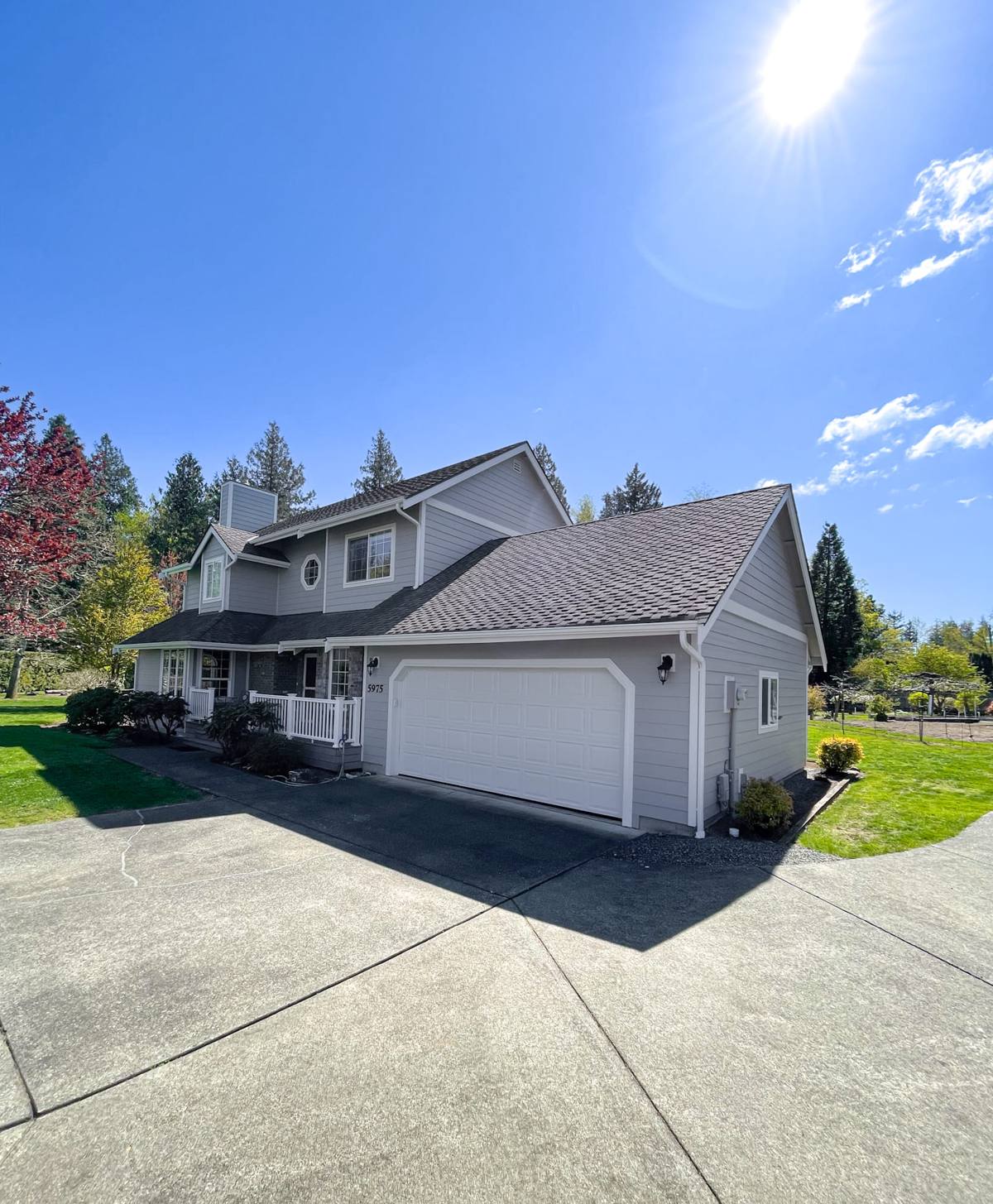
What Salt Air, Driving Rain, and Moss Actually Do to Siding
Salt air
Airborne salt is corrosive to metal fasteners, flashing, and trim, and it accelerates the breakdown of finishes that aren't engineered to resist it. On siding with a weak factory finish, salt exposure shows up as chalking, fading, and premature paint failure — often on the water-facing side of the house years before the rest of the siding shows wear.
Driving rain
Whatcom County's storms don't always fall straight down. Wind off the water pushes rain sideways and up under laps, trim, and butt joints. Siding systems that rely on face-sealing (caulk and paint alone) rather than proper drainage and flashing behind the cladding are the ones that eventually let moisture behind the wall — where it does the real damage to sheathing and framing, out of sight.
Moss and algae
Shaded, moisture-retaining surfaces in this climate grow moss whether the siding is wood, composite, or fiber cement. The real difference is what happens to the material underneath that moss over time. Materials that swell, soften, or delaminate when they stay damp lose structural integrity under moss growth. Materials that don't absorb water the same way simply need periodic cleaning to look their best — moss is cosmetic, not a threat to the wall assembly.
Signs a Blaine Home Needs Replacement, Not Just Repair
Not every siding problem calls for a full tear-off. But in a coastal, high-moisture climate, some symptoms mean the siding system itself has failed and patching won't fix the underlying issue.
- Soft, spongy, or crumbling siding when pressed, especially near the bottom courses and around windows
- Persistent dark staining or streaking that returns quickly after cleaning
- Visible gaps, buckling, or warping in panels or lap boards
- Paint that's failing across large sections rather than one weathered spot
- Interior signs — musty smell, peeling interior paint, or soft drywall near exterior walls
- Siding that's original to a home built more than 20-25 years ago, especially with wood-based or vinyl products
If you're only seeing surface-level fading or a bit of moss on the north side, a cleaning and repaint may still be reasonable. If you're seeing the items above, replacement is almost always the more honest recommendation — and the more cost-effective one, since repeated patch repairs on a failing system rarely add up to less than doing it once, correctly.
What a Correct Siding Replacement Actually Involves
A siding replacement is a wall assembly project, not a cosmetic swap. Skipping any of these steps is exactly how a home ends up with the same problems five years later, just under new siding.
- Full tear-off of the old siding and trim, not installation over the existing layer
- Sheathing inspection — any water-damaged or rotted sheathing gets identified and replaced before anything new goes on
- Water-resistive barrier installed correctly, lapped shingle-style so water sheds outward rather than getting trapped
- Flashing at every window, door, and penetration, integrated with the barrier so water is directed out, not behind, the assembly
- Proper fastening per manufacturer specs — fastener type, spacing, and depth all matter for wind and moisture performance, not just holding the board up
- Correct clearances at grade, decks, and roof lines so siding isn't sitting in standing water or trapped moisture
- Factory-finished material installed per manufacturer instructions to keep the warranty intact
On a home exposed to salt air and driving rain, the flashing and water-resistive barrier details matter as much as the siding product itself. A great siding choice installed with weak flashing will still fail. A good siding choice installed correctly will outperform it.
Why We Only Install James Hardie Fiber Cement
We made a decision as a company to install James Hardie fiber cement siding exclusively, and not vinyl, not LP SmartSide, not cedar or primed spruce, and not other fiber cement brands. That's not a marketing angle — it's what we've found actually holds up under the conditions Whatcom County's coastal communities deal with year-round.
Fiber cement is non-combustible, which matters as much for insurance and long-term value as it does for fire safety. It doesn't absorb water the way wood-based products do, so moss, algae, and repeated wetting don't threaten the material's structure the way they can with wood or wood-composite siding. Hardie's ColorPlus factory finish is baked on and engineered to resist UV and moisture-driven fading better than field-applied paint, which matters directly here given the salt air's effect on painted finishes. Hardie also makes climate-specific "HZ" product formulations, and their installation guidance and warranty structure both reflect a manufacturer that has engineered for wet, coastal climates rather than treating them as an edge case.
We're not saying every other product is unusable everywhere — vinyl and LP SmartSide have real uses in the right climate and budget. We're saying that after years of doing this work along the Whatcom County coastline, Hardie is the product we're willing to put our name behind and back with a strong installation warranty.
Our Process for a Blaine Siding Replacement
| Step | What Happens |
|---|---|
| Site visit & assessment | We inspect current siding, trim, flashing, and look for signs of moisture behind the wall, not just surface condition |
| Written estimate | Scope, material selection, and pricing laid out clearly, with options if there's flexibility in your budget |
| Tear-off & sheathing check | Old material removed, sheathing inspected and repaired as needed before anything new is installed |
| Barrier & flashing | Water-resistive barrier and flashing installed and integrated at every opening and penetration |
| Hardie installation | Installed to manufacturer spec for fastening, clearances, and joint treatment |
| Final walkthrough | We review the finished work with you and confirm everything meets our standard before we call it done |
Cost Factors to Understand Before You Get Quotes
Siding replacement pricing varies by home size, complexity, and existing damage, so we won't quote a number here that wouldn't be honest for your specific house. What we can tell you is what actually drives the range from job to job:
| Factor | Why It Matters |
|---|---|
| Sheathing condition | Hidden water damage found during tear-off adds repair cost but is far cheaper to fix now than after new siding is on |
| Home shape & trim detail | More corners, windows, and architectural features mean more labor and material cutting |
| Siding profile & accessories | Lap width, trim style, and corner details all affect material cost |
| Access & site conditions | Multi-story sections, tight side yards, or landscaping can affect labor time |
| Removal & disposal | Tearing off old siding (especially old cedar or damaged product) adds disposal cost that a same-layer overlay would skip — which is exactly why we don't offer overlays |
Why Hiring a Crew That Already Works in Blaine Matters
Coastal Whatcom County conditions aren't the same as siding a home in a dry inland climate, and a crew that mostly works elsewhere may not think through flashing and drainage details the way they need to be handled here. A contractor who regularly works Blaine and the surrounding Ferndale area already knows to plan around wind-driven rain exposure, to pay close attention to water-facing walls, and to expect moss and algae as a normal maintenance conversation rather than a surprise. That local familiarity shows up in the small decisions during installation — the ones that determine whether a siding job lasts 10 years or 40.
If you're weighing a siding replacement on a Blaine home, we're happy to take a look and give you a straight assessment of what condition your current siding is really in, what it would take to do it right, and what your options are. There's no pressure and no obligation — just a clear, honest read on your home, with a free estimate whenever you're ready.